Latest Posts

What to wear to a garden party in 1922

Next week is the Hamilton Gardens’ Mansfield Garden Party, and I’ll be speaking on garden party fashions in Mansfield’s life at the Glory Days Garden Party Salon.

The Hamilton Gardens have chosen to set the Mansfield Garden party in 1922, the year Mansfield’s story was published (it came out in early Feb, 1922 – and Mansfield had been living with Northern Hemisphere winters for the last 12+ years), rather than ca. 1907, which is when Mansfield was in Wellington, attending garden parties, and which is when I think the story is essentially set, based on the mentions of clothing.

Mansfield’s garden party may not have taken place in 1922, but the parties of The Great Gatsby did, and the early ’20s are certainly a fetching, and easy to wear, era for garden parties.

So what did people wear to garden parties in 1919-1922?

A hat and parasol are absolute must-haves.  The fad for tanning wouldn’t happen until later in the 1920s, and the desired complexion in the ‘teens and early ’20s was still very pale – with defined rosy cheeks.  To achieve pale, wide sunhats were worn.  The modern  cloche shape was just emerging, but always with a wide brim – it wouldn’t loose its brim until the mid  1920s.

Fashions for May 1918, The Deliniator

Fashions for May 1918, The Deliniator

1922 skirts were long  – hemlines are still at the level they had been since 1916, skimming the lower calf.  The mid-20s rise to just below the knee is still a few years away, and anything at or above the widest part of the calf was for girls  under 13 only.

Anna Q. Nilsson and Ethel Clayton — 1919

Anna Q. Nilsson and Ethel Clayton — 1919

Fashion plates show slightly shorter lengths than most examples in photographs, indicating that most women, even the very fashionable, weren’t quite ready to show more than their ankles.
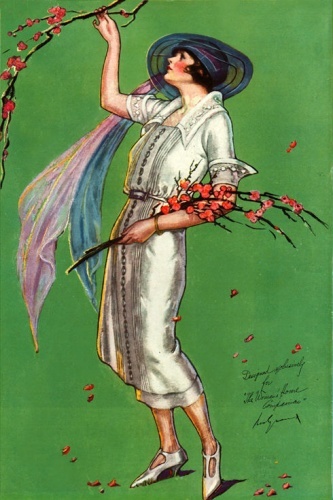
White gown by Molyneuz - Illustration by Ruth Eastman, 1921

White gown by Molyneuz – Illustration by Ruth Eastman, 1921

Garden parties frocks came in white, pastels, and white with touches of brighter shades, like the dress with cherries below.  Favoured colours were coral, apricot, rose, citron, ‘a fascinating golden flame colour’, apple green, nile green, eu de nil, cerulean, and delicate shades of mauve & purple.

Frocks were always worn with stockings, either in delicate pastels to match the dress, skin tones, or white, in silk or liesl (for the young and sporty), and heeled shoes in light shades.  A ca. 1920 silk stocking is much heavier than a modern nylon one – thicker tights give a closer period look.
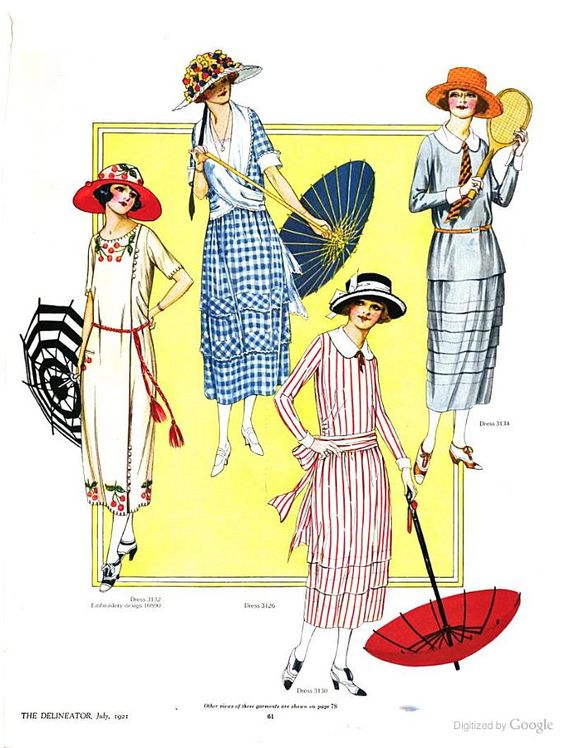
The Delineator, Fashions for July 1921

The Delineator, Fashions for July 1921

The silhouette was very long, slightly rounder in a the lower half, rather than being a straight column, with a very slightly dropped waist (you can see how much the waist dropped between 1918 and 1921 by comparing the fashion plates above and below this one with the very first fashion plate).  The dropped waist was often emphasised with a wide sash or narrow belt.

For women who didn’t find the slim silhouette flattering, one alternative was the robe de style inspired look, with full, romantic skirt:

Mary Pickford in a Robe de Style, possibly by Lanvin, c. 1920

Mary Pickford in a Robe de Style, possibly by Lanvin, c. 1920

“Circular skirts and irregular outlines are characteristic of the season” read a McCalls  fashion pamphlet from May 1921, as the irregular hemline on this dress demonstrates.
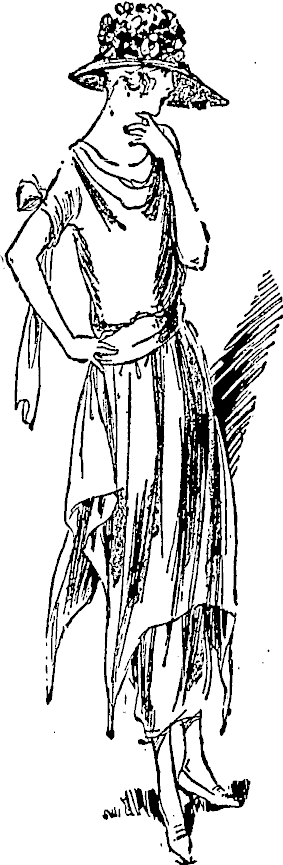
Garden Party Frock. New Zealand Herald, Volume LIX, Issue 17989, 14 January 1922, Page 4

Garden Party Frock. New Zealand Herald, Volume LIX, Issue 17989, 14 January 1922, Page 4

As were frocks with hip emphasis:
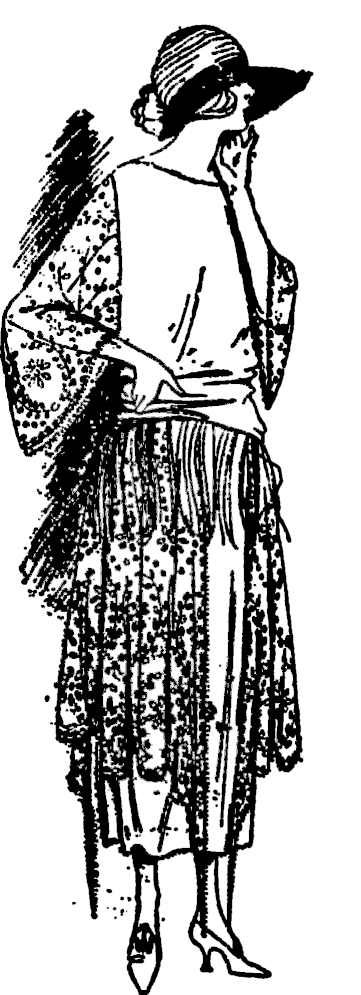
Garden Party Frock. New Zealand Herald, Volume LIX, Issue 18281, 23 December 1922, Page 4

Garden Party Frock. New Zealand Herald, Volume LIX, Issue 18281, 23 December 1922, Page 4

And lots, and lots of lace, particularly in white and palest tans.
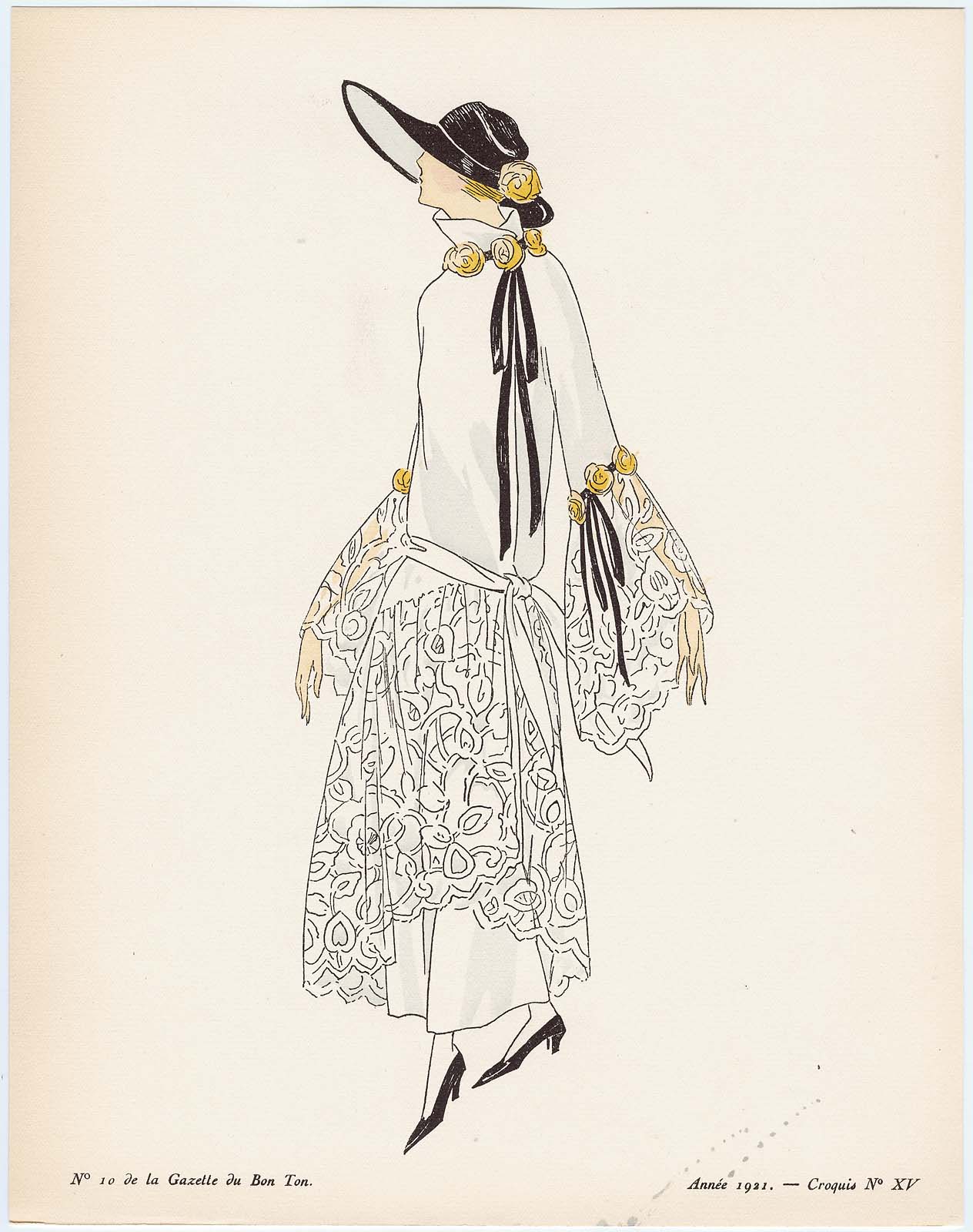
For accessories, long necklaces and gloves were popular up until 1919, but appear rarely in fashion plates and photographs showing garden party attire from 1920-1922.
Sewing for wee ones

While I mostly sew for myself, I do occasionally sew for other people – especially if they are tiny.

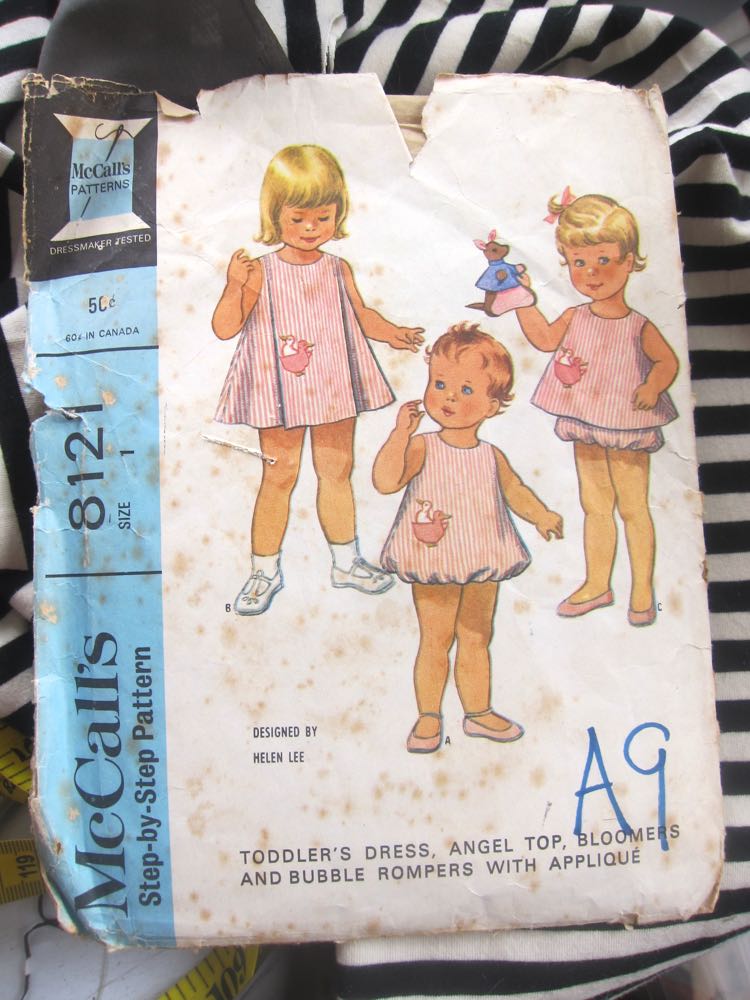
Well, little.  I don’t love sewing for newborn babies, but if you are a close friend of mine, and you have had a little girl in the last oh, 20 years or so, chances are your wee one has been given a version of McCalls 8121:

Sewing for wee ones thedreamstress.com6

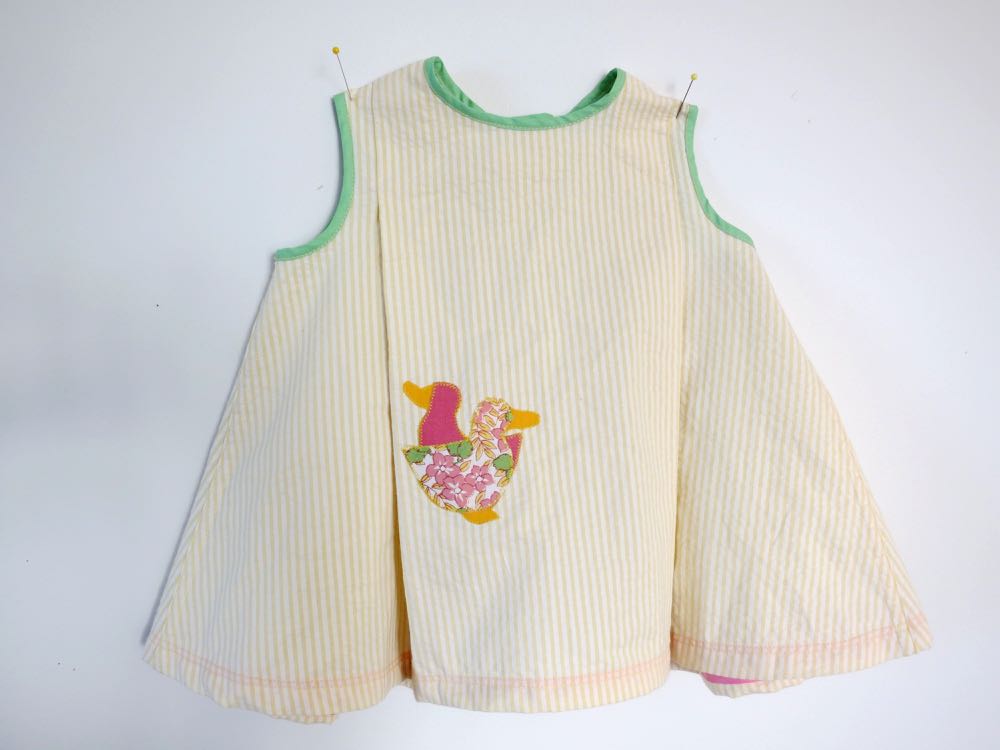
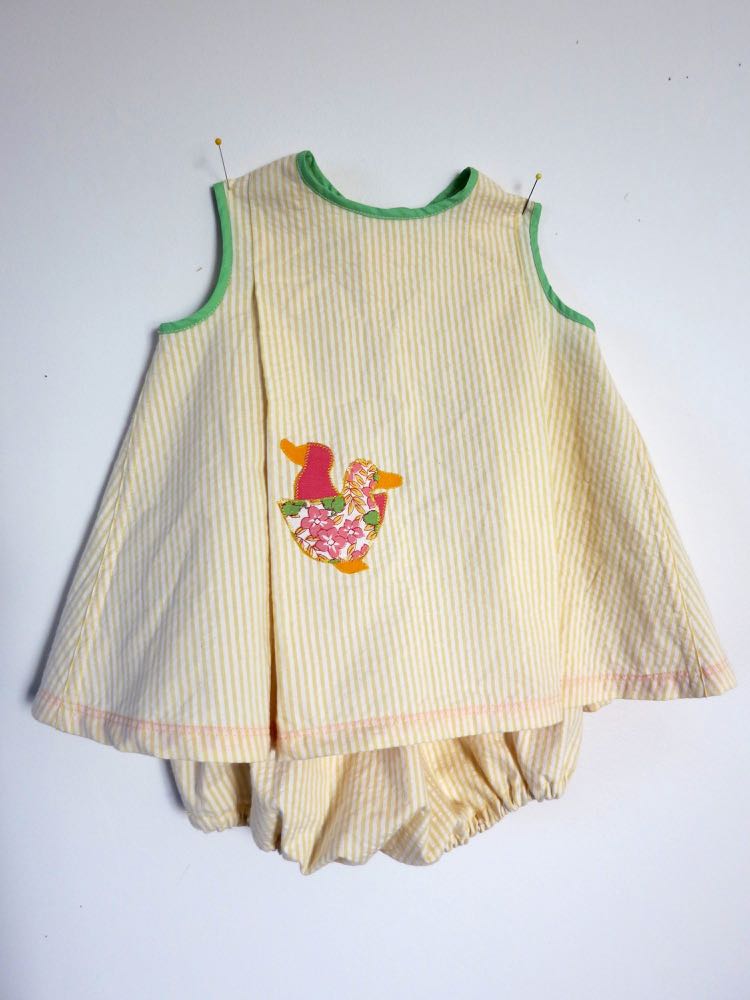
This poor, battered pattern was my Grandmothers, and ever since I inherited it I have been using it to make little frocks and bloomers for the girl toddlers in my life.  It’s got duckies on it!  And the girl has a kangaroo toy!

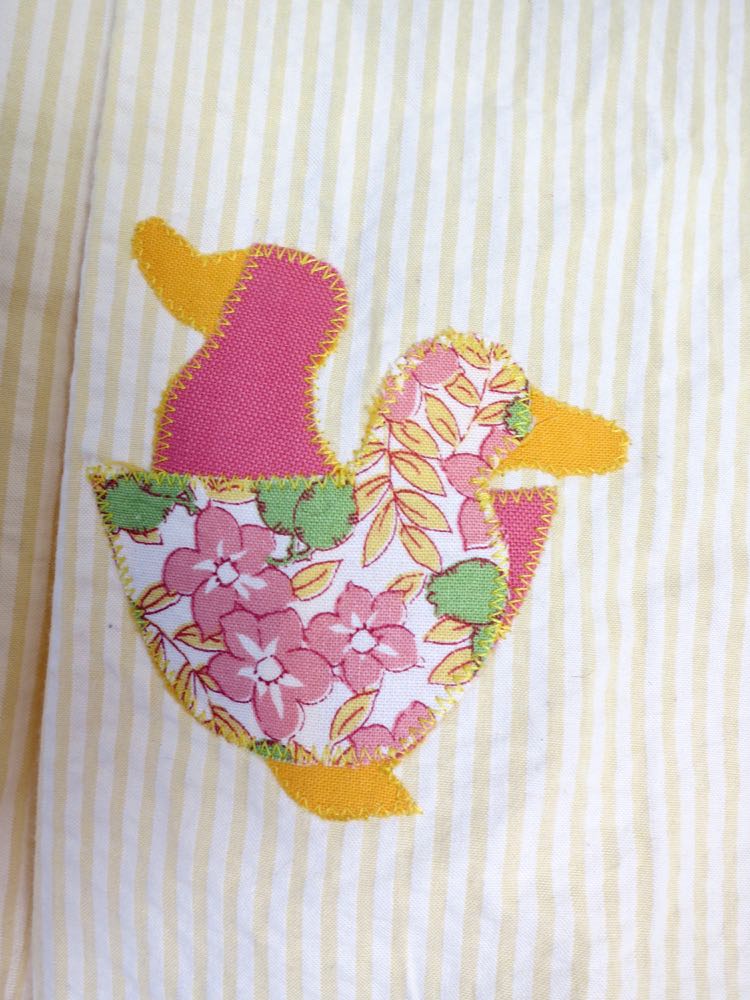
Most of the early versions of the dress I made have had the duck applique (after all, I do love ducks), but lately, I’ve been branching out.

Here is a recent-ish duckie one:

Vintage sewing for wee ones thedreamstress.com1

It’s made from the fabric that remained from making my sherbet  stripes dress, and is trimmed with vintage piping, and a bit of replica 1930s floral fabric.

Vintage sewing for wee ones thedreamstress.com2

Vintage sewing for wee ones thedreamstress.com4

Vintage sewing for wee ones thedreamstress.com3

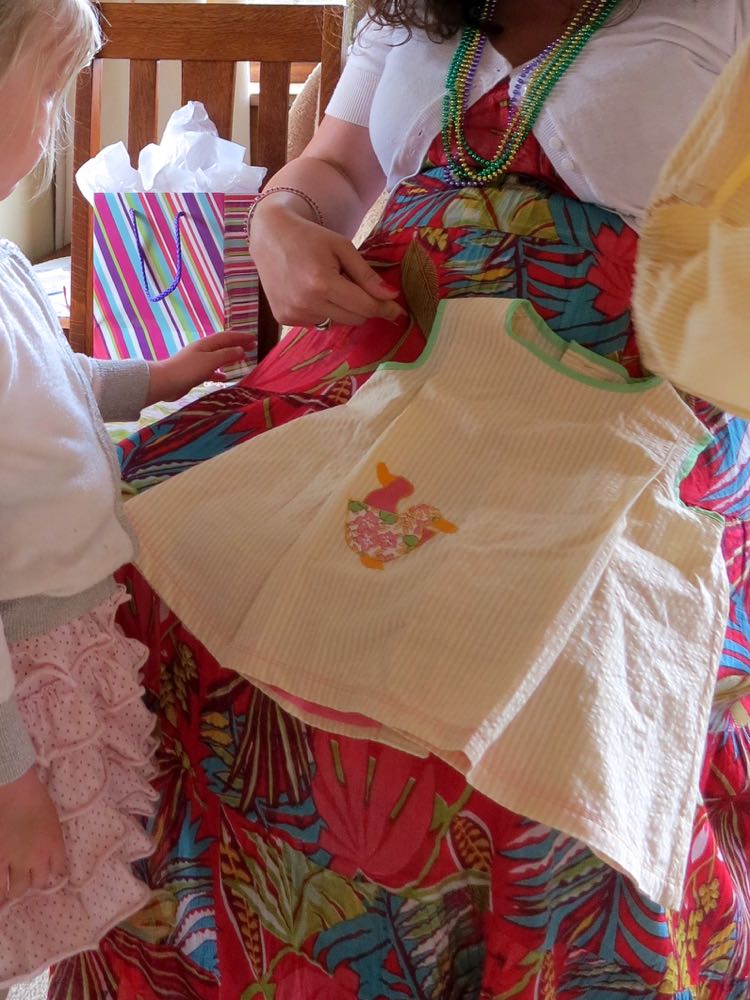
Here is dearest Mum-to-be opening it (with admiring audience of child guest at the baby shower):

Vintage sewing for wee ones thedreamstress.com6

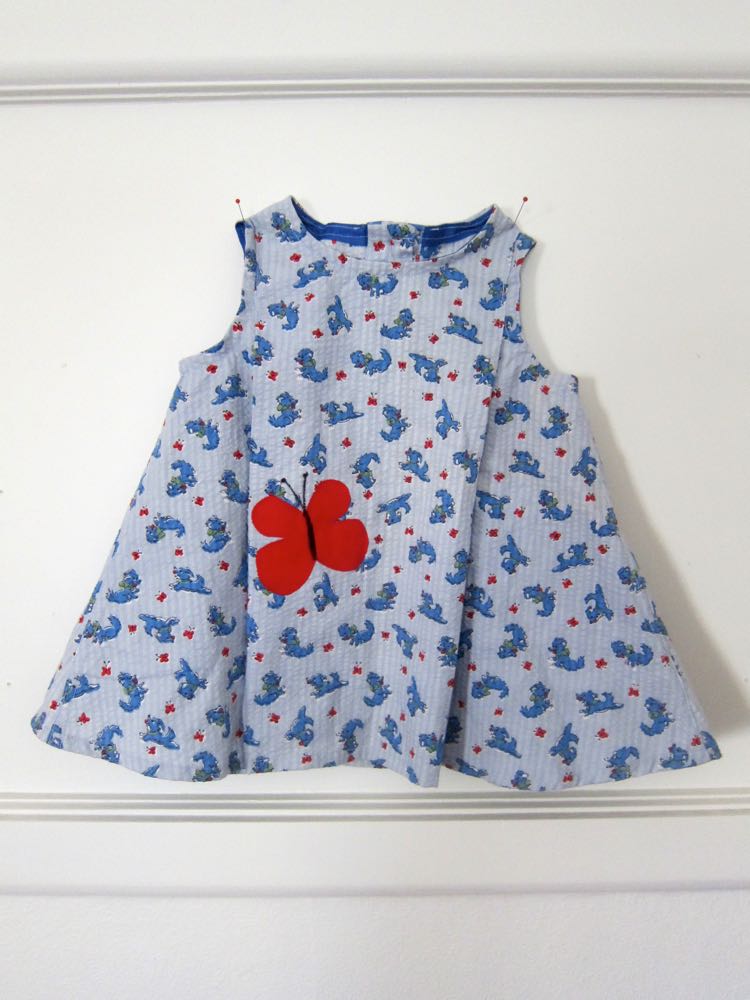
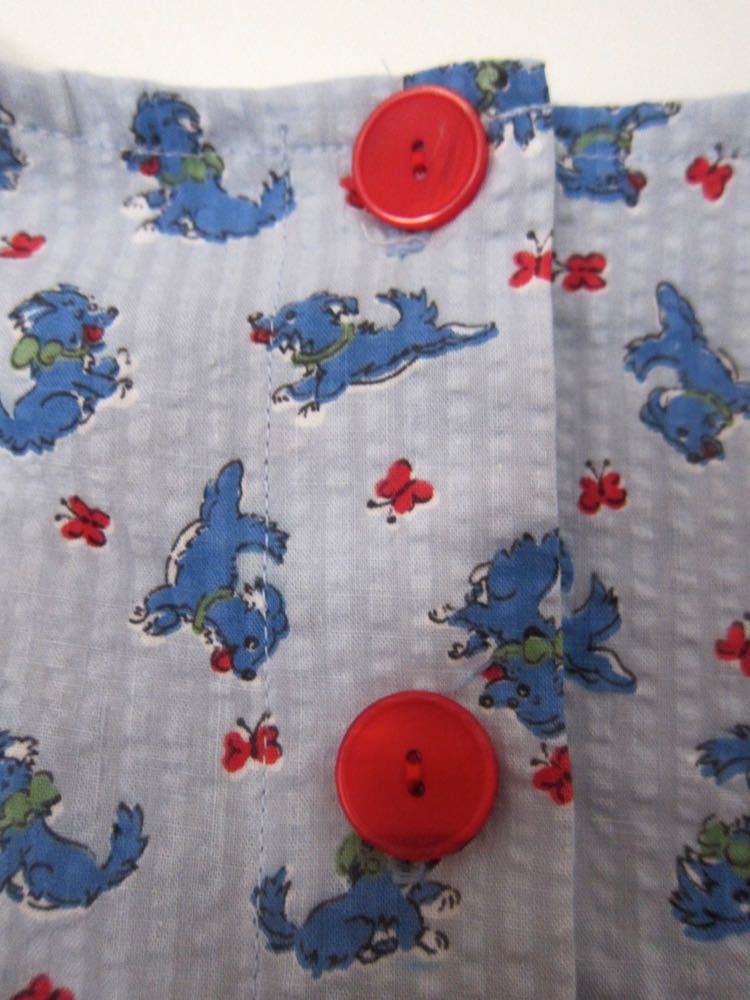
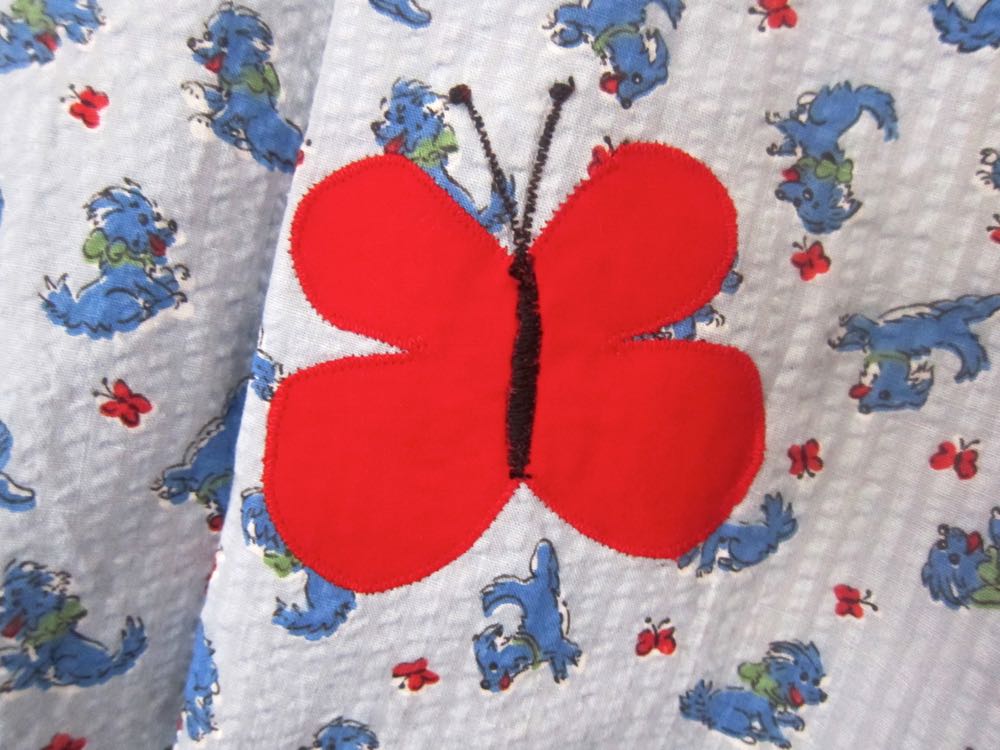
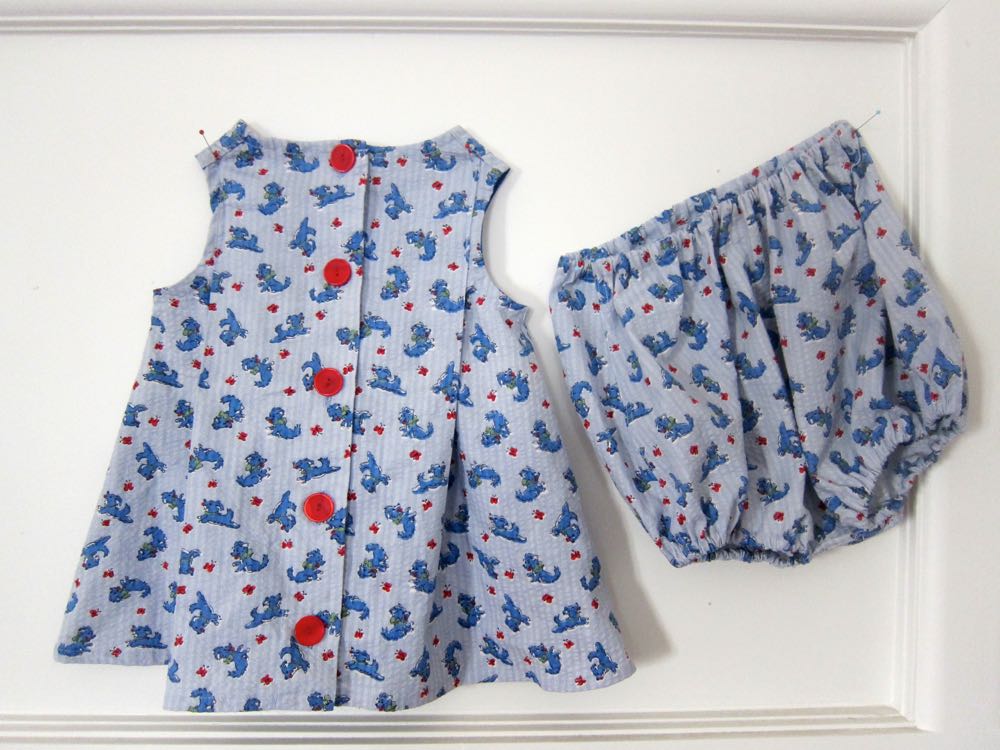
My most recent version is not duck themed – instead, it’s got dogs and butterflies, for a friend who does fantastic work with dogs.

Sewing for wee ones thedreamstress.com1

As soon as I saw the fabric I knew it would be perfect for her little girl.

Sewing for wee ones thedreamstress.com3

I love that it is fun and sweet and active – let’s go run around and play with puppies and chase butterflies!  I was equal parts ‘mud-pies and pretend sword fights’ and ‘sit on a cushion and sew a fine seam’ as a little kid, and I think that exploring both something every child should have the chance to do.  I KNOW that the mother of this little girl is definitely going to be giving her daughter every opportunity to be awesome at whatever she is interested in.

Sewing for wee ones thedreamstress.com2

It’s fun to sew something that’s a little out of my normal range, and that I can be a bit silly and cute with.

Sewing for wee ones thedreamstress.com4

Don’t get too excited about being my friend though – I was so slow and behind with this that the recipient was almost too big by the time it was finished!

Rate the Dress: Emperor Yellow

I do apologise!  Yesterday was Wellington Anniversary Day, which made it a public holiday in the Wellington region.  I was so busy painting and photoshooting and going on walks with Mr D and having such a typical weekend day that I entirely forgot that it was Monday, and didn’t finish my Rate the Dress post.

Last week I showed you a WWI era dress in muted stripes, with quirky tassels & buttons.   Alas, Kathryn was the only one to my private opinion  that the buttons are just the bit of unexpected not-matchiness that the dress needed: most of the rest of you took points off for the buttons not matching, or simply for the buttons overall.  While there were a few scores in the middle, in general it was quite a divisive dress: you either really loved it, or really didn’t (and one of the middle scores was from Hana, who loved the front and hated the back – those buttons! 😉 ) So the dress came in at a perfectly round 8.0 out 10.  Still not bad!

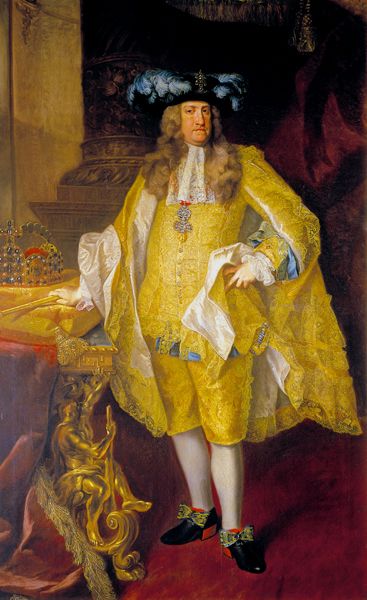
To provide balance for anyone who thought the colours of last week’s frock too drab, this week, I present Charles VI, Holy Roman Emperor, King of Bohemia, Hungary, Croatia, & Serbia, Archduke of Austria etc.  (etc. is literally what Wikipedia says about his titles too).

As emperor, Charles was foolish and shortsighted.  He spent the majority of his rule desperately working to ensure that his daughter, Maria Theresa, would succeed him as ruler, despite the fact that he had promised his father that his older brother’s daughters would take precedence over his own if there were no male heirs.

In the process of making sure that his daughters were heirs, Charles bankrupted his treasure and country, agreed to compromises that were not to Austria’s benefit (such as abolishing their overseas trading company, the Austrian equivalent of the British East India Company)  from other countries in exchange for their support of Maria Theresa’s rule, and left his army in shambles.

All of this might have been forgiven if his reason for wanting Maria Theresa to be ruler was a firm conviction that she was more able and would do a better job than his nieces, or if he had taken care to educate her and train her to be a capable monarch.  Unfortunately Maria Theresa was given the standard training of a princess who was being raised to be a Queen Consort (heavy on the decorative arts, light on politics, language, writing, military strategy etc.), and came to the throne woefully unprepared.  Charles lived till the end in the desperate hope that he would have a male heir after all, and did not care if Austria had a good monarch, as long as they were his direct descenant.  While Maria Theresa eventually became a capable monarch, the fact that she survived the first decade as monarch with any land is almost as much due to luck as any clever political manoeuvring on her part.

Charles VI, Holy Roman Emperor by Johann Gottfried Auerbach,1735

Charles VI, Holy Roman Emperor by Johann Gottfried Auerbach,1735

Today, however, we aren’t worried about that.  We’re concentrating on Charles’ gloriously yellow ensemble.  From his lavishly feather trimmed chapeaux to his red-tongued and red-heeled shoes, his outfit  aims to create an impact.  He is almost luminous  against the dark  drapery, all other accoutrements in the room reduced to insignificance.

What do you think?  The epitome of early-mid 18th c sartorial splendour?  Or a trumped up canary?

Rate the Dress on a Scale of 1 to 10.