Latest Posts

A photoshoot at the Katherine Mansfield Museum thedreamstress.com

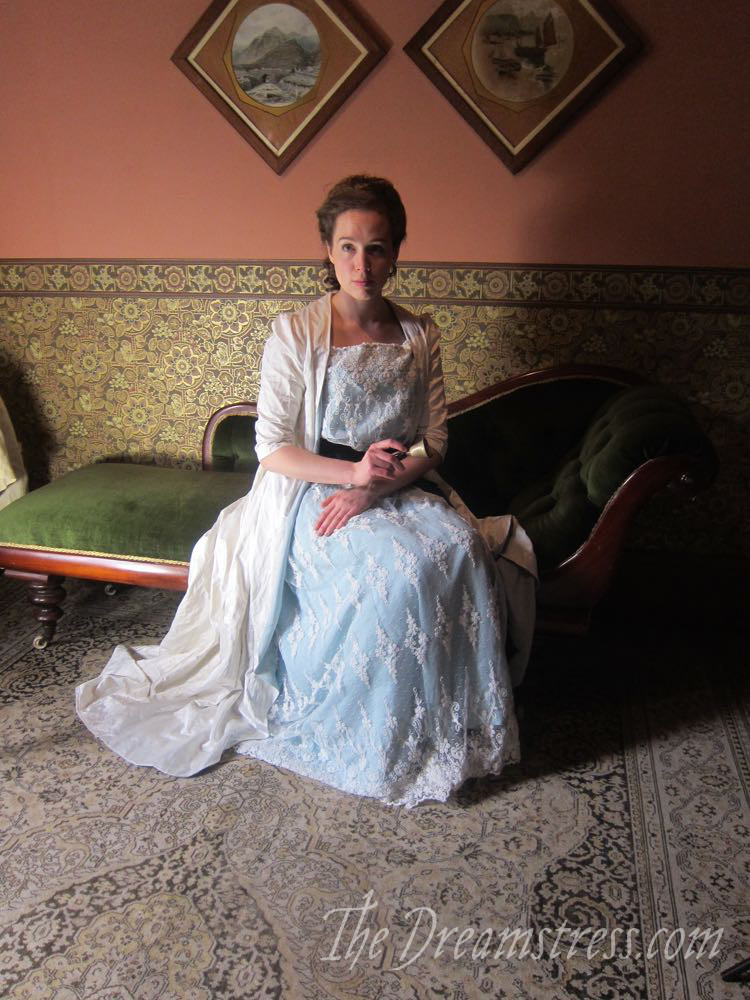
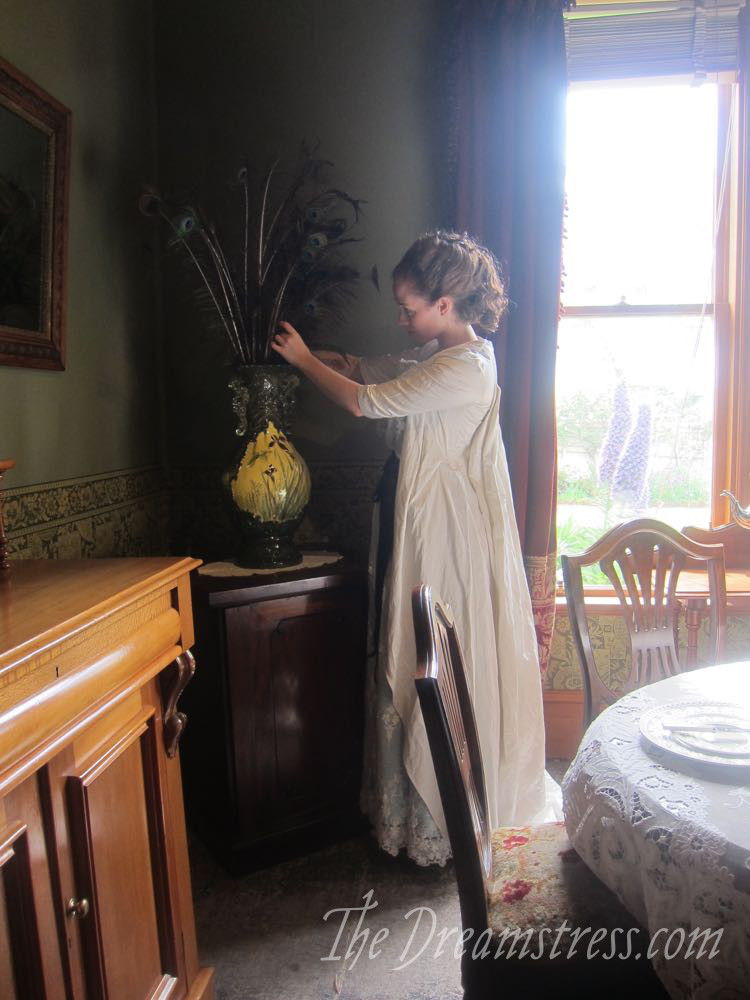
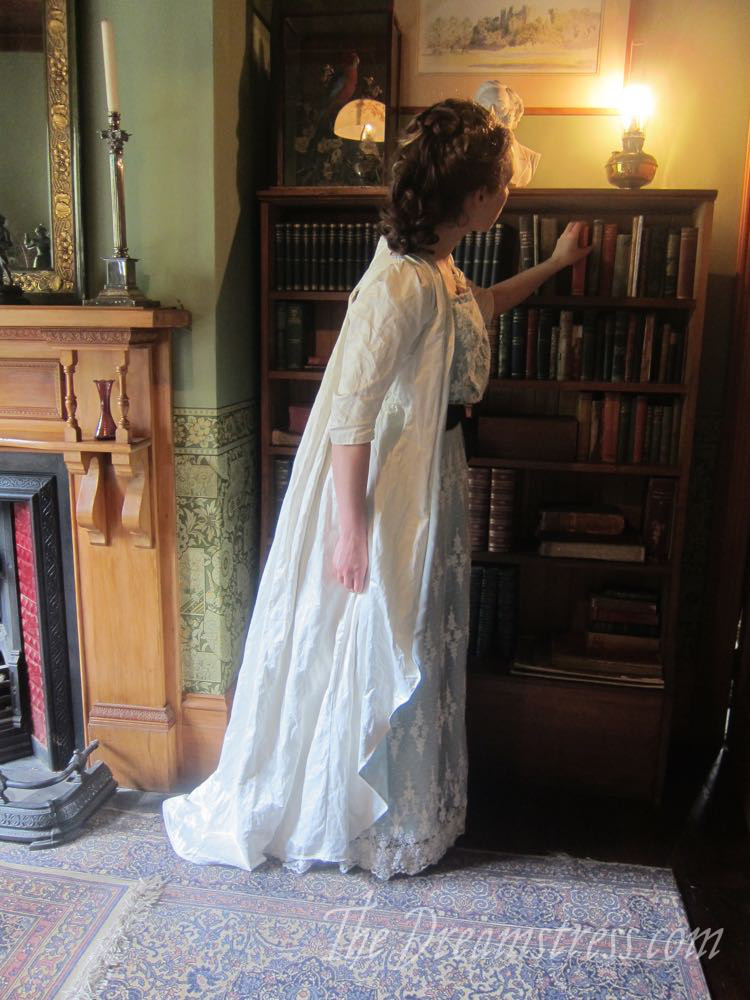
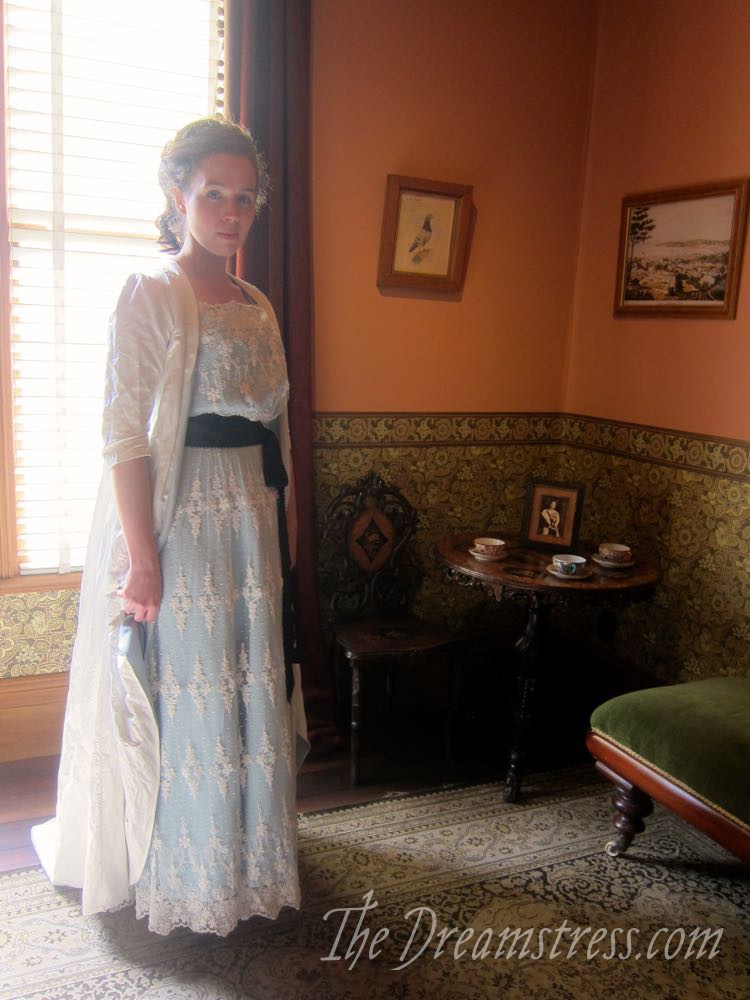
A tea gown at the Katherine Mansfield Birthplace Museum

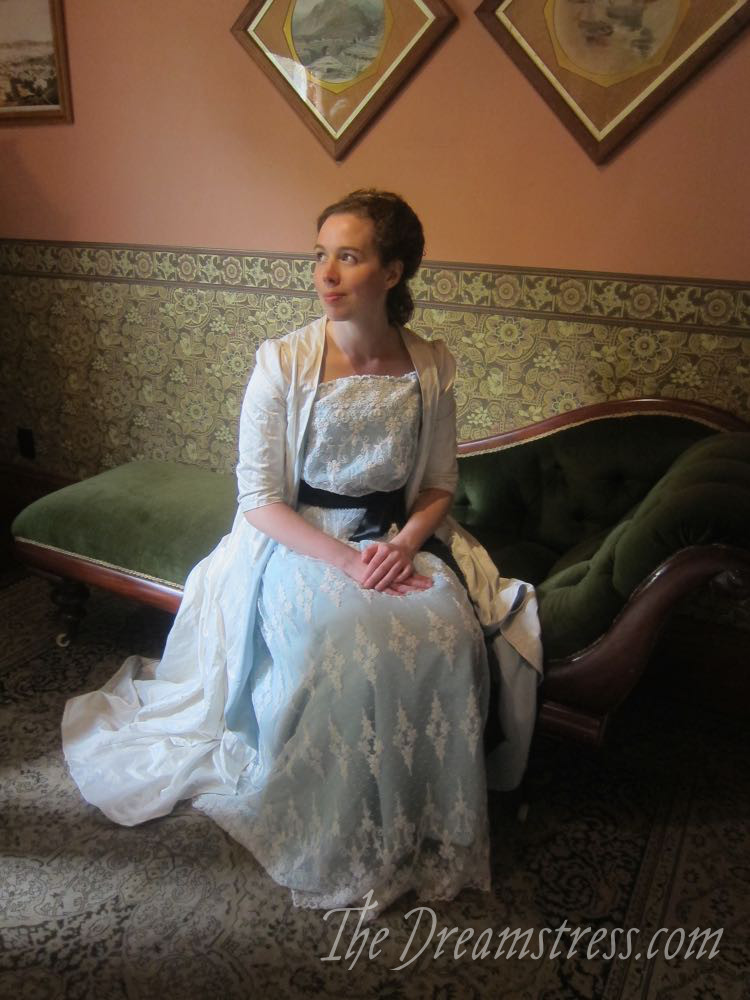
One of my favourite things about the photoshoot at the Katherine Mansfield Birthplace Museum was the opportunity to showcase my tea gown: it’s hardly been worn since I made it.

The tea gown was perfect for representing Mansfield’s mother.  Annie Beauchamp was an ambitious Wellington society hostess, and what could better represent the social aspirations and impractical elegance of the late Victorian society woman than a tea gown?

A photoshoot at the Katherine Mansfield Museum thedreamstress.com

A photoshoot at the Katherine Mansfield Museum thedreamstress.com

I absolutely love the photographs of Liz in the tea gown.  I feel they perfectly capture the slightly repressed, claustrophobic energy that I always imagine Annie having when I read Mansfield’s semi-autobiographical stories.  Well before I knew anything of Mansfield’s life I pictured  Annie as a woman who, had she lived today, would have had a quite interesting career.  Living in the 19th century she took the only acceptable path of marriage and motherhood, and then focused her energy on social climbing and on frenetically trying to create a ‘perfect life’ to try to hold back the constant suspicion that she was actually quite unhappy.  In the process I suspect she made her daughter quite unhappy in her own right.

A photoshoot at the Katherine Mansfield Museum thedreamstress.com

Quite a lot to put on poor Liz’s slim shoulders in terms of emotional baggage to emote!

A photoshoot at the Katherine Mansfield Museum thedreamstress.com

She did beautifully, and I think she looked beautiful as well!

A photoshoot at the Katherine Mansfield Museum thedreamstress.com


Rate the Dress: Regency daisy chain

Last week I showed you a full-steam-ahead 1870s dress, crammed with all the tassels, pleats, lacing and trimming it could possibly hold: right up to the parasol pocket.  I guessed correctly that a lot of you would go totally gaga over it, and there was an impressive swathe of 10s.  But a surprising amount of you held back and couldn’t quite commit to a full score, and so there were an equal number of 8 & 9s, and just a few who weren’t quite convinced, bringing the dress in at a still-impressive 9.2 out of 10.

Personally, I’m in the minority in  feeling that there is something not quite resolved about that dress: a bit of imbalance in the colour arrangement that kept my  eye stuck on one spot, and when I  really pulled back and tried to look at the whole  there were all these little tiny things that just niggled at me (and, like Cathy, I couldn’t dismiss the sneaking suspicion I would hate the front).  It’s like a movie where the actors are so good and the characters so appealing that you love it when you see it, and only later do you realise that there were massive plot holes all over the place.  I HATE that!  It’s almost worse than a bad movie, because the letdown when you figure out the plot holes is even harder because you liked the characters…

But I digress!

Let’s stick with the theme of over-the-top embellishments this week, but move from the 1870s to the 1820s, and from tasselled fringing to three-dimensional puffs.

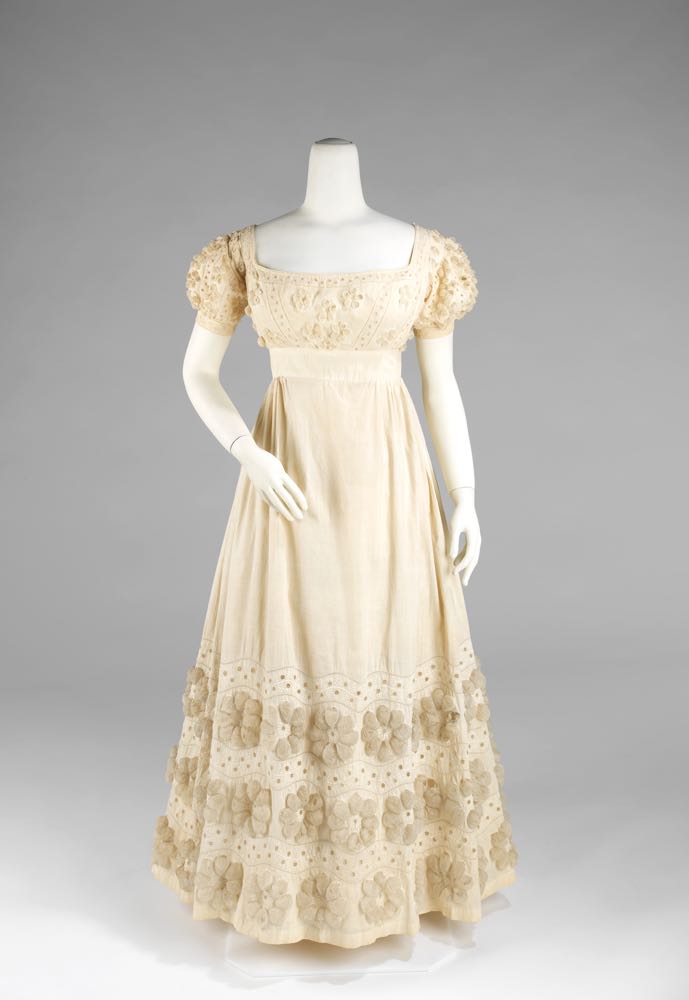
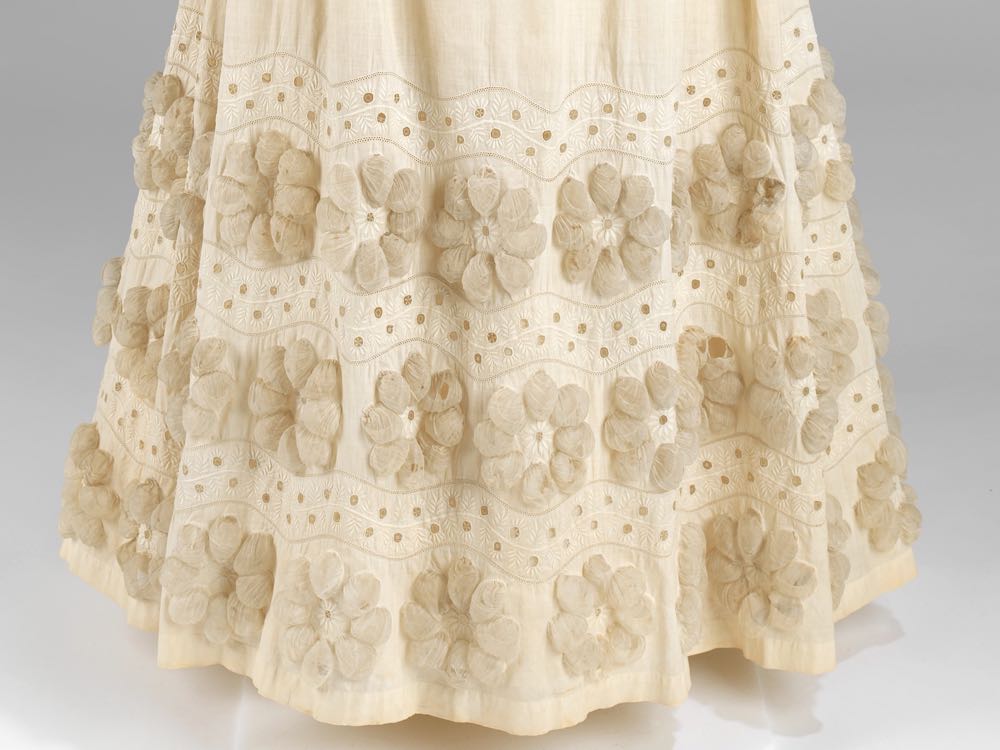
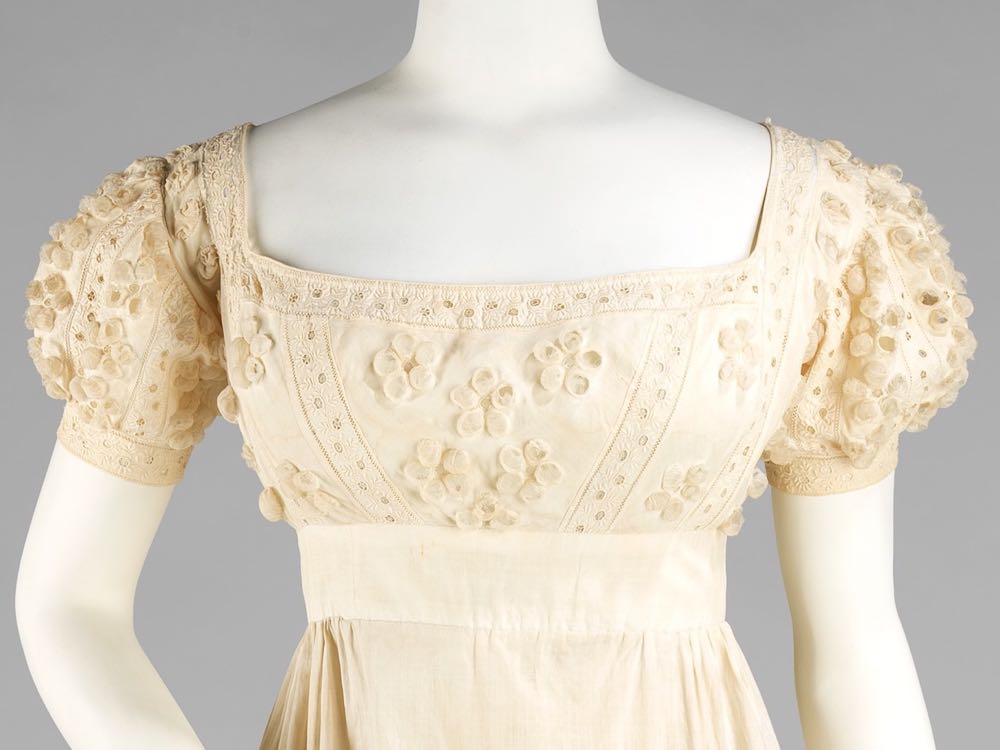
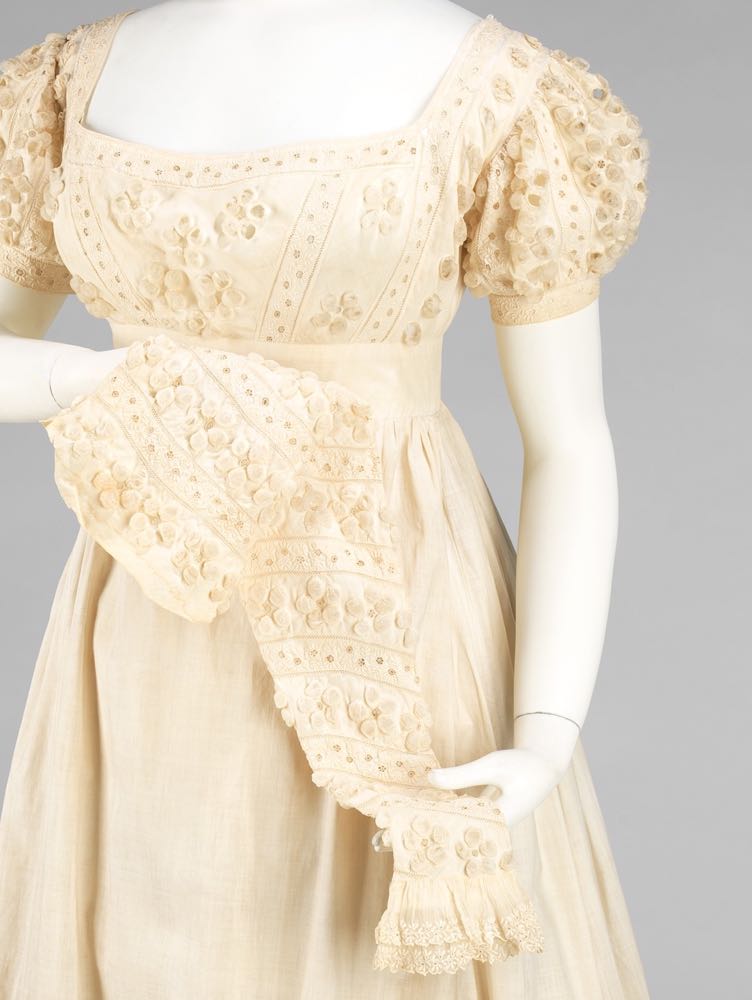
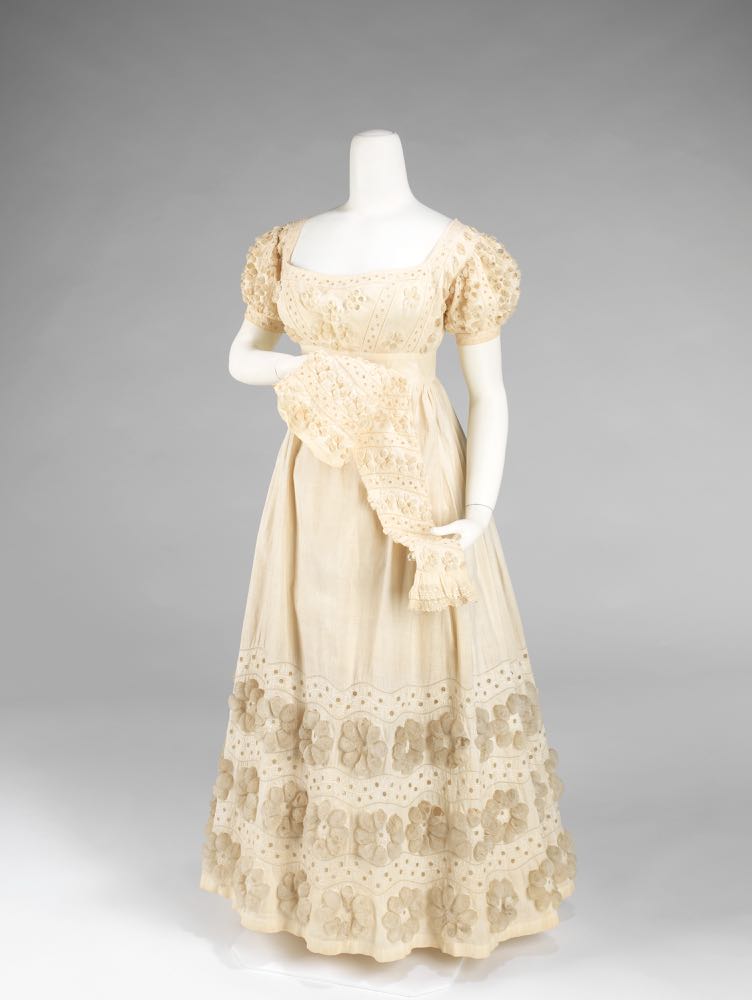
This  evening dress is in classic Regency white, with visual interest created through the use of whitework embroidery and gauzy three-dimensional daisies formed from puffs of delicate fabric.

The daisies are arranged in rows at the hem of the skirt, and smaller versions decorate the bodice and small puffed sleeves.

The daisy and embroidery decorations completely cover the detachable long sleeves of the dress, which made it suitable for a wider variety of occasions and weather. Sadly, only one of the long sleeves has survived, so we’ll just have to imagine what the dress looked like with both.

The all white of the dress is a taken from the classical Greek & Roman inspired fashions of the earlier Regency, but the puffed sleeve decorations give the dress the slightest nod to the Renaissance, another popular source for dress designs in the 1810s-30s.

What do you think?  You’ve been pretty lukewarm on all-white Regency frocks in the past, but does the superlative decorations on this one lift it out of the ordinary?  And does the pale palette and delicate ornamentation keep it from being too heavy and fussy: the frequent criticism levelled against the 1820s.  Or are the daisy chains just ridiculously twee?

Rate the Dress on a Scale of 1 to 10.

The HSF/M 2015: Challenge #11: Silver Screen

I know, I’m running dreadfully behind with this challenge!  I’ve already posted my finished project, and I haven’t even done an inspiration post yet!

I’ve already mentioned that screen costumes don’t really inspire me, but there is one big exception to that: I LOVE screen costumes from pre-1945-ish.

I love the ones that were meant to represent historically periods (which they usually do with fabulous flair and utter disregard to accuracy), and I love the ones in contemporary costume.  And most of all, I love the costumes where the designer just went mad and created something entirely random.

For inspiration, here are my 10 favourite period film costumes:

1. Greta Garbo in Mata Hari.  As a designer, Adrian is definitely my favourite.  He knew how to dress his actresses, and excelled at creating totally iconic costumes.  When it comes to shear mad fabulosity, nobody can beat Adrian!    I mean, look at this:
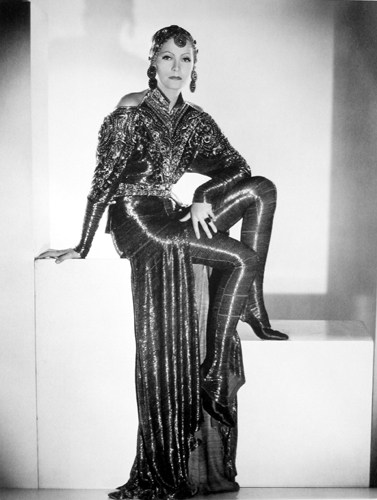
Greta Garbo in Mata Hari, costumes by Gilbert Adrian
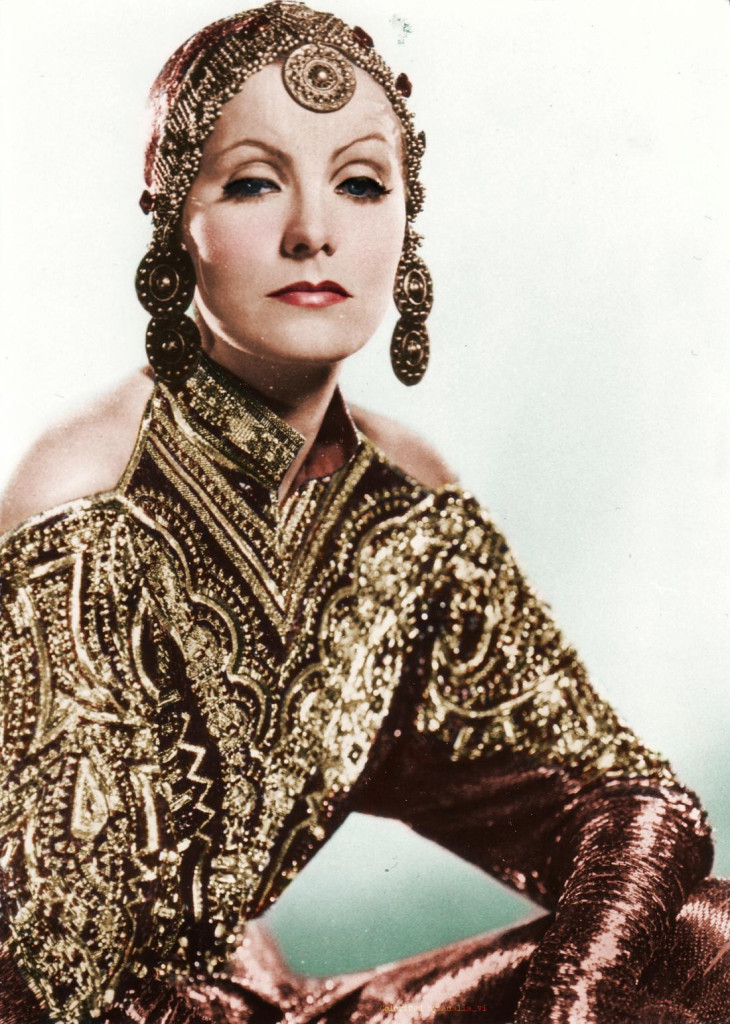
Greta Garbo in Mata Hari, costumes by Gilbert Adrian


Greta Garbo in Mata Hari, costumes by Gilbert Adrian

Greta Garbo in Mata Hari, costumes by Gilbert Adrian

2. Marlene Dietrich’s tuxedo from Morocco.  ADORE!
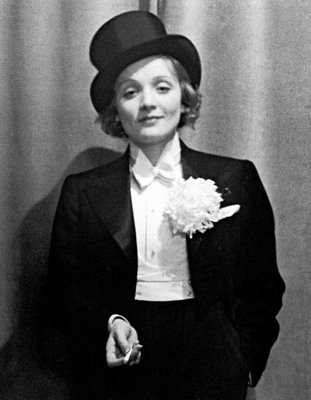
Marlene Dietrich in a tuxedo for 'Morocco' (1930)

Marlene Dietrich in a tuxedo for ‘Morocco’ (1930)

3.  Madge Bellamy in 1920s does 1670s – for Lorna Doon, and then White Zombie (because there is nothing like a good bit of costume re-use.
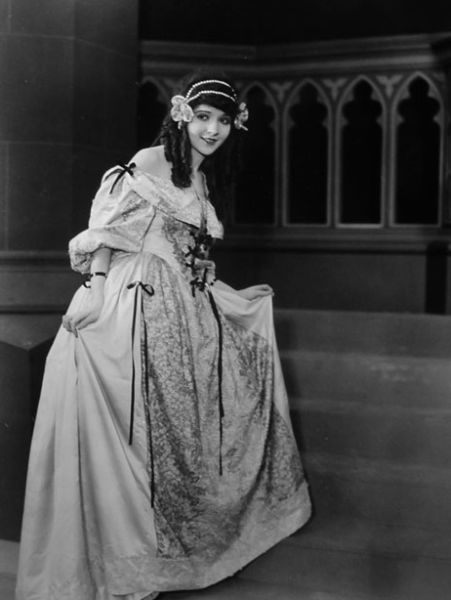
Madge Bellamy as Lorna Doone in 1922

Madge Bellamy as Lorna Doone in 1922

Madge Bellamy in 'White Zombie', inexplicably wearing a costume from Lorna Doon

Madge Bellamy in ‘White Zombie’, inexplicably wearing a costume from Lorna Doon

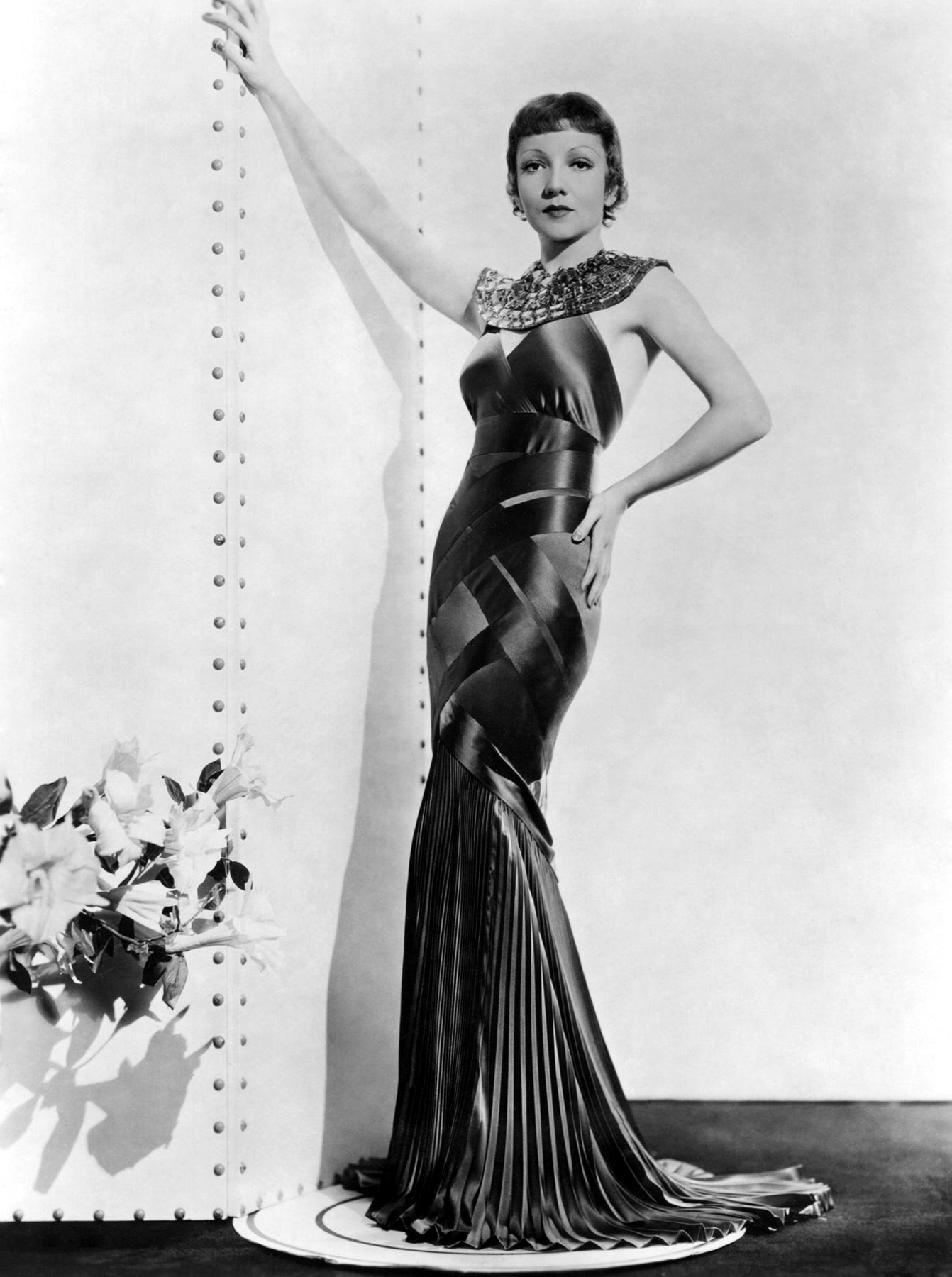
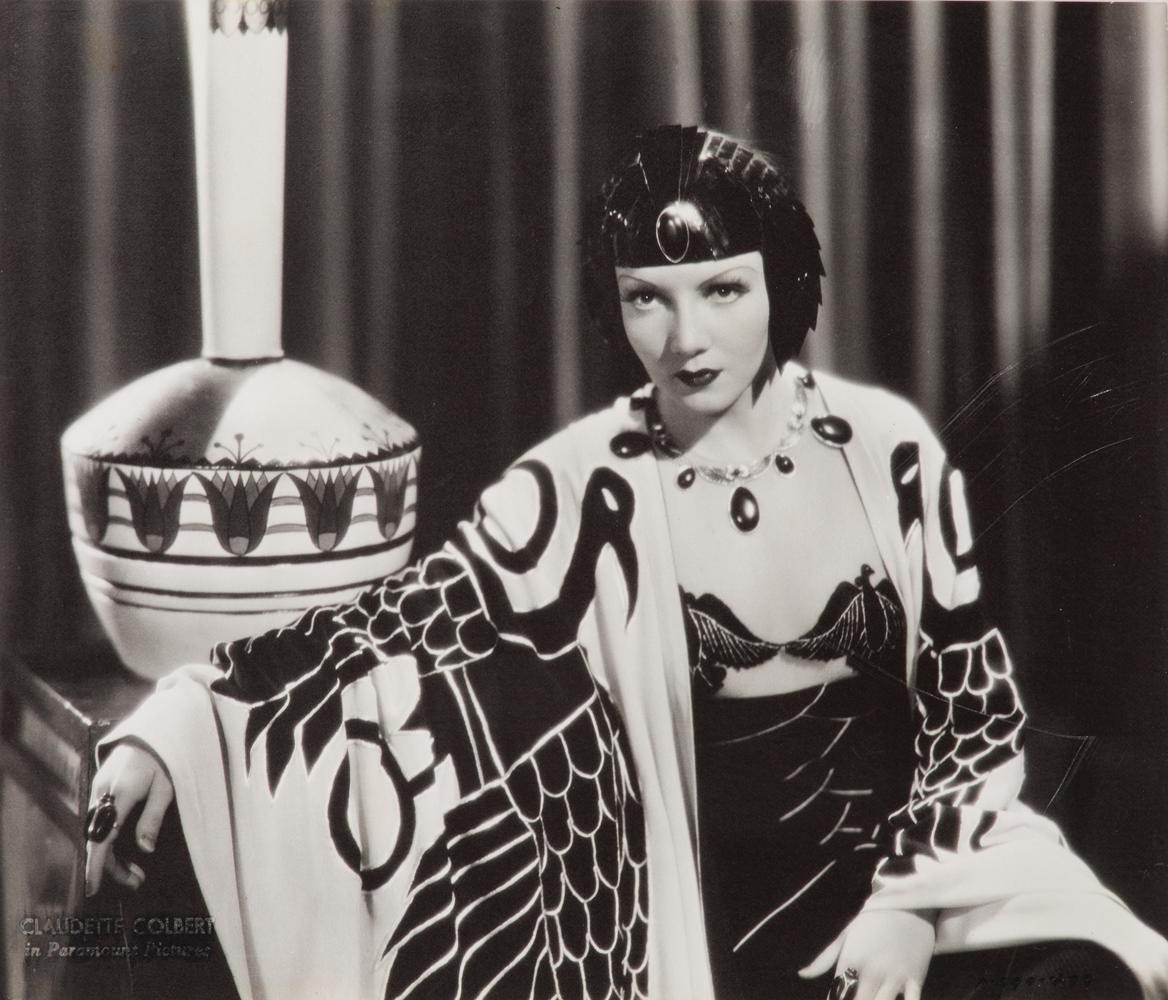
5. Claudette Colbert in Cleopatra.  How can you not love every single costume from this film!   Hyper-sexy 1930s with Egyptian accessories – they may not be remotely accurate, but they fit the film’s Cleopatra perfectly.  Literally and figuratively.
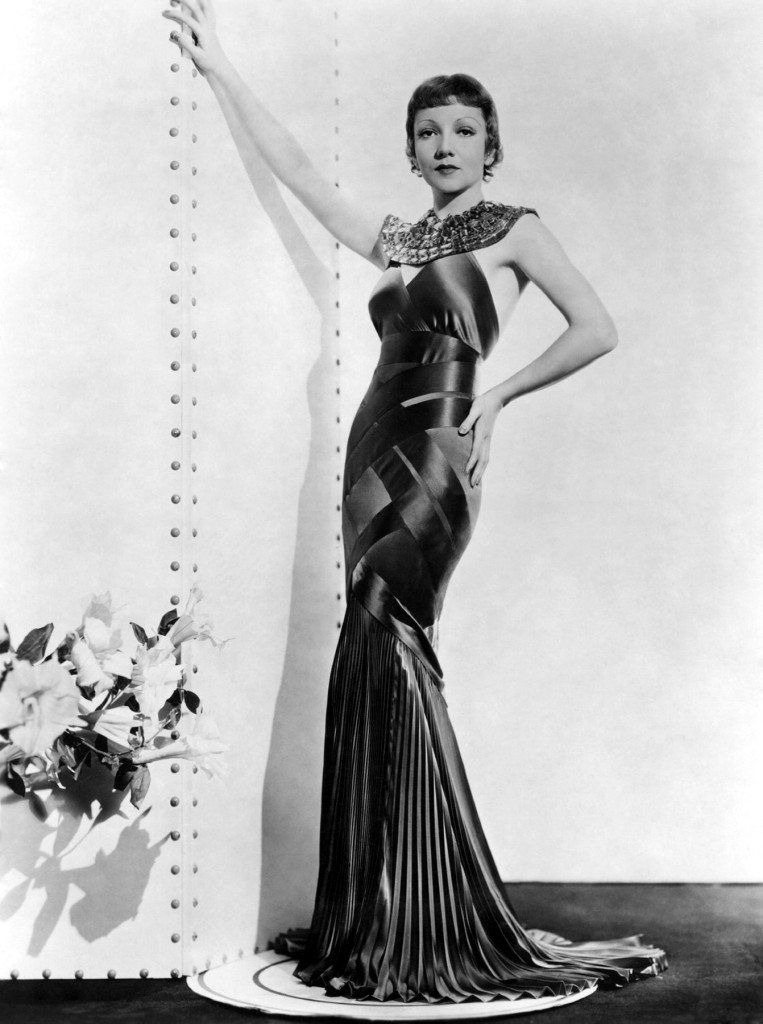
Claudette Colbert in a gown by Travis Banton for Cecil B deMille's 'Cleopatra' 1934

Claudette Colbert in a gown by Travis Banton for Cecil B deMille’s ‘Cleopatra’ 1934
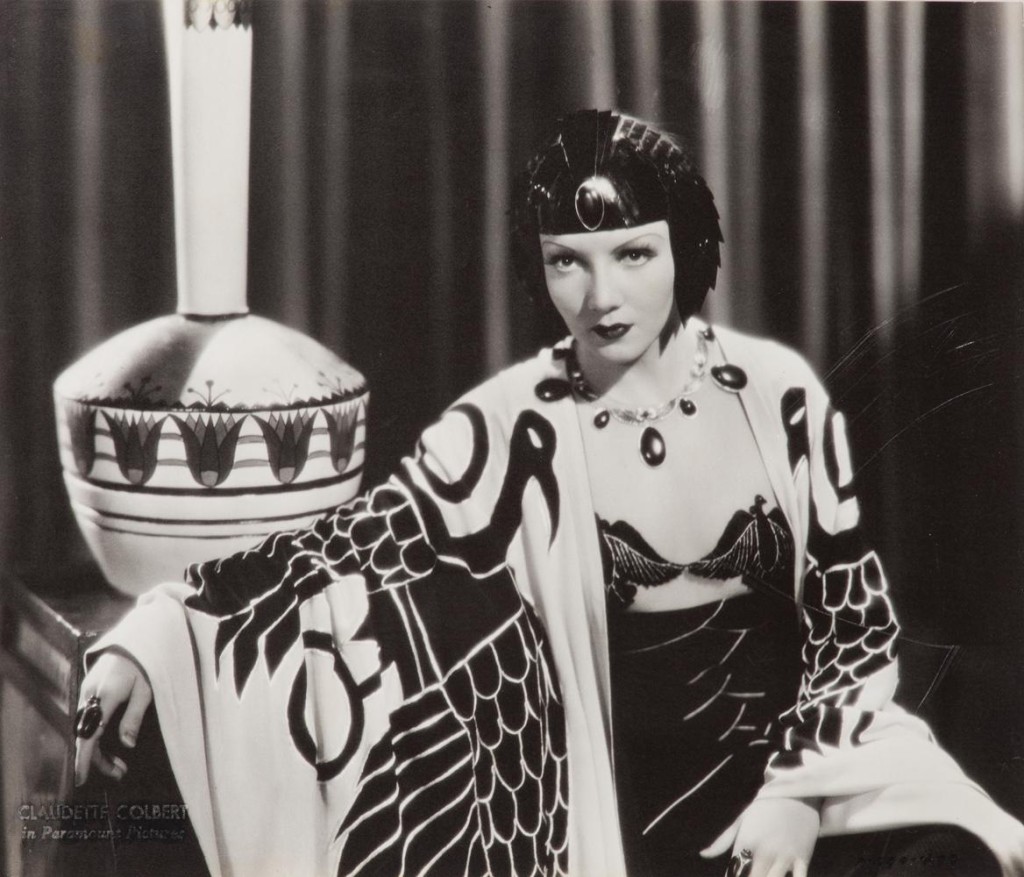
Claudette Colbert in a gown by Travis Banton for Cecil B deMille's 'Cleopatra' 1934

Claudette Colbert in a gown by Travis Banton for Cecil B deMille’s ‘Cleopatra’ 1934

6. Greta Garbo in Adrian (again) for A Woman of Affairs.  Adrian’s decision to put Garbo in a trench coat (previously an exclusively male garment) only made her look even more gorgeous, and made trench coats fashionable for women (YAY!).  Plus, the plaid lining?  Tres chic!

Greta Garbo in Adrian in a Woman of Affairs (1928)

Greta Garbo in Adrian in a Woman of Affairs (1928)

7. Joan Crawford in the famous revolving door dress from 1932’s Grand Hotel, because…well…this pretty much answers it all:
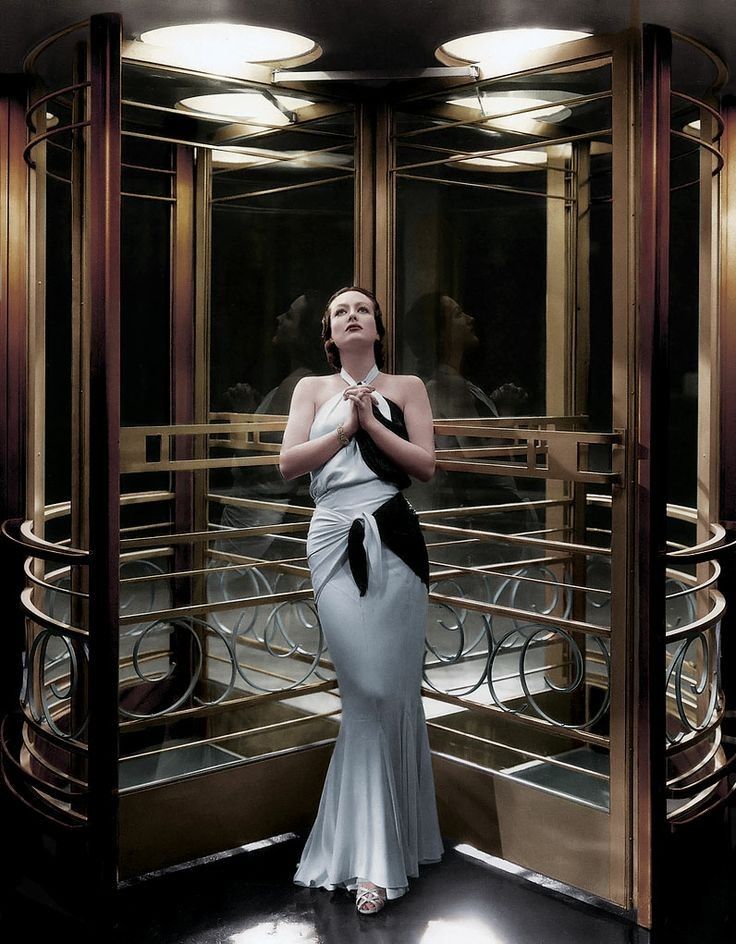
Joan Crawford in revolving door (1932)

Joan Crawford in Grand Hotel  (1932)

8. 1930s Riding Outfits.  Cheating every so slightly, because I can’t find the actual image I want.  Fay Wray wears a gorgeous riding ensemble  in Mills of the Gods, but this is the best image I can find.  So here is Madge Belamy in an equally cute riding outfit, but I don’t think she ever wore it onscreen:
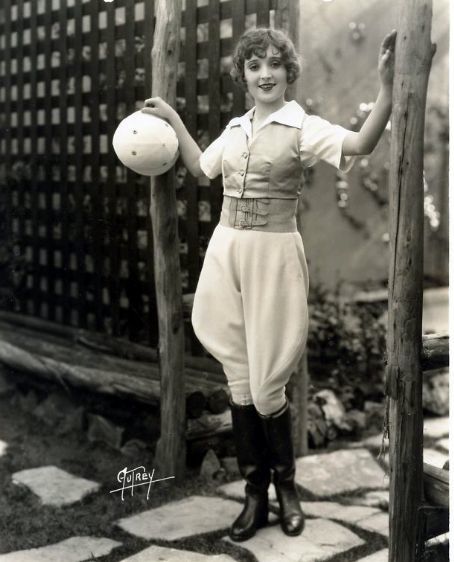
Madge Bellamy, 1920s

Madge Bellamy, 1920s

9. Joan Crawford in the legendary white Letty Lynton gown by Adrian.  This was the original film dress that launched a thousand copycats, but due to a copyright battle, the film was banned and the completely, fabulously, utterly, wonderfully ridiculous dress can only be seen in stills.
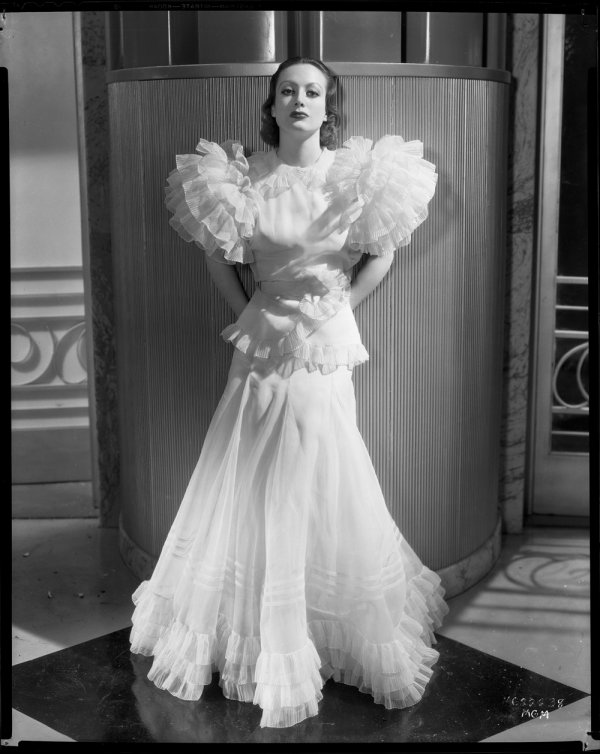
Joan in Adrian's legendary Letty Lynton gown (1932)

Joan in Adrian’s legendary Letty Lynton gown (1932)

10. And finally, while I have serious problems with the book and film, I still can’t help loving Vivien Leigh in the famous green picnic dress from Gone with the Wind:

Vivien Leigh in Walter Plunkett's famous picnic dress for Gone WIth the Wind (1939)

Vivien Leigh in Walter Plunkett’s famous picnic dress for Gone WIth the Wind (1939)