Latest Posts

The HSF/M 2015: Favourites for Challenge #7: Accessorise

Some of the challenges we choose for the Historical Sew Monthly are meant to ask you to really push yourself, some just call for something big and spectacular, and some of them provide the opportunity for a little breather: the chance to do something small and simple, while you gear up for the next big challenge.  Or not!  Sometimes people make the most phenomenal, amazing, detailed, elaborate things for the challenges I thought would be small ones.

Accessorise is definitely designed to be an easier, breather challenge, but that doesn’t mean there wasn’t a whole range of fascinating, fantastic, creations: some simple, some very elaborate indeed.

I made four  items for Accessorise, but they were mostly on the simple end of the spectrum (and two of them were rather late too…).  First there was a set of Baroque pearl accessories: a necklace  (not in baroque pearls) and earrings (in baroque pearls – so they are Baroque, baroque pearls 😉 ).  I started my medieval circlet and veil  during the challenge, but didn’t get them finished quite on time, but they are done now!

For my favourites I select items that really represent the spirit of the challenge: to complete a period look with the right accessory, to research, stretch yourself, learn more, sew better, and get something made.

There are always amazing things that I can’t show you (because almost all the submissions were AMAZING) I do recommend you check out the comments under the blog post and the photos in the FB album (yep, you do have to be a member to see it, yep, if you ask to be a member we’re going to ask you some questions, and yep, it might take us a few days to answer, but if you are really interested in the HSF, as a participant or active cheerleader, we’d LOVE to have you) to see the rest of the fabulous things that were made.

And now, my  favourites!    Entries with photos link to FB, entries without link to the blog post of the maker.

  1. Anna’s medieval aprons:  I love that these aren’t pretty but yet they are so beautiful, because they make the whole picture of the outfit look so right. They make me happy through and through (and I want my own!).
  2. Hvitr’s paleolithic Natufian headband:    Every time Hvitr makes something, I learn something.  This headband is no exception – I’ve been introduced to a whole host of new techniques and a new culture.
  3. Allison’s 1840s double night-cap:  If you didn’t know, you’d never realise this is a period item, so it’s a great illustration of how little fashion and human needs actually change (and as far too many Kiwis can tell you, nightcaps like this are really useful in period houses without modern insulation and heating!)
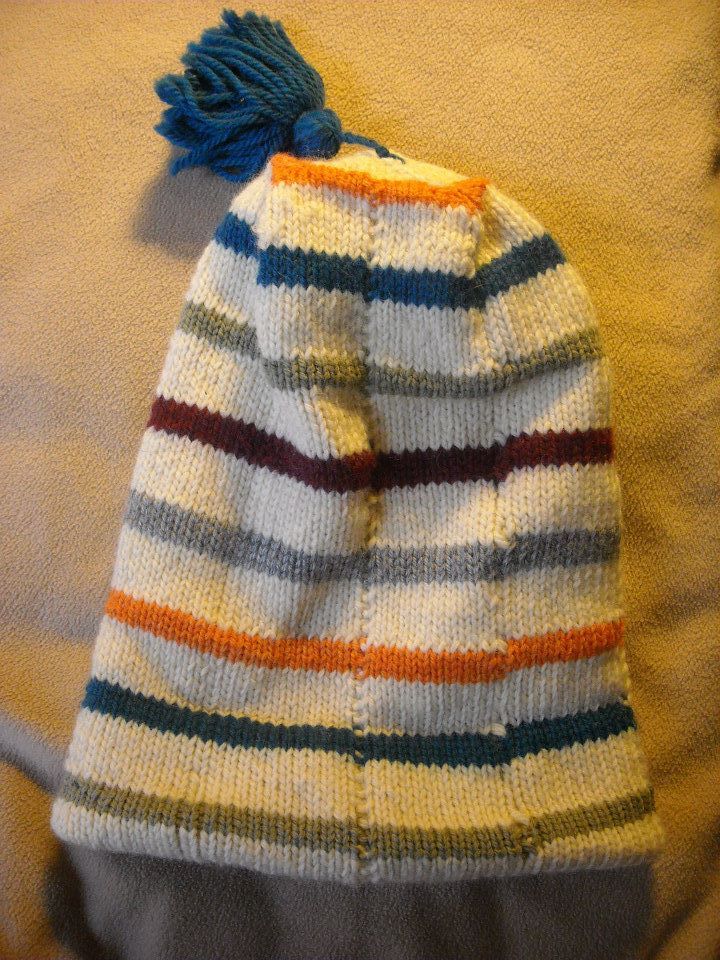
    The Historical Sew Monthly Challenge #7 Allison's 1840s Double Night-cap thedreamstress.com
  4. Sharon’s 1780 cap:    The details of this make me absolutely weak at the knees!  It’s so exquisite!  It really, really shows how much really paying attention to the period and recreating the details look make the period look.
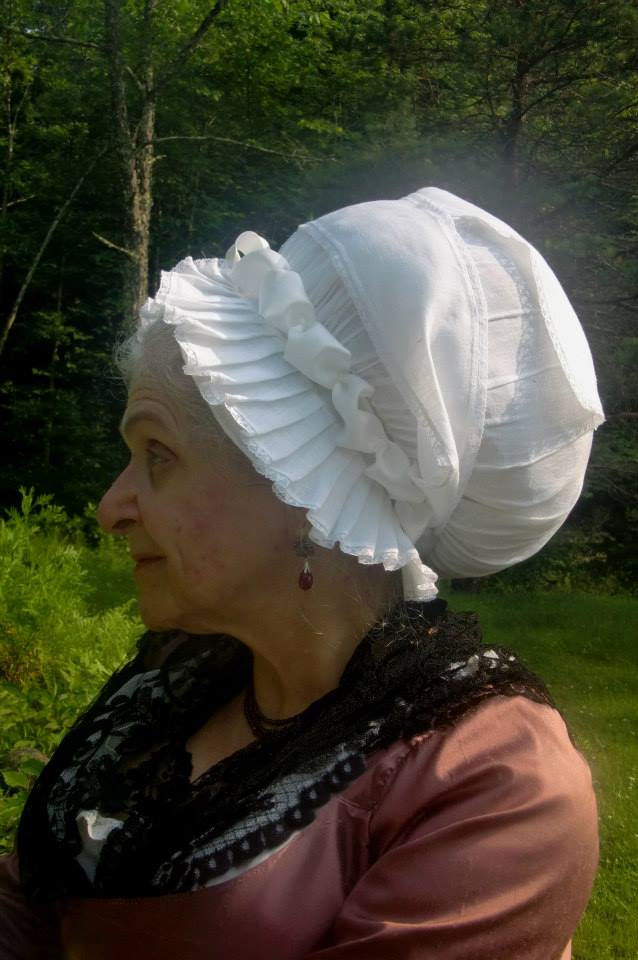
    Historical Sew Fortnightly Challenge #7 Sharon's 1780 cap thedreamstress.com

  5. Hana Marmota’s Fichu en Marmotte.    Because guys, it’s a fichu en marmotte!

For the rest of the favourites posts see:

Favourites for Challenge #6:  Out of Your Comfort Zone

Favourites for  Challenge #5:  Practicality

Favourites for  Challenge #4: War & Peace

Favourites for  Challenge #3: Stashbusting

Favourites for  Challenge #2: Blue

Favourites for  Challenge #1: Foundations
A trio of Medieval accessories

You’ve already seen my medieval dress, and a costume-y medieval belt, but I’ve been working on much more historically accurate accessories.

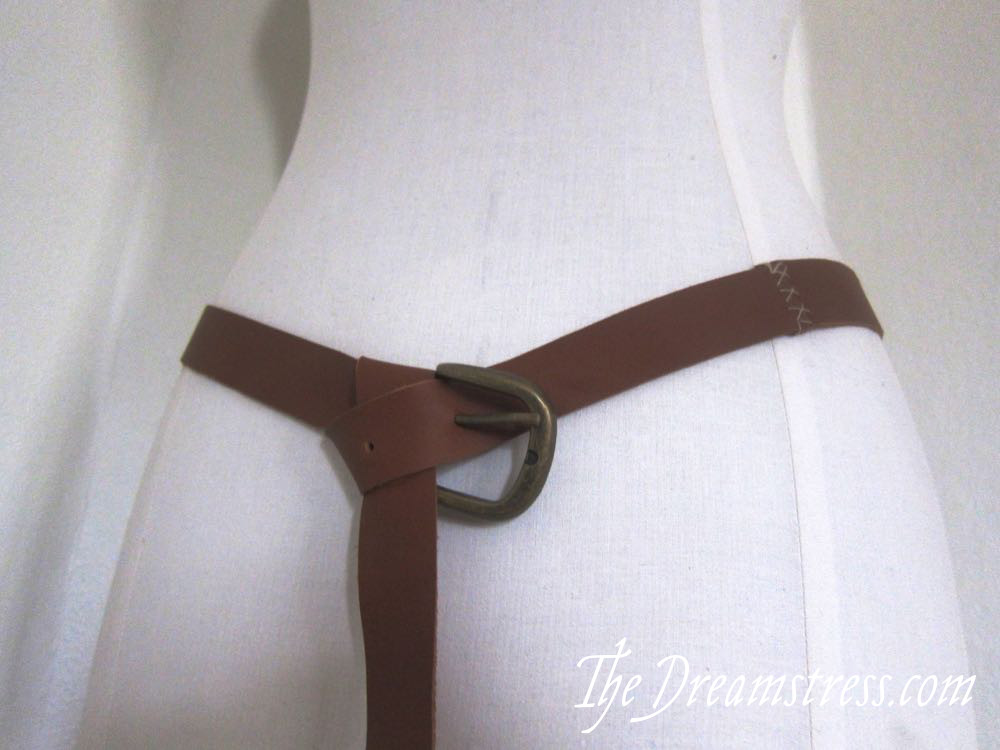
My first belt was fun and sparkly, but I wanted a proper belt:

A Miramar Gothic Dress thedreamstress.com08

(shown, with complete lack of properness, with my Miramar Gothic dress)

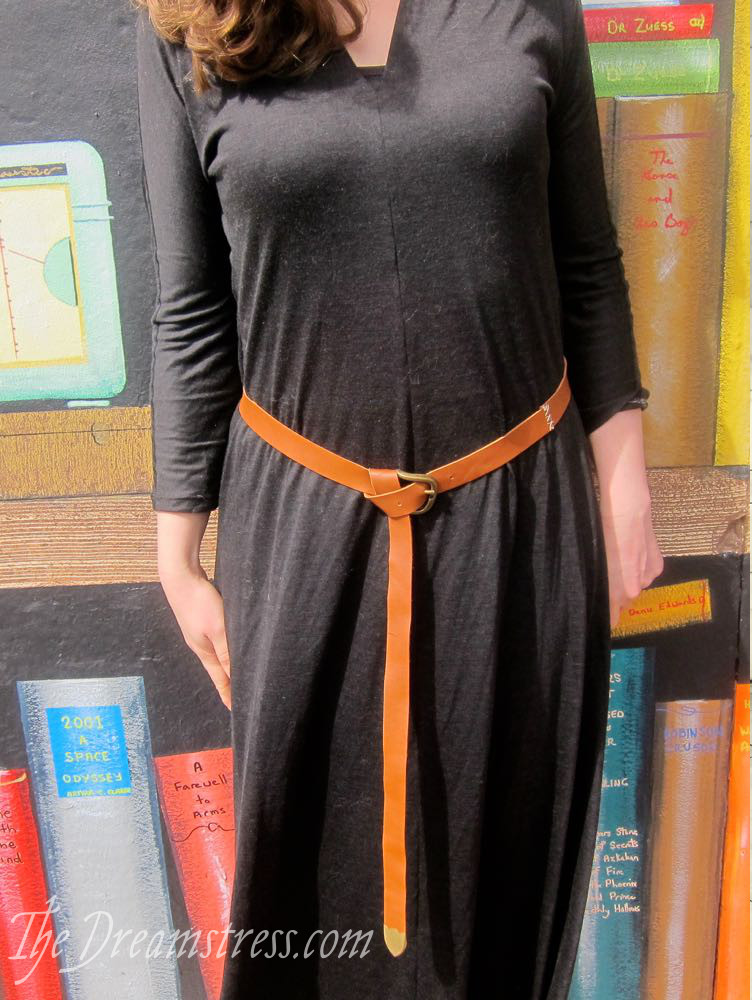
I made the belt from two strips of soft leather in mid-brown.  I couldn’t find a leather scrap within my budget that was long enough for a single strip (a $200 hide is out of the question at the moment), so I joined the two strips with a bit of stitching.  I have no idea if a leather join like that is accurate, but I suspect it’s plausible.  And it reminds me of the  mended sashes of the sword-wearers of Damar, so, win!

A medieval belt thedreamstress.com

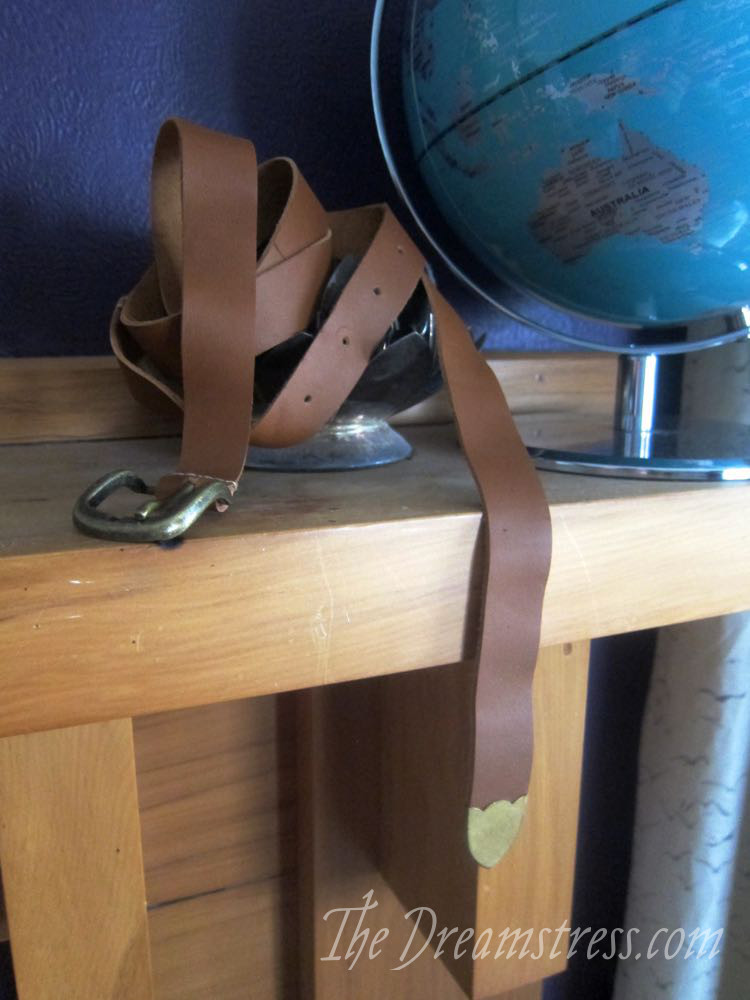
I used a vintage English-made brass buckle I found at an op shop: it’s not quite right for the 14th century, but isn’t too bad.  I had a stroke of luck the day after I cut my belt, but before I’d finished it.  I found a crappy pleather belt at an op shop with a cool brass end: and it was the perfect width for my belt.  Score!

A medieval belt thedreamstress.com1

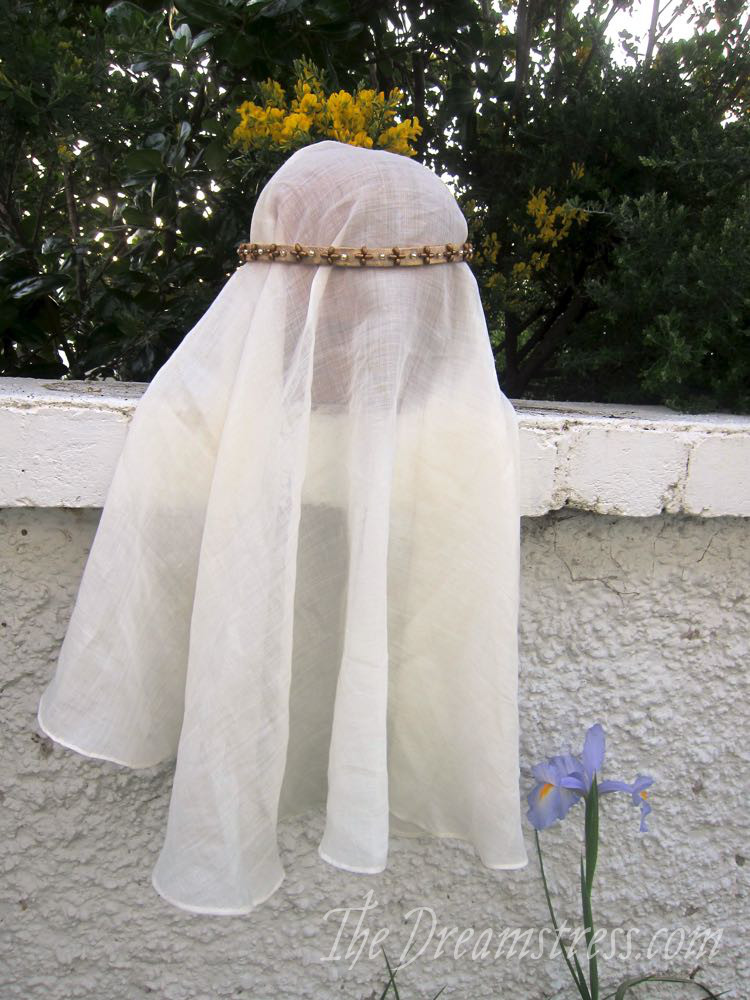
I’ve also made a proper veil:

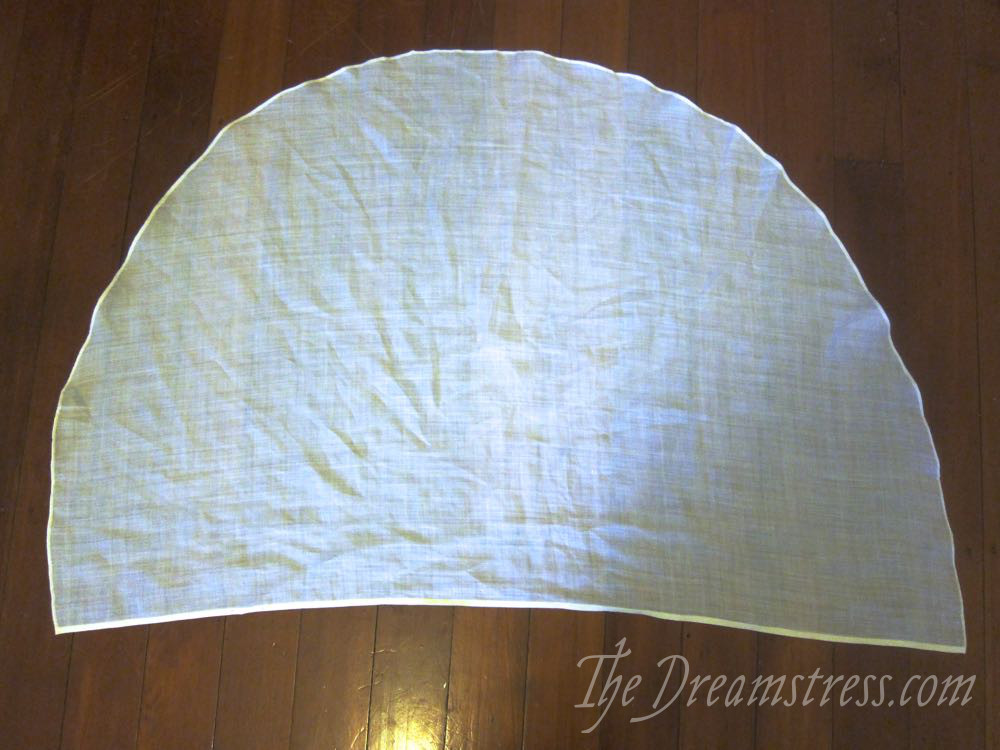
A medieval linen veil thedreamstress.com

The Fabric Store got in a bolt of very fine linen a few years ago, and I knew I’d regret it later if I didn’t buy some.  I was definitely right, because I couldn’t find it the first time I went looking for it for a veil, and spent a week with the devastating conviction that I’d decided against buying the fabric after all!  Luckily, another search revealed it had slipped in between the folds of another fabric.

A medieval linen veil thedreamstress.com

The linen is much too fine for a chemise, but it’s perfect for a noblewoman’s veil.

A medieval linen veil thedreamstress.com

I used the guide at Som När Det Begav Sig  for the veil dimensions – mine is 107cm long x 73cm wide: a tiny bit longer and wider, but I like that it isn’t precise dimensions.

A medieval linen veil thedreamstress.com

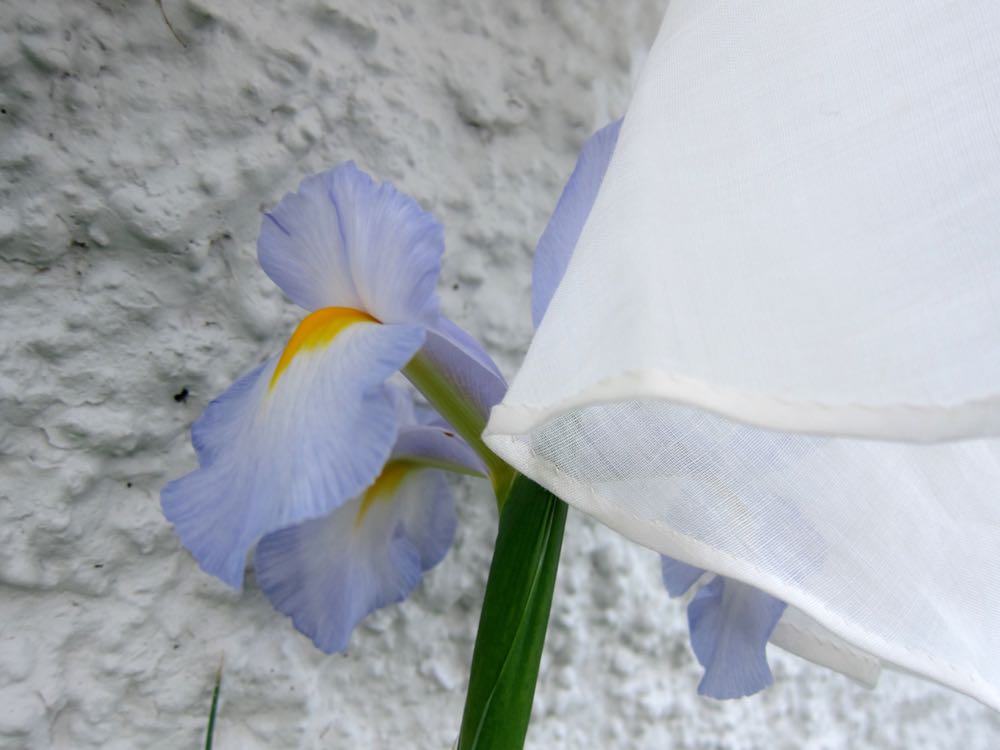
I hemmed the curved edge with a tiny rolled hem, but I just used the selvedge edge for the straight edge, because erk, rolled hemming!  Also, I’m pretty sure using the selvedge edges is period accurate.

A medieval linen veil thedreamstress.com

And finally, to go with the veil when I feel like being posh, a circlet:

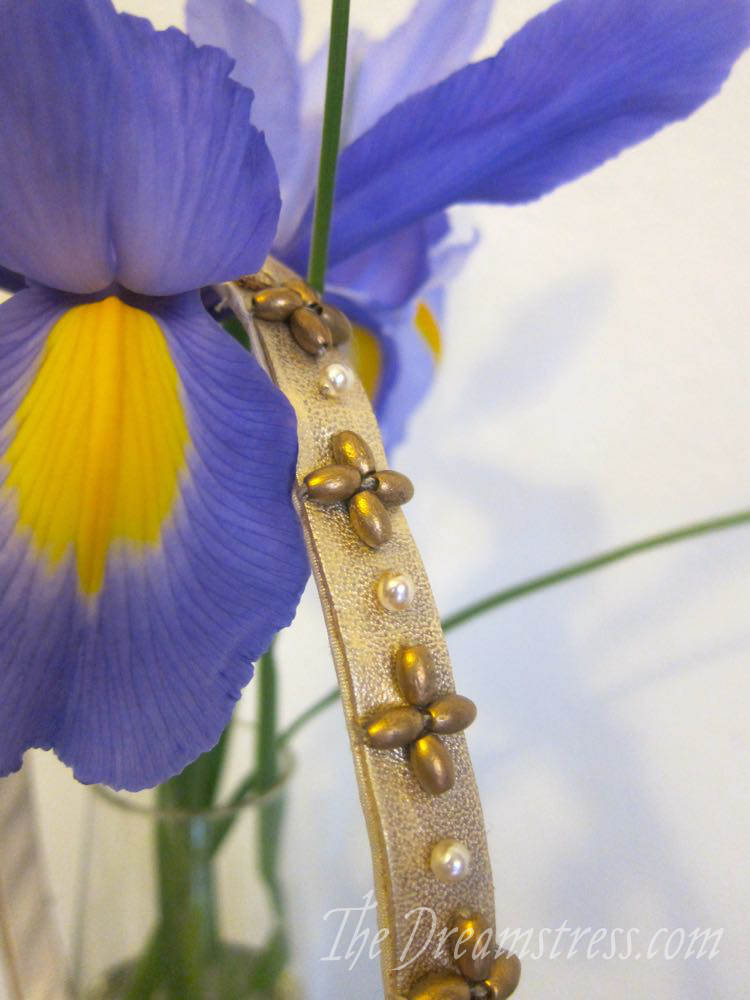
A medieval circlet thedreamstress.com

I used the same beading technique for the circlet that I used on my costume belt.

A medieval circlet thedreamstress.com

The circlet was a little too soft and flimsy the first few times I wore it, so I lined it with silk and a circle of pasteboard.  The lining is caught to the beading at every point where it reaches the edge of the leather.

A medieval circlet thedreamstress.com

I have no idea if any of the techniques I used in the circlet are historically plausible.

So, now I just need to find the time to put on my ca. 1369 dress again and show this all off!

The Challenge:  #7 Accessorise (veil & circlet)  #9 Brown  (belt)

Fabric:  75cm of linen for the veil ($10),  a scrap of silk for the circlet (from my scrap bag), and scraps of leather for the belt & circlet ($8).

Pattern:  None for any of them.  The veil was helped by the information  at  Som När Det Begav Sig, a friend in the SCA showed me some belts, and I used period images and materials that would have been available in period for the circlet (though I suspect the decorations would have been studs, not beads).

Year:  last half of the 14th century.

Notions:  silk thread (veil) (>$1),  faux pearl beads, gilded woods beads, linen thread and pasteboard (circlet) ($2), brass findings (belt) ($2).

How historically accurate is it?:  The  veil is close to  100%, the belt is pretty good, but not perfect (especially not if the mend is totally inaccurate), so let’s say 75%, and the circlet is lucky if it 50%.

Hours to complete:  30 minutes for the belt, 2 hours for the circlet, 3 hours for the veil (blasted rolled hem).

First worn:  I wore the circlet unfinished for the historical dinner & my medieval photoshoot, and the belt with the Miramar Gothic dress, but I haven’t managed a proper wear + photoshoot yet.

Total cost:   $6 (belt), $10.50 (veil), $5 (circlet).

Rate the dress: 1880s 18th century remake

Last week I showed you a blue-green & black 1860s dress with embroidered embellishments & a dash of Renaissance inspired historicism.  Your overall reaction to the dress was pretty positive – the vast majority of you either loved it, or felt that it was rescued from the potentially deadly frumpyness so common in 1860s dresses by the perfect colour combination and above-average embellishment.

But nobody liked the collar!

Collar aside, the dress came in at an extremely impressive nice round 9 out of 10.

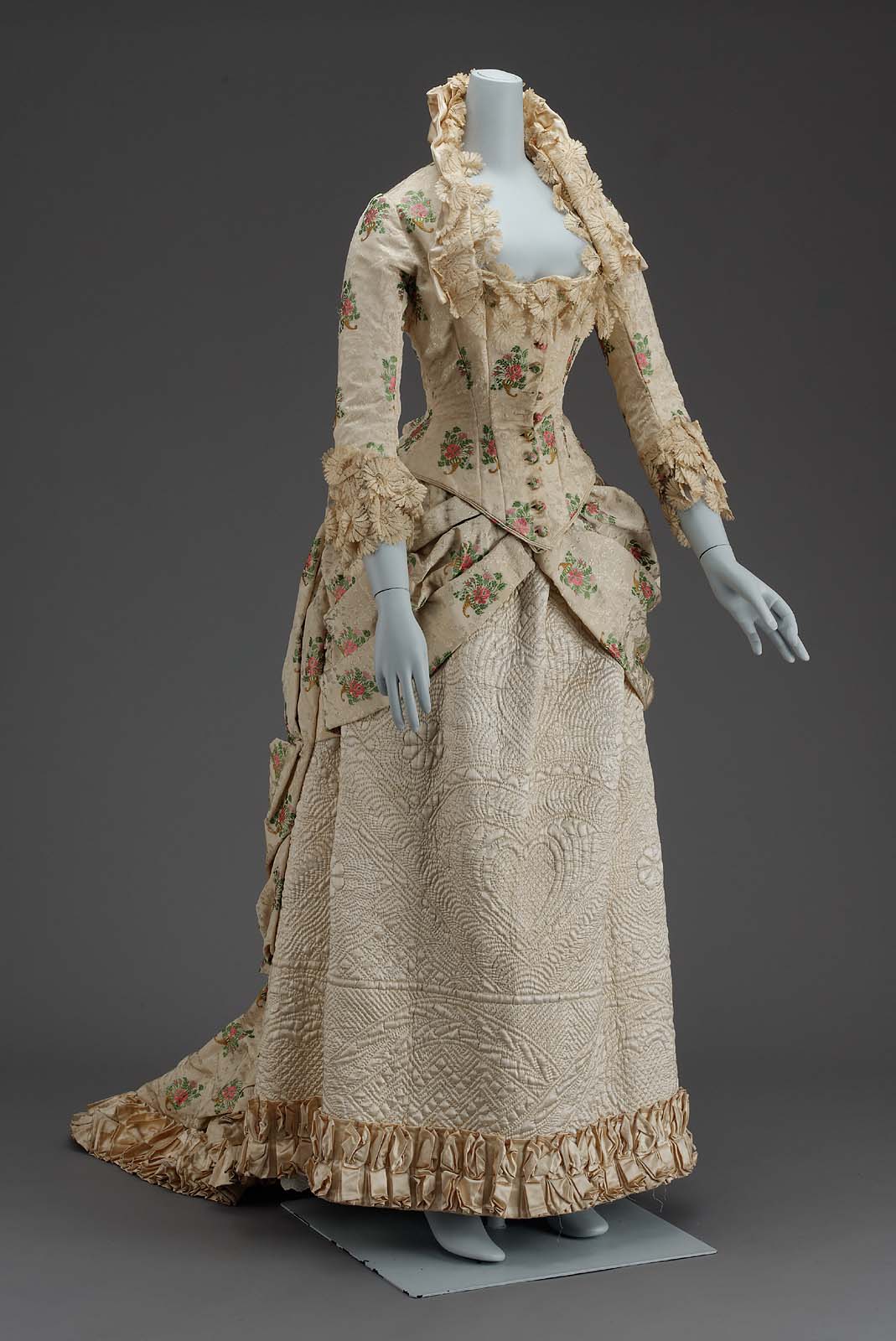
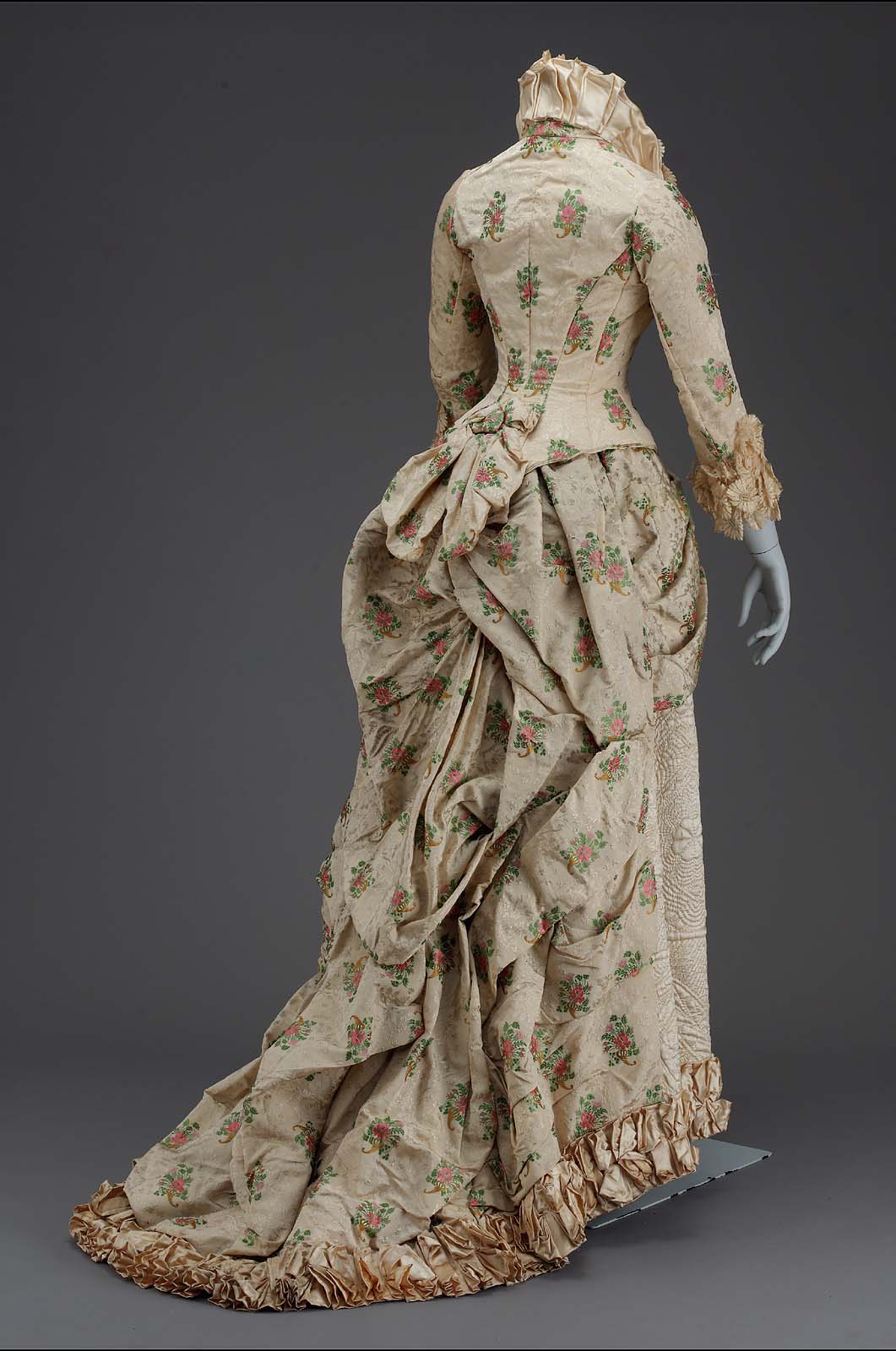
I’m sticking with the historicism theme of last week, but putting a different twist on it.  Many 1880s dress took inspiration from the 18th century, but this one from the MFA Boston has actually taken an 18th century quilted petticoat, altered the shape to fit the current styles,  and used it as the entire skirt of the  gown.

The quilted petticoat has been paired with a bodice and trained overskirt of ecru silk with brocaded green and red flowers,  and trimmed with pleated silk in palest gold, and fascinating three-dimensional floral trim (I think it’s a lace, but can’t zoom enough to see if it’s lace or a very lightweight embroidered silk).  The pleated collar and heavy trim around the neckline are a clear nod to 18th century fichu.

The low, square neckline of the dress and the slightly paniered effect of the overskirt further evoke the 18th century, but the overall gown is decidedly 1880s in its silhouette and sensibilities.

It’s definitely slightly flattened and crushed with age, so you have to imagine it fresh and bouncy.  What do you think dear readers?  Has the re-use given the petticoat another shot at elegance and glamour, or is the whole thing a twee travesty: slightly too little Bo Peep for good taste?

Rate the Dress on a Scale of 1 to 10