Latest Posts

The HSF/M 2015: Challenge #9: Brown

The theme for the Historical Sew Monthly Challenge #9 is Brown: make something in any shade of brown.

Brown is not generally my favourite colour, but I’m getting quite ambitious about this challenge, and have actually gotten very excited as I’ve researched it, so I may come around to brown yet!  And I’ve found so many beautiful things in finding pieces for the inspiration post!

Brown should be an easy one for everyone to do, because brown has been such a popular colour throughout history: there is almost no period, no people, no rank or station that hasn’t worn brown.  Hopefully  there will be entries to represent all sorts of periods, places, levels of stations, and all shades of brown!

And now, for some inspiration…

True browns are less common in Medieval illustrations than they were in Medieval clothing, simply because the illustrators went for bright shades for visual effect, and coloured illuminations are more likely to depict the upper classes, where brighter colours were a status symbol.  Plus, some colours  have faded to brown over time.  But I’m pretty sure Atalante’s frock was always brown, and isn’t it beautiful with her red under-gown!
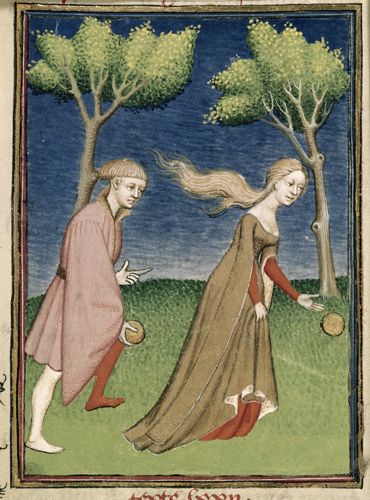
Queen's Book, fol. 128. Hippomenes and Atalante.

Queen’s Book, fol. 128. Hippomenes and Atalante.

For another high-status brown, here is Jan Janz Mostaert’s beautiful Portrait of a Lady.  I love the way the rich brown brocade of her over-dress mirrors the rich brown of the fur lining, and complements the pinks of her under-dress.  Delicious!

Fawn and copper were both very popular colours in the mid 17th century, as these two Lely portraits show admirably:

Elizabeth Wriothesley, Countess of Northumberland, later Countess of Montagu (1646-90), by Peter Lely, c. 1668
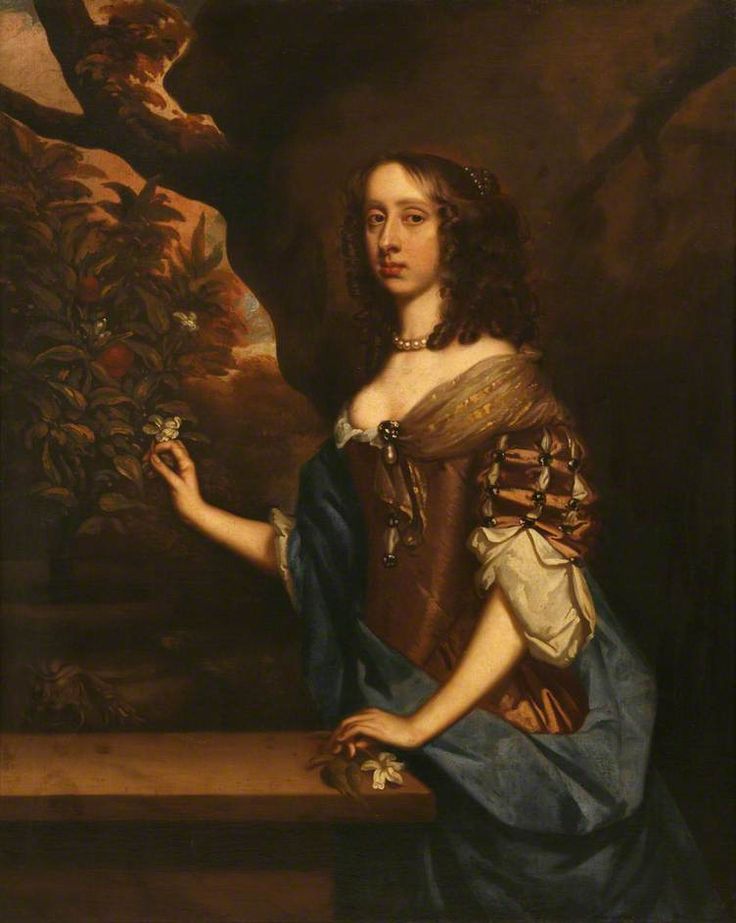
Elizabeth Wriothesley, Countess of Northumberland, later Countess of Montagu (1646-90), by Peter Lely, c. 1668

Jemima, 1st Countess of Sandwich, studio of Peter Lely, ca. 1660; (c) Mount Edgcumbe House; Supplied by The Public Catalogue Foundation

Jemima, 1st Countess of Sandwich, studio of Peter Lely, ca. 1660; (c) Mount Edgcumbe House; Supplied by The Public Catalogue Foundation

I absolutely adore this early 18th century jacket, the  beautiful bizarre silk it is made from, and the masterful use of the fabrics pattern in its design:
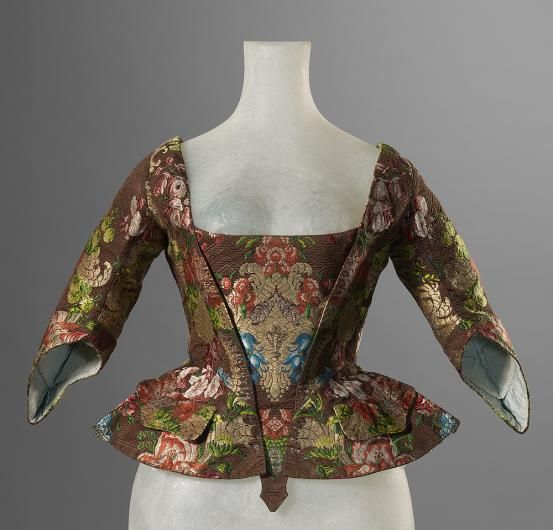
I’m still obsessed with 18th century chine a la branche silks, and I’ve noticed that they all come in shades of palest tan and the most classic 18th century shade of all, the pink-brown  known as puce.

Robe à la Francaise (detail), French, 1760s, chine silk, LACMA

Robe à la Francaise (detail), French, 1760s, chine silk, LACMA

18th century menswear can be a bit over the top, but this jacket  is both severe and fabulous.
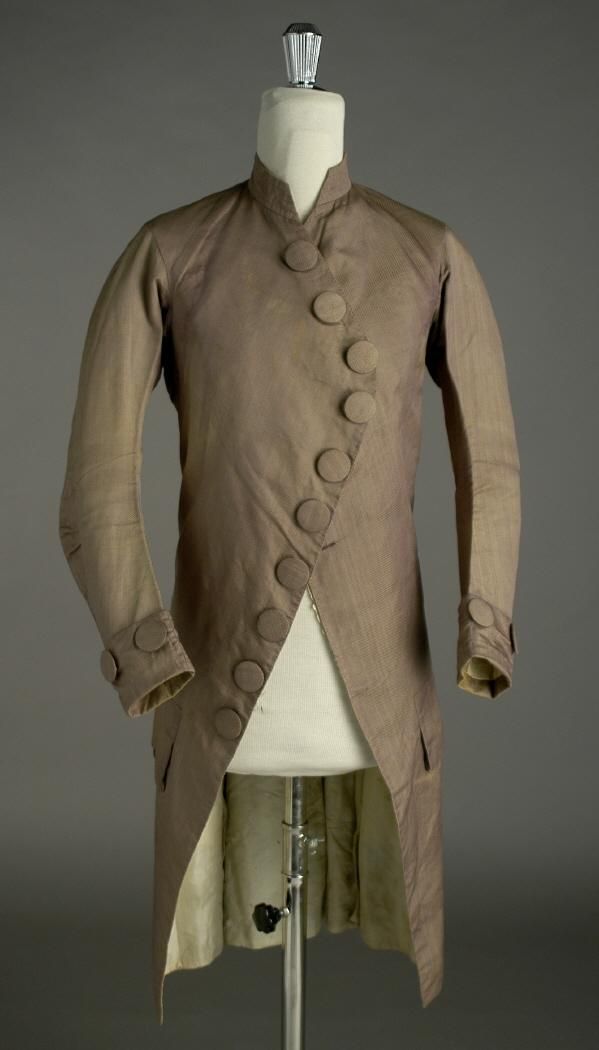
Lovely!

Brown was, of course, a common colour for stays and other under-things in the 18th century, and the working classes made all manner of garments, including shifts, from unbleached  brown linen.

As with all colour challenges, the item doesn’t have to be exclusively brown, as long as the brown component is a significant part of it. This dress may be predominantly lilac, but  the beige flowers give it interest and visual impact, and even the briefest description is likely to say that it is lilac and light brown.
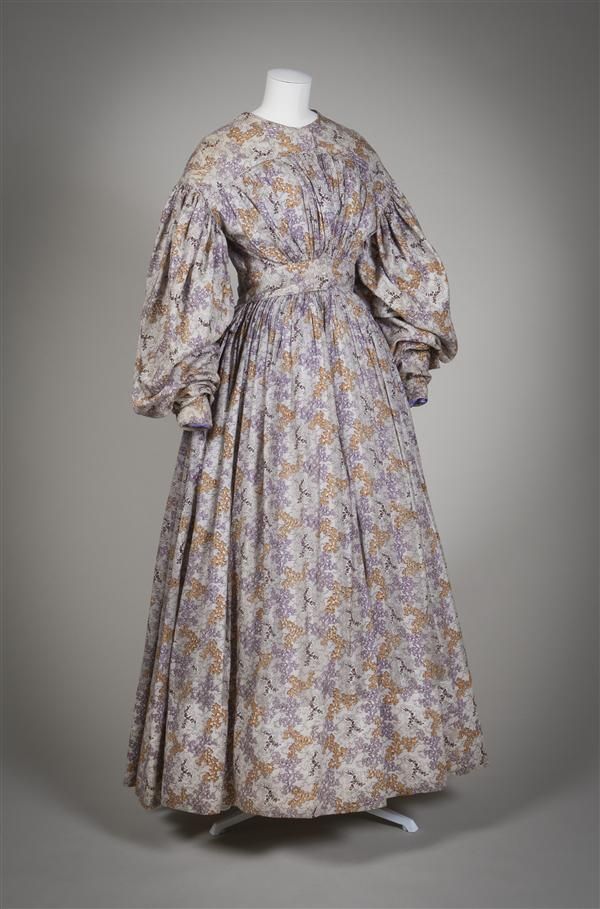
And because gorgeous mid-19th century flowers aren’t just for women….
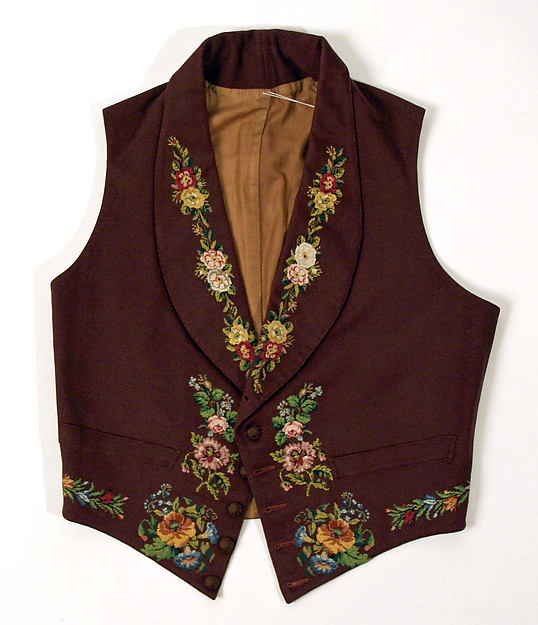
Waistcoat, mid-1840s, British, wool, silk, Metropolitan Museum of Art, 24.160.3_F

Waistcoat, mid-1840s, British, wool, silk, Metropolitan Museum of Art, 24.160.3_F

Accessories are a great way to bring brown into an outfit if a whole brown garment is too much.  I love this little bonnet:
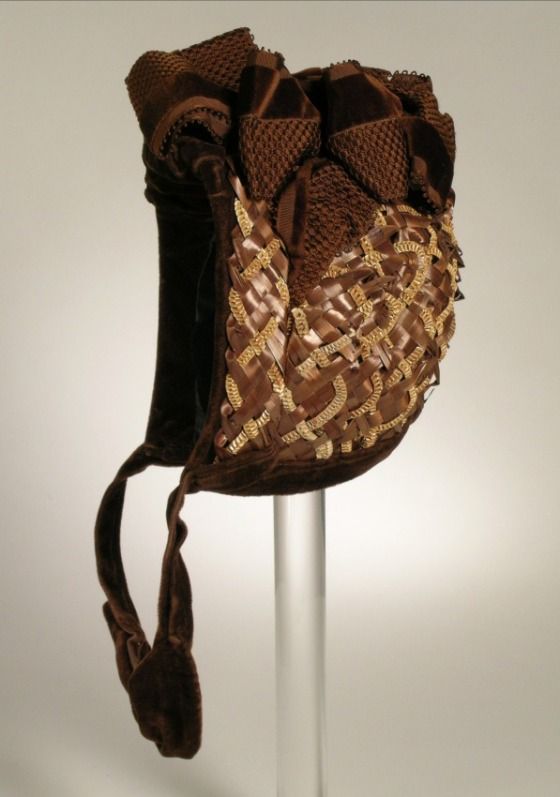
Woman's Bonnet E. Dreyer (United States, Pennsylvania, Pittsburgh, active 19th century) Constructed in France for the United States market; materials from Switzerland or Japan, circa 1890 Costumes; Accessories Barley straw and synthetic celluloid, silk velvet, Los Angeles County Museum of Art, M.60.22.4

Woman’s Bonnet
E. Dreyer (United States, Pennsylvania, Pittsburgh, active 19th century)
Constructed in France for the United States market; materials from Switzerland or Japan, circa 1890
Costumes; Accessories
Barley straw and synthetic celluloid, silk velvet, Los Angeles County Museum of Art, M.60.22.4

This ensemble got rather ravaged in Rate the Dress, but I still think it’s fascinating, and has distinct possibilities:
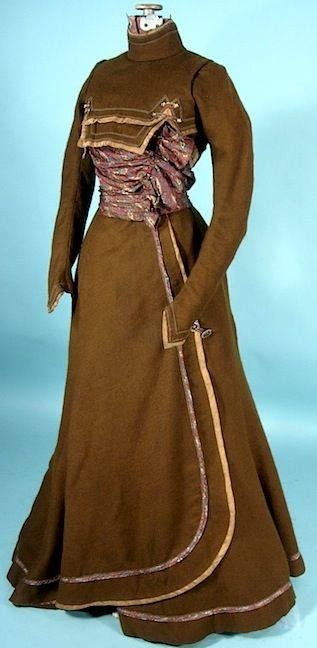
Ensemble (dress in two parts) in brown wool and paisley silk, ca. 1900, sold via Antique Dress.com

Ensemble (dress in two parts) in brown wool and paisley silk, ca. 1900, sold via Antique Dress.com

For an  example of brown linen, not the 18th century kind, this brown linen summer ensemble:
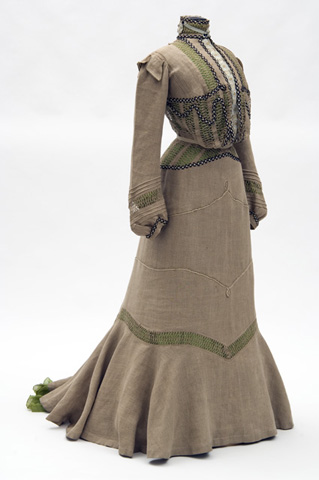
Day dress of unbleached linen with green silk underslip, 1901-2, Misses Leonard, St. Paul, US, Minnesota Historical Society

Day dress of unbleached linen with green silk underslip, 1901-2, Misses Leonard, St. Paul, US, Minnesota Historical Society

In more recent decades, brown has become a popular autumn colour, and is seen a lot in coats and tweeds, as in this chic 1935 number with matching cape:
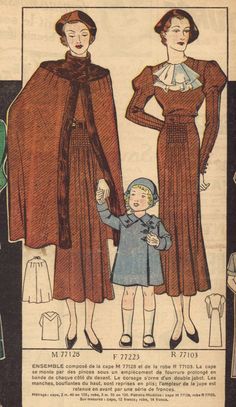
1935, Petit Echo de la Mode

1935, Petit Echo de la Mode

Gorgeous!  Happy sewing!
Rate the Dress: 1860s florals

Last week I showed you an unknown Italian woman in pink and ivory with gold.  While late Renaissance fashions aren’t always the most popular, you felt that this was the best possible variant of the silhouette (though you were a bit squicked out as to the probable point of the portrait – to advertise the marriageability of the very young lady).

(I’ll get the tallied score up shortly – I’m currently occupied cuddling Felicity, and I can’t add them up without kicking her off my lap 😉

UPDATE: And, now, the score!  Despite a few people who really didn’t like the dress (and possibly disliked it even more because everyone else loved it, because that’s how the human brain works ;-)), and a few high scores that I had to ignore because they were weird fractions (I’m sorry!  Please spare my poor brain and keep your ratings to whole or half scores!  Adding up gets far too complicated if I have  to deal with 7.3 and 5.6s!)  our lady was pretty in pink with 8.7 out of 10.

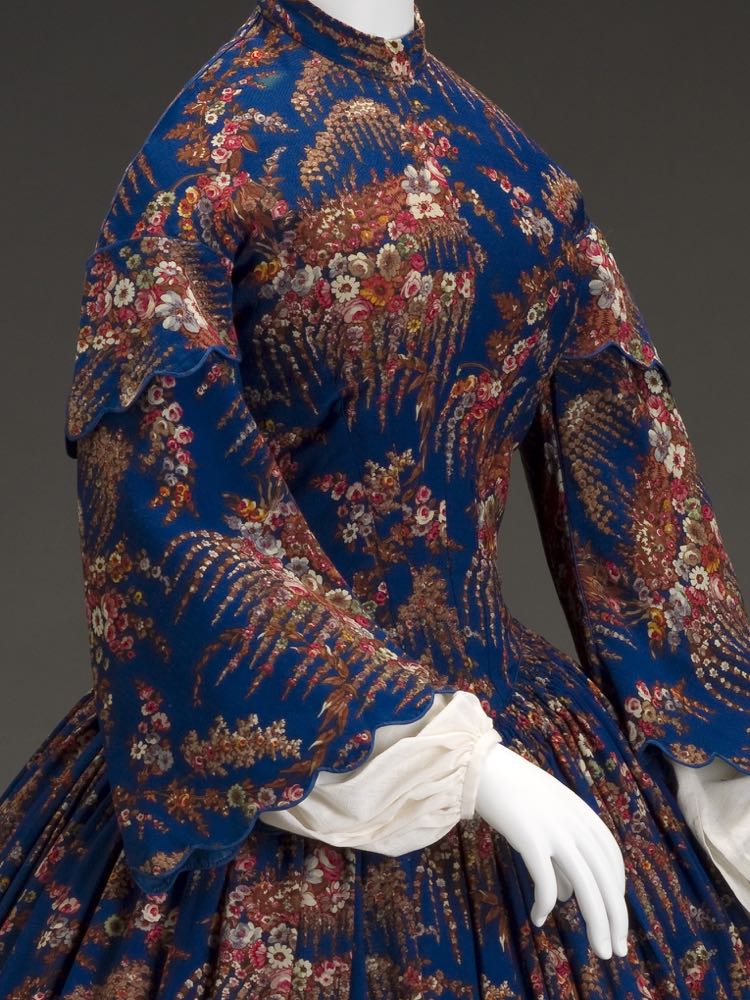
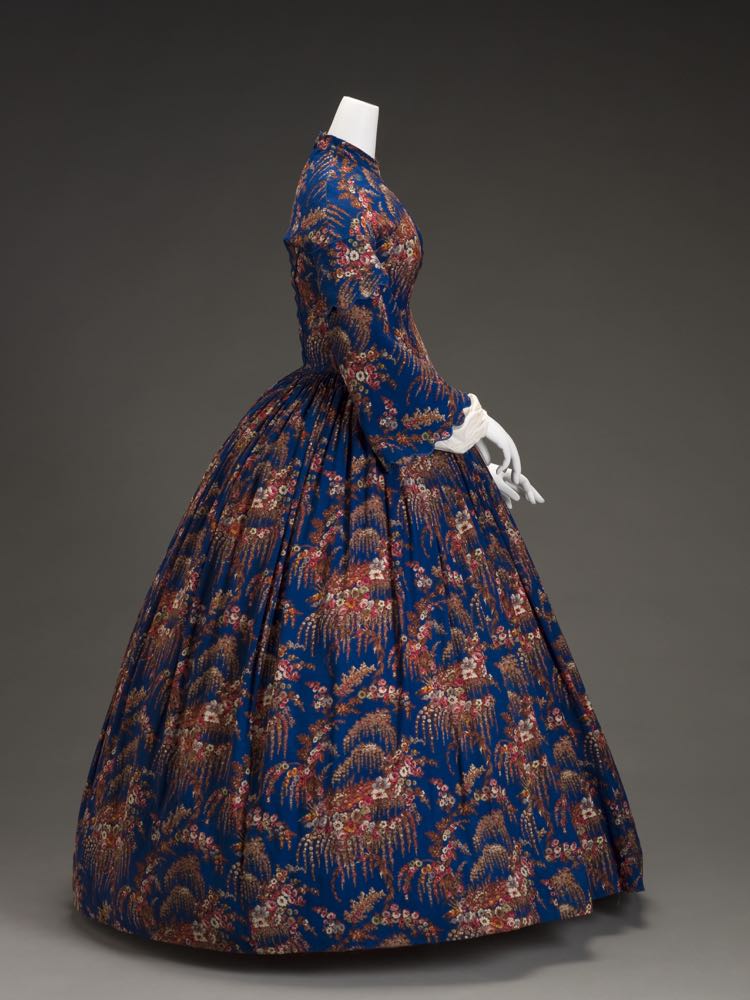
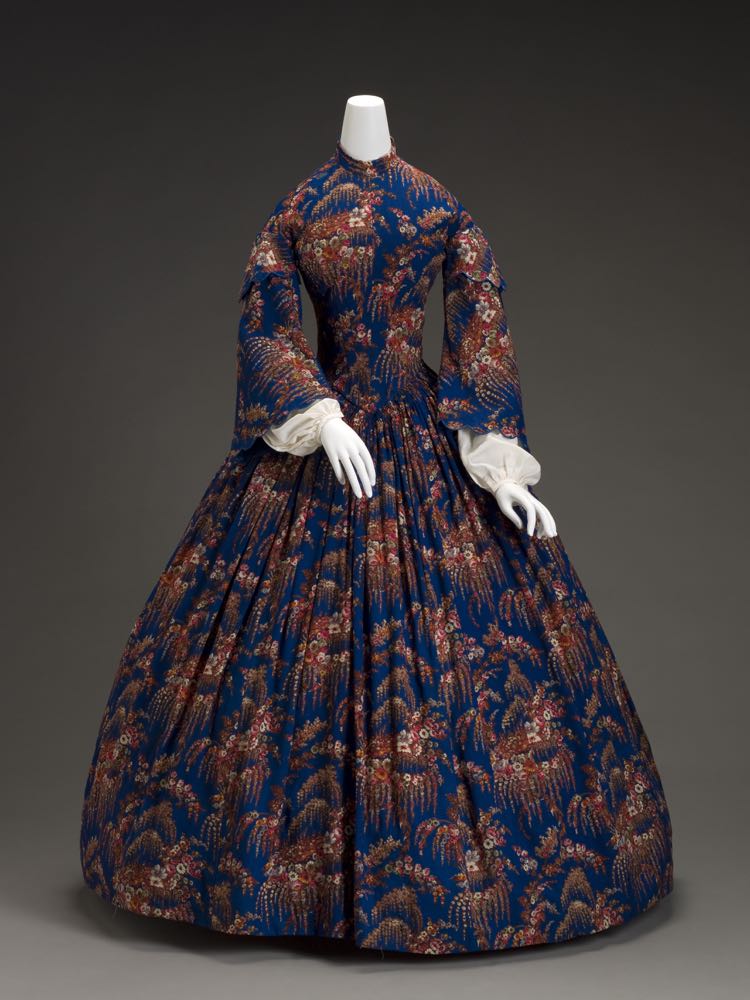
This day dress from the Indianapolis Museum of Art features a sleek silhouette, and a very busy floral print.

Dress, American, 1860s, wool, silk, cotton, metal, plastic, Indianapolis Museum of Art 2007.761

Dress, American, 1860s, wool, silk, cotton, metal, plastic, Indianapolis Museum of Art 2007.761

The intricate print, with swags of spirea and mock orange, and vivid colours of the wool challis are testament to the advances in both dye and print technology happening in the 1850s & 60s (dye & print innovations other than aniline dye, because while this print is very bright, this shade of blue was achieved with natural indigo rather than a synthetic dye until the advent of synthetic indigo in the 1890s).

Dress, American, 1860s, wool, silk, cotton, metal, plastic, Indianapolis Museum of Art 2007.761

Dress, American, 1860s, wool, silk, cotton, metal, plastic, Indianapolis Museum of Art 2007.761

The fabric would have been quite exciting and novel when the dress was first made, and the dressmaker has kept the focus on the fabric of the dress, with few  design details to compete with it.

Dress, American, 1860s, wool, silk, cotton, metal, plastic, Indianapolis Museum of Art 2007.761

Dress, American, 1860s, wool, silk, cotton, metal, plastic, Indianapolis Museum of Art 2007.761

The only ornamentation is the scalloped edges of the double-layered pagoda sleeves, finished with blue piping.

Dress, American, 1860s, wool, silk, cotton, metal, plastic, Indianapolis Museum of Art, 2007.761

Dress, American, 1860s, wool, silk, cotton, metal, plastic, Indianapolis Museum of Art, 2007.761

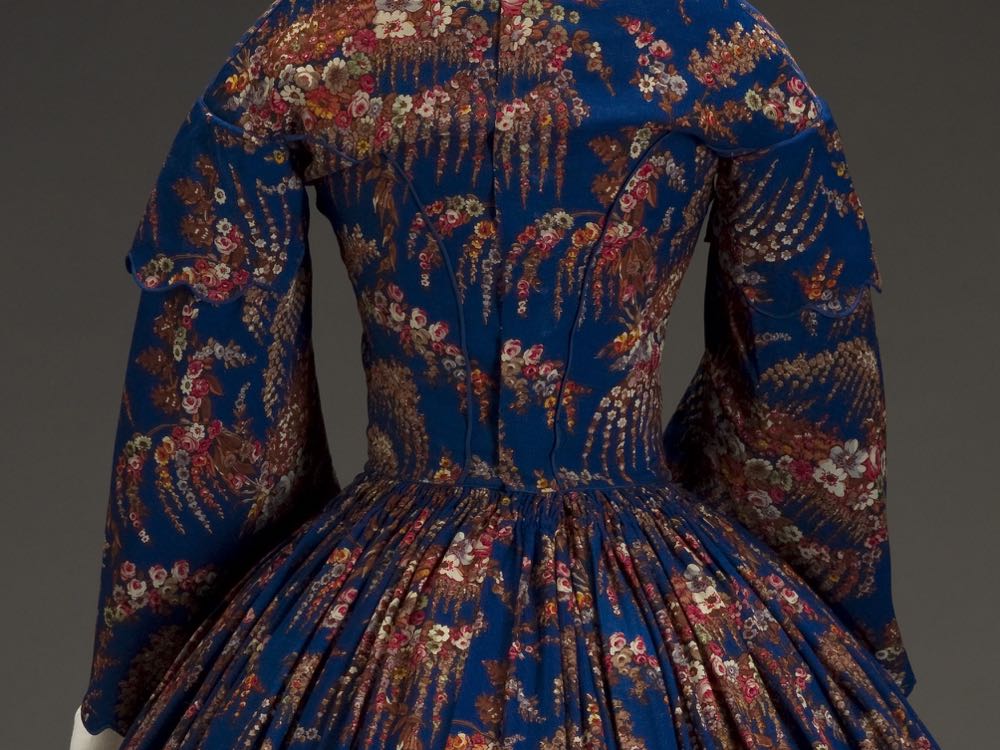
The same blue piping is used on the back seams of the bodice, and to define the line between the fitted bodice and tightly pleated skirt.

Dress, American, 1860s, wool, silk, cotton, metal, plastic, Indianapolis Museum of Art, 2007.761

Dress, American, 1860s, wool, silk, cotton, metal, plastic, Indianapolis Museum of Art, 2007.761

Interestingly, the dress description includes plastic as one of the materials used, indicating that either the dress utilised the first plastic, Parkesine, which was briefly available in the 1860s; the dress was altered with more modern materials at some point; or simply that someone cataloguing the dress got a little confused about their materials list (which definitely does happen!)

Dress, American, 1860s, wool, silk, cotton, metal, plastic, Indianapolis Museum of Art, 2007.761

Dress, American, 1860s, wool, silk, cotton, metal, plastic, Indianapolis Museum of Art, 2007.761

What do you think of the frock?  Does the simplicity of cut balance the elaborateness of the fabric, or did the dress need a lot more details to tone down the print?

Rate the Dress on a Scale of 1 to 10.

Wonder Unders

UPDATE:  Want to make your own Wonder Unders?  You can now buy the knickers pattern (along with a singlet camisole and slip pattern) through my pattern line: Scroop Patterns.  Get it here!

Superheroes are awesome.

Is there anyone ever  who hasn’t wanted to be a superhero?  Or played at being a superhero?

I know I have and this is despite the fact that I made it to adulthood without ever having read a single superhero comic,* seen a single episode of a superhero TV show, or watched a single superhero movie.

Despite this, I somehow knew about superheros, and, of course, their costumes.   The salient points being they wear 1) capes, and 2)  underwear on the outside.

As a kid I was extremely envious of my older sister, because someone had made her a red superhero cape with her initial on it, and I didn’t have a cape.  Much later, she made me a cape…out of crazy cat lady fabric (it had photorealistic cat heads completely covering it).

Not quite the same… (but I still loved it, because c’mon, crazy cat lady cape?  How could you not!)

I never did the underwear on the outside thing though, and (other than wearing actual historical underwear in public) I’m a bit old for it now.  That doesn’t mean I don’t want superhero undies though!

Enter, the Wonder Unders!

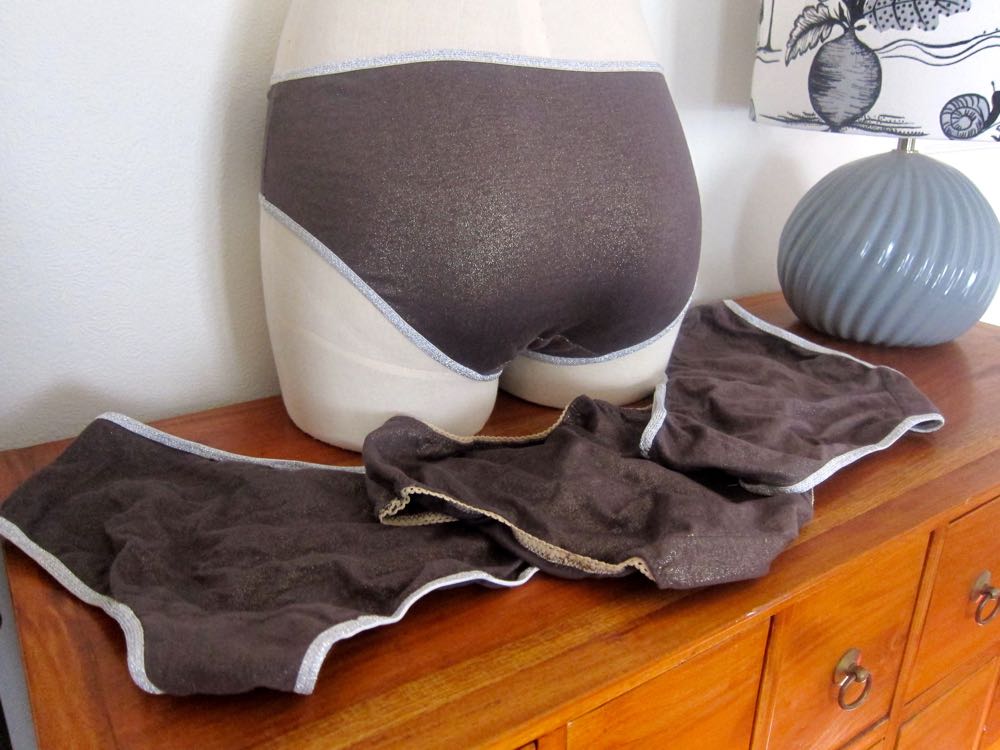
Wonder Unders thedreamstress.com3


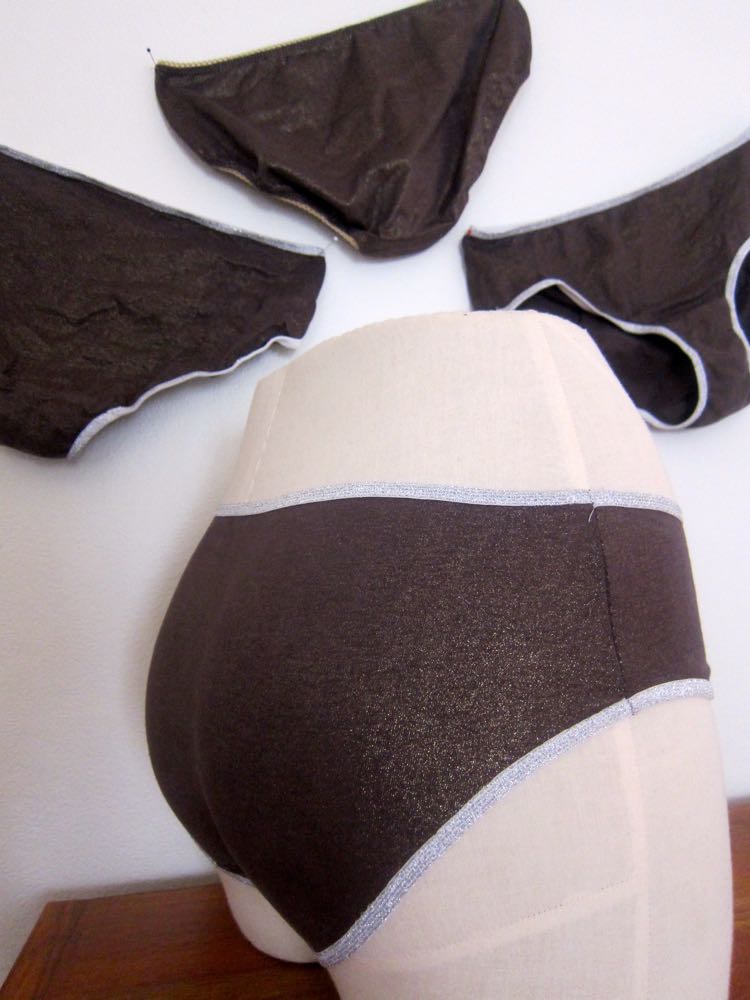
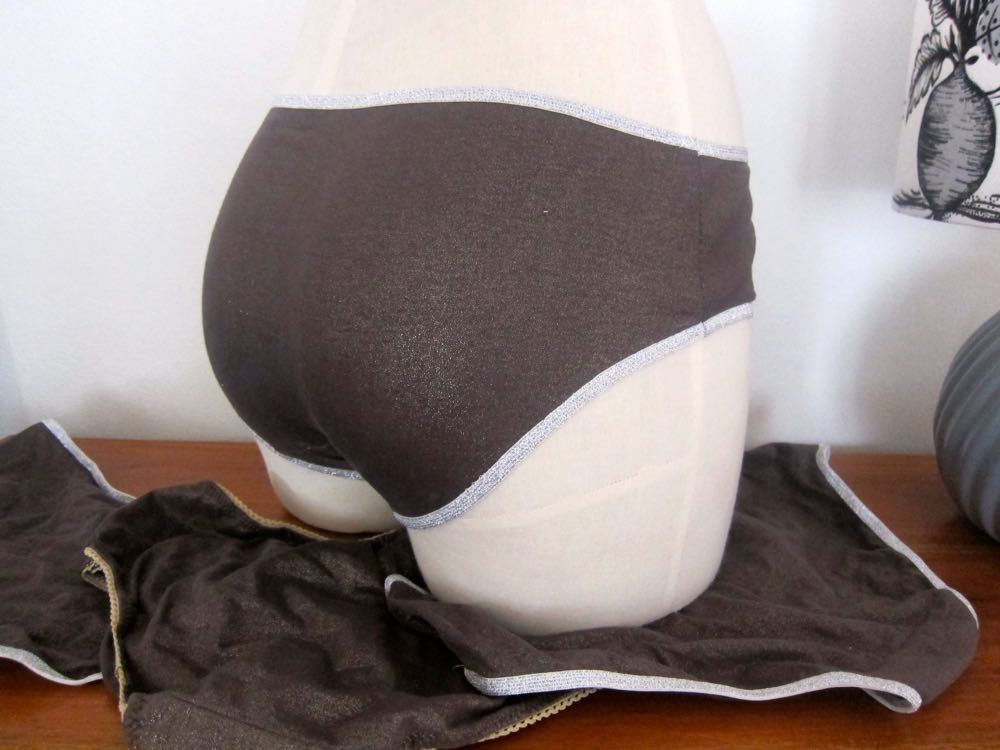
Made out of incredibly buttery soft brown cotton knit  with gold sparkles (so sparkly!) and bound in sparkly silver foldable elastic binding (a present from the lovely Sewphist) they are the perfect hidden disguise for my superhero alter ego….

Hedgehog Girl!  

(Abilities include rescuing hedgehogs, being adorable, being prickly, rolling into a ball and ignoring the world, poking people I don’t like)

Wonder Unders thedreamstress.com1


The fabric was from Global Fabrics some 4 or 5 years ago, and was left over from an unsuccessful T-shirt dress that I made with it.  Somewhere I think I still have the T-shirt dress, and when I find it, there will be more…!

(maniacal hedgehog laughter)

Wonder Unders thedreamstress.com2


I ran out of silver binding before I ran out of fabric, so I finished  the last pair in less exciting picot elastic.

Obviously I’m only going to wear these for special occasions, when I need to channel the extraordinary  powers of Hedgehog Girl.

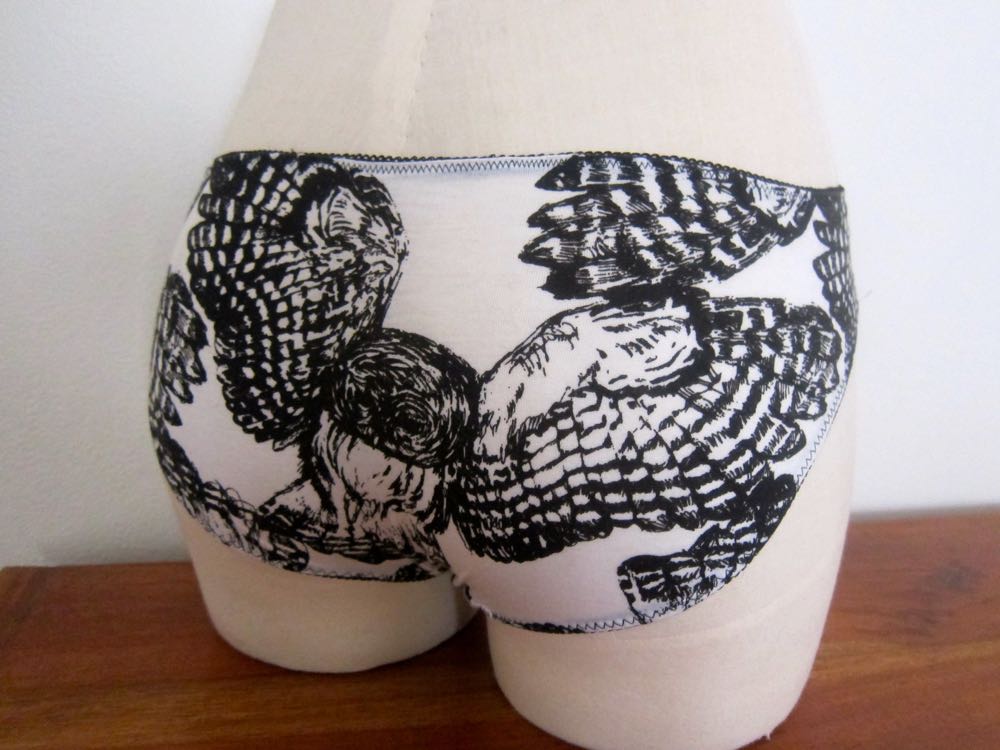
And, as a bonus, a pair of stunt unders for The Amazing Owless:

Wonder Unders thedreamstress.com4


They are stunt unders because the fabric is AWESOME, but totally unsuitable for actual wear (no recovery, a tendency to pill), so I made them as a demonstration piece during a class, and will keep them for teaching, because obviously I can’t show students actual unders.

But they have an owl on the bum, so someone needs to see them!

*Unless Calvin’s Stupendous Man counts.

** The original Unders post, if you’re wondering about the pattern, how I make them, etc.