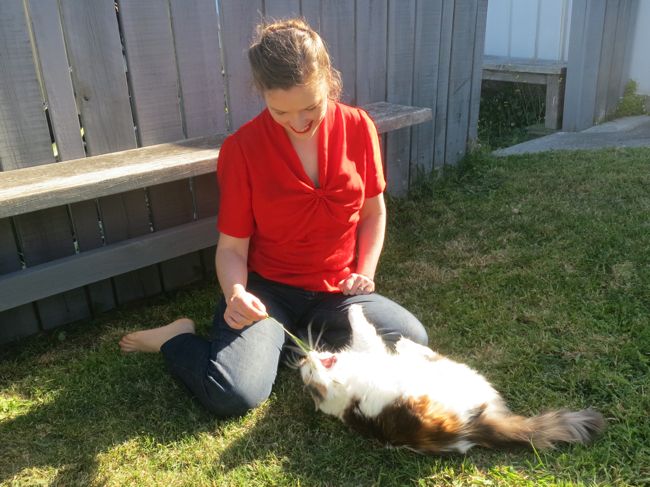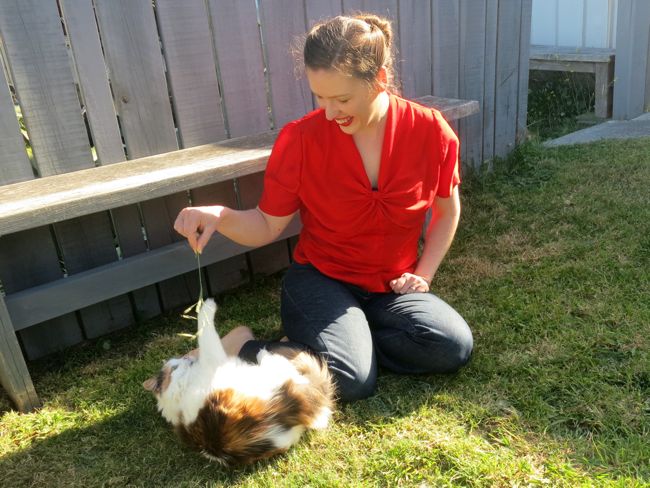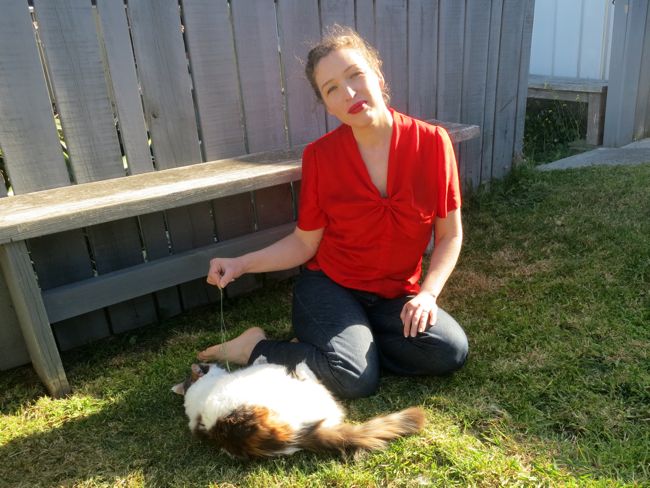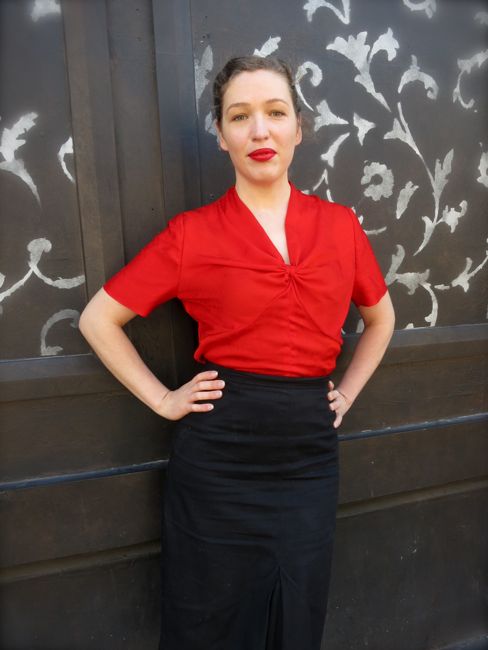
I’ve written a lot about one famous New Zealand author recently: Katherine Mansfield. This is blouse is dedicated to another famous NZ author – one who was certainly, at least for a long time, at least as famous as Mansfield. I’m talking, of course, of Ngaio Marsh, one of the four ‘Queens of Crime’ of the Golden Age of Detective Fiction.

Unlike Mansfield, I hadn’t heard of Marsh before I moved to NZ – but she’s not exactly high school reading curriculum material, and I’m not that in to detective fiction.
I’m afraid I’m still not much of a fan of Marsh’s works, but that’s mostly because I find Inspector Alleyn, her most famous creation, to be an insufferable know-it-all with terrible taste in women. If I met him in person I’d probably describe him as a wanker (but only because even after over a decade in NZ I still think words like bollucks and wanker and bugger are cute, and can’t actually make my mind believe they are proper ‘swear’ words).
Other than Alleyn, and the boring ‘someone killed someone in the most convoluted way possible and now we have to figure out who’ bit, I actually really enjoy Marsh’s writing. She’s got delicious clothing vignettes, and her depictions of the theatre in early-mid 20th century England, and society in NZ in the same time-period (particularly in Colour Scheme) are fantastic.
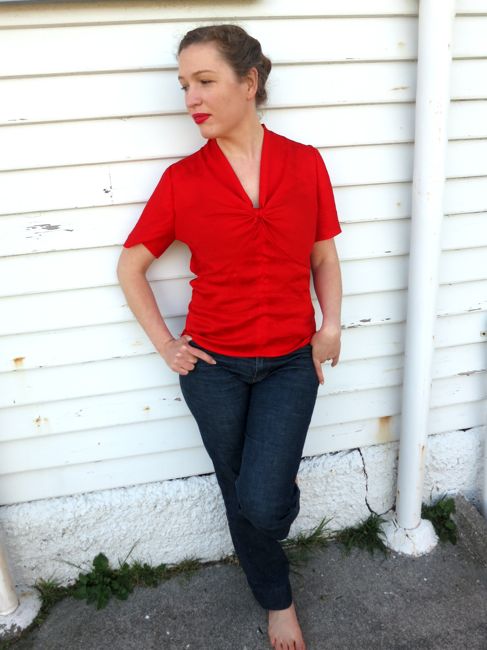
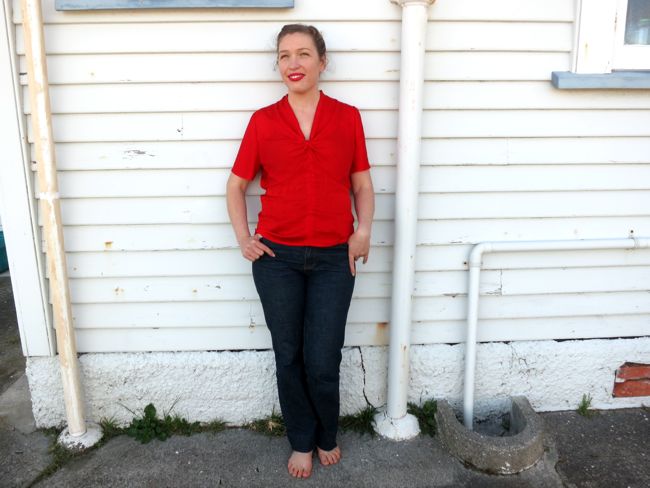
I’ve been playing with the idea of a classic late ’30s blouse, and thought that the result, especially in scarlet silk with a pattern of exploding pinwheels (sadly, almost impossible to capture in photographs) fits beautifully with Ngaio’s clothing descriptions, and her fondness for actresses who are just a tiny bit too glamorous to be entirely tasteful.
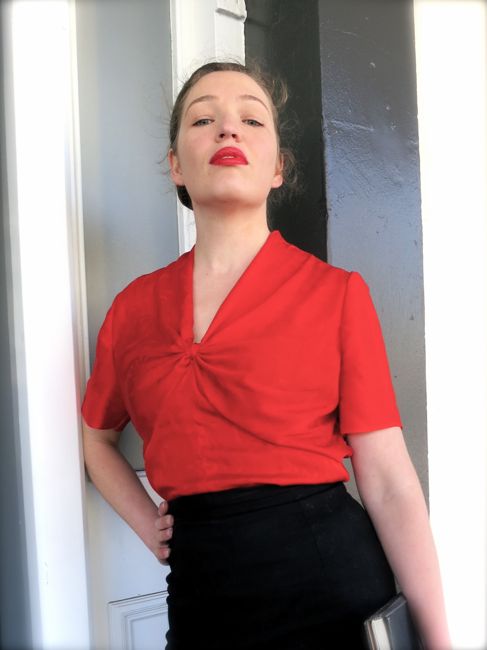
So I’m calling this pattern the Ngaio blouse, and in blood red, it’s clearly fit for a Queen of Crime!
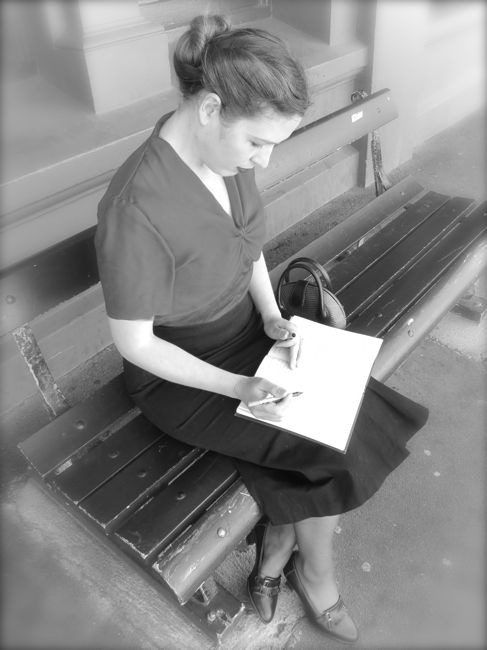
I’m pretty happy with what I’ve come up with: the front gather/twist that forms a faux bow, the impression of scandal created by the plunging neck, while still remaining quite modest, the way the blouse hugs the neck and forms the tiniest bit of a collar rise.
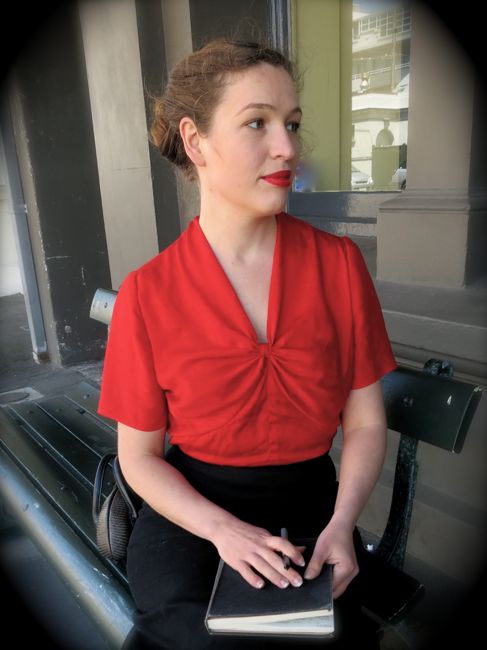
There are some tweaks I want to make though. I think I can simplify the front even further, which will look better on smaller busted women, and I want to try a version with cut-on sleeves. For now though, this is just the thing for a lady detective with a daring but never outre sense of style!
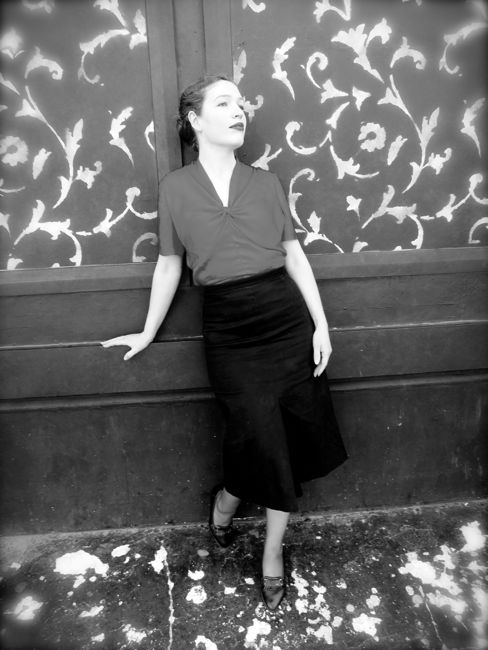
The Challenge: #21 Re-Do
Challenges I am Re-Doing:
#1 Make Do & Mend: made from a vintage kimono, unpicked for the fabric. There are some flaws and age marks on the blouse that you can just see if you look closely.
#2 Innovation: Sadly, I haven’t managed to find out much about it, but jacquard crepes first make their appearance in the 1920s and ’30s, which indicates to me that advances in jacquard technology made this possible – perhaps driven by the fashion for crepes, a case of fashion driving innovation and then innovation prompting future fashions.
#5 Bodice: well, only in the absolute broadest possible sense of the word is a blouse a bodice, but it sort of qualifies.
#13 Under $10: The kimono was on sale for $10, and I still have more than half of it left 🙂
#11 The Politics of Fashion: The use of silk between the World Wars was quite politicised, especially in the late 1930s, as conflicts and increased militarization in East Asia, which provided most of the world’s silk, made the supply increasingly unstable.
#16: Terminology: the fireworks pattern is a jacquard weave.
#20: Alternative Universe: This could definitely be the basis for a steampunk outfit (I love using bright colours for steampunk!), or dieselpunk, but I really see it as something a modern day elemental goddess would wear – Pele while teasing movie stars in 1930s Waikiki, or something one of the Rivers of London would wear in the ’30s.
#23: Modern History: Obviously I could have (just) held on to this and posted it for the Modern History challenge, as it looks great with pencil skirts for office wear and jeans for hanging out, but I want to make something else for that!
Fabric: 1 unpicked vintage kimono
Pattern: My own, heavily influenced by a number of late 1930s patterns.
Year: 1935-40.
Notions: cotton thread.
How historically accurate is it?: Spot on. The fabric is period accurate (might even be period!), the pattern could easily be period, and all my techniques match 1930s techniques.
Hours to complete: 6, because annoying fabric.
First worn: To a class one evening, and the photoshoot.
Total cost: NZ$5ish.

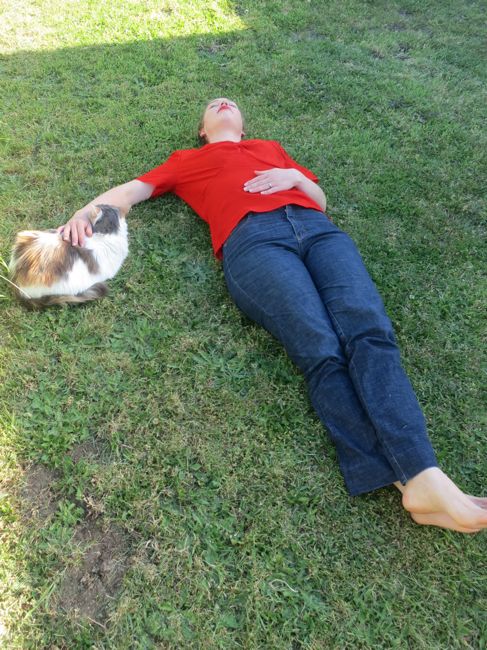
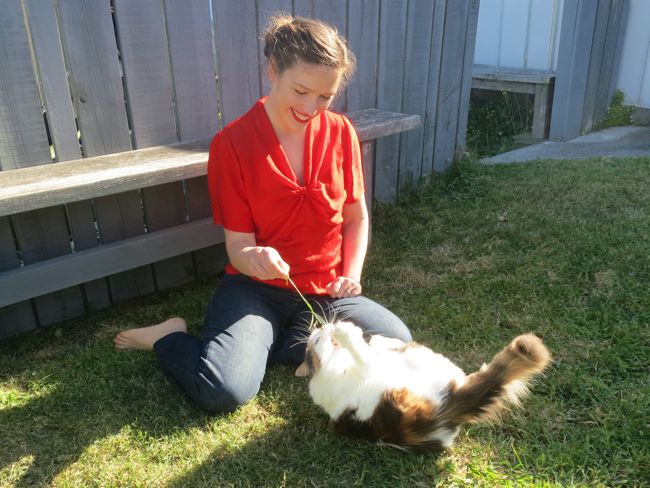
On Wednesday I’ll show you the same blouse, styled completely differently, as it’s surprisingly versatile! (plus, Felicity adorableness!)