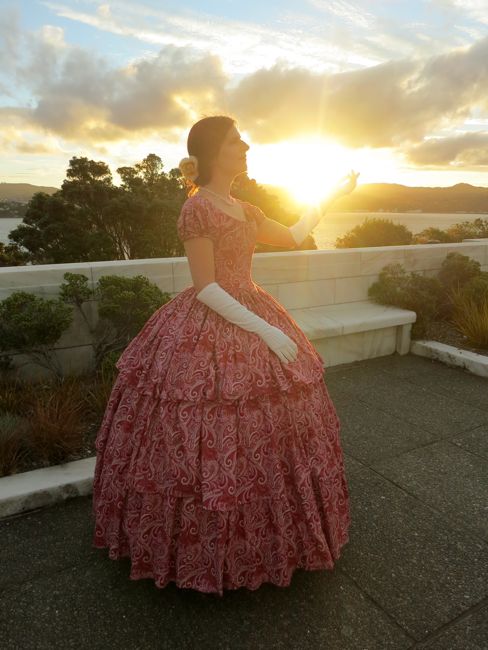
For the Historical Sew Fortnightly Black & White challenge I decided to make a white item, and a black item (and maybe a black and white item if I get very ambitious this evening!)
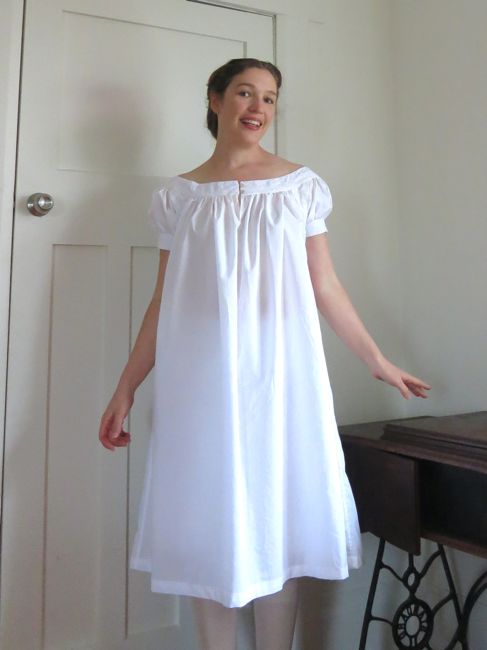
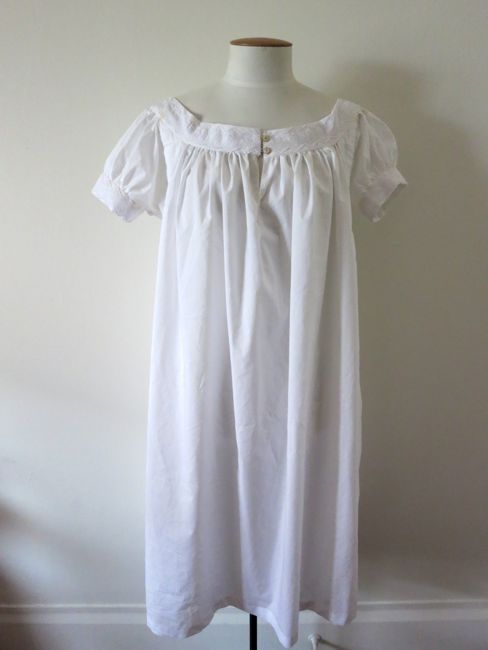
My white item? A very sweet, very white, 1860s chemise from the (slightly infamous) Simplicity 9769 Martha McCain ‘The Fashion Historian’ chemise/corset/drawers pattern.
Under normal circumstances, I wouldn’t have bought this pattern, because I usually use period patterns, or make something based off an original item I’ve studied or own (I know it sounds snobbish, but I’d rather know that anything weird, hard to work through or mistake-y is my own fault!). But…I’m teaching sewing so I’m trying to use a lot more commercial patterns, so that I can advise students on them.
Oh, and also, the pattern was basically free. At one of the first Fabric-a-Bracs I went to someone was selling a bag with all the bits for a corset: busk, aiglets, grommets, lacing, and this pattern, for (if I remember correctly) $15! Which is less than a busk costs. So I snapped it up, and have added all the bits to my corset making stash (and probably used them since).
As long as I had the pattern, I thought I’d best give it a try!
I was, to say the least, very pleasantly surprised by the pattern. I cut the size 10, rather than the 14/16 I am based on the measurements (let’s just say that when it comes to Simplicity sizing, I wasn’t born yesterday!), and it made up beautifully. It really is a period-accurate pattern, and while I prefer more description of why things are done, and why they are period accurate in my patterns (a la Wearing History), if you already know how 1860s undergarments work, or don’t care about the research behind a garment, the pattern is just fine as it is.
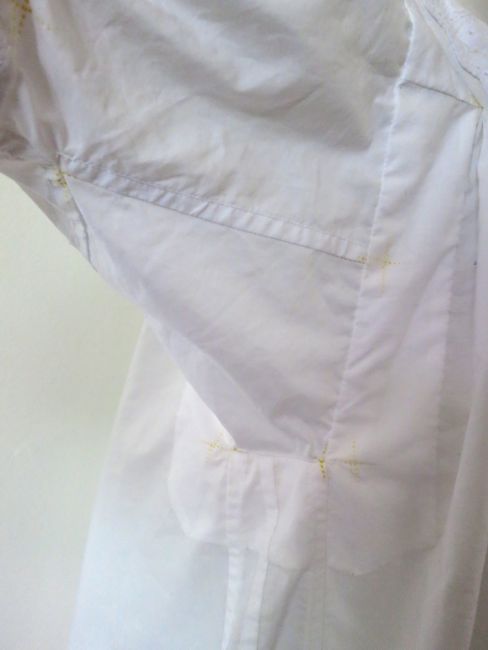
The pattern was actually very easy to make and put together, though I imagine it would really throw you if this was your first attempt at gussets and geometric patterning. Every piece in the pattern is a rectangle or triangle, and fitting them together is a fun puzzle . Each step is well described (except for step 15, where the drawing shows you putting in the sleeve reinforcement panel backwards), but it does help to have a mental picture of how it’s all going to fit together in the end.
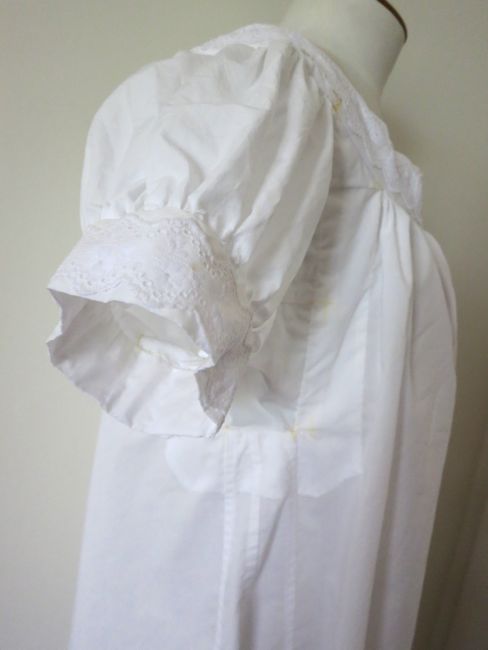
This was a pattern where pattern markings were very important. In fact, you can still see my yellow X markings all over the chemise, as I haven’t had a chance to launder them out yet!
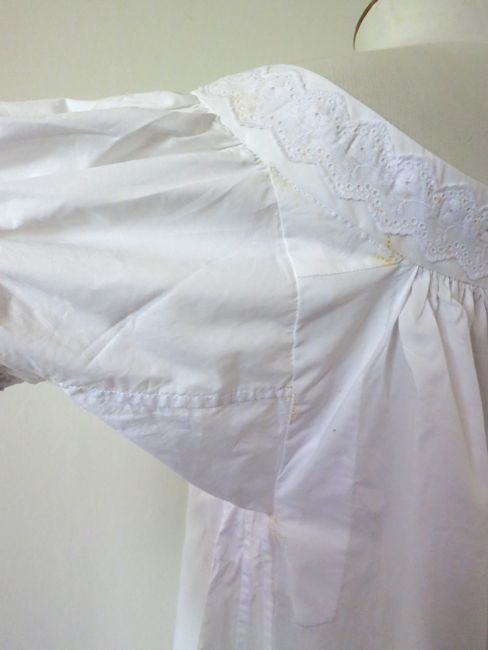
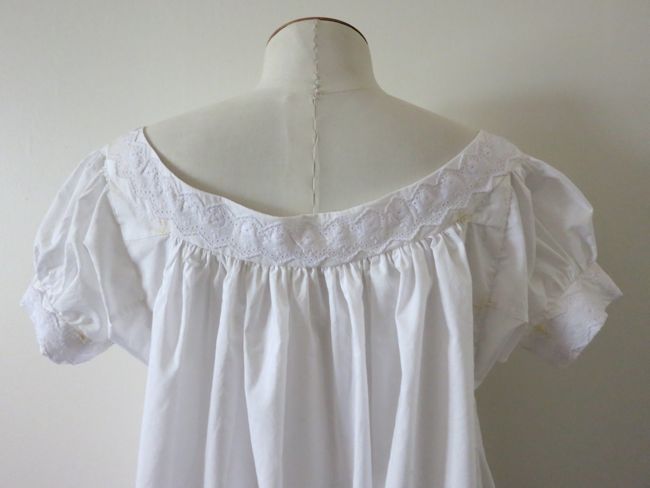
For trim, I used some vandyke (a bit of a theme in my lace choices recently) broderie anglaise that I also picked up at Fabric-a-Brac, and vintage shell buttons that have been in my stash forever.
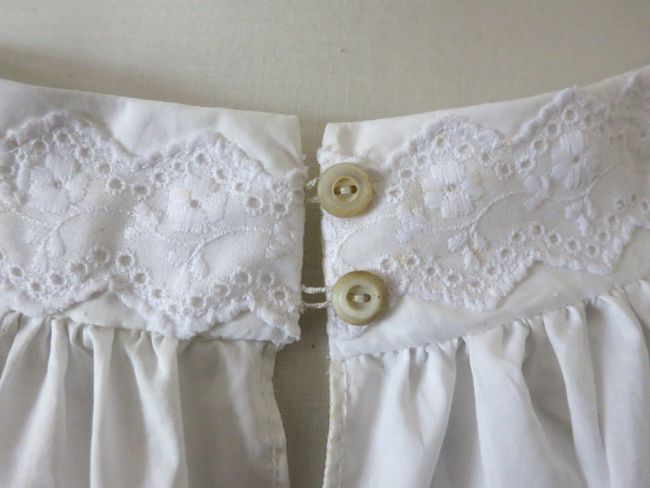
I made life difficult for myself by sewing the lace down right to the edges – lots of sinking and turning as I navigated those points.
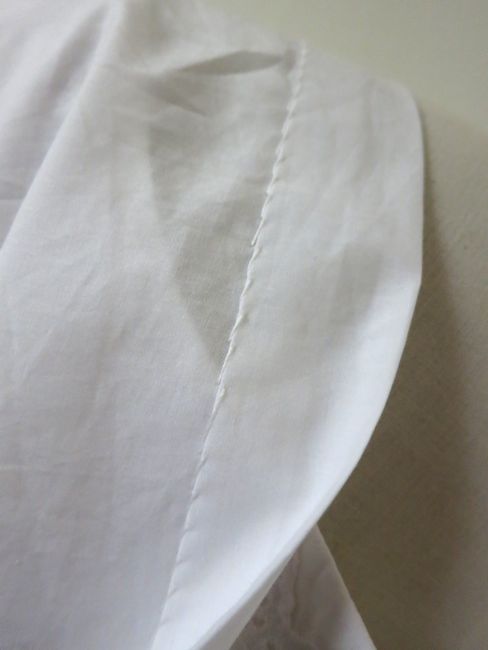
I did all the handsewing with a silk thread, which took most of my time as the cotton is very tightly woven, and hard to handsew through, especially as chilblains begin to claim my hands for another winter.
The Challenge: #9 — Black & White
Fabric: 2.2m of white cotton lawn (from the $5 bin at Fabric Warehouse).
Pattern: Simplicity 9769 Martha McCain ‘The Fashion Historian’ chemise/corset/drawers pattern
Year: 1857-68
Notions: 1.5m white cotton broderie anglaise trim (also a Fabric-a-Brac find), 2 vintage shell buttons, silk and cotton thread.
How historically accurate is it? Because I was just trialling the pattern, I wasn’t too worried about being period perfect. The chemise is primarily machine sewn (pushing it for the early 1860s), though I did do the finishing by hand. The fabric is a tiny bit thin and crisp compared to most period examples, but not beyond the boundaries of normal mid-19th century undergarment fabrics. My lace is a bit modern, but the buttons are perfect. So….70%?
Hours to complete: 4. Really easy except for sewing the lace rows so close to the sleeve gather.
First worn: Just for photos, though it will appear in a lecture at Handmade at the end of the month.
Total cost: $5.00 for the fabric, and another $3 in lace and notions.
I wanted to do a photoshoot with this chemise and my blue corset and red hoops, and the paisley petticoat, but as always, time was short, so I settled for a quick snap of me in the chemise.