New Zealand is pretty much road trip paradise – every drive is spectacularly beautiful, there is something interesting every hour or so, and even at the busiest time of year you can get accommodation with only a days notice, so you can go where the road leads you, or, as the case happened with my post-Christmas road trip with my sister, where the weather might be better!
The week after Christmas is the busiest time on the roads in New Zealand, as everyone takes advantage of the public holidays. It’s also notorious for having bad weather – the Murphy’s law of vacation time.
Road trip week with my sister was no exception. I left Wellington in damp drizzle, and arrived in Christchurch to pouring rain. The weather report predicted 6 days of rain on the normally drier eastern coast of the South Island, and 4 days of rain and 2 days of sunshine on the usually wet, wild and windy West Coast.
Obviously, two days of sun being better than none, we picked the West Coast for our road trip!
We drove across the Canterbury plains in a downpour, the towns and farms obscured by clouds and pelting water, our windshield wipers going as fast as they could. Only as the road began to climb the foothills of the Southern Alps did the weather clear, revealing far-off mountains capped in snow even in the midst of summer.
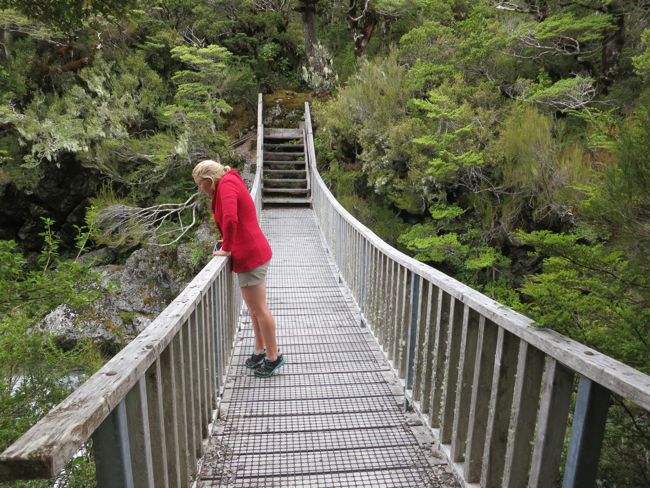
The further we got into the mountains, the better the weather. At Arthur’s Pass, the midpoint of the road between Christchurch and the West Coast we stopped to have a sushi picnic on the grass in glorious sunshine, and then went for a walk in the fairytale-worthy beech forests that the western half of the South Island is so famous for.

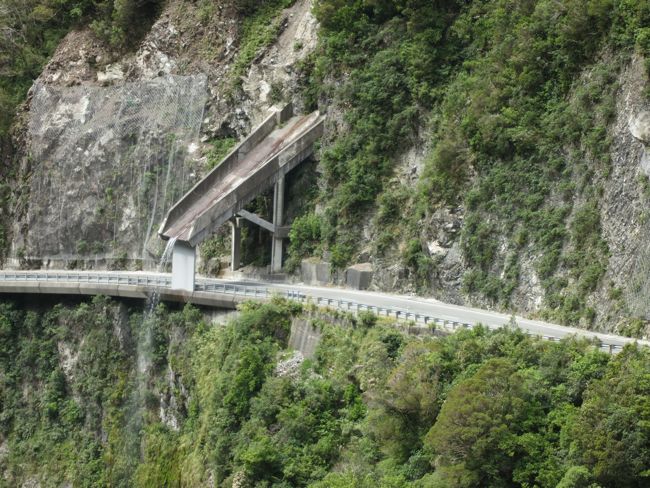
Then it was all downhill, under viaducts channeling waterfalls out over the road:
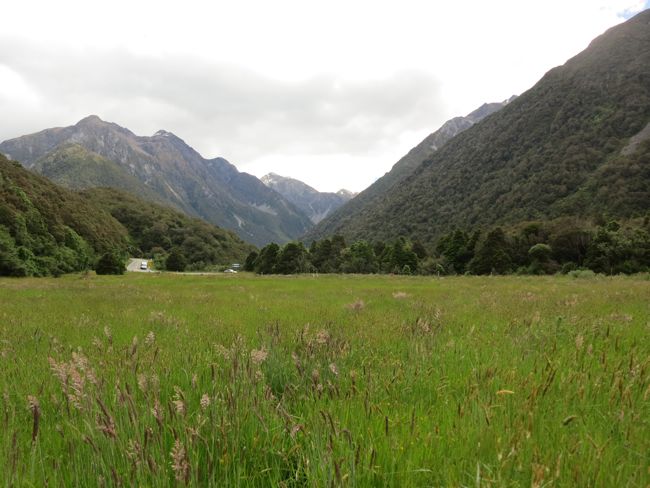
And past rippling meadows of red-seeded grass, framing narrow roads twisting down from craggy mountains, the drone of summer bees filling the warm, humid air.
As the land flattened out, farms appeared, with old barns of weathered native timbers echoing the shapes of the peaks above them:
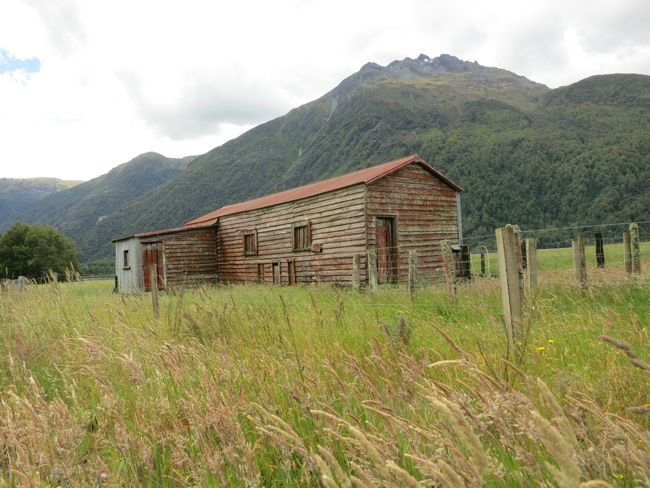
Once, all of these farms would have been sheep farms. Today, as the price of wool and mutton continues to fall, more and more farms are turning to the more lucrative dairy business.
The names of the towns and farms bear witness to the settlers who braved the rugged West coast, and the people who originally settled it. We passed Inchbonnie, and then Kotuku (named for the endangered native white heron), where we saw the miniature historic bungalow, before meeting the Grey River, and travelling with it to the sea, at Greymouth.
The rest of the trip was alternating rain and sunshine, misty clouds giving glimpses of grey beaches, waves rolling into shore:
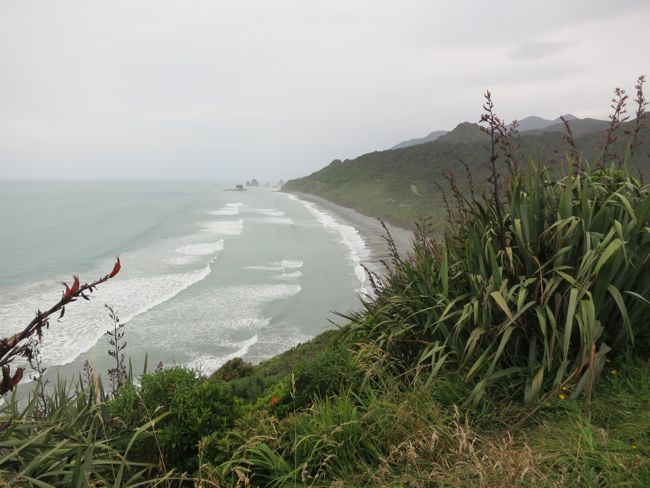
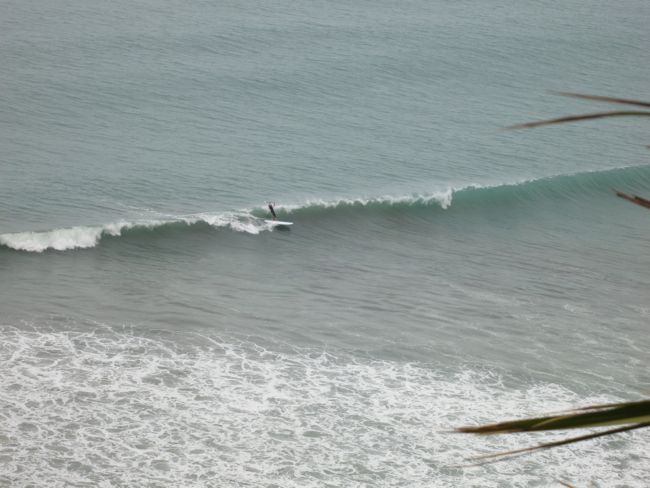
The surfers and paddleboarders were undeterred by the cold waves and the inclement weather, and every beach had a half dozen hardy souls taking advantage of the swells.
While the West Coast is littered with amazing historical and scenic spots, it’s inevitable that one spot gets dubbed the ‘must do’ attraction, which every caravan and road tripper and tour bus inevitably stop at as they charge down the West Coast towards the tourist mecca of Queenstown.
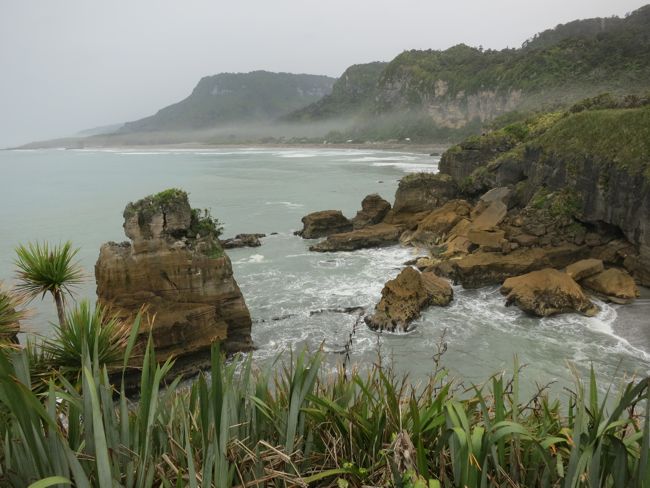
On the northern West Coast this spot is the Pancake Rocks & blowhole at Punakaiki: an interesting geological formation with layers of rocks stacked (as the name suggests) like pancakes, and a natural blowhole that spouts water into the air. But only if you are there at the right tide, with the wind blowing in the right direction, a feat which I have never managed!
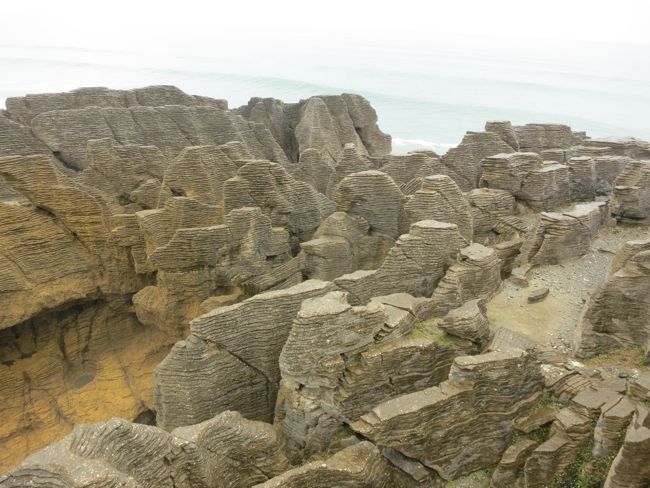
Overdone tourist attraction or not, we dutifully fought our way to a parking spot in the overflowing carpark, and then trotted around the little paved path that wound through the rocks, carefully perusing each educational signboard, learning about the Oligocene and karst landscapes, stylobedding and compaction.
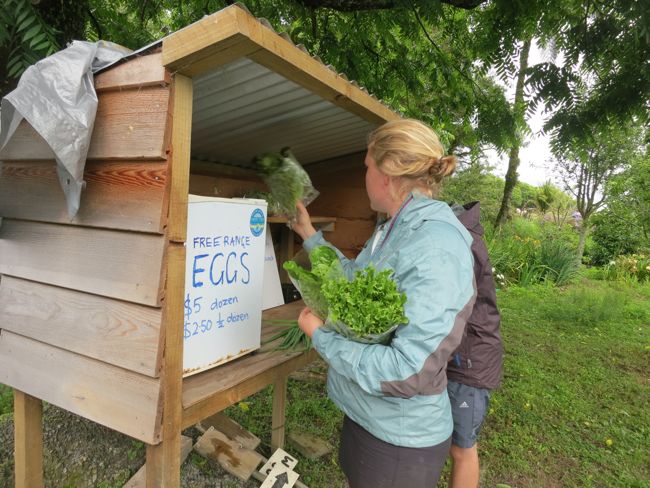
Less touristy, but equally entertaining, were stops at roadside stalls with honesty cash boxes, where we bought eggs* and lettuce, endive and spring onions.
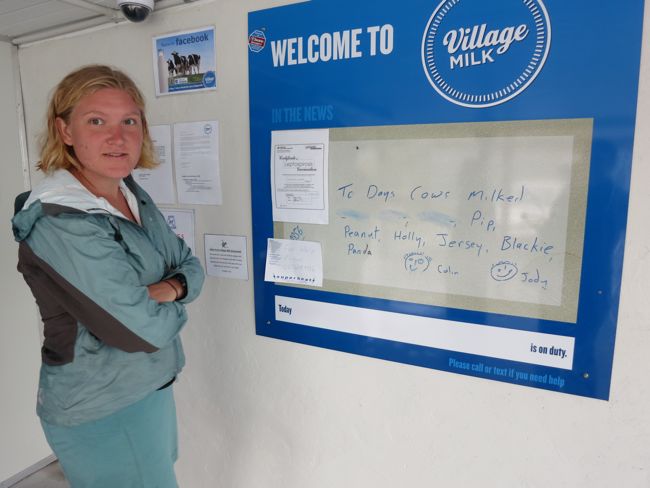
We also stopped at one of the few farms in New Zealand where you can buy raw milk. It’s only legal to sell raw milk “from the farm gate,” and there are only 6 certified sellers in New Zealand – and only one of them is on the North Island, but they are a full 6 hours drive from me.
I’ve never had raw cow’s milk before (though I grew up on raw goat’s milk†), and was just interested in seeing what it tasted like (amazing! We sat on the farm fence and drank milk straight out of our tin travelling cups – and I rarely drink milk straight). I did find that the nasty hay fever that has plagued me all this spring disappeared entirely when drinking the raw milk – but that could equally have been the change in plants on the West Coast, or lots of exercise and no work and stress. So I’m not quite a crunchy-dippy convert to it, but I’m certainly a taste convert.**
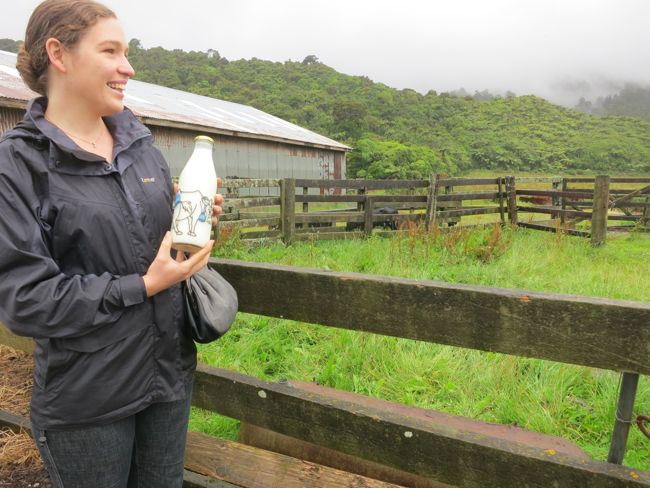
So now I need to find somewhere near Wellington to get the stuff, because right now my adorable happy cow glass bottle is sitting sad and lonely and empty in my kitchen.
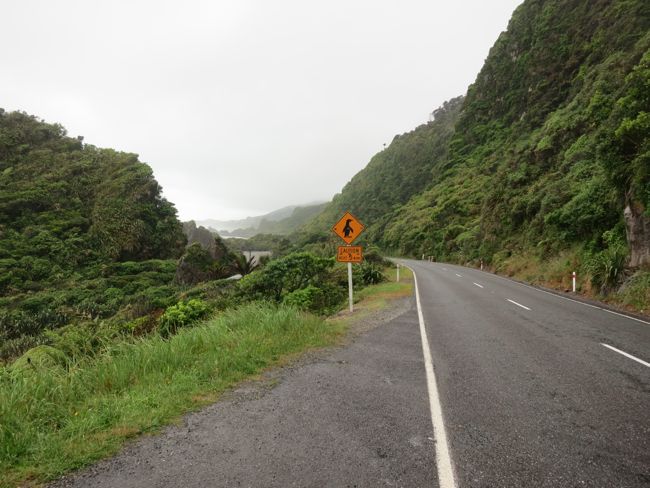
After a couple of days in and around Greymouth, we drove north, past awesome road signs, and into the sun.
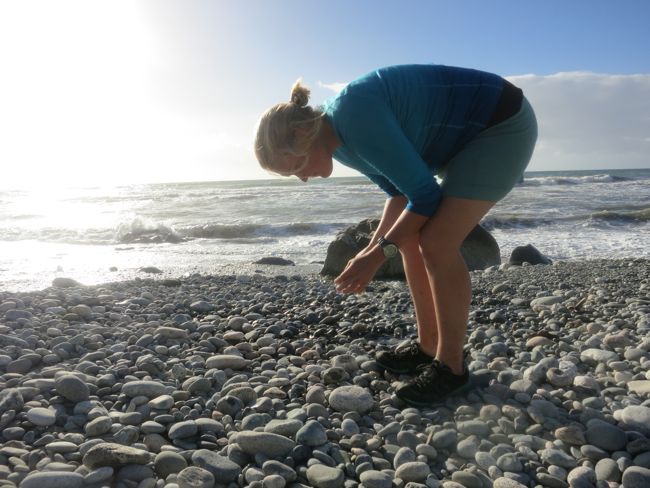
There, we explored more wild beaches:
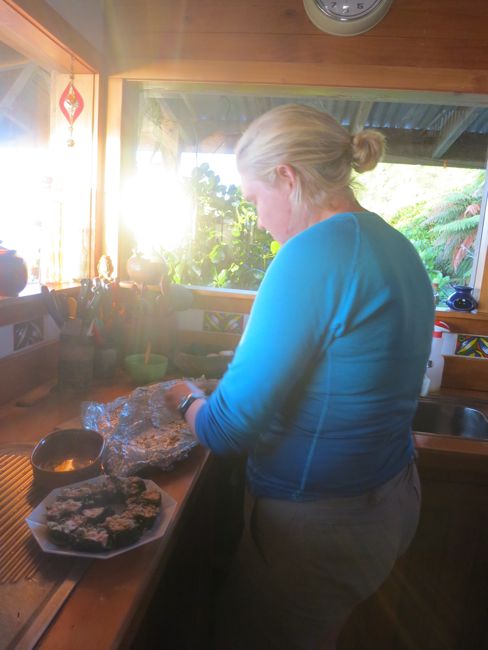
And cooked:
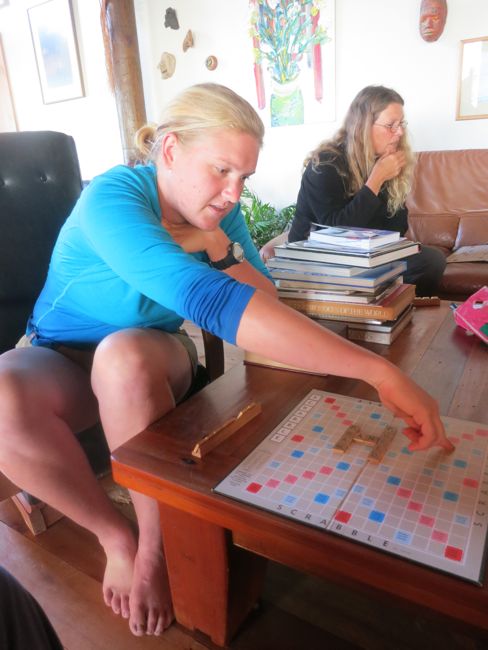
And played extremely poor but extremely competitive scrabble, with a 1921 Oxford English Dictionary for reference. As you can imagine, much squabbling and hilarity ensued, especially when we discovered that the dictionary had an entire addendum section in back, full of words “which have come into prevalent usage due to the recent unrest of the Great War.”
New Years was celebrated with a lovely shared dinner with backpackers from Germany and (German-speaking) Switzerland and Austria.
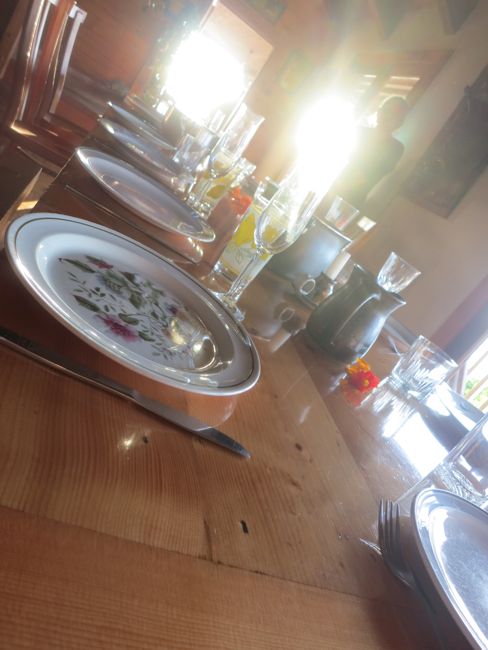
We, and the other pair of Kiwi backpackers, discovered that that area of the world (or at least all of these representatives of it) takes New Years quite seriously. We were astonished when they burst into cheers and indiscriminate hugs at the stroke of midnight, and then actually put on a cassette tape (remember those?) of Auld Lang Syne , and began to sing along with it, word, chapter and verse, arms linked. This was followed with ebullient toasts and a bit of sniffly reminiscing. Mouths agape with astonishment we four announced “Yay, we made it, bedtime!” and took ourselves off, leaving them mouth agape with astonishment. “Aren’t you going to stay up and celebrate?”
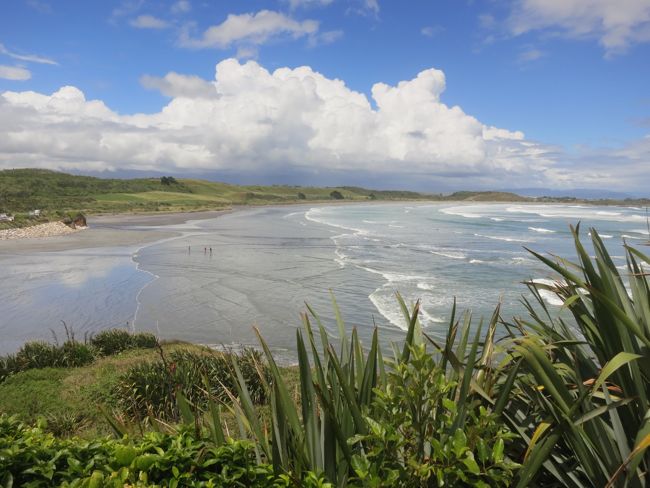
We started off the New Year with blue skies mirrored in remote beaches:
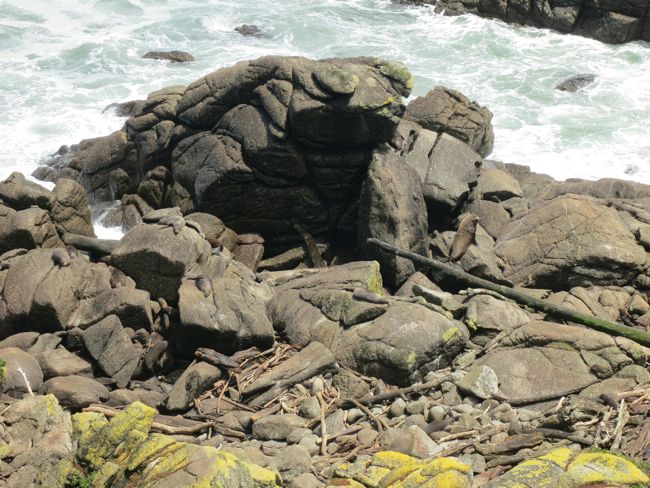
And walks round the coast to seal colonies amongst the rocks, where we watched the soap opera of seal lives; burly males fighting for dominant position, lost wee ‘uns calling loudly for their mothers, svelte young lady seals posing to their best advantage on the warm rocks, all among the drama of crashing waves and swooping seagulls.
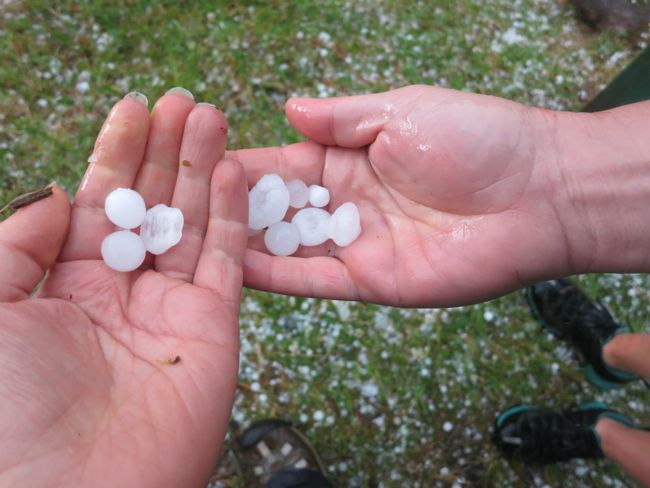
From the sunny (ish) coast we headed back towards the mountains, where a short walk to a historic bath was interrupted by the sound of an approaching freight train, and then a spectacular, unseasonal hailstorm, with hailstones the size of small grapes (unfortunately we didn’t have time to photograph the really big ones – what with being soaked through, freezing, and in more than a little danger of being thumped on the head by a real whopper).
The mountains were cool and misty, the rain keeping the trees green and the lupines blue, and muffling the sound of New Zealand’s most famous bird – should you be lucky enough to hear it call.
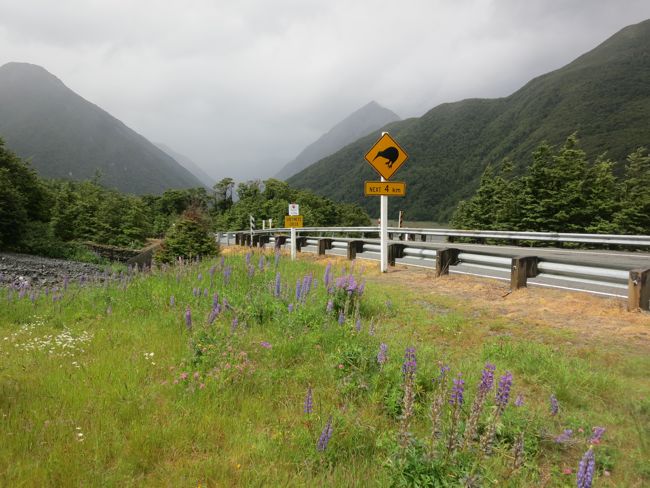
And that was the trip: mountains and coast, mist and rain and sun and hail, excitement and relaxation. And I’ll tell you a bit more about the most exciting, historical, interesting things in individual posts. Because my adopted country is amazing and fascinating AND YOU SHALL THINK SO TOO. ahem. I hope 😉
* Lots of eggs. Lots and lots and lots of eggs. We went through 5 dozens eggs in 6 days – and there were only two of us!
†Obviously, as we had spare goats to trade for sewing machines!
** And yeah, I know, salmonella, blah blah blah, but I’m a fan of the ‘get exposed to lots of germs’ theory of health, and I put more trust in tiny farms that can control what happens to all of their milk and cows, than huge corporations that accidentally allow thousands of litres of product to get contaminated with dangerous chemicals (*cough, cough melamine*).

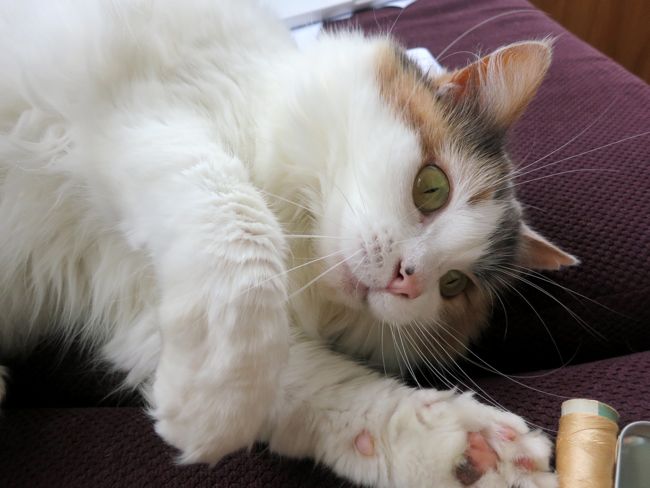 Oh, here is a new spool!
 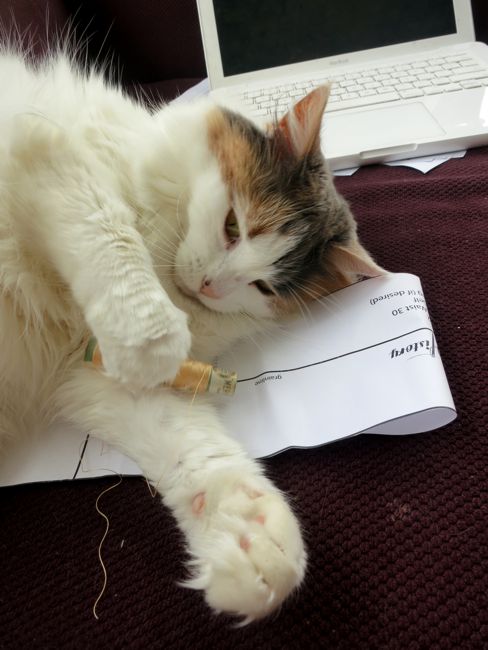 Looks OK…
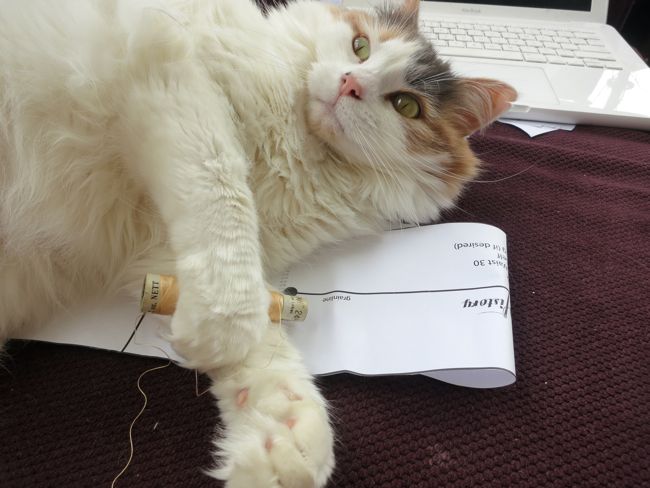 Rolls nicely…
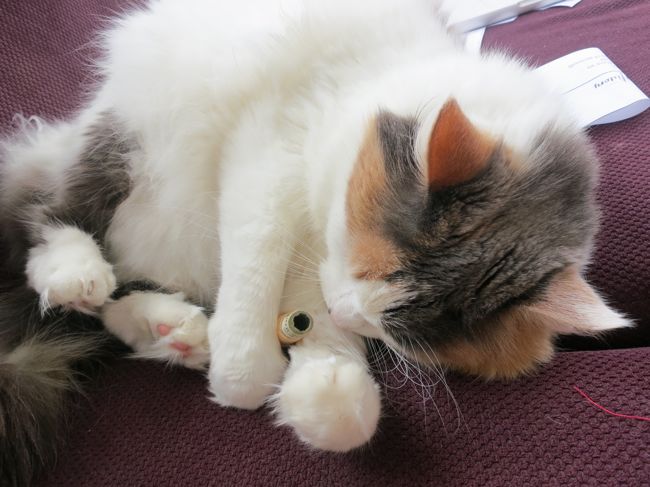 Smells OK…
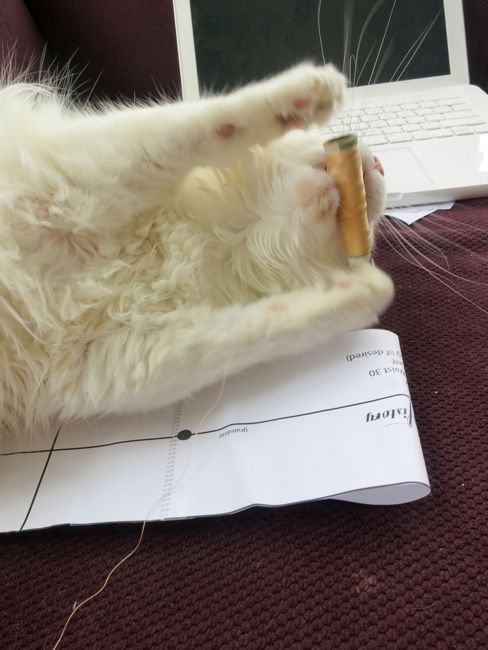 Nice firm bite resistance…
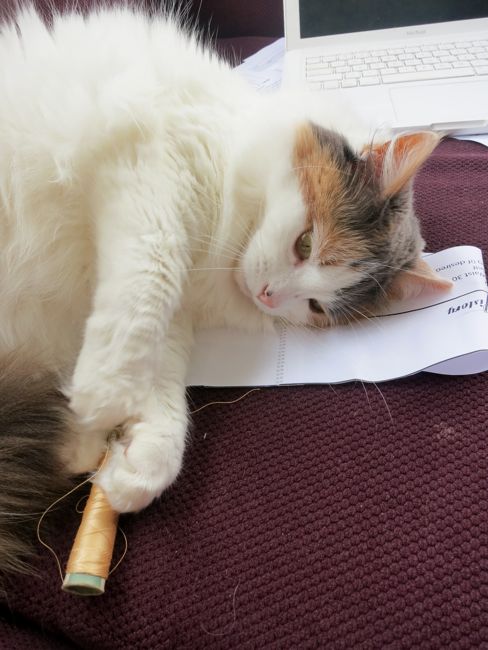 Passed every test. I deem this thread acceptable. You may now proceed to use it!
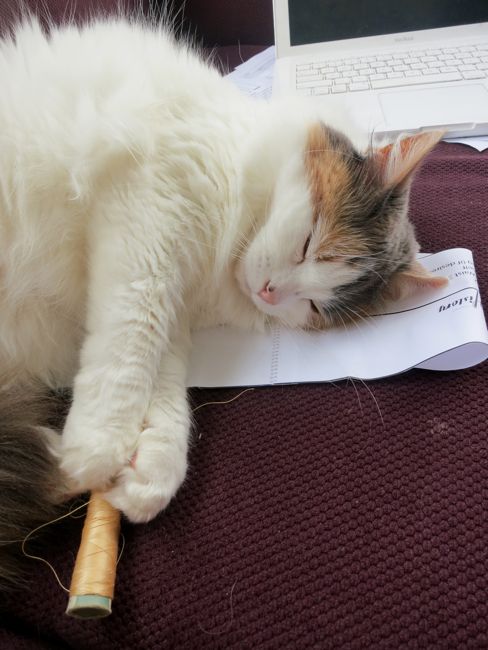 Whew! That was hard work. Naptime!