Last week I was away and couldn’t follow the comments on the 1890s purple satin & velvet ensemble as they came in. I thoroughly enjoyed catching up on them, and wonder if everyone who wrote ” _ out of 10, for sheer gumption/outrageousness/grumba/brio (etc.)” noticed that more than half the comments ended with a variant of that phrase! Generally you approved of it for its richness and detail and for the character who would wear it, though you invariably disliked the front buttons (for the record, I’m 90% sure that they are turquoise, which was extremely fashionable at the time, and as far as I am concerned they rescue the entire outfit. Without them the suit is direly overdone and stuffy and predictable – but clearly I’m in the minority, because it managed an 8.3 out of 10)
Continuing on the rich, velvety, and sumptuous theme, let’s look at Élisabeth de Valois, in her full glory as a French princess married to a Spanish king. Élisabeth, the eldest daughter of Henry II of France and Catherine d’Medici, was only 14 when she became the third wife of the 32 year old Phillip II of Spain. However, the normally cold and reserved Phillip was besotted with his young bride, and Élisabeth found her husband charming, and had a unusually happy marriage. She even formed a warm and loving relationship with her insane stepson (lucky for her that he became her stepson rather than her husband, as had originally been intended)
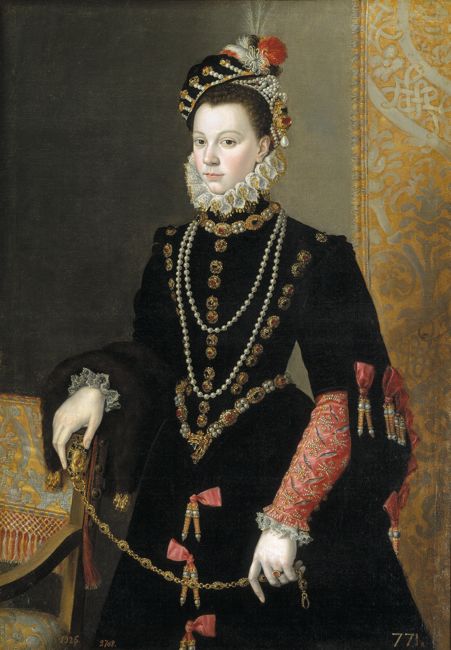
Élisabeth de Valois, by Juan Pantoja de la Cruz, 1565
This painting shows the 20 year old Élisabeth as a young and beautiful Queen. While 16th century fashion and Spanish fashions haven’t always been the most popular themes in Rate the Dresses, Élisabeth’s costume may represent the high point of the two: grand and extravagant, before the weirder excesses of the later 17th century, and before Spanish fashions solidified into tradition over elegance.
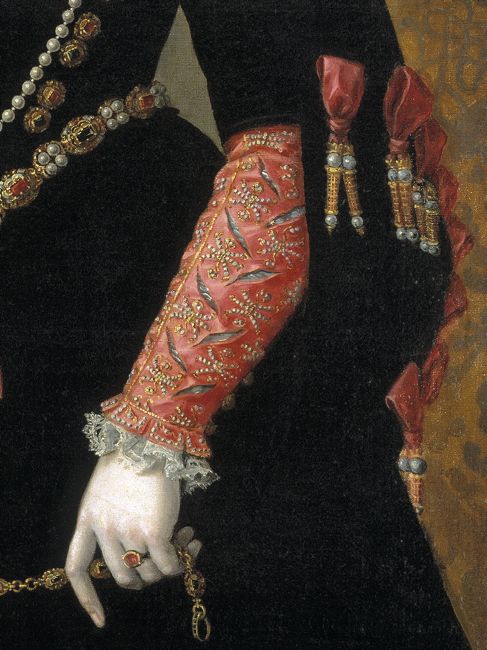
What do you think? Do you like the slim slashed sleeves in rich carnation pink, their detailing contrasting with the luxurious severity of her black velvet gown? Do the matching pink ribbon knots with their decorative aiglets round the sleeves and down the skirt add an appropriate levity to the dress, or are they too whimsical for a queen?
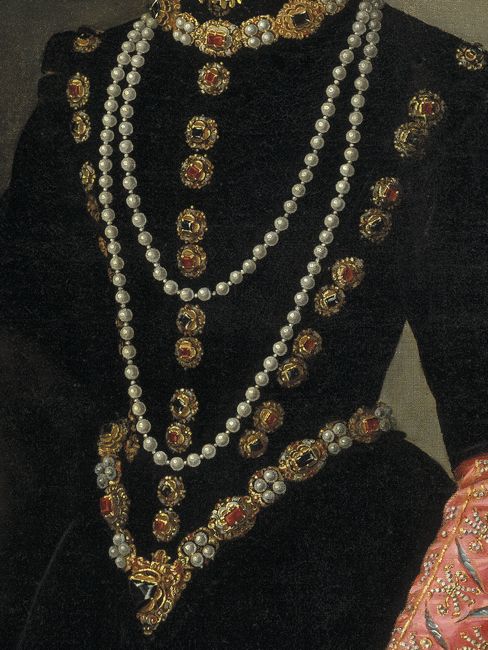
The black of the bodice is relieved by a decadence of pearls and jewels set in gold, flaunting Spain’s wealth and highlighting Élisabeth’s narrow waist. Too much? Especially when you notice the rather…unusual…ornament at the point of her bodice.
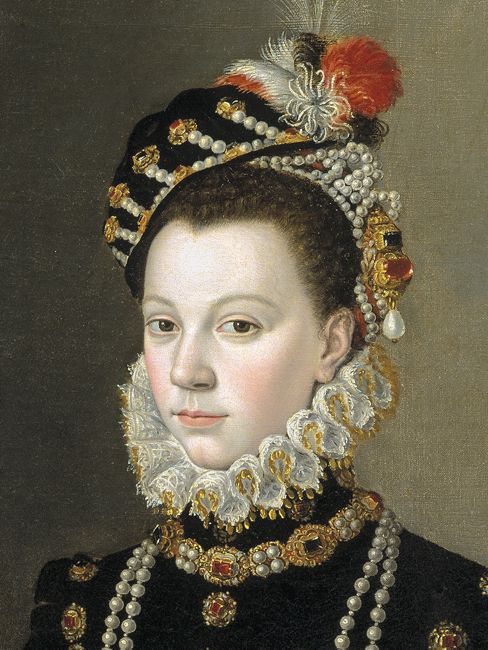
Élisabeth’s porcelain complexion and fashionably crimped hair ar set off with a gold-trimmed ruff and a cap of soft velvet further bedecked with jewels. Looking at it, I can’t help thinking of Maria Christina and her diamond and feather headdress. Élisabeth’s is almost as extravagant, but much trendier, and somehow despite all the jewels, lacking in authority and grandeur.
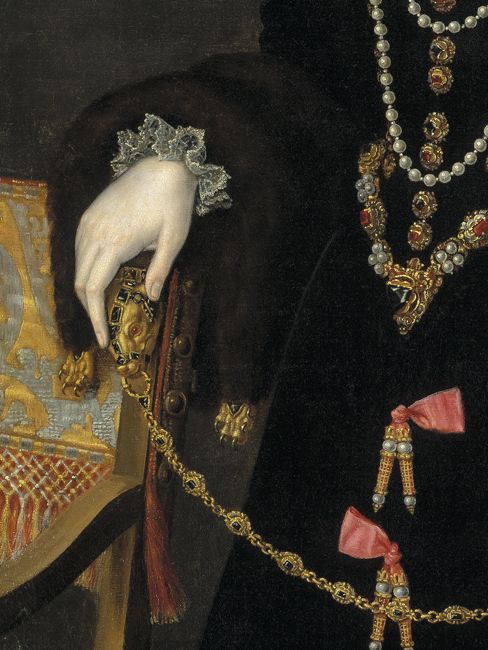
Élisabeth has accessorised her outfit with one final fashionable detail: a jewelled fur zibellino with a bejewelled chain.
Time to have your say: has Élisabeth balanced status and grandeur with youth, fashion and a bit of wit, or is she trying too hard on both ends?
Rate the Dress on a Scale of 1 to 10.