Latest Posts

A 1930s/40s Canterbury Woollen Mills Swimsuit

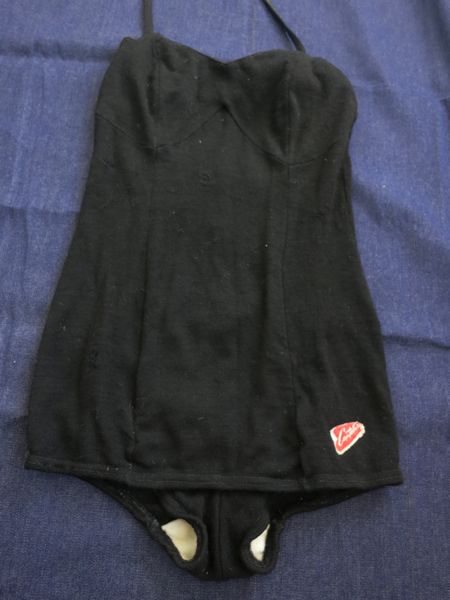
As a last treat for the Historical Sew-Fortnightly ‘By the Sea’ week, I thought you might enjoy seeing the one piece* of vintage swimwear in my collection: a late ’30s, or 1940s knit wool swimsuit from the Canterbury of New Zealand.   (*Actually, that’s not entirely true.  I do have a couple of late ’50s/early ’60s swimsuits – but this one might be as early as 1938, so replicating it would be within the HSF guidelines).
1930s/40s Canterbury Woollen Mills Swimsuit, thedreamstress.com

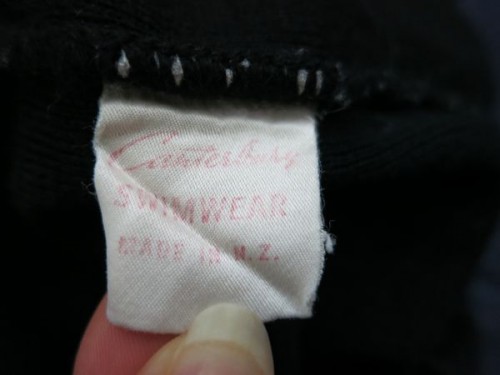
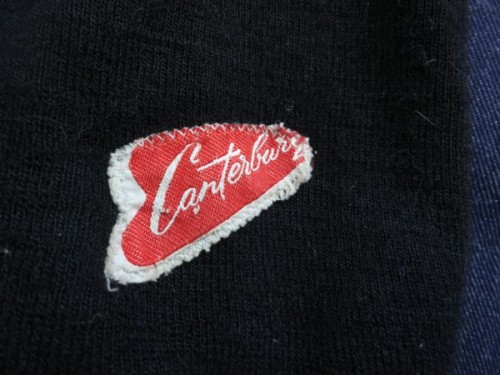
NZ, as a major wool producer, had a number of its own woollen mills and manufacturers in the 19th and throughout the 20th century.  One of these was the Canterbury Woollen Mills, based in Ashburton, just south of Christchurch, in the  Canterbury region of the South Island.  The mill was actually known as the Ashburton Woollen Mills from its founding in 1885 until 1890.  I am relatively certain that it was this mill that produced Canterbury swimwear (just like the Roslyn Woollen Mill produced Roslyn swimwear)

Protectionist laws throughout most of the 20th century made importing clothes prohibitively expensive, so instead of bringing in brands like Jantzen, NZ shoppers bought local versions, and swimsuits by Canterbury and Kaiapoi and Roslyn are much more easily found at antique stores and auctions.
1930s/40s Canterbury Woollen Mills Swimsuit, thedreamstress.com

I found my swimsuit at a small antique store in Nelson over Christmas.  It’s made from a midweight wool knit – it’s quite a fine, nice wool, not at all scratchy.
1930s/40s Canterbury Woollen Mills Swimsuit, thedreamstress.com

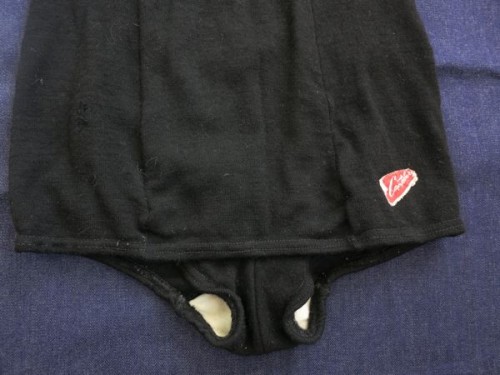
Although the swimsuit is made of knit fabric, all the shaping is achieved through sewn seams, allowing it to fit snugly to a woman’s curves – that, along with the materials used, logo font, construction and overall aesthetic, help me to date it to no earlier than the mid-1930s, and no later than the end of the ’40s, when cotton and synthetics started to be used in NZ swimwear, and the logo changed.
1930s/40s Canterbury Woollen Mills Swimsuit, thedreamstress.com

The swimsuit label states that it is for a 40″ bust, so too big for me.  It’s quite generously sized:  the bottom seems shaped for hips around 44″”, and the waist isn’t particularly defined.
1930s/40s Canterbury Woollen Mills Swimsuit, thedreamstress.com

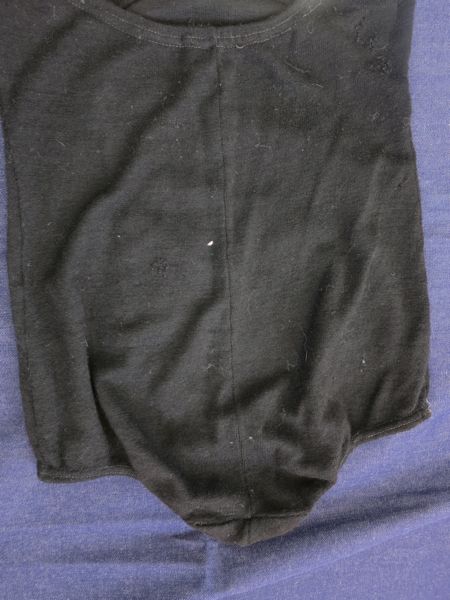
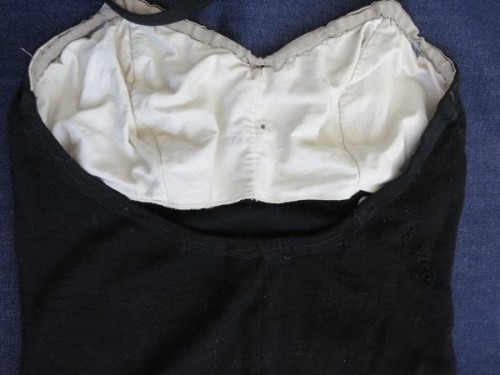
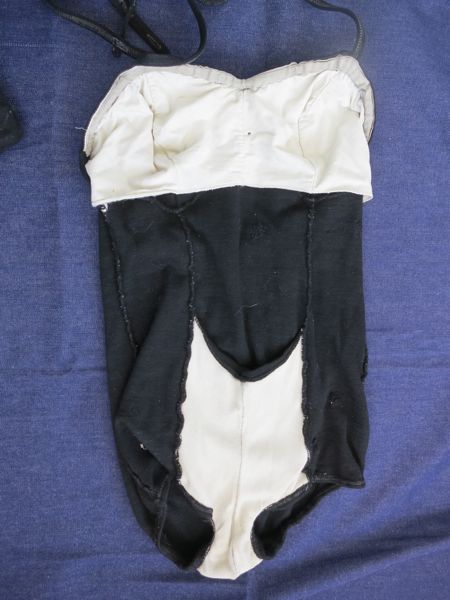
The bust area is fully lined with heavy unbleached cotton, shaped to support the bust.
1930s/40s Canterbury Woollen Mills Swimsuit, thedreamstress.com

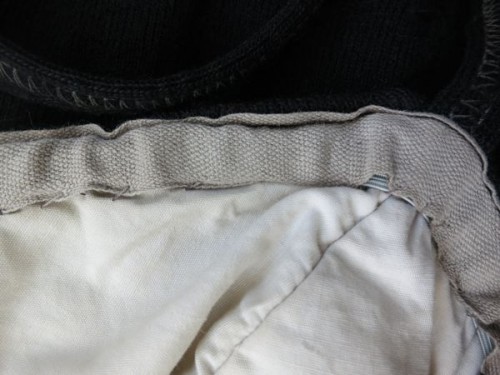
The bust is held snug against the chest with a line of elastic run through a line of twill tape from underarm to underarm.  The twill tape is hand stitched down at the bottom, and may be a later addition, or the elastic may have been replaced at some point when the original elastic perished.
1930s/40s Canterbury Woollen Mills Swimsuit, thedreamstress.com

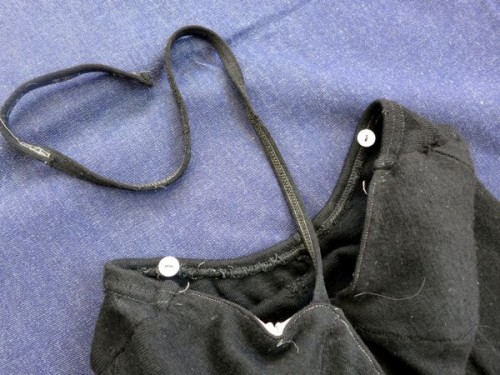
The swimsuit is held up with two long straps which fasten to buttons on the back.  The straps each have four worked buttoholes, allowing the straps to be fastened in an X across the back, or straight down from the shoulder.
1930s/40s Canterbury Woollen Mills Swimsuit, thedreamstress.com

The buttons are simple white two-hole buttons.  They appear to be original, and to be made from an early plastic.

1930s/40s Canterbury Woollen Mills Swimsuit, thedreamstress.com

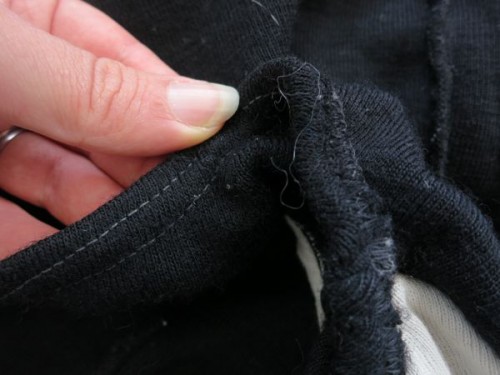
All of the interior seams of the swimsuit are finished with overlocking.  Overlocking machines were actually invented in the 1880s, and were commonly used for commercial knitwear from the early 20th century, though they would not become common for home seamstresses until the 1970s.

The edges are all finished with overlocked and double-stitched single-turn hems.
1930s/40s Canterbury Woollen Mills Swimsuit, thedreamstress.com

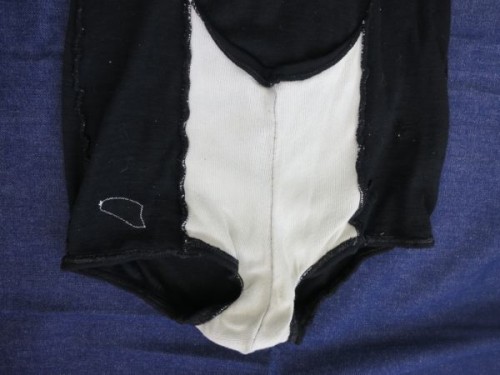
The crotch area of the swimsuit is protected by a layer of white cotton knit which, as part of the crotch-piece, is sewn into the princess seams at the side fronts of the false skirt front.
1930s/40s Canterbury Woollen Mills Swimsuit, thedreamstress.com

Other than the bust area and crotch, the swimsuit is unlined, but the wool was so fine that I did not find it uncomfortable to wear around the house for a couple of hours (just to see – as it is a vintage piece I won’t be swimming in it, though I’d love to know how it would react).
1930s/40s Canterbury Woollen Mills Swimsuit, thedreamstress.com

The swimsuit is generally in quite good condition, and is totally wearable, but it does have a number of small holes that have been carefully darned.
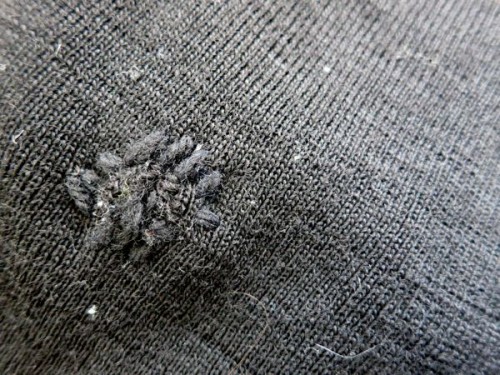
1930s/40s Canterbury Woollen Mills Swimsuit, thedreamstress.com

The holes are located mostly in the midriff area.  I have a soft spot for mends and darns, and rather like garments that have them more than garments that are in pristine condition.  A mend tells a story of wear: of a garments used and loved and needed.
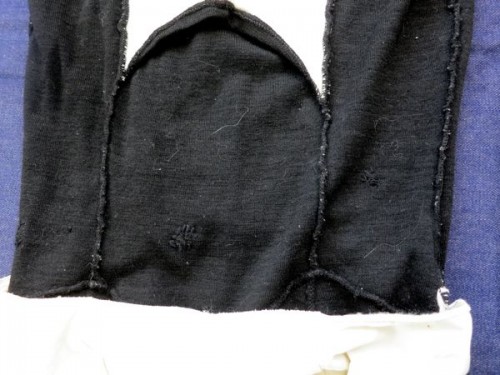
1930s/40s Canterbury Woollen Mills Swimsuit, thedreamstress.com

I wonder who the woman who bought and owned and wore, and hopefully swam in, this swimsuit was, with her 40″ bust.  Did she like black, or was that just the cheap, practical colour?  Did she feel pretty in this swimsuit?  Confident when wearing it?  I hope so.

Someday I’d like to find a model in the right size to do a very careful, gentle photoshoot in the swimsuit.
Flora and Fauna inspiration

The Historical Sew Fortnightly ‘Flora and Fauna’ challenge fortnight starts on Tuesday, and I’m SO excited about it.

I love using the natural world as inspiration: I’ve done it with the Juno Gown (melding Greek/Roman mythology and nature with the peacock motif) and with the Luna Moth gown, plus the Laurel Gown, which also used natural motifs and classical inspiration.  I also do it with not-so-historical garments, like Carolyn’s wedding gown, which borrowed from both butterflies and fish, and with Shell’s wedding dress, which borrowed from native New Zealand birds.

There are so many different ways to interpret ‘Flora and Fauna’ – you can simply use fabrics that depict flora or fauna, or fabrics made from flora or fauna, or can add in flora and fauna based motif, or you could create a garment that is inspired by the aesthetic of a particular bit of flora or fauna.  The last bit brings to mind the yellow and black Regency dress that I posted a few months back that many people felt had been inspired by a bee.  That’s pure conjecture, but we do know there were historical garments inspired by the natural world.  Louisa May Alcott described married Meg as wearing a grey dress that made her look like a little dove, and Emily spends the entire payment for a story on a dress that reminds her of a specific summer evening.

I had the most exciting project planned for the Flora and Fauna challenge: a replica of an embroidered 1920s dress in my collection that combines a very traditional feminine nature motif (a butterfly) with the exciting colours and broken lines of Fauvism, Futurism and Cubism.  Alas, while I located half the fabrics and embroidery threads needed, a reasonable match to the fabric I would be embroidering on has eluded me, so I’ve put the project on hold until I can find the right fabric.  There is no point in spending a hundred hours embroidering on a less than ideal fabric.

Instead, I’ll be making one delicious 18th century accessory, and a 1930s capelet for a dear friend for the challenge.  Not what I’d intended, but wonderful none-the-less.

Here are a few of my favourite flora and fauna inspired garments:

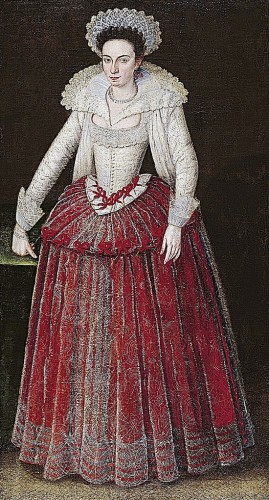
First, you have to look closely, but Lady Arabella’s skirt is spiderweb patterned.  I am SO in love.  SO IN LOVE.  My wedding veil was a piece of 1910s metal lace with spider webs.  I like spiders, and I LOVE spiderweb motifs.

Lady Arabella Stuart by Marcus Gheeraerts the Younger, Norton Simon Museum, Pasadena, Ca, ca. 1605-10

Lady Arabella Stuart by Marcus Gheeraerts the Younger, Norton Simon Museum, Pasadena, Ca, ca. 1605-10

I adore this workbag.  I’m sure the embroidery is meant to be flowers, but it’s so delicious and juicy looking that I like imagining it as berries.

Workbag, 1701,  linen with wool crewel embroidery, V&A

Workbag, 1701, linen with wool crewel embroidery, V&A

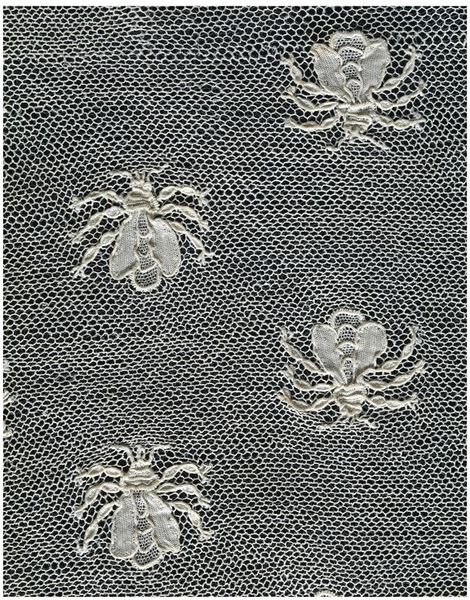
Look at this fichu worked with lace bees!  How sweet is that! (though, of course, it was actually a political statement at the time, as the bee was a Napoleonic symbol).

Fichu, Alençon, France, ca. 1805-1810, Needle lace worked in linen thread on a net ground, V&A

Fichu, Alençon, France, ca. 1805-1810, Needle lace worked in linen thread on a net ground, V&A

There are all sorts of divine Regency items with flora and fauna motifs.  This dress, with its hem garland of oak leaves, just makes me swoon.

Dress, 1807—10, Italian, Metropolitan Museum of Art

Dress, 1807—10, Italian, Metropolitan Museum of Art

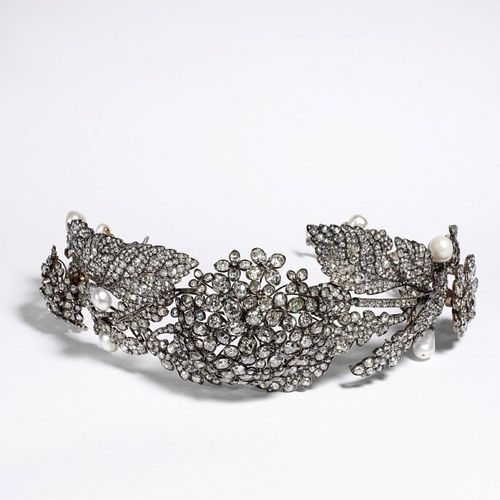
Clearly I’m not expecting anyone to make one of these, but I still can’t help showing you one of those tiaras that I love so much:

Tiara, 1850, V&A

Tiara, 1850, V&A

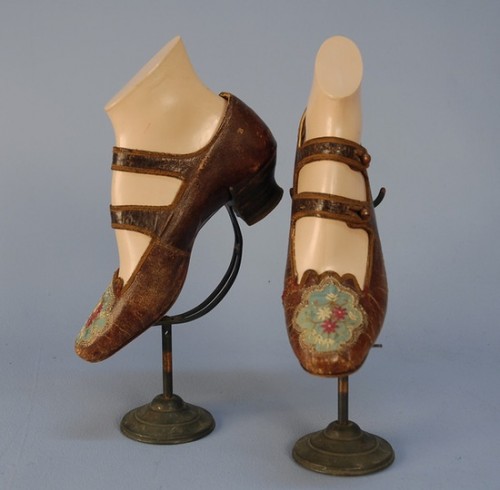
These shoes are a great example of how simple floral inspiration can be.  And the whole silhouette of these shoes is just divine.  I’m keeping an eye out for modern shoes with this look that I could re-make to be more historical.

1870's shoes of brown leather with double button strap, stacked wooden heel, the toe having a cutout scalloped oval inset with floral embroidered blue silk faille

1870’s shoes of brown leather with double button strap, stacked wooden heel, the toe having a cutout scalloped oval inset with floral embroidered blue silk faille, Whitaker Auctions

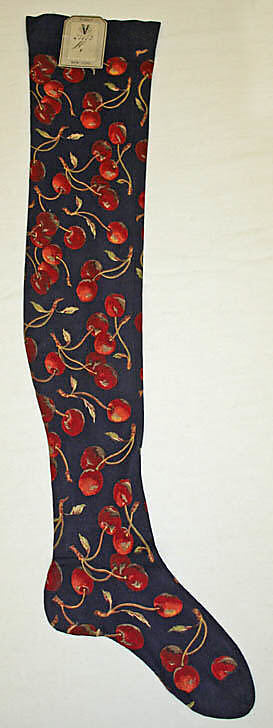
In general, I don’t like 20th century vintage cherry motifs, but I love these 1870s stockings.  If I ever find nice silk or cotton knit with a cherry pattern I’m going to make my own!

Stockings, 1870, French, cotton, Metropolitan Museum of Art

Stockings, 1870, French, cotton, Metropolitan Museum of Art

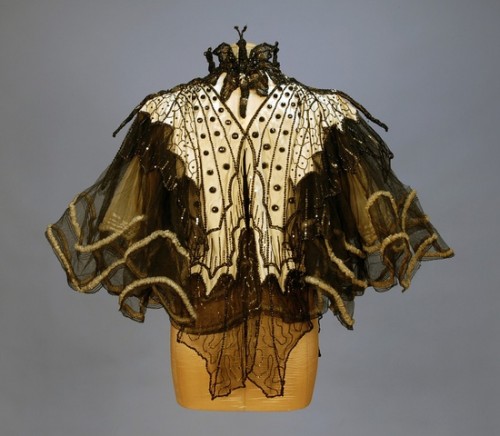
I think this butterfly inspired cape is just fantastic.  It’s just another piece of proof that garments really can literally be flora or fauna inspired.

Pingat Jet Beaded Butterfly Evening Cape (back), 1890's

Pingat Jet Beaded Butterfly Evening Cape (back), 1890’s, sold through Whitaker Auctions

Isn’t the fabric on this ’20s dress just fabulous?  Its also a great inspiration piece for Eastern Influence.

1924 Redfern of London dress

1924 Redfern of London dress, Hillwood Estate

Ah, so many pretty inspiration pieces, so little time to sew!  If you want to see more, check out my Flora and Fauna pinterest page.

Cats and corset boxes

Last week I got a big shipment of corset and hooping materials in a lovely low, square box, all packed in with tissue paper.

I took out all the corset supplies, but left the hoops and tissue paper in the box, and the box in the middle of the living room.

For two days, nothing happened.

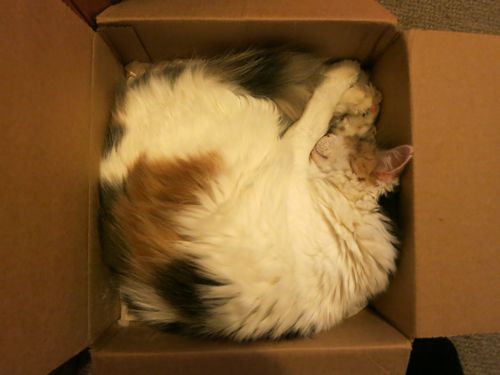
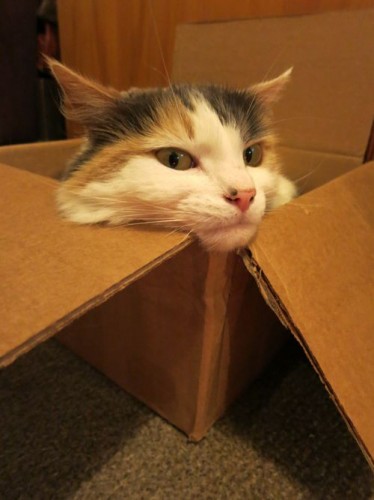
And then Felicity discovered the box.

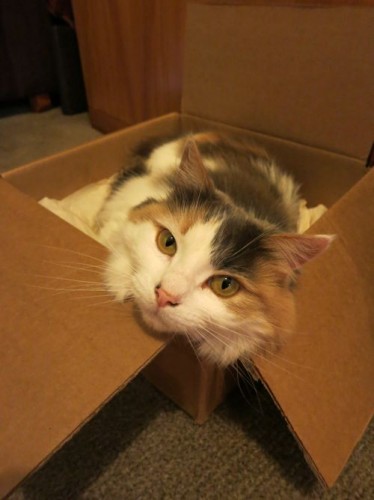
She’s not much of a box cat, but it turns out corset supply boxes are perfectly Felicity shaped.

Felicity in a box, thedreamstress.com

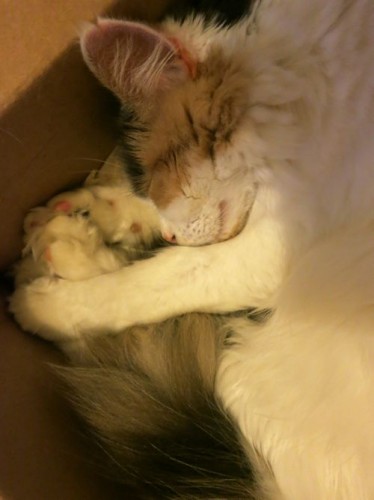
It’s now her nightly nest.

Felicity in a box, thedreamstress.com

Felicity in a box, thedreamstress.com

Felicity in a box, thedreamstress.com

Clearly this is a costuming cat!

Felicity in a box, thedreamstress.com