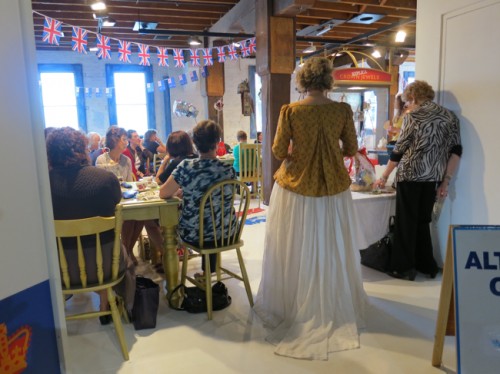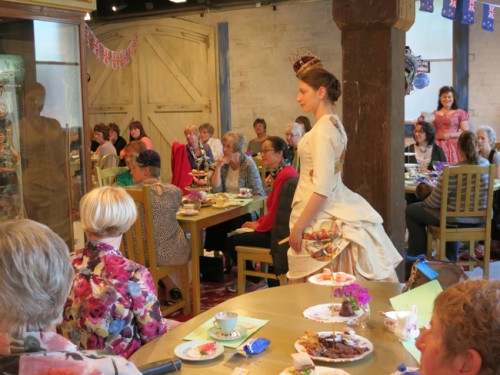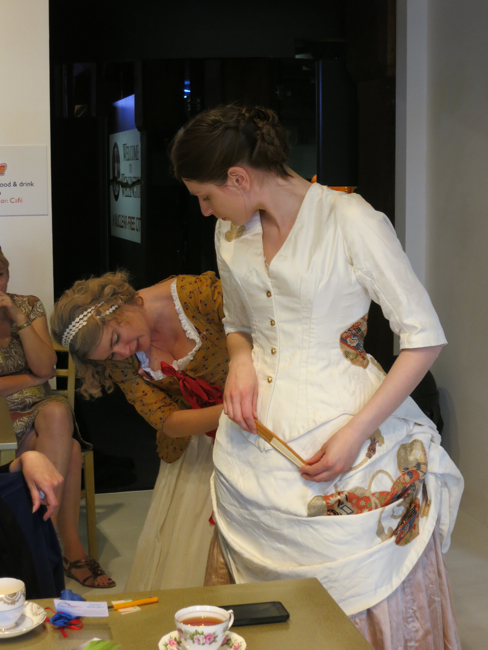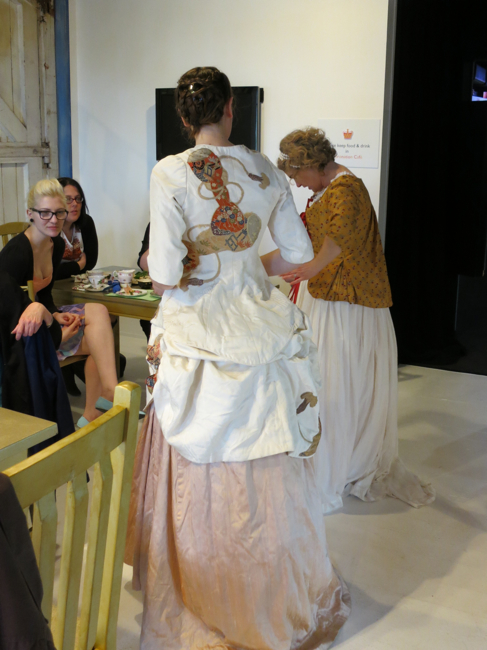
We all know about Queen Victoria’s obsession with Scotland and her castle in Balmoral, and how this led to the name ‘Balmoral’ being applied to all sorts of fashion items. One of these was the balmoral petticoat.
The balmoral petticoat was a coloured petticoat that was intended to show at the hem of a drawn-up skirt for walking and sportswear in the 1860s and 1870s.
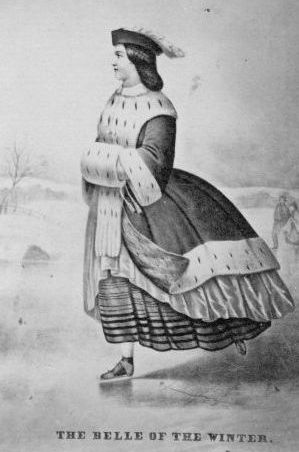
‘Belle of the winter’ – a skater in a striped Balmoral petticoat
The balmoral petticoat could be worn over a hoopskirt or crinoline or have hoops built into the petticoat, and (according to some sources) include a horsehair stiffener as part of the petticoat itself.
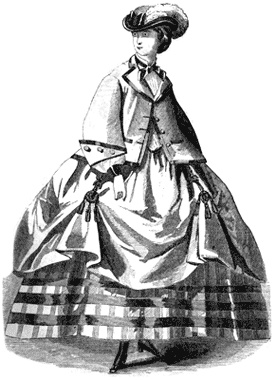
1860s walking outfit worn with a Balmoral petticoat
The most common Balmoral petticoat was red wool, often with 2-4 black stripes running around the hem. Later in the 1860s there are mentions of balmoral petticoats in plaid or striped wool, and even cotton balmoral petticoats in the Americas.
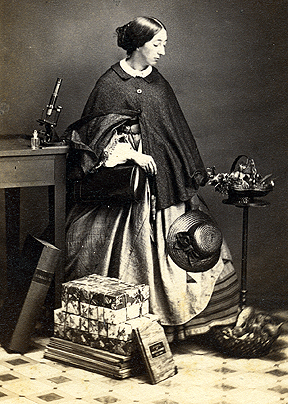
Rachel Bodley (1831-1888), the first female chemistry professor at Philadelphia’s Women’s Medical College from 1865 to 1873, in a balmoral petticoat. via here
The petticoat was said to originate at Balmoral, with writers in the 1890s claiming that during the 1860s royals at Balmoral wore high laced boots (Balmoral boots), scarlet petticoats, and their skirts drawn up to walking length for practicality, showing glimpses of the scarlet petticoats, the boots, and bright coloured stockings.
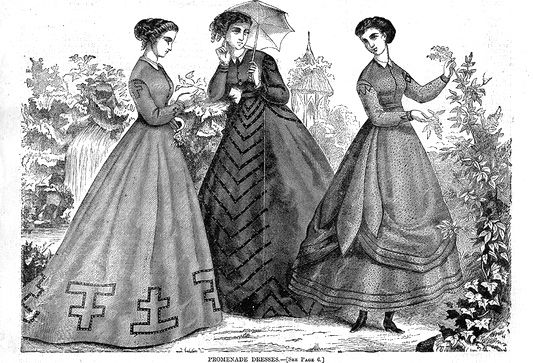
Harper’s Bazar, 1867, Promenade Dresses
The balmoral petticoat was most popular at the height of the crinoline era, but quickly became a victim of its own popularity and practicality. Fashion has never loved sensible garments, and balmoral petticoats were eminently sensible: warm, durable, easy to walk and move in. They were adopted by all levels of society almost immediately (there are numerous mentions of slaves in the American South wearing balmoral petticoats in the 1860s), and quickly discarded by the upper levels of society. A variant of the Balmoral petticoat (sans hooping) remained popular with older women and the less fashionable for decades after the crinoline was discarded. As a result ‘red flannel petticoat’ became synonymous with provincial fashion and the elderly.

Margherita of Savoia-Genoa in the late 1860s carte de visite by Henri Le Lieure. Is this a balmoral petticoat? Debatable
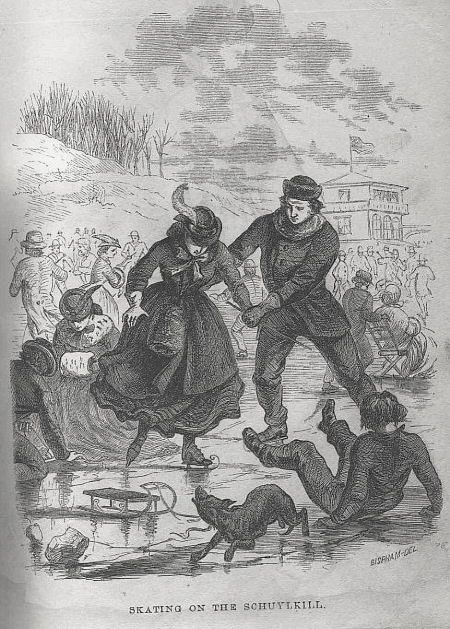
Skating on the Schuylkill in a balmoral petticoat
Sources:
O’Hara, Georgina, The Encyclopedia of Fashion: From 1840 to the 1980s. London: Thames and Hudson Ltd. 1986
Lewandowski, Elizabeth J, The Complete Costume Dictionary. Plymouth UK: Scarecrow Press. 2011