I like to make garment bags for my clients, and to keep my own dresses in. It makes garments easy to store and carry, and you can build pockets into the garment bags to hold belts and sashes and other accessories, so that you never spend time trying to remember where you put the rest of the outfit.
Here is how to make a simple 22″ wide, 55″ long dress bag with one outside pocket.
You will need:
- 65″ (1.7 yards, 1.5 metres) of 45″ wide fabric. I like to use pre-washed unbleached cotton muslin because it is low-acid. For a shorter bag you will need the length you want the bag to be + 10″ for the pocket.
- A 50″ zip
- A 3″ length of cord, or make your own piece of rouleau cording using Steph’s excellent tutorial.
Step 1: The pocket
- Cut 10″ off of the bottom your length of fabric.
- Cut two 12″ pieces from the 10″ strip. These 10″ x 12″ squares will be your pocket.
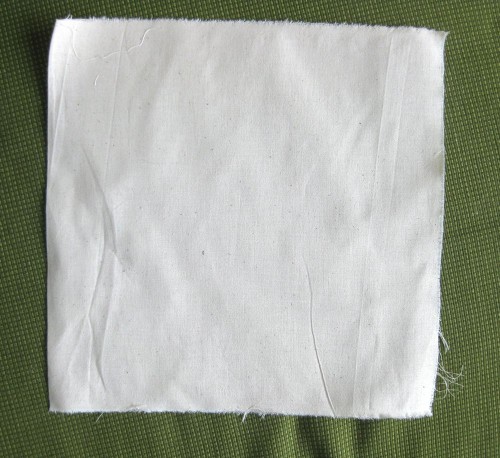
Squares for pockets
- Place the two 10″ x 12″ squares wrong sides together. With a 5/8″ seam allowance start sewing on one long edge 3″ from a corner. When you get to the corner turn and sew down the short edge with a 3/8″ seam allowance. Turn and sew down the 2nd long edge, also with a 3/8″ seam allowance. Sew the final short edge with a 3/8″ seam allowance, but when you get to the last corner turn and sew another 3″ on to the first (original) long edge with a 5/8″ seam allowance. When you are done it should look like this:
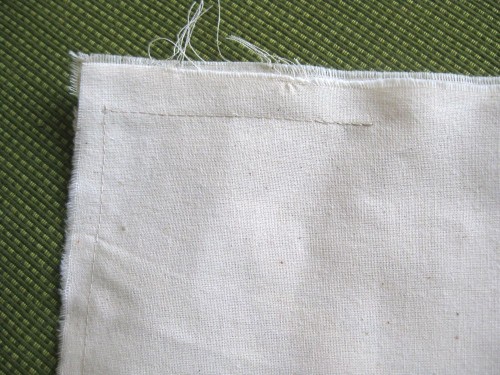
The turned corner with the gap at the right
- Snip the corners
-
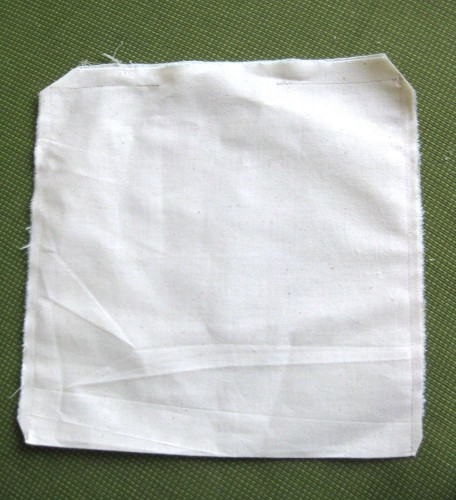
Your sewn square with the gap at the top centre & snipped corners
- Turn and press the square, using the gap in the top edge to turn through.
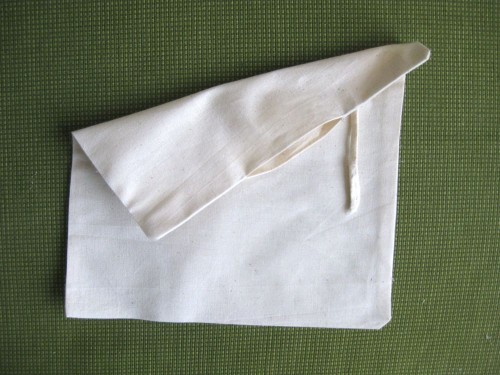
The turned and pressed square, with the open turning hole
- Mark the centre of the square at the top edge which has the gap. Fold your cord or rouleau cord into a loop, and pin between the two layers of fabric at the gap. Stitch right along the edge of the fabric at the top edge of the pocket, backstitching over the loop a couple of times to ensure that it is secure.

Folding the roleau cord into a loop

The roleau loop pinned between the two layers

The fully sewn pocket
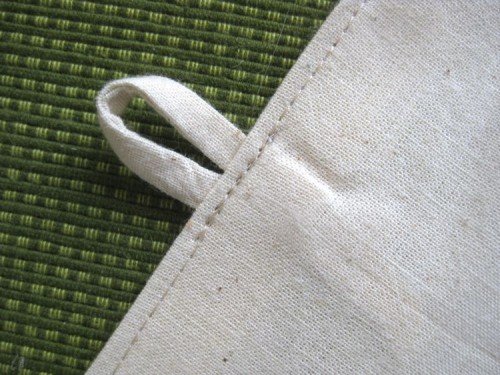
The backstitching over the rouleau loop
Step 2: Attaching the pocket to the garment bag
- Mark the centre of your length of 45″ fabric, and the centre of your pocket (remember this will pass through the centre of the loop)
- Measure down 10″ from the top of your length of fabric, and pin the pocket square in place, matching the centre markings.
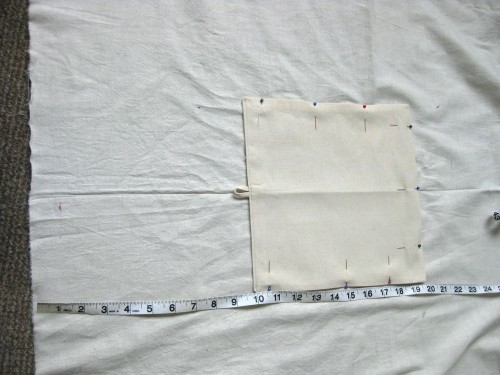
The pocket centred & pinned on the garment bag 10″ from the top.
- Narrow sew along the sides and bottom of the pocket, being sure to backstitch at the beginning and end so that the pocket is firmly attached.
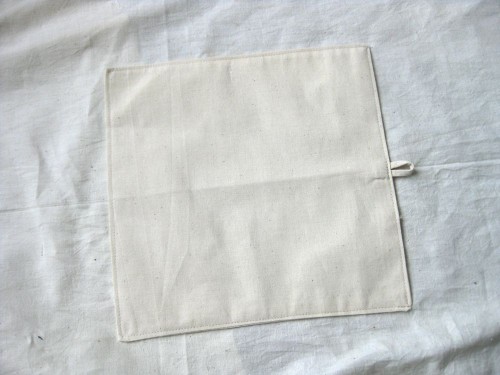
The pocket sewn on to the bag
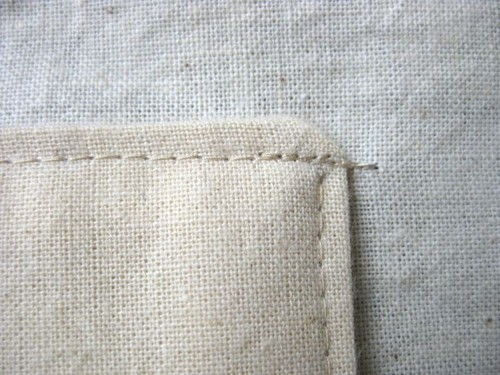
The back stitched pocket sides – no unravelling happening here!
- Pick a cute button that fits the size of your loop, and sew it on and your pocket is done!

I used a large vintage black jet-effect ‘orphan’ button
Step 3: The zipper
- Fold your length of fabric in half with right sides together. Pin along the two selvedge edges. Sew along the edge using a 5/8″ seam allowance and the largest stitch length. Press this seam open. This seam will be your centre zip opening.

The sewn and pressed seam for the zip
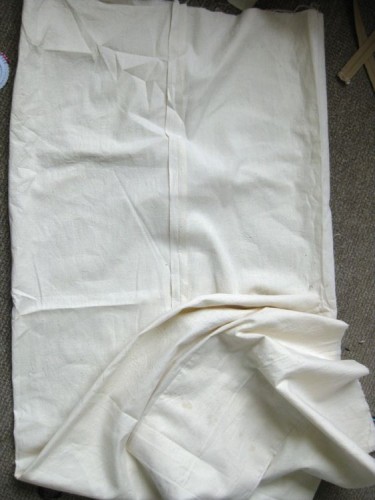
The zip seam at the centre of the bag
- Insert your zipper: lay your zipper face down on the pressed open seam, carefully centering the zip on the seam. Pin or baste in place.
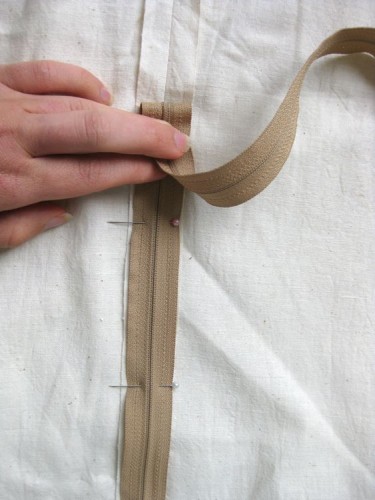
Centreing and pinning the zip in place
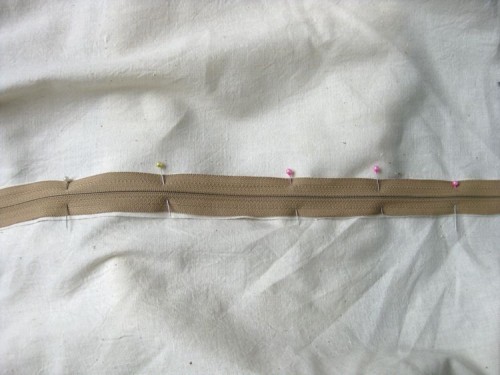
The zip pinned over the seam
- Using a zipper foot and the normal stitch length, carefully sew down one edge of the zip, following the ribbed line that is in most zips to guide you.

Sewing down the zip. See how my needle follows the line that is woven into the zip?
- When you get to the bottom of the zipper insert your needle fully into the fabric, lift your foot and turn the fabric 90 degrees, so that you can sew across the bottom of the zipper. On garment bags I like to backstitch back and forth across the bottom of the zip a number of times so that it is very firmly secured.
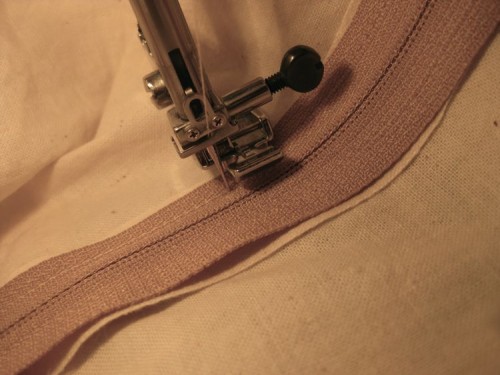
The foot lifted, and the bag turned 90 degrees

You can see how I backstitched across the zip a couple of times
- With the bottom of the zip secured insert your needle into the fabric, lift your foot, and turn the bag another 90 degrees, so that you can sew back up the other side of the zip seam 1/2 from the seam.
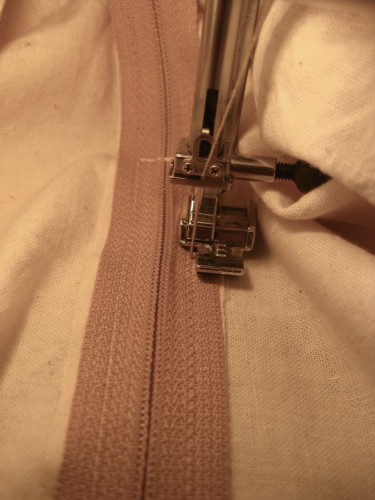
Sewing up the seam
- If you have trouble getting past the zipper pull you can insert your needle firmly into the fabric, lift your food, and unpick a bit of the seam to open a hole enough for you to slide the zipper pull down past your foot.

All the way back to the top! Now what to do about that pesky zipper foot?

A little hole opened in the seam, and the zip pull moved down so I could finish the zip
- At the top of the zip turn the fabric once more and sew back and forth across the top of the zip, just as you did at the bottom, so that it is firmly secured.
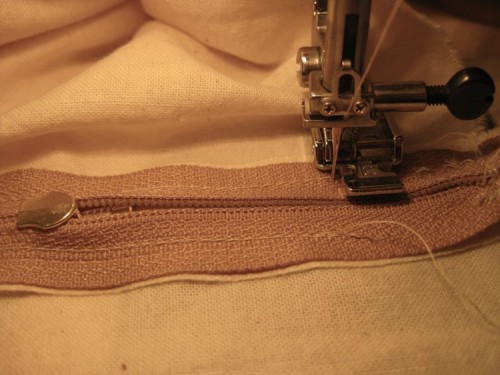
About to sew across the top of the zip
- Woohoo! Your zipper is all sewn, and almost done. Now you unpick the basted seam covering the front of your zip, and trim off any extra length at the bottom of your zip if you bought one longer than your bag.
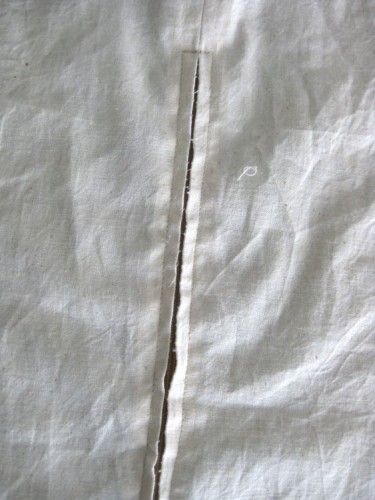
The ripped open seam

The cut off zip
Step 4: The bottom of the garment bag
- With your zip done it’s time to finish the bottom of the bag. I do this with a french seam, so that there are no nasty raw edges.
- First, lay the bag out, right side out, centreing the zip in the middle of the bag. Pin the bottom edges together.

The bag laid out, with the bottom edges pinned together
- Sew along the bottom edge, 3/8 from the edge.

The stitch line at 3/8 from the edge
Turn your bag inside out, press the bottom edge, and sew along the bottom edge 5/8″ from the edge, thus enclosing the raw edges in your seam.
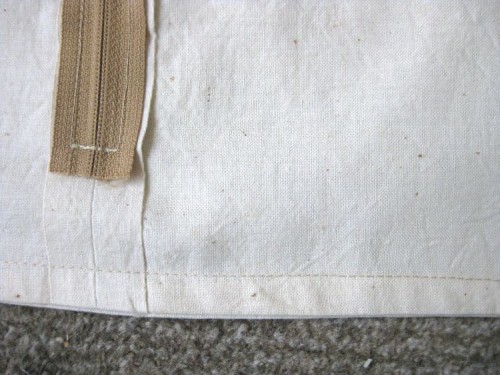
The french seam you have just created on the inside of the bag
Step 5: the top of the garment bag
The top of your garment bag is going to look like a shallow upside down V, with the tip cut off for the hanger hook to go through. Just as with the bottom of the bag, I french seam it, so that there are no nasty frayed pits.
So, do do the top of your bag:
- Lay the bag out flat, and carefully smooth it out and centre the zip. Lay a hanger on top of it to use as a guide, with the hook right at the centre point along the zip line.
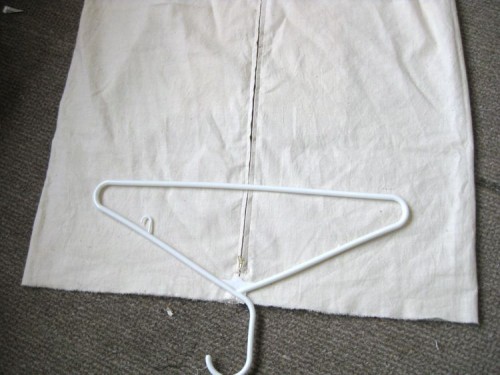
The hanger centred on the garment bag
- Mark the line of the hanger on ONE side of the bag using a chalk or a pencil. Use a straight edge to continue this line to the edge of the garment bag.
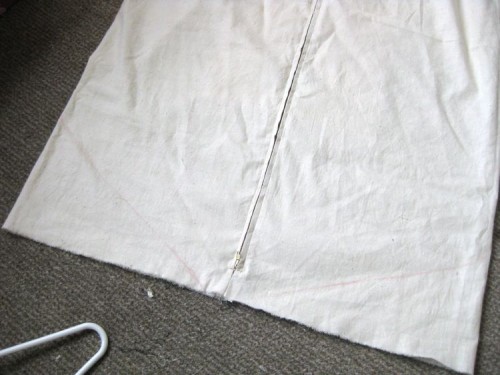
The hanger line marked. Both sides are marked here, but it works better if you only mark one.
- Cut 5/8″ above the line you have marked on one side of the garment bag, and then fold the bag in half and use the cut line as a guide to cut the other side of the garment bag.
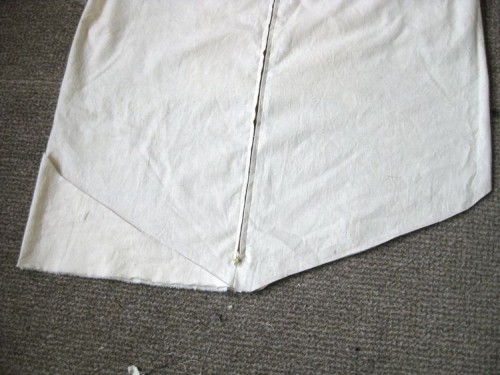
The cut angles at the top of the garment bag
- Trim off a bit of the top of the garment bag so that you have at least 2″ of a straight edge at the top of your inverted V.

A bit of the top of the point trimmed off to give a 2″ straight edge
- Then fold, press and stitch the straight edges on the front and back of the garment bag.

The finished edges at the centres of the garment bag.
- Now that the centre hole that the clothes hanger hook will pass through is finished, it’s time to do the french seam on the top edge. With the wrong sides of the bag together, the zip facing out and centred on the garment bag, sew a narrow 1/4″ seam along the edge on both sides of the finished edges for the hook hole.
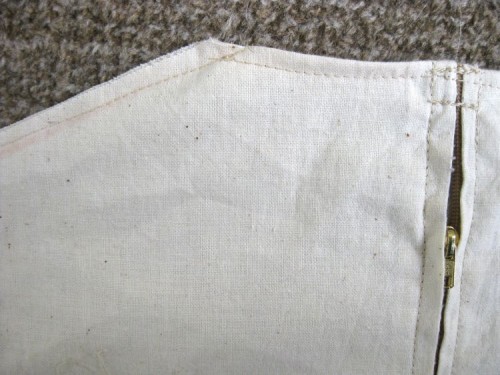
Seam sewn 1/4 from edge on the outside of the garment
- UNZIP the zip and turn the garment bag inside out. Press the seam you have just sewn, and sew 1/2″ from the edge, forming a lovely finished french seam.
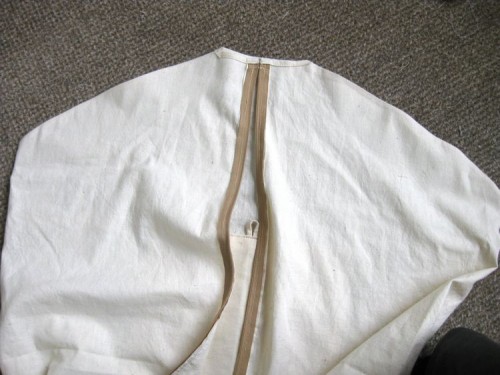
The inside-out garment bag, ready to sew the 1/2″ seam sewn

Pretty finished french seam!
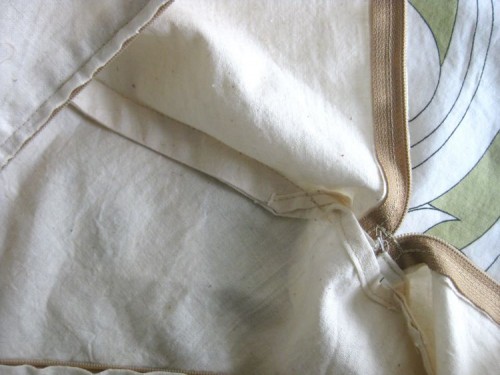
The inside finished french seam
- Turn your garment bag right side out, press, and….
You’re done! Put your prettiest garment in it and enjoy!
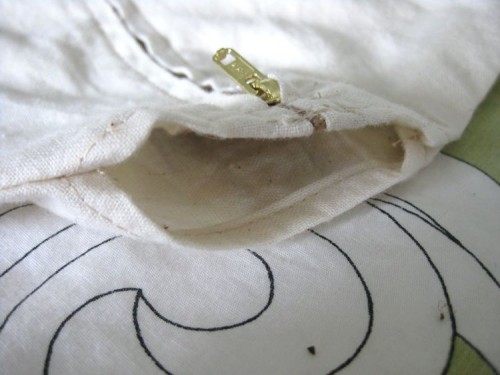
The hole for the clothes hanger hook
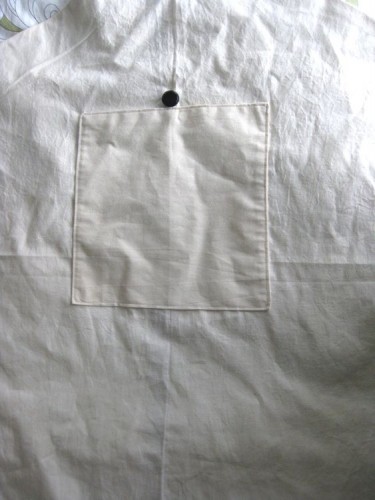
Lovely useful pocket