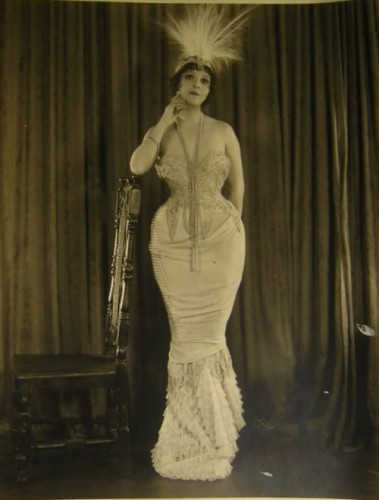
Following up on Friday’s post on what I do when a garment is finished, this is how I store the finished garments.
Or, specifically, how I store my undergarments.
I have one suitcase for corsets, chemises, short petticoats and drawers, and another for big petticoats and bustles
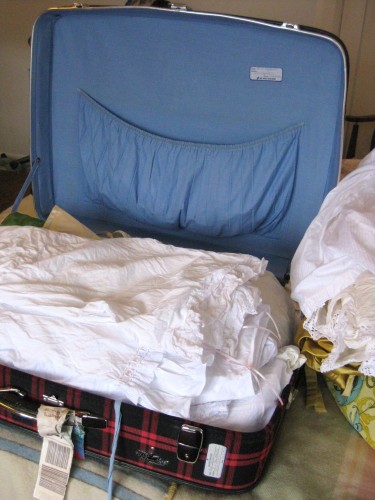
Ruffly, fluffy (in need of pressing) chemises and drawers
My first suitcase, the one for corsets etc. came from Nana. It still has the airport tags from the last trip she took it on attached.
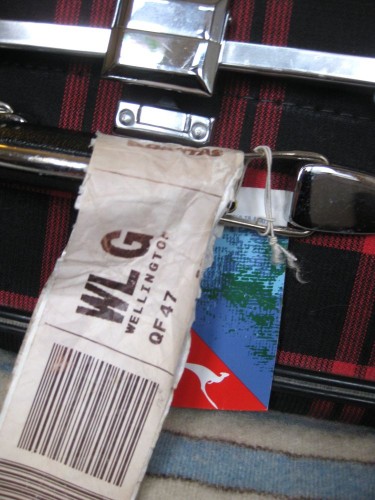
To Wellington on Quantas 47
I’m pretty sure it dates from the 80s, when China had just started to really open up to the West. The suitcase is clearly made for the Western market, but the marketing hasn’t quite caught up.
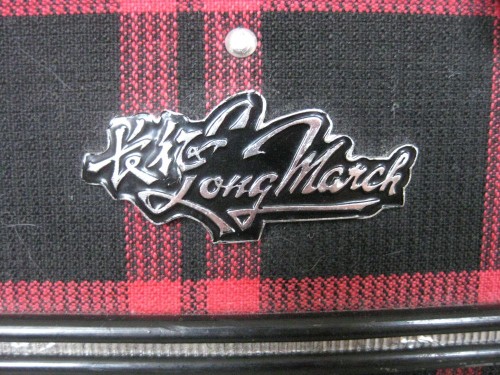
Well...that is one kind of journey
The corsets and chemises and drawers go in the body of the suitcase, and I keep stockings and extra corset laces in the pocket.
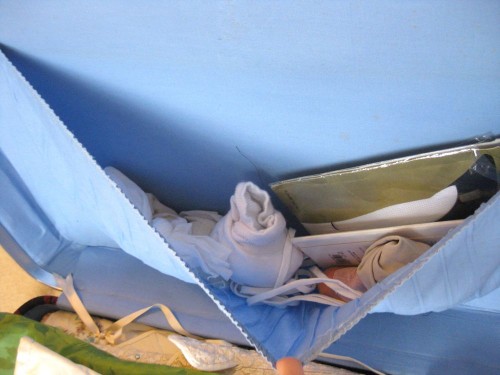
Stockings, socks, laces and tights
Its a great system: anytime I need lots of undergarments I just grab the whole suitcase and go.
Just about the time that I started really running out of room in Nana’s suitcase, I found another, almost matching one, but even older and cuter, in an op shop for $6.
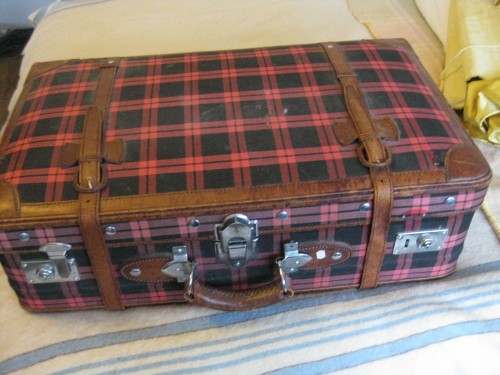
Black watch tartan and leather trimmings
Perfect! This one holds my bustles and really big fluffy petticoats, which I use a little less than the corsets and chemises
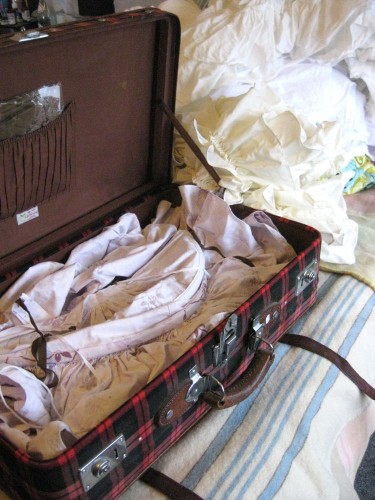
The bustle petticoat in the suitcase, and big fluffy ones on the side
And that is my attempt to organise and contain one little aspect of my massively disorganised and sprawling life!