Latest Posts

Juno dress: Things I wish I had known

When I first started the Juno Victorian Goddess dress, there was only one image of my inspiration gown available:

Evening Dress, House of Worth (French, 1858—1956), ca. 1890, 2009.300.635, Met


So I guessed what the train looked like, and what the back of the bodice looked like, and lots of other stuff.

Original bodice front
Original train

And I got it wrong.  Because the Met got the Brooklyn Museum’s costume collection and put up more images of the dress, and now I know that the the train looks like this:

Evening Dress, House of Worth, ca. 1890, back view, 2009.300.635, Met

The train is fancy, not plain, the bodice laces, and the bodice trimming is much more controlled.  And just look at the sleeve details, and the way those pleats fall!

Evening Dress, House of Worth, ca. 1890, 2009.300.635, Metropolitan Museum of Art

She looks so pleased with herself!  And this shot really shows how far off the shoulders the bodice sits:

Evening Dress, House of Worth (French, 1858—1956), ca. 1890, 2009.300.635, Metropolitan Museum of Art

And the other side of the dress.  Now I can see that the tulle catches back up:

Evening Dress, House of Worth, ca. 1890, silk, 2009.300.635, Metropolitan Museum of Art

And just look how different it looks without a full bustle.  Is this an original 19th century image (dubious), or the donor in the 1930s or a later museum model (far more likely)?  And is it just me or do the ruffles at the hem look not at all the same as the ones that we see today?
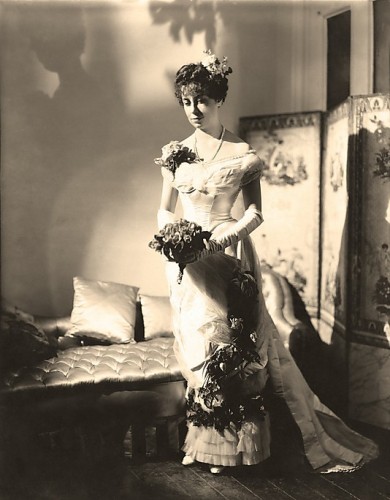
Evening Dress, House of Worth, ca. 1890, 2009.300.635, Met

So now that I know what the gown is supposed to look like, I just can’t be content with my version.  So, in complete disregard of the poll that I put up on the site, I have pulled the Juno dress pretty much completely apart (at least the skirt part of it), and am putting it back together.

I started by blithely pinning toile fabric to Isabella with mad abandon.

Let’s just say that didn’t work so well:

Uh...the army called, they want their camo tent back

Then I got smart, and carefully analysed the duchesse satin draping, and did that part.  And it looked pretty darn good.

Then I had to decide what to do for the tulle draping.  Silk tulle is impossible to find in NZ, so I’m having to be creative.

Option 1:

Blue and silver silk striped gauze. The colour isn't quite that good in real life, the handle is much too crisp, and it clashes with peacock feathers.

Option 2
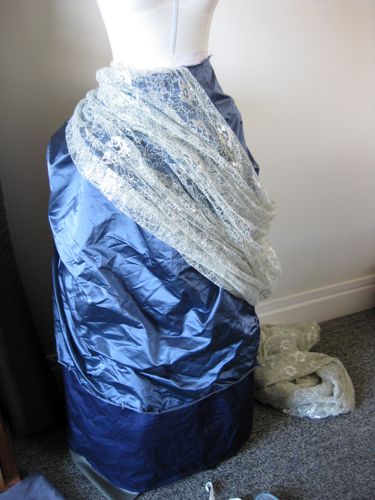
Silver and white net lace. The colour is a bit too clash-y. And it's a synthetic

Option 3
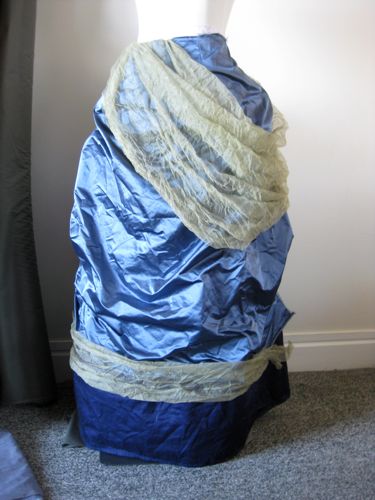
Gold silk tulle. Perfect drape, historically correct, but I only have small scraps left over from the Laurel dress and the colour is too contrast-y.

So, with three imperfect option, I decided I was just going to have to make it work and create a perfect option.  I’m un-dyeing the gold silk tulle (and some extra gold tulle which I had dyed black for the Laurel dress) and dyeing it blue to match the duchesse silk.  Ridiculously complicated.

I’ll keep you updated!

Rate the Dress: a Pingat Mantle

Last week you were divided on the individual garments that made up the men’s ensemble which I presented you.  The jacket was universally liked, but the pleated stirrup pants were not so popular, dragging the ensembles ratings down to a 6.3 out of 10

This week I present you with a singe garment, rather than a full ensemble, so you don’t have to worry about not liking bits and pieces of the ensemble (though you might not like bits and pieces of the individual garment!)

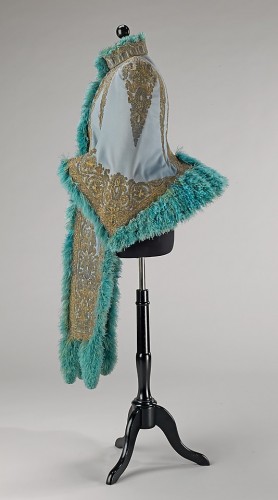
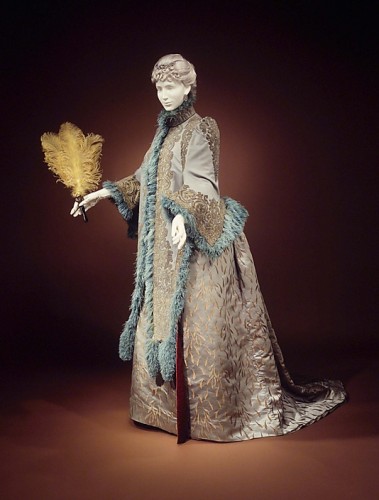
There are multiple views of this striking 1891 evening mantle by Emile Pingat with Islamic inspired designs and aqua marabou trim, so you can experience it from different angles.

We have the front:

Emile Pingat, mantle, 1891, Metropolitan Museum of Art

And the side:

Emile Pingat, mantle, 1891, Metropolitan Museum of Art

And a view of the jacket worn over a dress:

Emile Pingat, mantle, 1891, Metropolitan Museum of Art

What do you think?  Fabulous?  Or not?

Rate the Dress on a scale of 1 to 10

By the way, have you realised that you can see every Rate the Dress ever, in order?

The Museo de la Moda Costume Book

I am so, so excited about what I get to show you this week.  It’s something I have coveted for a long, long time, and didn’t think I would ever be able to get.

It is the catalogue from the Museo de la Moda‘s first exhibition:

My precious…

You might not have heard of the Museo de la Moda, or the catalogue.  And that wouldn’t be surprising, because it is a new museum, with very little web presence, located in Santiago, Chile – not usually the centre of costume fabulosity.

But it has a fabulous collection, and a fabulous catalogue.  Neither of which is available in any form except for in Santiago.  Gah!

I’ve been so obsessed with the catalogue that the minute the fabulous Claire of Well, I used to be a Lady mentioned that she was going to South America, I asked if she was going to Santiago.

And she replied that she had a stopover of a few hours.

And I very cheekily asked if she would take a taxi out to the Museo during her stopover and pick up a catalogue for me, and she said she would.

I have the BEST friends ever.

She even sent me a text from Santiago to tell me that she was at the Museo, it was fantastic, and she had my catalogue.

Like I said, I have the BEST friends ever.

The catalogue is so worth every penny of the ridiculous amount of money I spent on it.  It’s beautifully photographed, and full of exquisite gowns: each a unique and beautiful example of its type.  I’m so in love with the book (and with Claire!)

This is just a hint of the wonders in the book (for its size, it’s every bit as good as the KCI book)

Dress Coat, 1790-1793, France

Love the stripes.  Love the buttons.  Nothing not to love in fact!

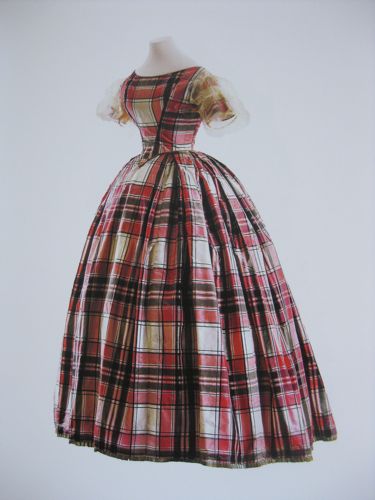
Dress, 1845-1848, France

The simplicity of this dress is really charming.

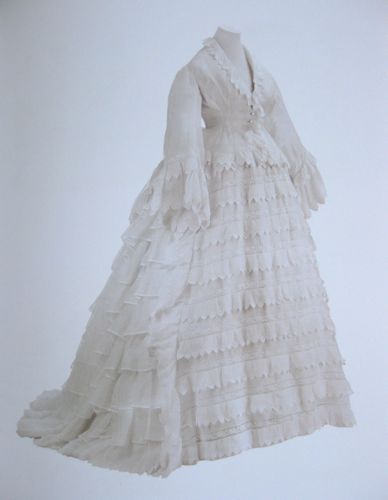
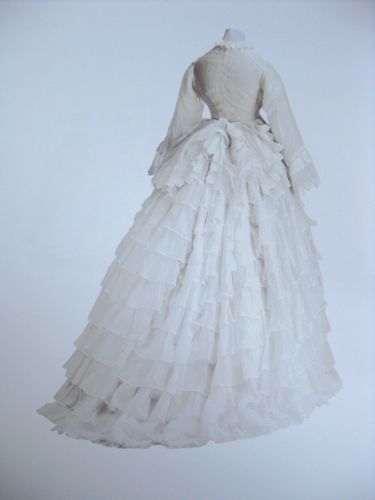
Wedding dress, 1868-1870, France

I’m a sucker for a white dress, so this was always going to be a hit with me.

Back view of wedding dress, 1868-1870, France

Those back ruffles!  Swoon!

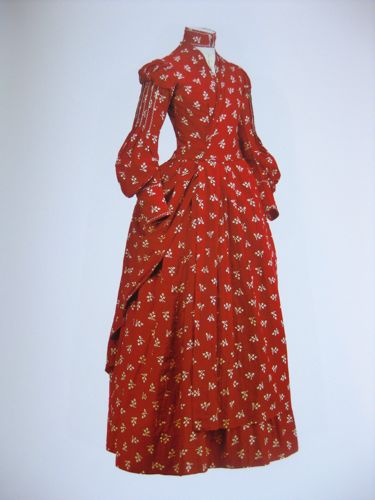
Misses dress, circa 1887, France or England

This looks a little Aesthetic inspired.  I love the bold colour and simple print.

Fan , 1885-1890, France

Those are monkeys.  Wearing lorgnettes.  And wing collars.  On a fan!

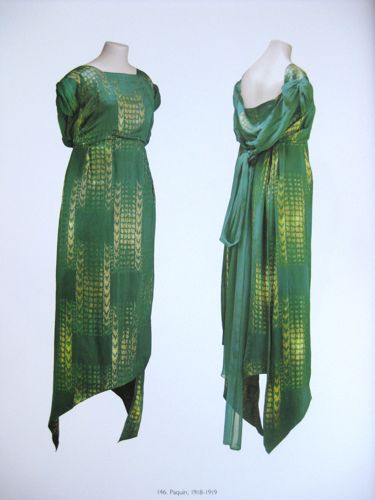
Paquin, 1918-1919, France

I love the colours and the Grecian influence of this frock.  It’s definitely going on my ‘must make’ list if I ever find a suitable fabric!

Marcel Rochas, 1951, France (belonged to Eva Peron)

Despite whatever else I feel about Evita, but I have to admit she had GREAT taste in clothing.

You’ll see more images from the book as I use them for inspiration and research.  And maybe, if we are all really lucky, the Museo will put their collections online.

For now, I’m just going to have another cup of tea and a drool over my precious.