I adore Felicity. She is wonderful, and lovable and undeniably cute.
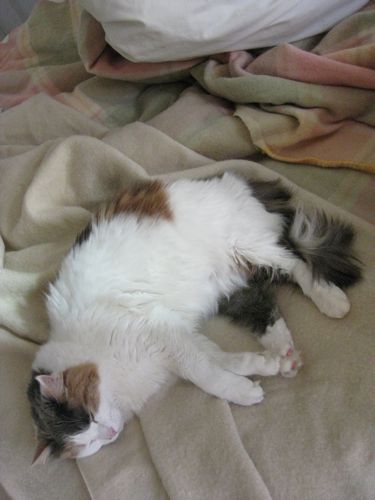
Cu-ute!
But she does have some flaws (she had a difficult kittenhood – what can I say?).
Ten things that are sweet about Felicity:
- She loves me. She follows me around from room to room, all day, because wherever I am is where she wants to be.
- She loves Mr Dreamy. Whenever he sits down she crawls on his lap and cuddles up.
- She is very gentle with old people, and children. She was exceptionally sweet to Nana when she met her.
- She never tries to eat people food. You can leave anything – milk, fish, steak, butter, anything – on the counter and she won’t eat it.
- She never begs for food, or demands that we wake up to feed her.
- She isn’t whiney. I can’t abide cats that whine.
- She comes and sits with you when you are upset. If I started crying, Felicity will be cuddled up to me in less than a minute.
- She comes when you call. Always.
- She chirps and peeps and trills when she wants to be fed, but only if you are already on the way to the kitchen.
- She loves when you come home. Even if you leave for weeks and only a pet-sitter visits her, you aren’t in trouble for leaving her, you are the best thing ever for coming home again.
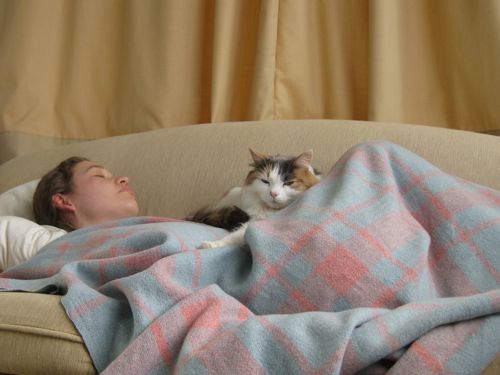
Felicity taking care of a sick Dreamstress
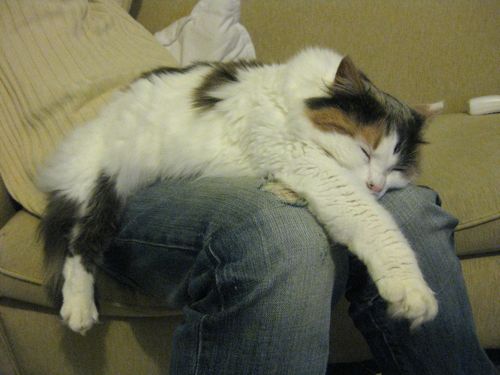
Felicity and Mr Dreamy share the love
Seven things aren’t always so sweet about Felicity (I couldn’t think of 10, which is a good thing).
- She is demanding. She wants what she wants, when she wants it, and, by-golly, if you don’t pet her, she will attack your calf and bite your ankle.
- She really is an ankle-biter (see above)
- She holds grudges. Un-lap her and she will glare at you for half an hour, attempt ankle biting, and sulk.
- She is in charge. She gets petted when she wants to get petted, and pushes your hand away when she doesn’t want to be petted.
- She bites and scratches when she is mad. She is getting much better about this, but still takes the occasional swipe.
- She thinks sewing is play time. Fabric is for hide and seek, and patterns are for ripping to shreds.
- She claws furniture.
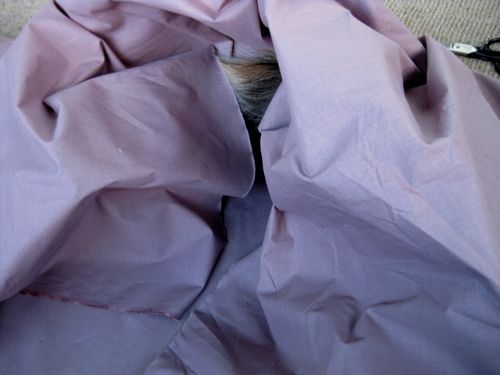
Cute. Now can I have it back, I need to cut it!

But I'm so cute! Even when I glare at you! Even when I leap at your face...OK...maybe not so much when I do that.