Latest Posts

My wedding dress: the fabric

I went wedding dress fabric shopping in the spring and summer of 2005.

It was not a good season for bridal fabric.  Or even for bridesmaid fabric.

Everything was deadly boring.

I don't do boring

I looked, and looked, and looked.  I looked in Wellington.  I looked online.  I looked in San Francisco.  I looked in Oakland.  I looked in Palo Alto.

New York City was my last resort.

So, when I wasn’t visiting museums and taking photos of flowers*, I scoured the fabric district.

I’d seen a piece of stonewashed silk charmeuse in Oakland, and I was in love with the fabric (not the colour though – it was bright coral).  But there was no stonewashed silk to be found, and the only things that I found that I liked even half as much were over $60 a yard – too much to pay.

Finally, digging in a huge pile of rolls in a little tiny designer ends fabric store , I found the holy grain – a roll of palest ivory stonewashed silk charmeuse.

It was a tiny bit thiner and more sheer than I wanted, but otherwise ideal.  It was the perfect colour, and had a luminous sheen without being shiny.  It was like pearls turned into fabric.

Trying to hide my excitement, I asked how much it was.  They said “Oh, that nylon lining – $6 a metre”

And that is how I found the fabric for my wedding dress, and for Mr Dreamy’s wedding shirt.

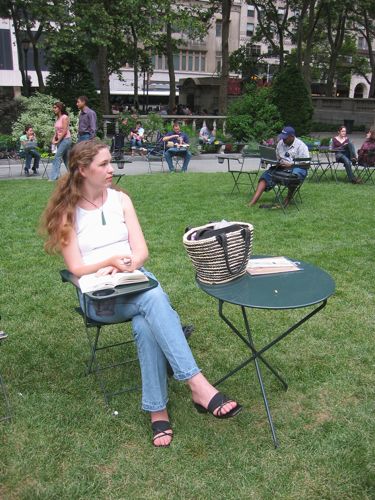
* Really.  90% of the photos that I took in New York City involve flowers.  You would never know I was in the city at all!  And these are the only photos I got of me:

In the woods near the Cloisters, NYC
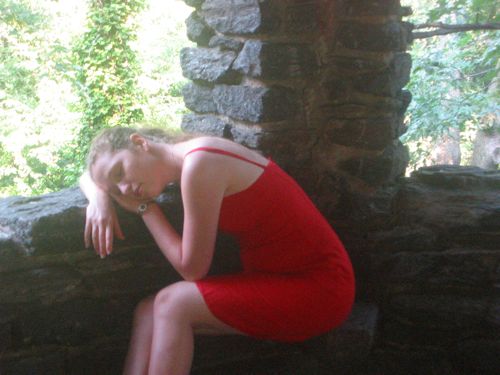
Me at an actual NY landmark - Bryant Park!
[/caption]

A fabric tour around the world – India

Last week we toured the Middle East and North Africa and saw all the textiles named after locales of that area.

India became a major source of textiles in the 17th century, and was an important source for fabric for the next 200 years.  Not surprisingly, many fabrics are named after places in India.

I’m sure that in many cases the naming process went like this:

European trader (pantomimes “What do you call that fabric?”)

Local “It is made in Kozhikode”

European “Ah, we will call it Calico”

Local “Whatever, you are dumb”

Notable examples are:

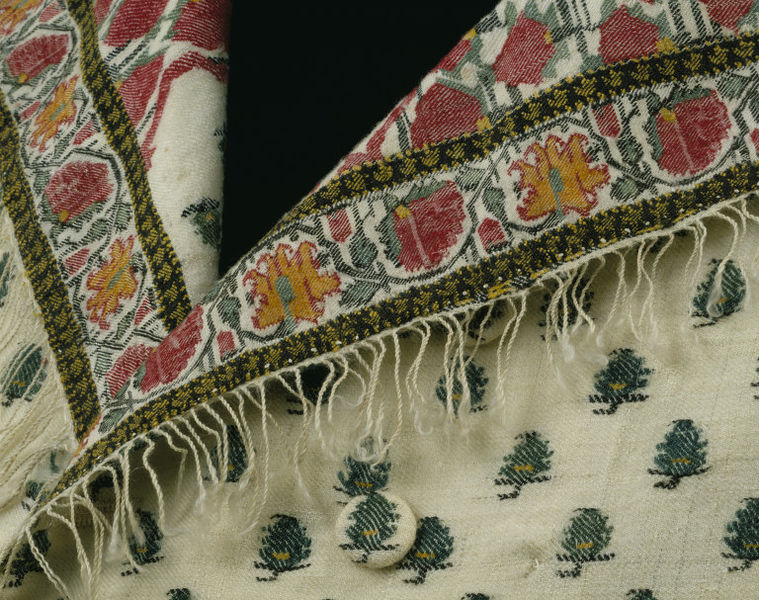
Kashmir, which (of course) gave us cashmere from the wonderful goats that live in the mountains around the Vale of Kashmir.

The Vale of Kashmir - elaborate houseboats on Walur Lake add to the fairy tale

Detail of a waistcoat made from a cashmere shawl, ca 1785, V&A Museum

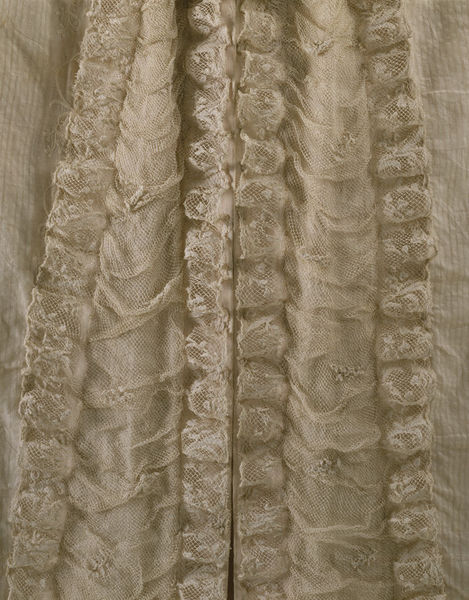
Machilipatnam in Eastern India was known as Maisolos and Masalia to the Romans, and (according to one theory at least, see the fabric tour of the middle east for the other) from these names comes the word muslin.

Machilipatnam beach on the Coromandel coast of India

Detail of the net lace trim on a muslin robe a la francaise, 1775-1780, France, V&A Museum

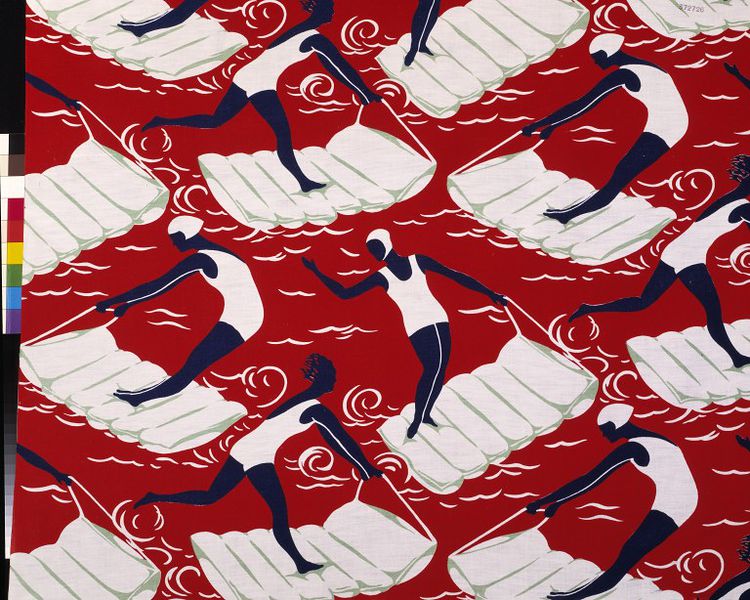
Kozhikode, Kerala, India was known as Calicut, and gives us calico. (note, Calicut is not the same city as Calcutta, they are in totally different parts of India!)

If this is Kozhikode, take me there now!

'Surfing beauties' dress fabric from the Calico Printers Association, Manchester, UK. Roll printing on cotton calico, 1937, V&A Museum

Madapollam, Narsapur, West Godavari, was the site of a factory where madapolan, a type of soft calico with equal stretch along the warp and weft, was made.

The railway at Narsapur. Madapollam is a tiny village nearby.

The De Havilland 'mosquito', which was covered in madapolam

Similarly, jaconet, a fine cotton with a glazed finish, is also named after the Indian village of where the fabric was made, in this case Jagannath, Puri.

Lord Jagannath Temple in Puri, Orissa

La Belle Assemblee October 1814 (printed in the September issue) "Morning Walking Dress" of jaconet muslin

Next week I’ll take you to the far east (mostly China), and the one place in all the rest of the world that has managed to have a textile name – and even then it cheats.