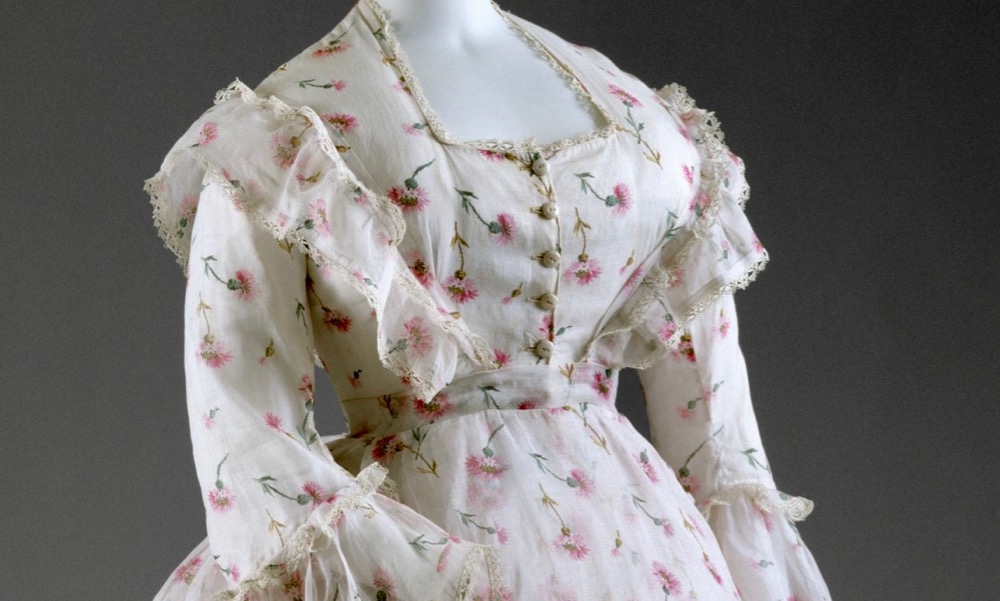
This week’s Rate the Dress goes from fish to flora, with a cornflower bedecked 1870s concoction. And concoction is really the only way to describe it…
Last Week: a 1920s day dress with ‘scale’ scallops
Last week’s dress was quite popular, other than a small group that expressed strong dislike. More than 3/4 of the ratings were 8-9, which is extremely, and unusually, consistent. Very few perfect scores though: most of you weren’t quite on-board with the ‘fish tum’.
The Total: 7.3 out of 10
Despite the strong showing of ratings 8 & up, the small core who really didn’t like the dress pulled the overall score down. The ratings have been creeping up over the last few weeks, but it’s been slow, and still not impressive. Maybe this week will break the 8 barrier? Or drop us down again?
This week: an 1870s day dress in summer florals
Today’s pick is an excellent example of an early 1870s crinoline-to-bustle era transitional garment.
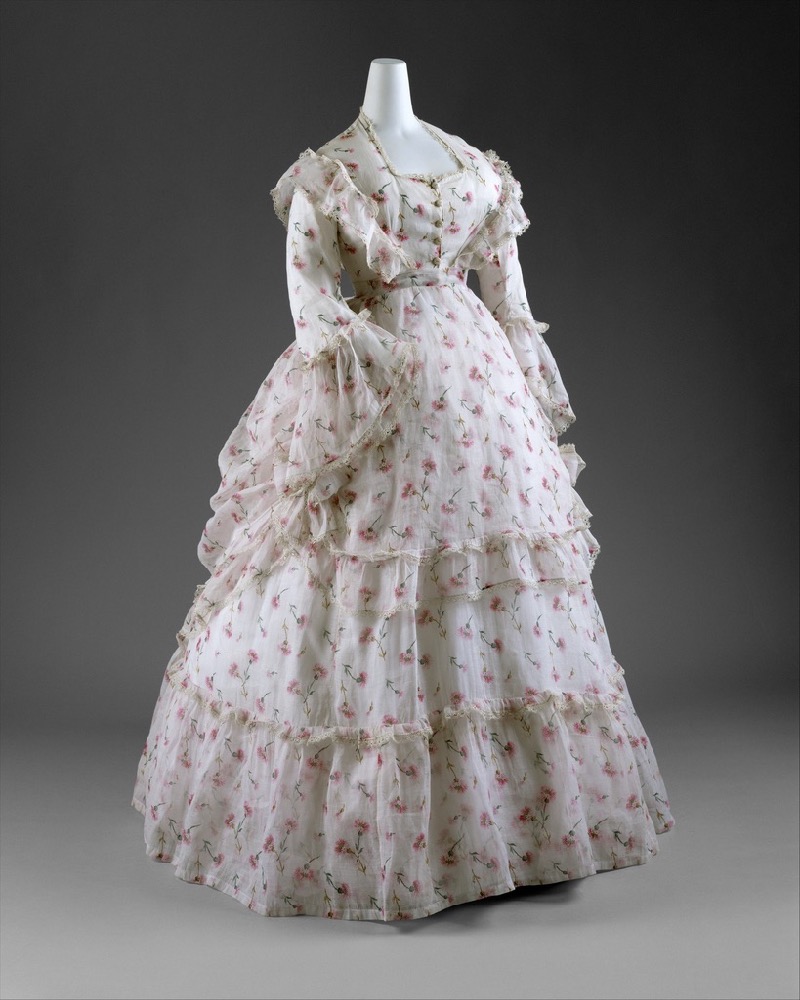
The sweet floral pattern and the frills are typical of the romantic 18th century inspired styles in vogue at the time.
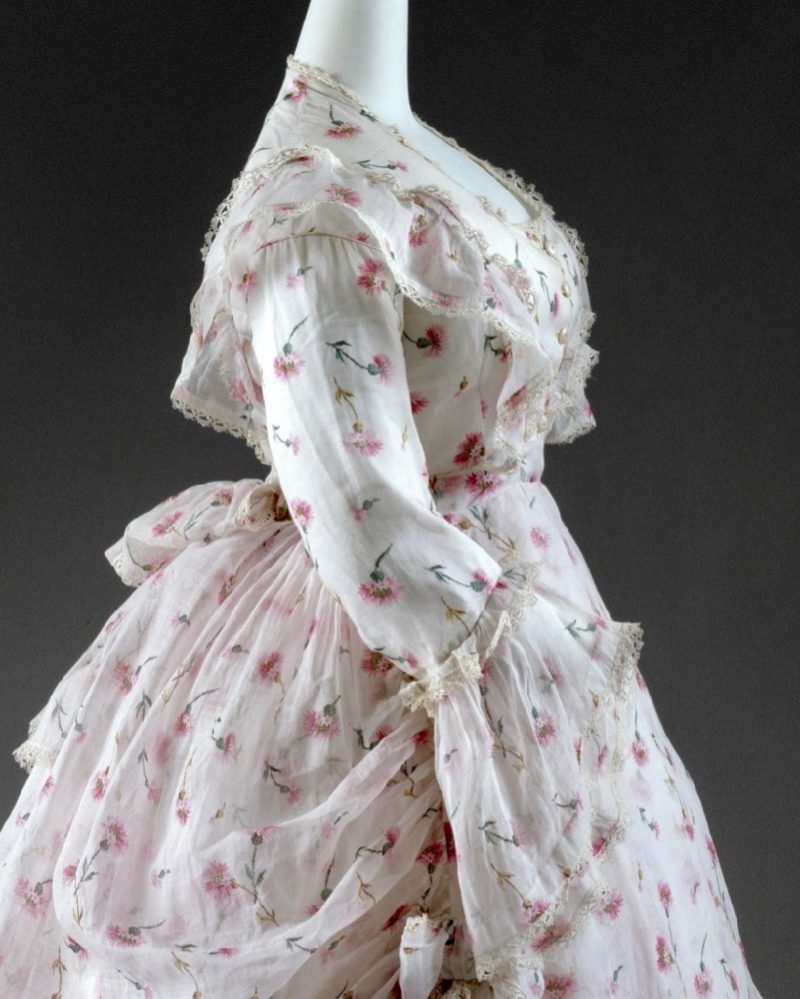
This dress shows its rococo roots in the deep sleeve ruffles, based on 18th century engageants, the bodice ruffles, which evoke a fichu, the square neckline, and the bustled skirts. While these touches are subtle compared to some examples, the influence is clear.
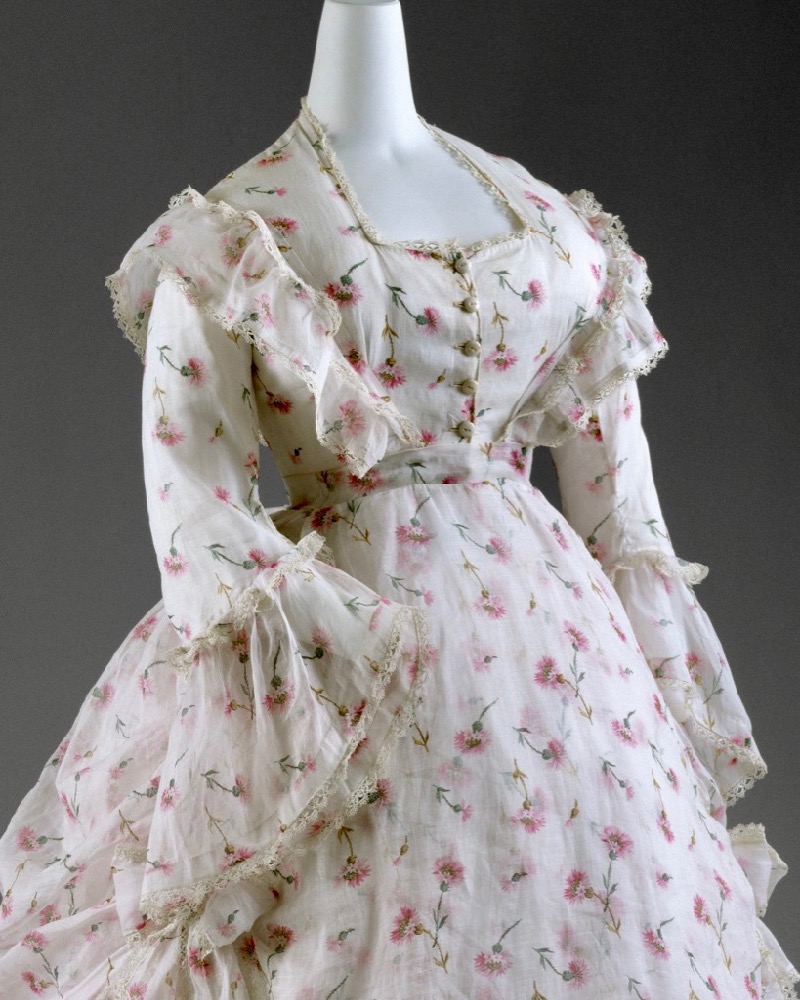
The popularity of 18th century historicism in 1850s-1870s dress was partly influenced by the French Second Empire’s attempt to align itself with the ancien regime, and Empress Eugenie’s fascination with Marie Antoinette. She had her rooms decorated in the style of Marie Antoinette, dressed as the doomed queen for fancy dress balls and official portraits, and inspired Worth to incorporate elements of 18th century fashion into his dress designs.
Although the Second Empire collapsed in 1870s, sending Eugenie fleeing to England, she continued to be a fashion icon, and the House of Worth continued to use extensive historical motifs in their garments: and where Worth led, the fashion world followed.
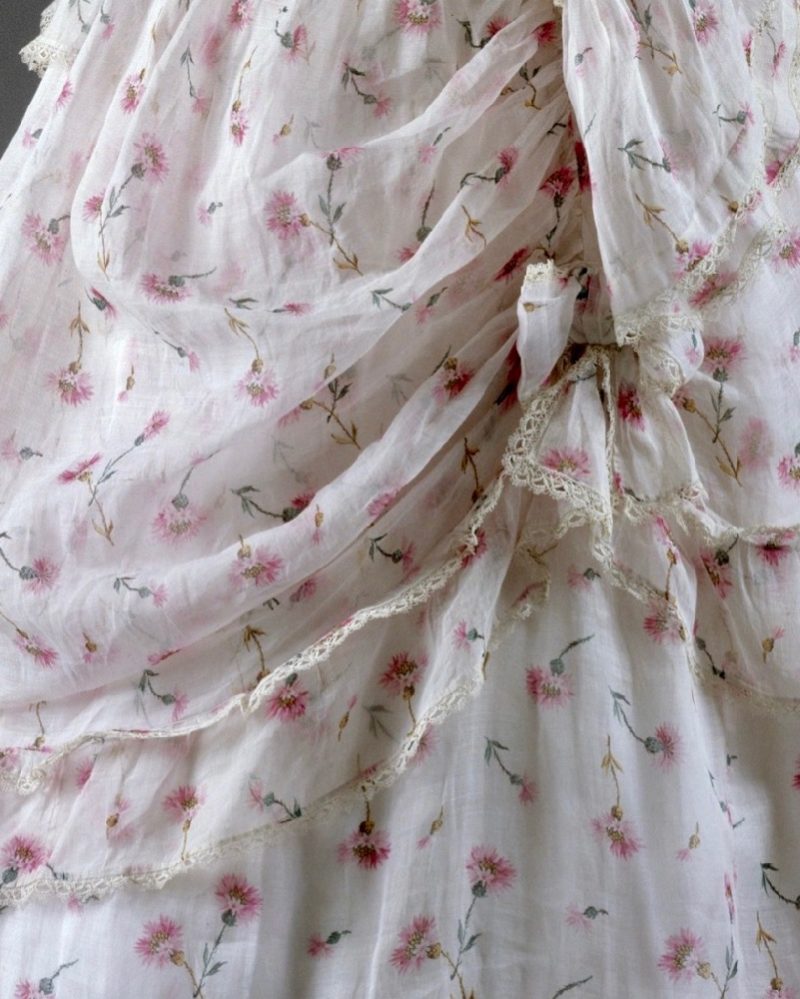
While the maker of this dress is unknown, it’s definitely a luxurious garment. The delicate white fabric would have marked easily, and been difficult, if not impossible to wash. While lace was becoming more affordable as more and more techniques to make it by machine were developed, it was still an expensive trim, and it has been used lavishly on this dress.
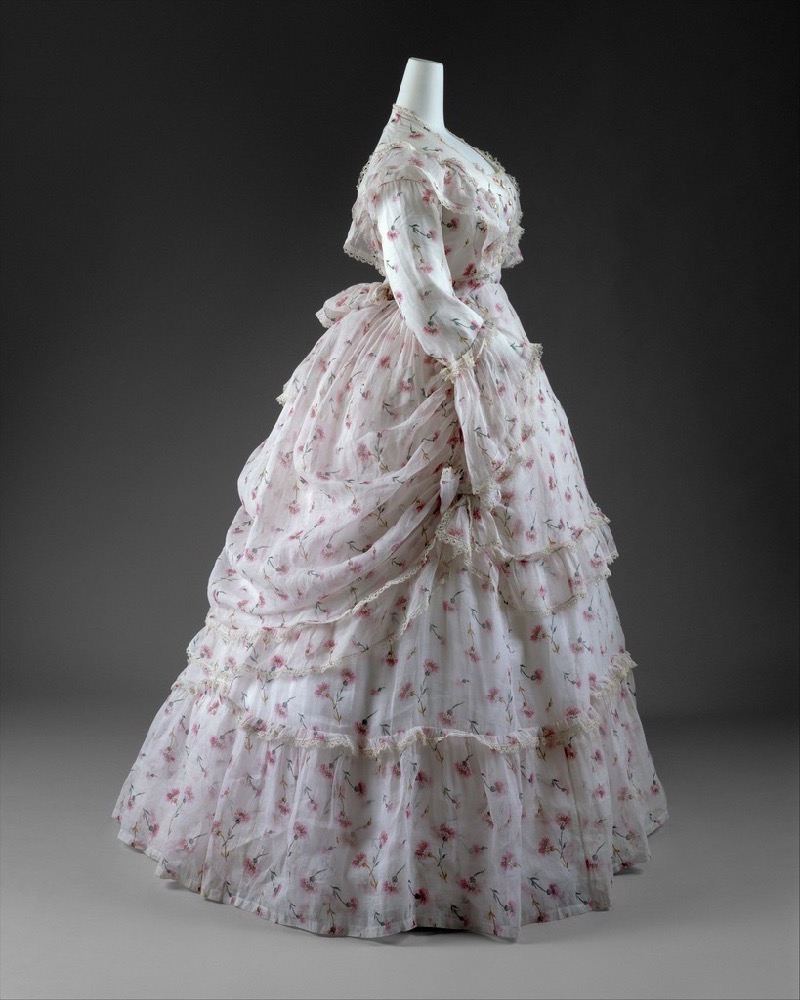
The whole effect is of sweetness, delicacy and light. The wearer would have appeared as lovely and cool and fragile as the flowers strewn across her gown.
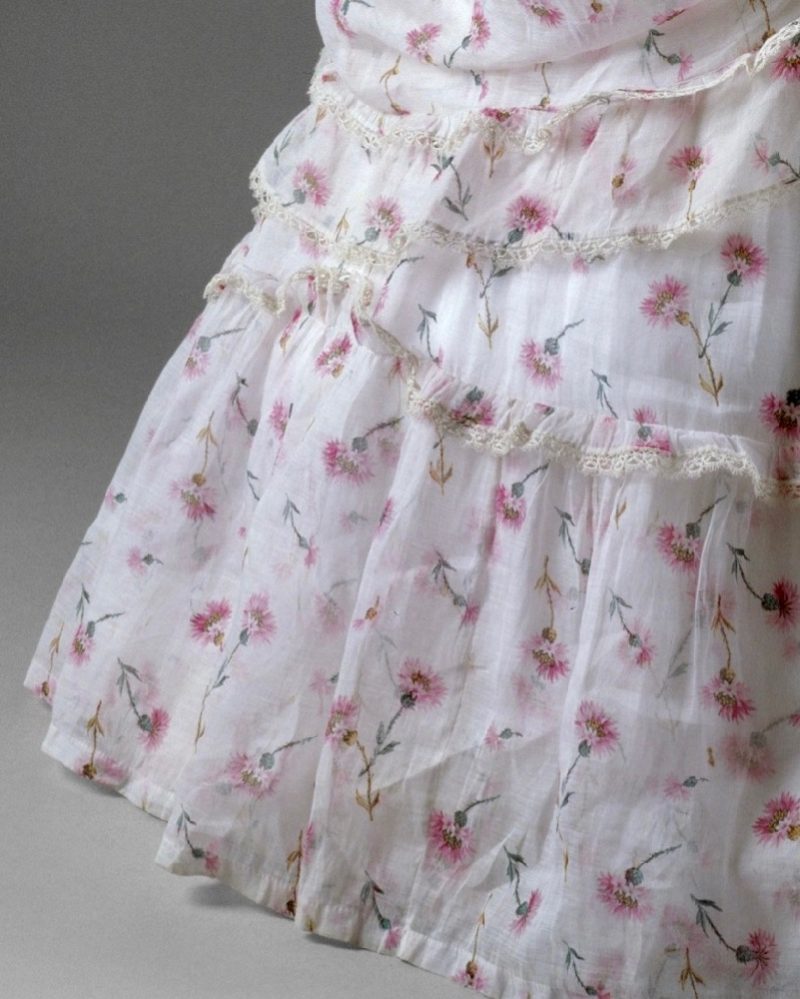
What do you think? Do you like this post-Second Empire confection, and find its pink florals and ruffles charming?
Rate the Dress on a Scale of 1 to 10
A reminder about rating — feel free to be critical if you don’t like a thing, but make sure that your comments aren’t actually insulting to those who do like a garment. Phrase criticism as your opinion, rather than a flat fact. Our different tastes are what make Rate the Dress so interesting. It’s no fun when a comment implies that anyone who doesn’t agree with it, or who would wear a garment, is totally lacking in taste.
(as usual, nothing more complicated than a .5. I also hugely appreciate it if you only do one rating, and set it on a line at the very end of your comment, so I can find it! And 0 is not on a scale of 1 to 10. Thanks in advance!)