Latest Posts

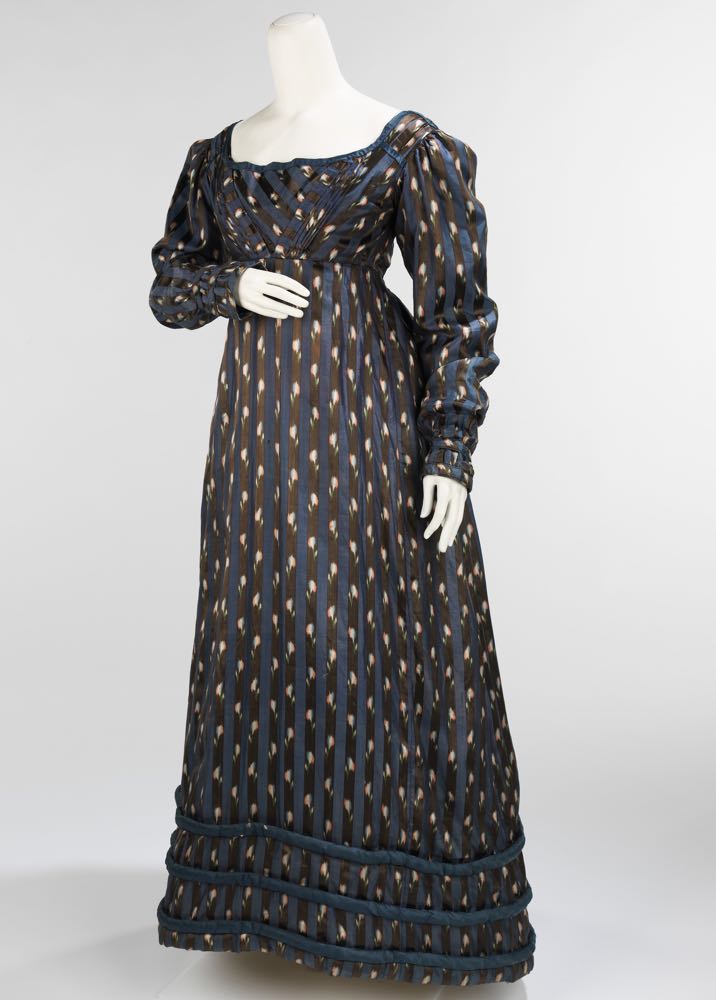
Dinner dress, ca. 1820, British, silk, cotton, Metropolitan Museum of Art, 2009.300.3370

Rate the Dress: Chine for Dinner

My Rate the Dress choices have been all mixed up when it comes to themes lately: we had a ball, and than an evening in in a dressing gown, and now we’re having dinner, with an 1820s dress that is subdued from a distance, but interesting up close.  Can it keep up the string of 9+ ratings?  Let’s find out!

Last week:  An 1880s dressing gown

While you loved the embroidery and the overall review was extremely positive, the dressing gown’s silhouette came in for a bit of criticism, as did the cord belt.

Unfortunately for those who didn’t like it, I’m 90% sure the style of belt is accurate (and think there is a good chance the one shown is the original), based on images of similar robes in catalogues of the period.  I’ll have to do a bit of research and see if I can find the images I’m thinking of.

The Total: 9.4 out of 10

It’s nice to know a dressing gown can impress almost as much as a lovely ballgown!

(and I suspect many of us are more good-book-&-dressing-gown people than ballgown people most nights, so that’s quite fitting 😉 )

This week: A ca. 1820 dinner dress in chine silk

This ca. 1820 dinner dress seems quite subdued and dark when you see the overall image:
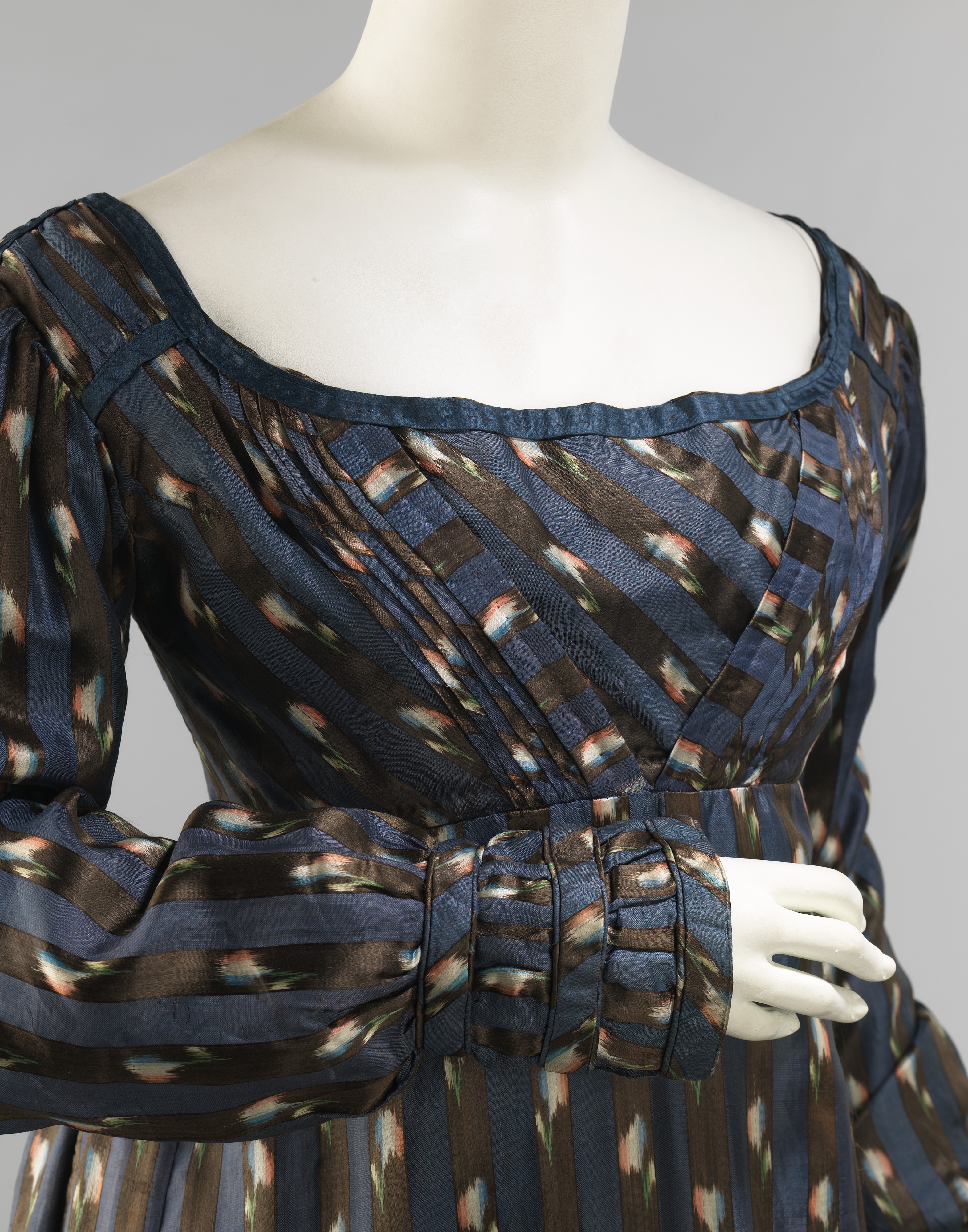
Up close, there is a lot of visual interest. The fabric is a mix of plain weave taffeta in blue, and satin weave chine in black with white, pink and green flowers:

Dinner dress, ca. 1820, British, silk, cotton, Metropolitan Museum of Art, 2009.300.3370

The design details, while subtle and restrained in the dark fabric, make full use of the striped pattern, and keep the focus on the hands and torso: areas that would have been most in view at dinner.
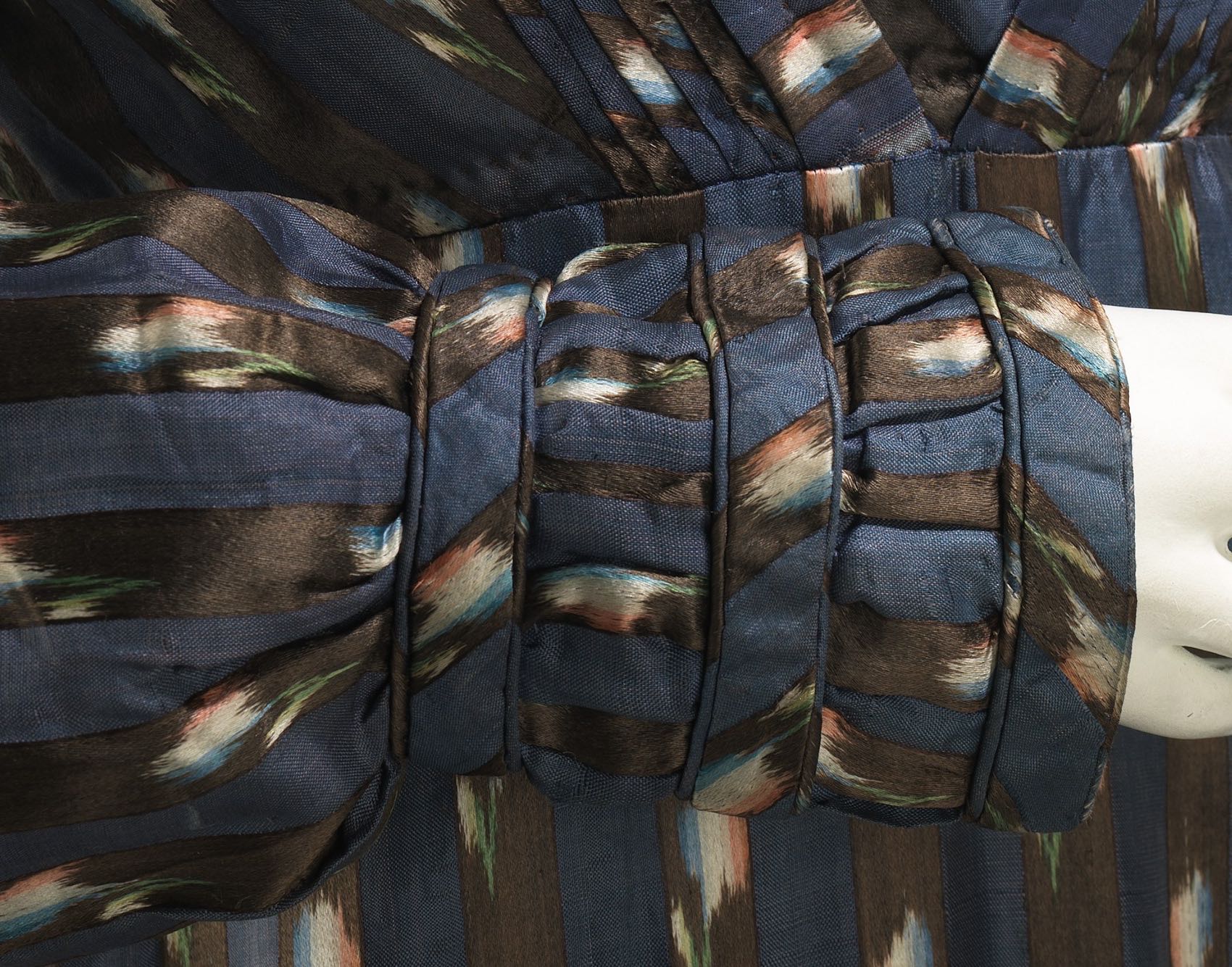
Dinner dress, ca. 1820, British, silk, cotton, Metropolitan Museum of Art, 2009.300.3370

Everything in the dress is equal parts fashion & practicality, from the padded hem, which would help keep the wearer from tangling it when she walked:
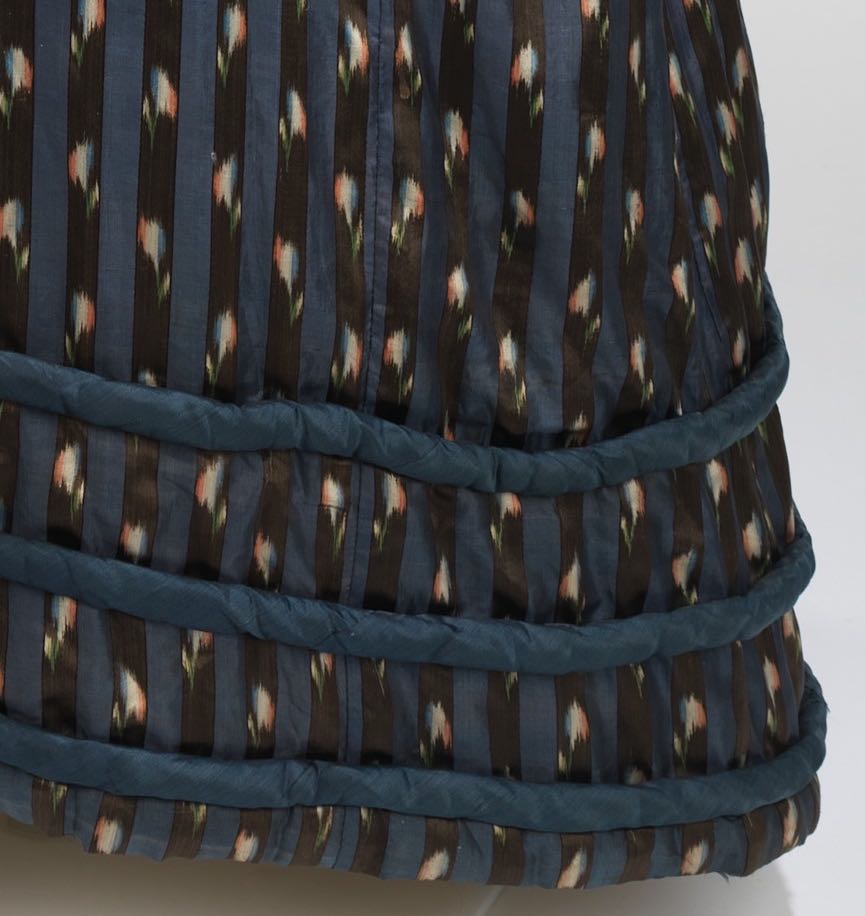
Dinner dress, ca. 1820, British, silk, cotton, Metropolitan Museum of Art, 2009.300.3370

To the cuff trimmings, which would keep the trendy extra-long late 1810s sleeves from dragging in the dinner:

Dinner dress, ca. 1820, British, silk, cotton, Metropolitan Museum of Art, 2009.300.3370

It definitely wasn’t intended to be a showstopper dress, but a quietly elegant staple that would see a woman happily through a few seasons of suppers.
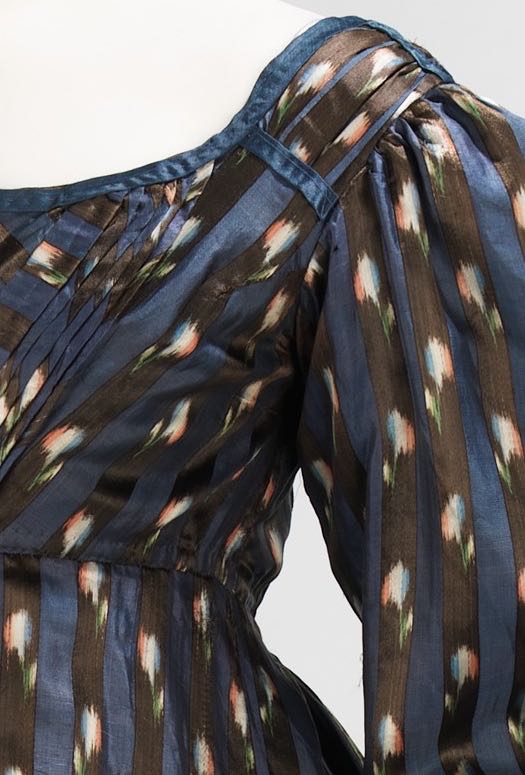
Dinner dress, ca. 1820, British, silk, cotton, Metropolitan Museum of Art, 2009.300.3370

As an example of this, what do you think?  The perfect late Regency little black dress?  Or still a bit blah?

Rate the Dress on a Scale of 1 to 10

A reminder about rating — feel free to be critical if you don’t like a thing, but make sure that your comments aren’t actually insulting to those who do like a garment.  Our different tastes are what make Rate the Dress so interesting. However it’s no fun when a comment implies that anyone who doesn’t agree with it, or who would wear a garment, is totally lacking in taste.

(as usual, nothing more complicated than a .5.  I also hugely appreciate it if you only do one rating, and set it on a line at the very end of your comment, so I can find it!  Thanks in advance!)

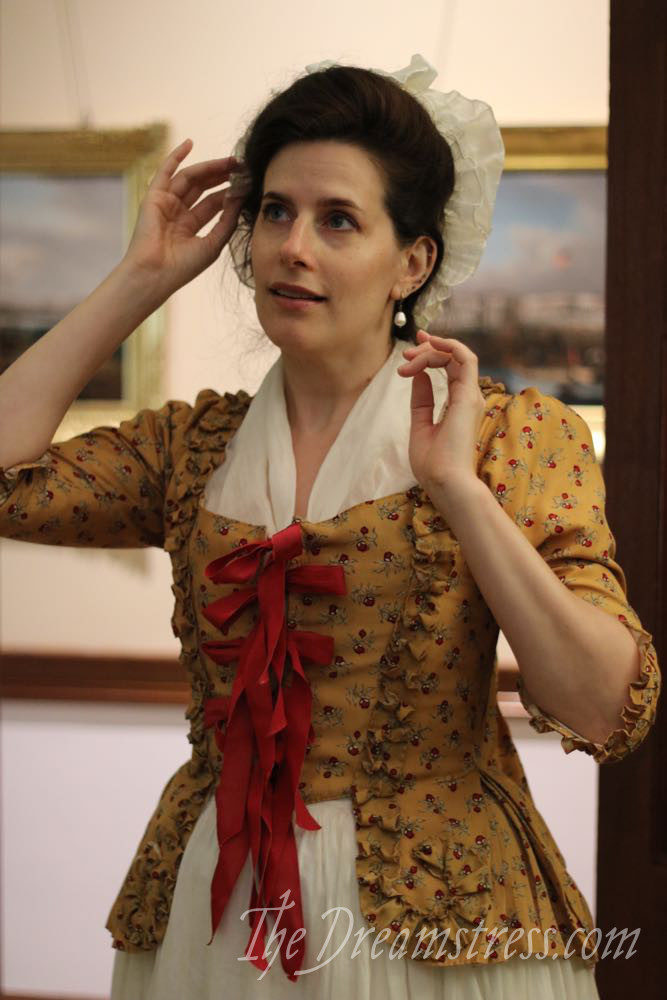
Theresa with a Fichu at Old Government House Parramatta, thedreamstress.com

A new 18th century fichu – HSM 2018 #5

I always try to have a bit of handsewing on the go, so I have something to work on while sitting in a waiting room, or whenever else I have a tiny bit of down-time (an all too rare occurrence in my life at the moment, sadly).

My last handsewing project was another 18th c fichu – a twin to the one I made back in December, because it’s easier to cut a square and divide it into two triangles than to cut an individual triangle, so you might as well make fichu in pairs!

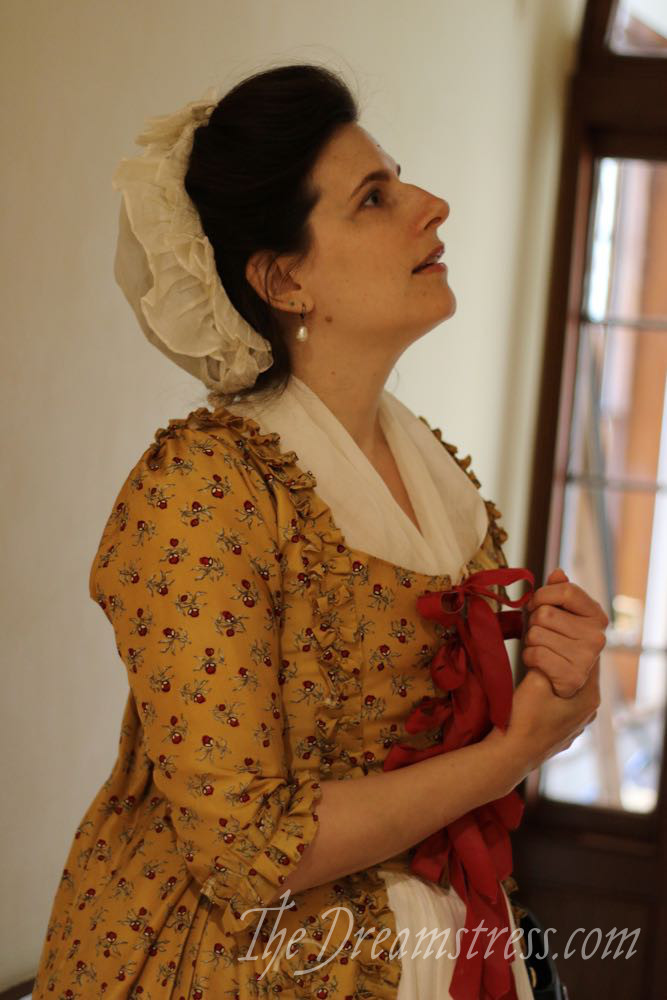
Theresa with a Fichu at Old Government House Parramatta, thedreamstress.com

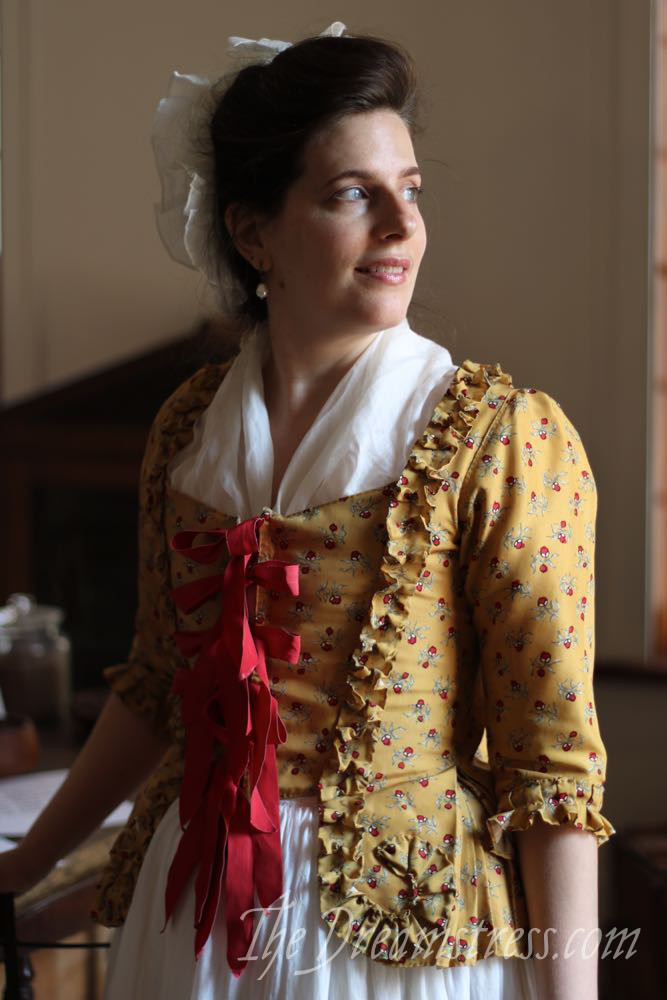
I finished my fichu on the flight to Sydney, just in time for Theresa to wear it for my talk and our photoshoot at Old Government House in Parramatta, Sydney.

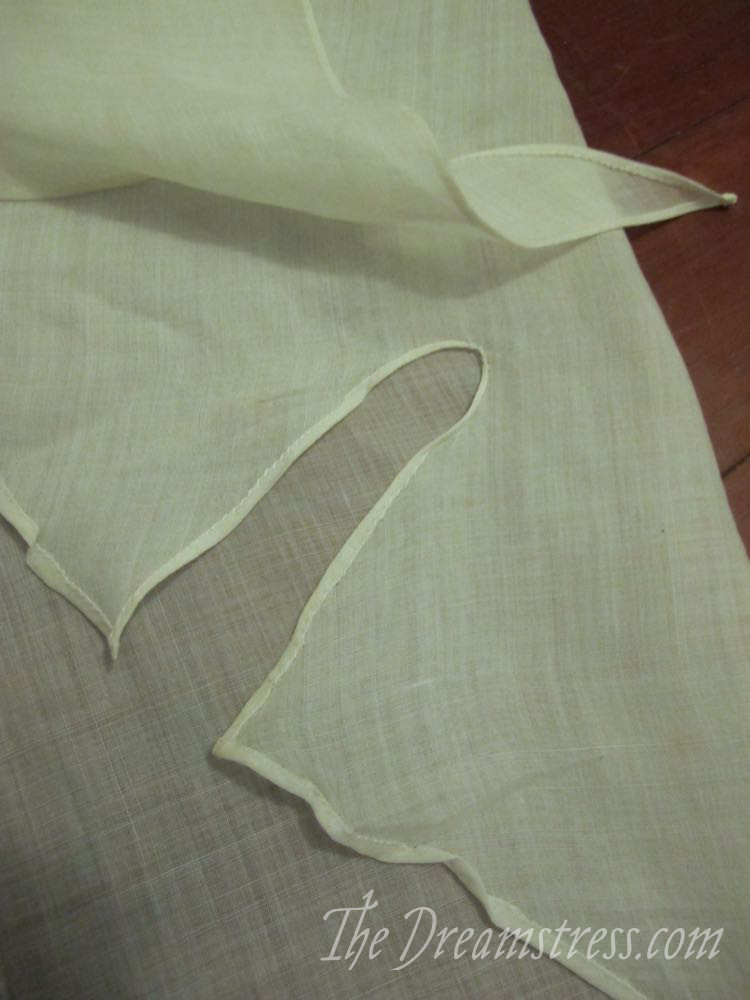
There isn’t a great deal to say about the fichu’s construction.*  I cut it at 80cm/31.5″ along the straight edges, which creates a 132cm/52″ angled edge.  The little slit in it is 12cm/4.5″ long.

A reproduction 18th century fichu, thedreamstress.com

The slit allows it to sit nicely and snugly against the back of the neck.

Theresa with a Fichu at Old Government House Parramatta, thedreamstress.com

The dimensions were based off of a few museum examples, and the width of my fabric.  It made sense to me to use a measurement that corresponded to a fabric width, which is, I’m sure, how historical fichu were sized.

The sizing sits very nicely around the neck and across the shoulders, and is long enough to just reach the waist in front, perfectly hiding any glimpses of blue stays under the ribbon ties of the pet-en-l’aire.

Theresa with a Fichu at Old Government House Parramatta, thedreamstress.com

The fichu is made of the same voile weight linen that I made the 1780s cap from the American Duchess book out of.

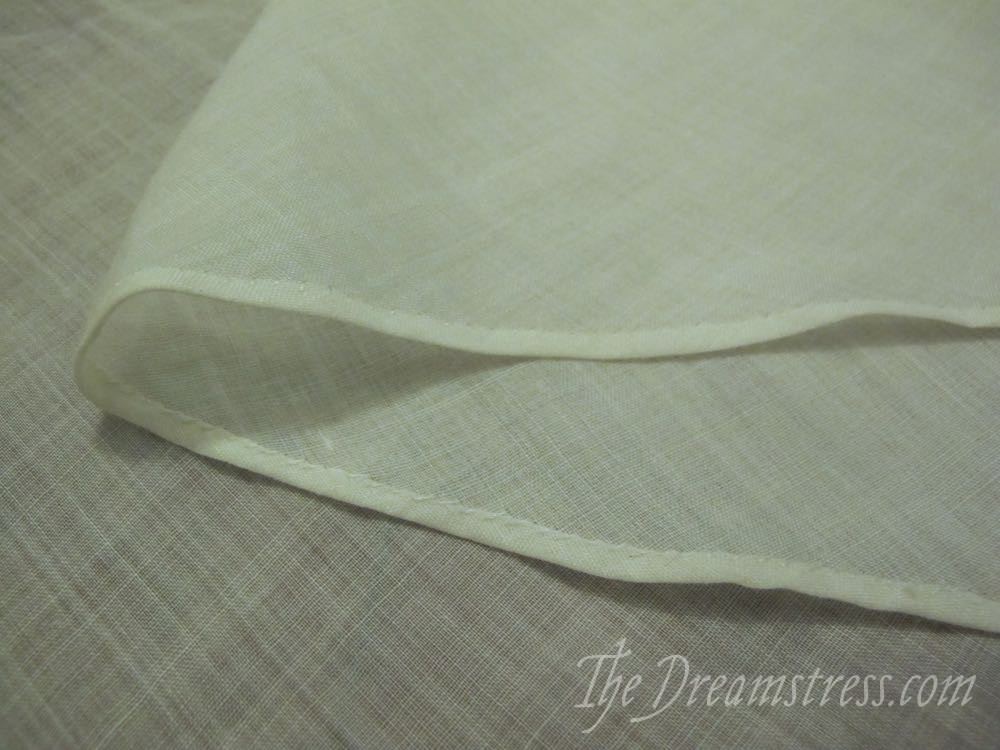
A reproduction 18th century fichu, thedreamstress.com

It’s hemmed with very, very tiny turned hems.

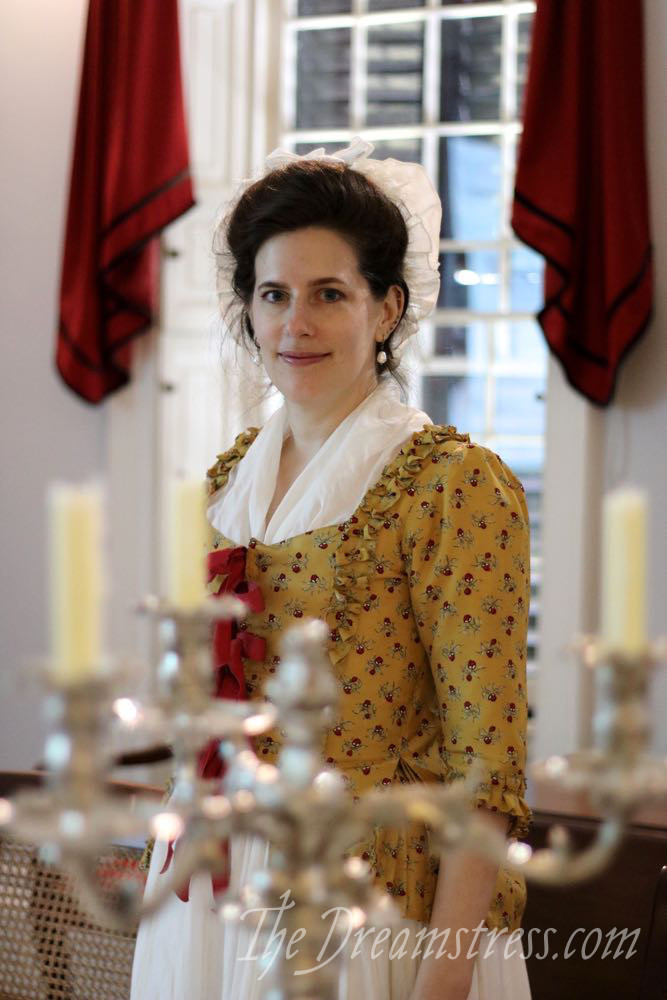
Theresa with a Fichu at Old Government House Parramatta, thedreamstress.com

Sadly, I got an ink stain on it while working on it, and my best efforts to remove the stain have not succeeded.  Luckily the stain doesn’t show when worn tucked in, and if I ever needed to do a lower class impression, a few marks would only add to the verisimilitude.**

It’s not a particularly exciting item, but it’s an excellent addition to my 18th century wardrobe, and is helping to create all the details that add up to an authentic impression.

A reproduction 18th century fichu, thedreamstress.com

And it perfectly qualifies for the Historical Sew Monthly 2018 Challenge #5: Specific to a Time (of Day or Year).  Fichu were worn primarily with daywear, to cover the neck and chest and protect them from the sun.  They were also, generally speaking, more informal wear.  Court dress, and other extremely formal garments, would be worn with an exposed chest and shoulders.

Theresa with a Fichu at Old Government House Parramatta, thedreamstress.com

What the item is: a 1780s fichu / neckerchief

Material:   linen voile

Pattern: based on extant exampels

Year: 1780 (but probably appropriate for most of the 2nd half of the 18th century)

Notions: silk thread

How historically accurate is it? I’m not so sure about my tiny pressed hems rather than true rolled hems, but it still can’t be very far off.

Hours to complete:  3 or so – lots of little stitches!

First worn: For photos at Old Government House, Parramatta, Sydney, 26 May.

Total cost: $10 or so based on the amount of fabric I used.

Theresa with a Fichu at Old Government House Parramatta, thedreamstress.com

* So yes, this post is really just an excuse to show off a bunch of photos of Theresa looking gorgeous 😉

** My current favourite word. Theresa was most impressed by how lightly and fluently it trips off my tongue 😛

Rate the Dress (ing gown)

This week’s Rate the Dress takes us from ballrooms, to bedrooms, with an formal dressing gown that I’ve dithered over showing to you for weeks, because what will you make of what is essentially a really, really, fancy bathrobe?

Last week:  a pale blue paisley ca. 1860 ballgown

It was a fairytale ending for the 1860s ballgown, with everyone singing its praises and declaring it must have been made by a fairy godmother, because if there was ever a historically accurate Cinderella ballgown, that was it!  (with a few votes for Elsa).

The Total: 9.8 out of 10

Almost perfect! (and really, that’s pretty much as close to perfection as RTD is likely to get).

This week: An 1880s dressing gown

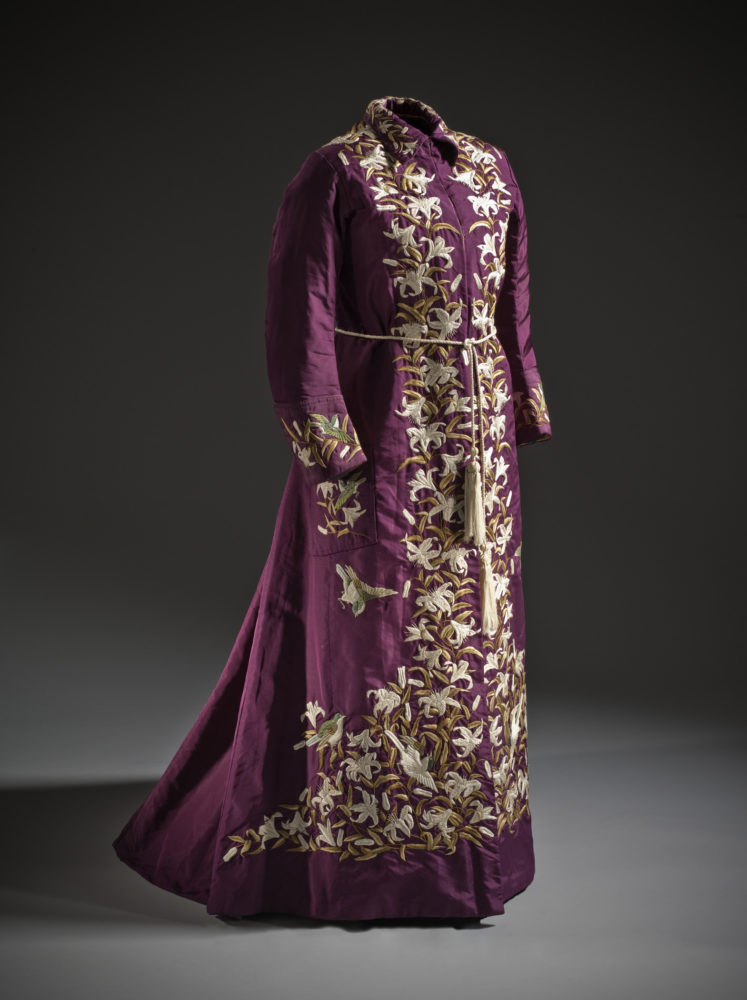
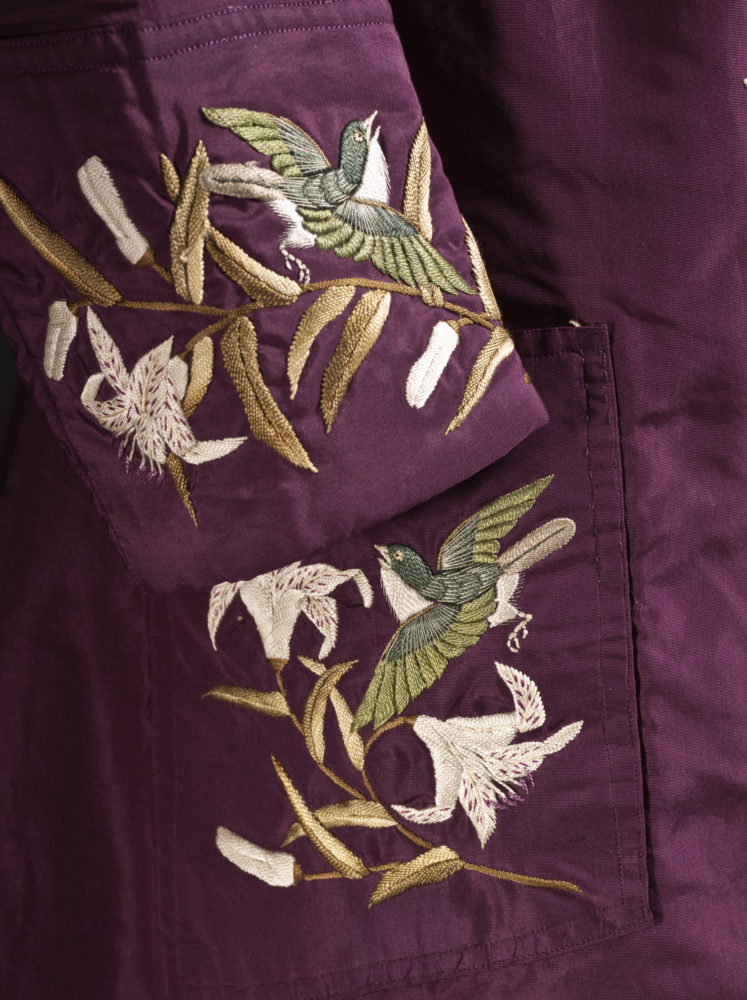
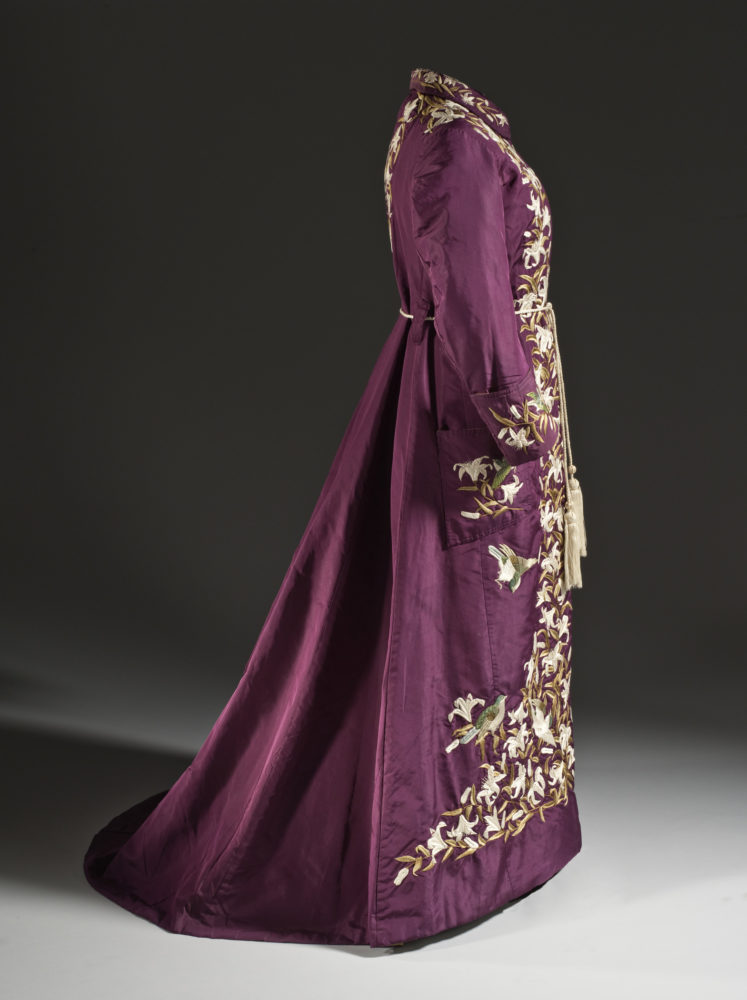
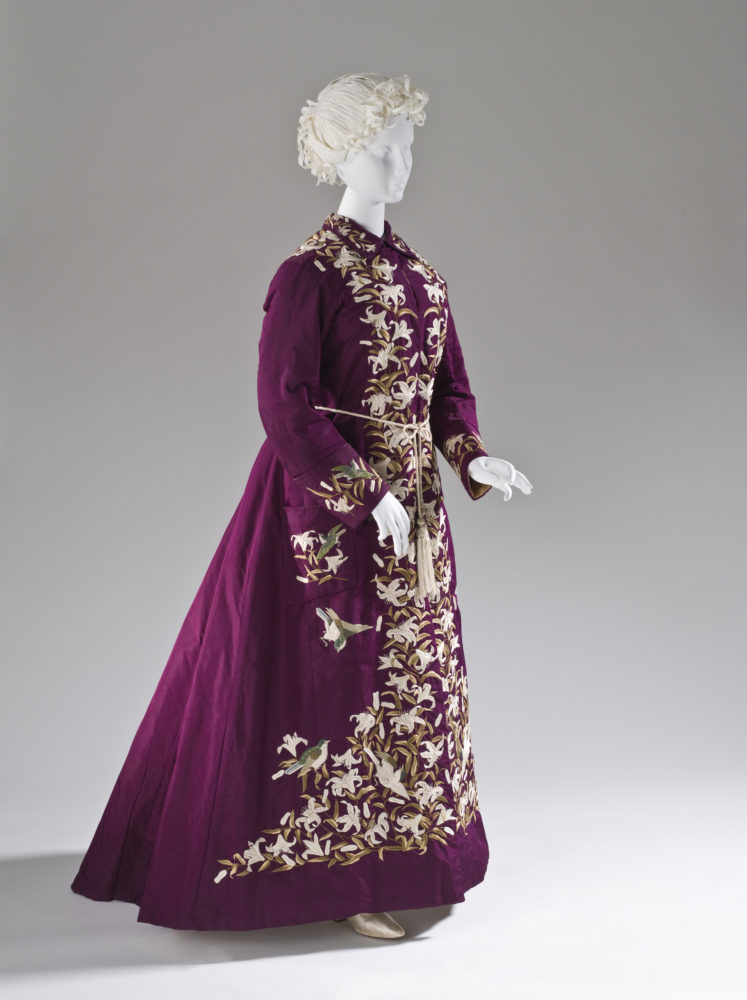
This embroidered dressing gown is a fantastic example of the type of goods that were made in Japan for the Western market.

Woman’s Dressing Gown with Belt, Japan, Yokohama, for the Western market, circa 1885, silk plain weave (faille) with silk embroidery; belt: silk braided cord with tassels Belt, LACMA, M.2007.211.784a-b

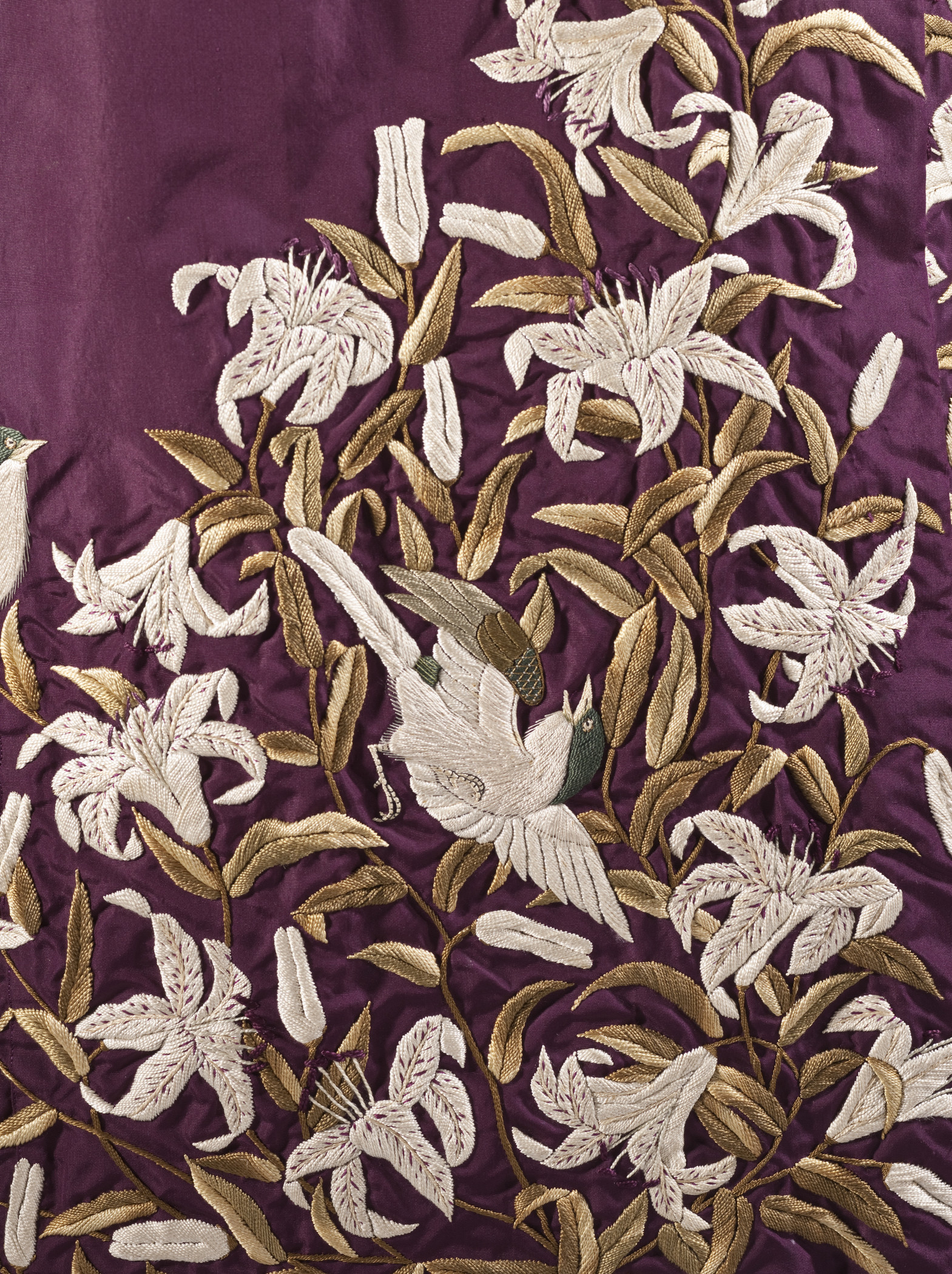
It features lavish embroidery that combines both a Japanese and Western aesthetic.

Woman’s Dressing Gown with Belt, Japan, Yokohama, for the Western market, circa 1885, silk plain weave (faille) with silk embroidery; belt: silk braided cord with tassels Belt, LACMA, M.2007.211.784a-b

Although there is a very slight nod to the idea of a kimono, the silhouette and pattern shapes are predominantly Western.  The set-in sleeves are just looser versions of those seen in fashionable European dress in the 180s, and the gored back panels add a slightly bustle effect to the dressing gown.

Woman’s Dressing Gown with Belt, Japan, Yokohama, for the Western market, circa 1885, silk plain weave (faille) with silk embroidery; belt: silk braided cord with tassels Belt, LACMA, M.2007.211.784a-b

Woman’s Dressing Gown with Belt, Japan, Yokohama, for the Western market, circa 1885, silk plain weave (faille) with silk embroidery; belt: silk braided cord with tassels Belt, LACMA, M.2007.211.784a-b

While an informal, indoor garment, this is most decidedly a dressing gown for showing off.  It’s one to wear around a new husband, or to take with you when travelling, to impress the hotel maids, or to maintain your status should your host unexpectedly see you in it.

Woman’s Dressing Gown with Belt, Japan, Yokohama, for the Western market, circa 1885, silk plain weave (faille) with silk embroidery; belt: silk braided cord with tassels Belt, LACMA, M.2007.211.784a-b

Woman’s Dressing Gown with Belt, Japan, Yokohama, for the Western market, circa 1885, silk plain weave (faille) with silk embroidery; belt: silk braided cord with tassels Belt, LACMA, M.2007.211.784a-b

What do you think?  Is this the ultimate in elegantly deluxe dressing gowns, or is the mixing of aesthetics less than satisfactory?

Rate the Dress on a Scale of 1 to 10

A reminder about rating — feel free to be critical if you don’t like a thing, but make sure that your comments aren’t actually insulting to those who do like a garment.  Our different tastes are what make Rate the Dress so interesting. However it’s no fun when a comment implies that anyone who doesn’t agree with it, or who would wear a garment, is totally lacking in taste.

(as usual, nothing more complicated than a .5.  I also hugely appreciate it if you only do one rating, and set it on a line at the very end of your comment, so I can find it!  Thanks in advance!)