Latest Posts

Introducing the Scroop Patterns Otari Hoodie!

Meet the newest Scroop Pattern: the Otari Hoodie:
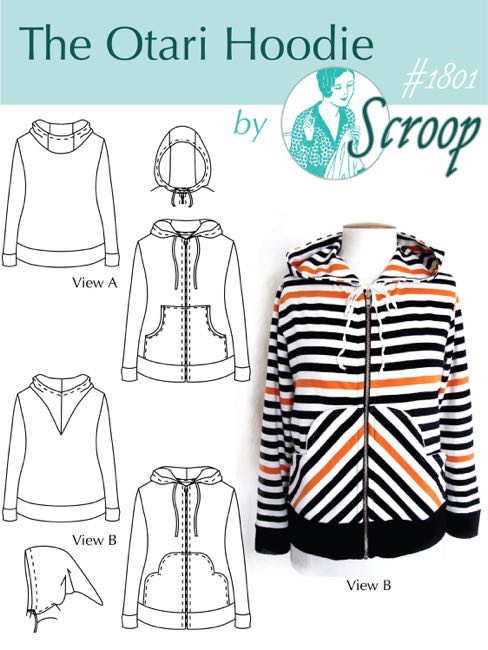
The Otari Hoodie by Scroop Patterns scrooppatterns.com

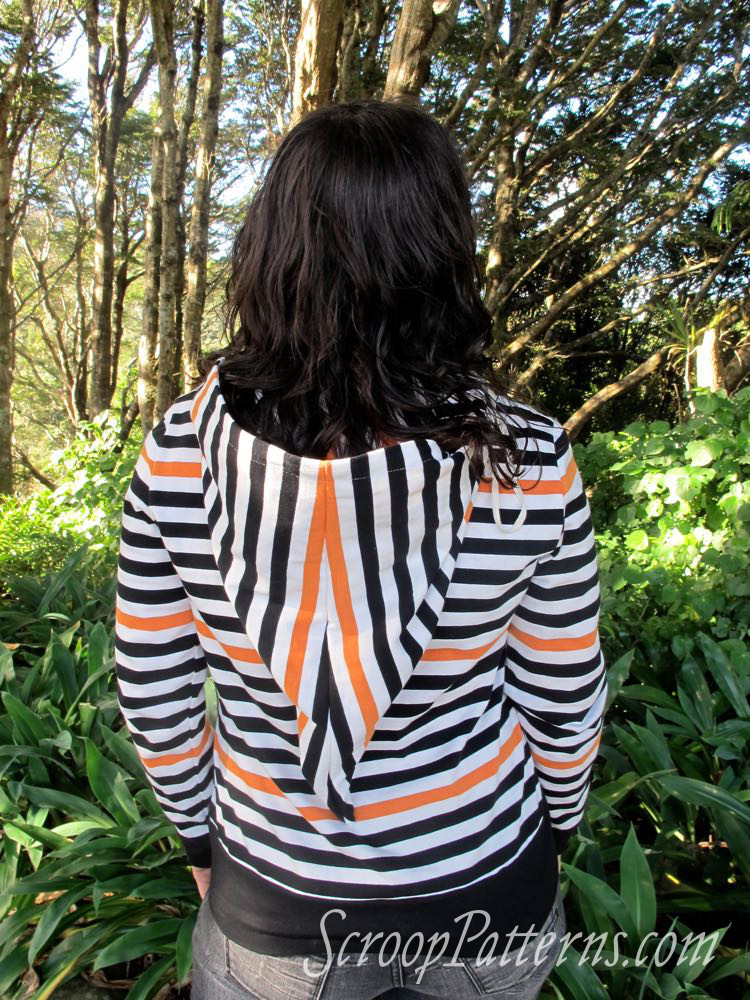
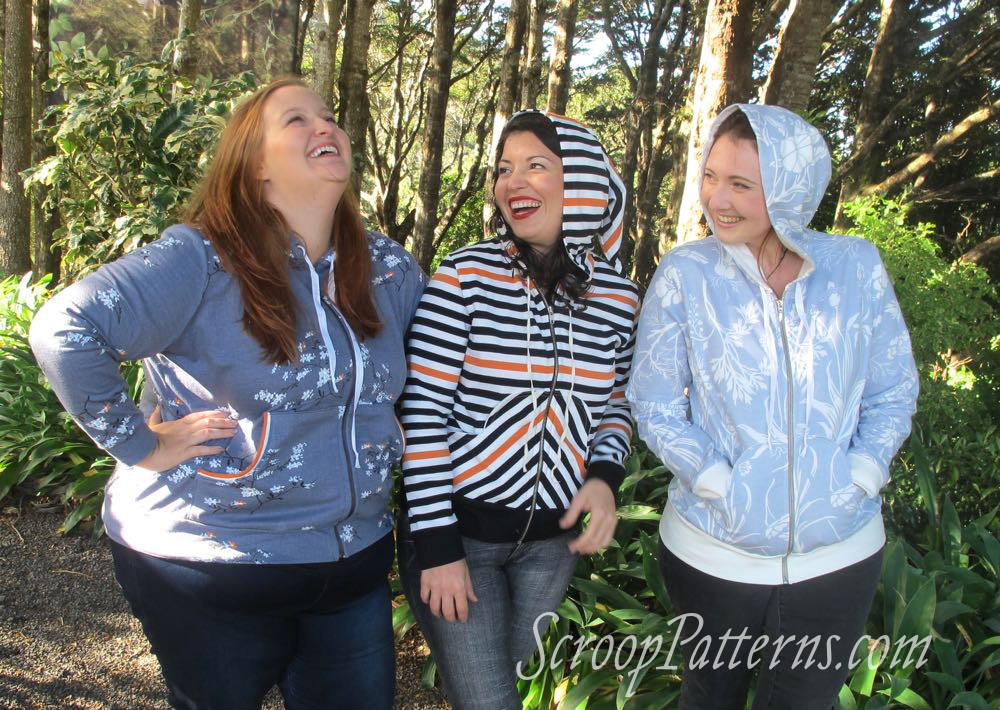
The Otari Hoodie is a classic front-zipped hoodie with a relaxed but feminine fit and polished finishing details.  It’s cut to be casual and comfortable without being saggy or frumpy.

With mix and match the pocket and hood views, and the option to use contrasting fabrics for linings and bands, the design possibilities for the Otari are practically limitless.  View A features a three-panel curved hood and classic banded pockets. View B features a pointed pixie hood and Art Deco inspired cloud pockets.

Both views end at mid hip and have shoulder seams that sit just off the shoulders, cuff and hem bands, covered front zip and hood joins, and fully-finished and lined hoods and pockets.

The Otari Hoodie comes in the full Scroop Patterns size range – from bust 30″ to bust 52″
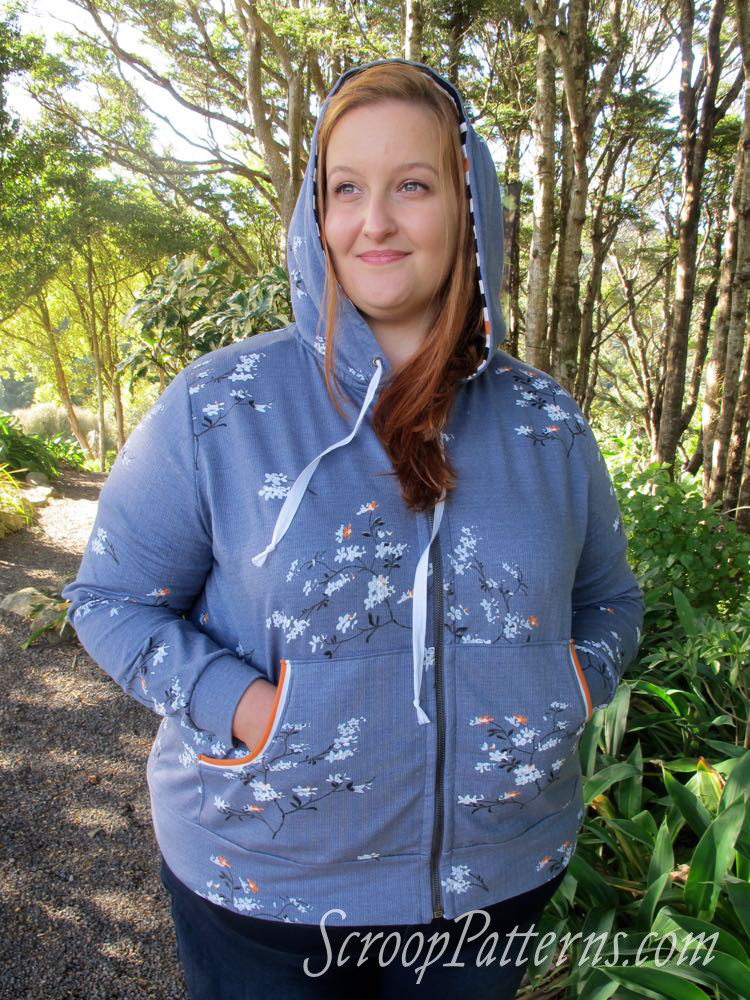
The Otari Hoodie by Scroop Patterns scrooppatterns.com

The Otari Hoodie by Scroop Patterns scrooppatterns.com

The Otari Hoodie started its design journey late last September.  Mr D & I went for a walk along the coast on a brisk spring day, and I wanted something fun and casual but warm to wear.  Something lighter than a jacket, but heavier than a cardigan, with pockets big enough to hold my phone.  I’ve never been a hoodie girl, because the ones in shops just aren’t that inspiring in terms of fabrics and cuts.  But Mr D had hoodies…

So I stole one of his hoodies for the walk.  And I loved it, but it really didn’t fit me properly (men’s clothes + my hips = nope).  So I started making my own hoodie pattern.

My sewing students have been asking for a zip-fronted hoodie for years, but I hadn’t been able to find a pattern that came in the full size range needed for teaching (telling a student that a pattern doesn’t come in their size is the worst feeling in the world), that allowed me to teach the finishing details I like in a garment, and that fit a wide range of women’s bodies reasonably well.

The Otari Hoodie by Scroop Patterns scrooppatterns.com

The Otari represents everything I want in a hoodie.  It’s got classic options & fun options.   It’s got lots and lots of possibilities for playing with design details.  It’s beautifully finished, with fully lined pockets (fully, fully lined – no annoying raw edges along the top and bottom of the inside pockets).  And the pockets are BIG – with plenty of space to securely hold a phone!

And I really hope you’re going to love it!

Buy your Otari Hoodie Pattern here!

But wait, there’s more!

Since April 1st is Felicity’s birthday, AND the second anniversary of Scroop Patterns launching, I’m celebrating with a sale.  All Scroop Patterns are now 20% off until Midnight the 3rd of April, NZ Time.

Use the code TWOYEARS at checkout to get your discount.

Exciting!
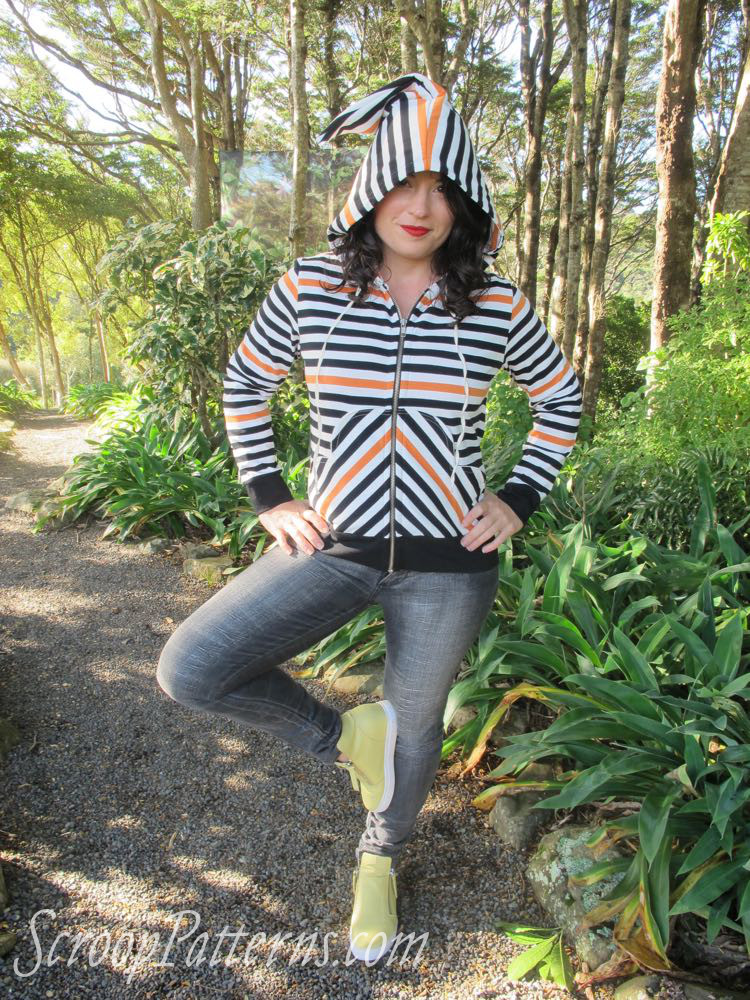
The Otari Hoodie by Scroop Patterns scrooppatterns.com

Share the pattern goodness on social media: #OtariHoodie  
SaveSave

SaveSave

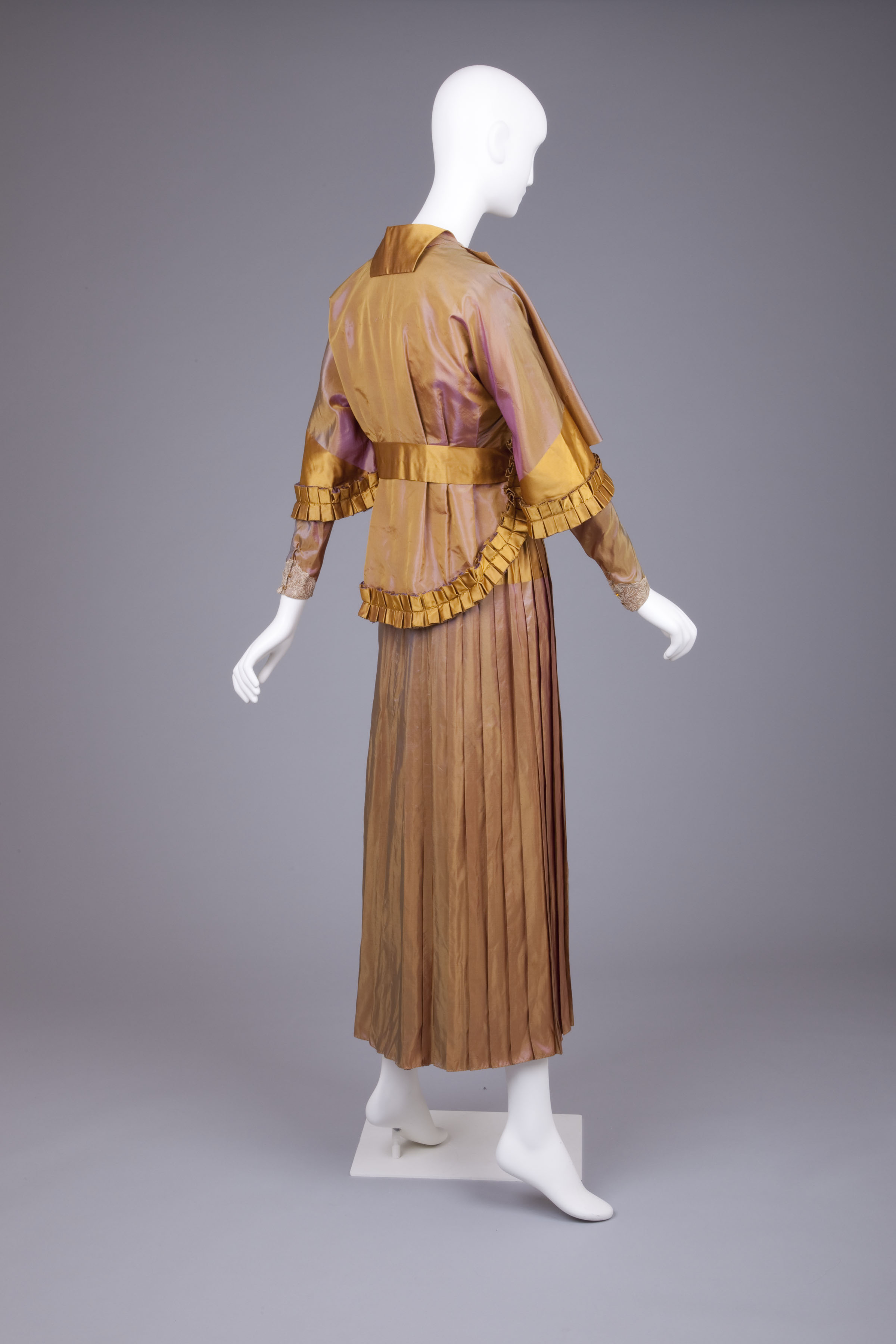
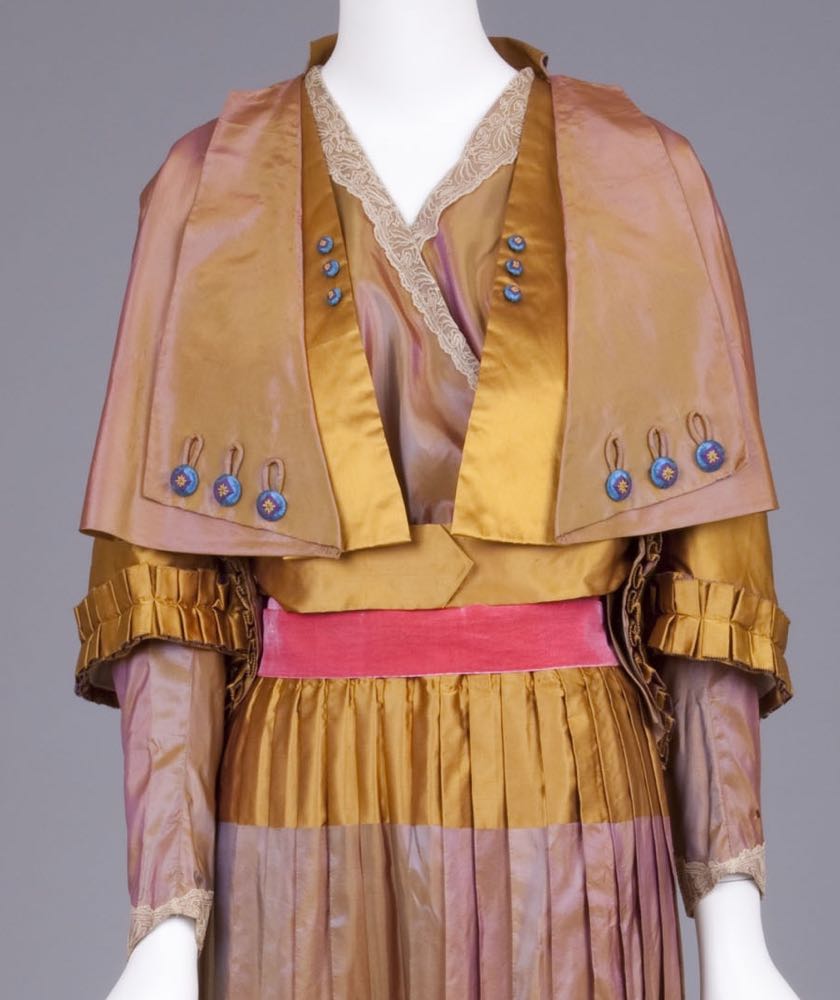
Dress, mid-1910s, 'Landum Minneapolis', silk taffeta, Goldstein Museum of Design, 2006.043.006a-c

Rate the Dress: Autumn tones from the mid-1910s

It’s the last week of March, which means the last week of #GreatWarMarch themed Rate the Dress picks.   Next week will be something totally different.  Maybe 18th century.  Maybe 1860s.  Who knows!  Definitely not from 1900-1924 though!  To finish up our month-long celebration of Edwardian fashion & history, this week’s Rate the dress is a really, really, fascinating iridescent silk taffeta number from the mid-1910s.

Last week:  An Edwardian Evening Dress

Poor dress last week.  Not only did it have a less-than-ideal mannequin, but no one loved it enough to give it a 10!  It did get some rather nice ratings – but also a lot of not nearly so nice numbers.  The layers of detailing, particularly the organza ruffles, velvet cords, and floral corsage (so, pretty much all of them) came in for a lot of criticism.  Just about everyone agreed that the cut-out layer was glorious, but the more that got added on top of it, the less you liked the dress!

The Total: 6.4 out of 10

Wah wah.

This week: A mid-1910s iridescent silk taffeta ensemble

Lauren of Wearing History shared this dress on Instagram as part of #GreatWarMarch, and I thought it was so fascinating. It’s so striking – just perfect for Rate the Dress.

Dress, mid-1910s, 'Landum Minneapolis', silk taffeta, Goldstein Museum of Design, 2006.043.006a-c

Dress, mid-1910s, ‘Landum Minneapolis’, silk taffeta, Goldstein Museum of Design, 2006.043.006a-c

This outfit was probably worn by the donor’s grandmother, Martha F. Harris Hynes.  She was born in 1882, so would have been in her mid-late 30s when she wore it.

Dress, mid-1910s, 'Landum Minneapolis', silk taffeta, Goldstein Museum of Design, 2006.043.006a-c

Dress, mid-1910s, ‘Landum Minneapolis’, silk taffeta, Goldstein Museum of Design, 2006.043.006a-c

The Goldstein Museum of Design identifies this as an evening dress, but the long sleeves, higher neckline, and overjacket are all unusual features for an evening garment.  This is more likely a formal afternoon ensemble: the type that might have been worn to a wedding (usually held in the day in the 1910s) or a very formal daytime event.

Dress, mid-1910s, 'Landum Minneapolis', silk taffeta, Goldstein Museum of Design, 2006.043.006a-c

Dress, mid-1910s, ‘Landum Minneapolis’, silk taffeta, Goldstein Museum of Design, 2006.043.006a-c

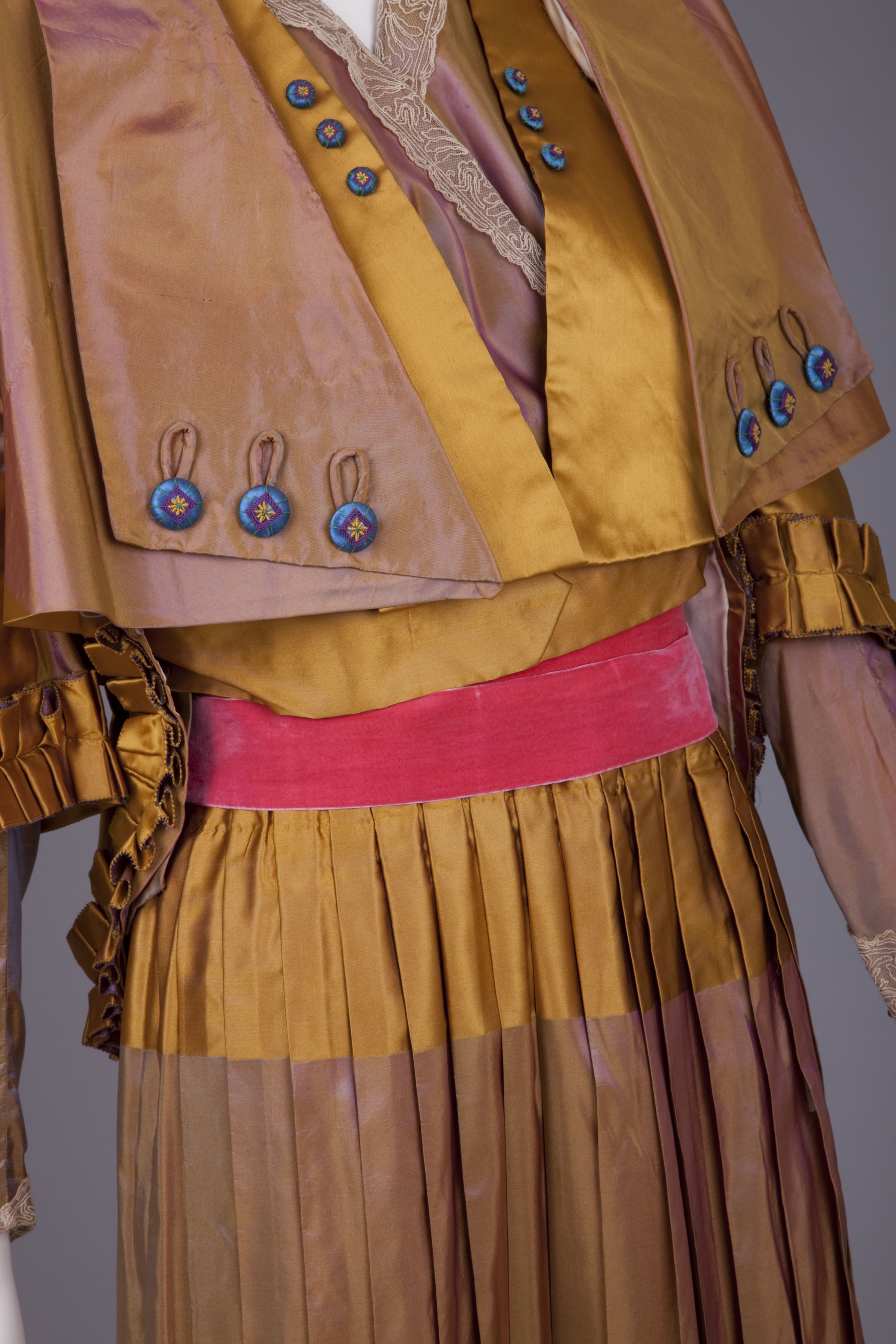
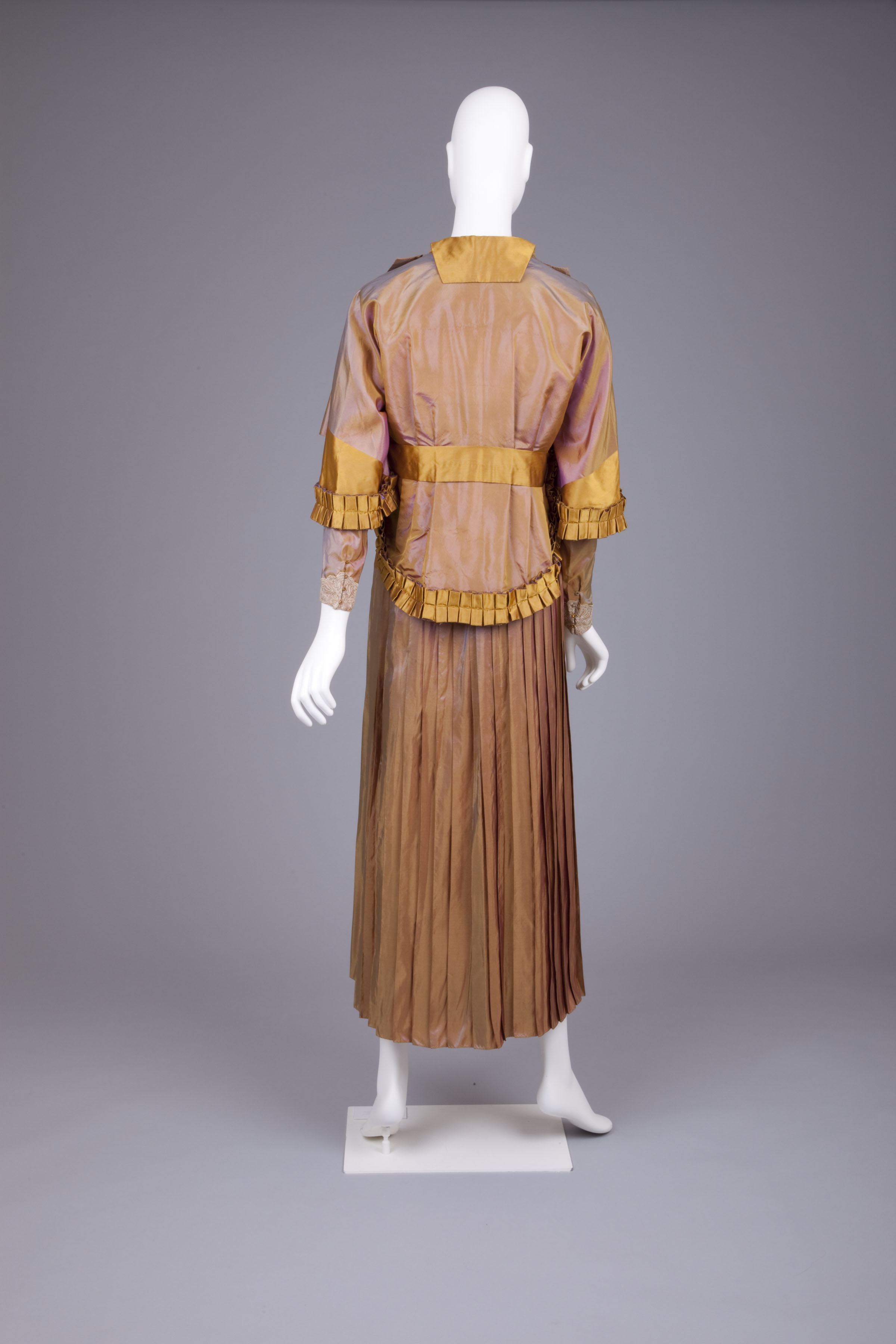
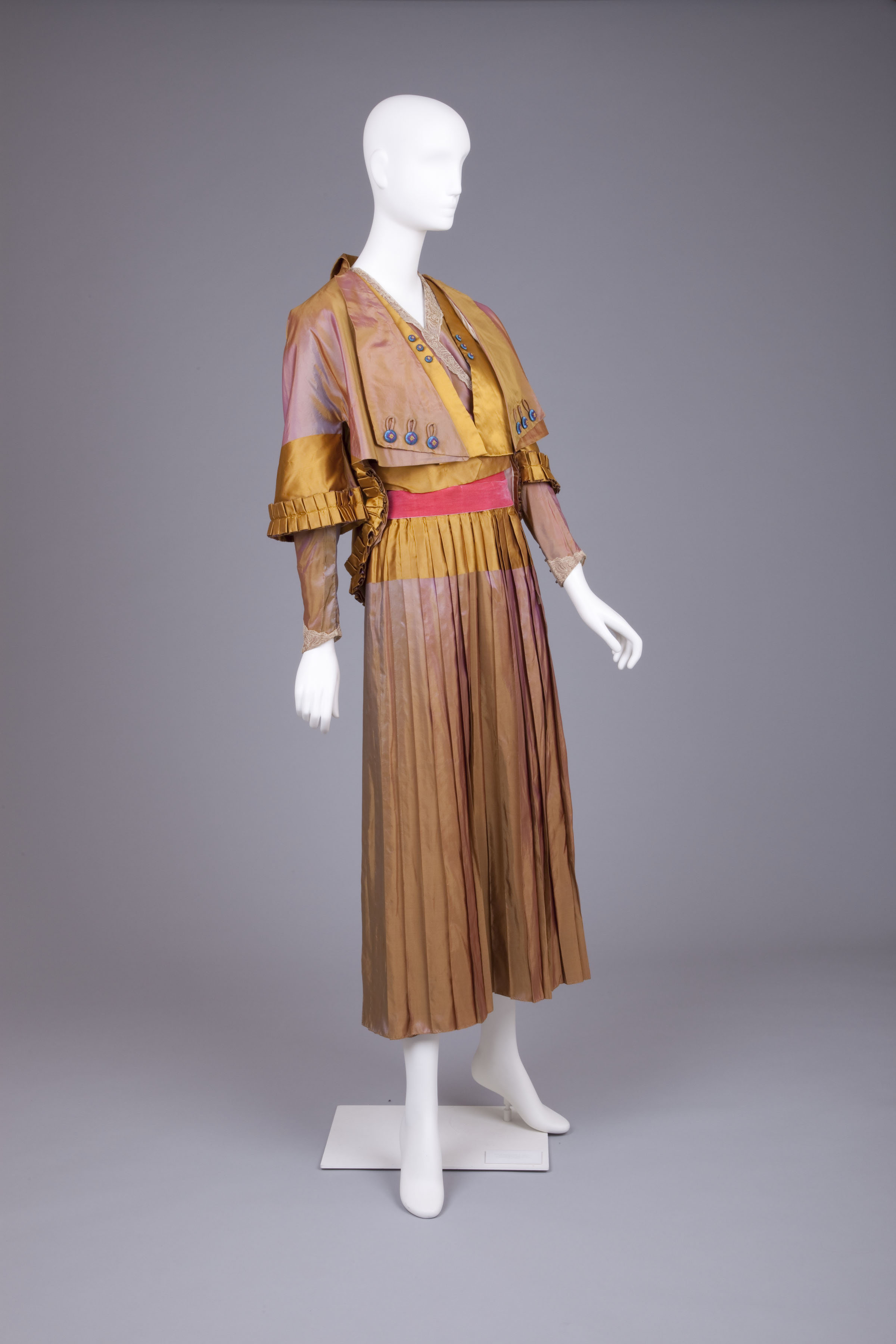
The outfit consists of a jacket with 3/4 sleeves, cape-effect at the front, and ruffled peplum back. A belt of the brighter gold silk taffeta holds the back of the jacket snuggly to the body, and sits above the vivid pink velvet sash of the dress.  Sadly there are no image of the dress without the jacket.

Dress, mid-1910s, 'Landum Minneapolis', silk taffeta, Goldstein Museum of Design, 2006.043.006a-c

Dress, mid-1910s, ‘Landum Minneapolis’, silk taffeta, Goldstein Museum of Design, 2006.043.006a-c

Typically of mid-1910s designs, this ensemble includes a bold and playful mix of colours and design elements.  Complementary hues are offset by touches of clashing colours.  A nod to Orientalism is combined with ruffles and a back view with more than a touch of 18th century inspiration.  Vertical, horizontal and angled lines all work together to bounce the eye around the garment.

Dress, mid-1910s, 'Landum Minneapolis', silk taffeta, Goldstein Museum of Design, 2006.043.006a-c

Dress, mid-1910s, ‘Landum Minneapolis’, silk taffeta, Goldstein Museum of Design, 2006.043.006a-c

From some angles the garment is simple and harmonious, from others it’s visually assertive:  a vivacious mix of colours and elements.

Dress, mid-1910s, 'Landum Minneapolis', silk taffeta, Goldstein Museum of Design, 2006.043.006a-c

Dress, mid-1910s, ‘Landum Minneapolis’, silk taffeta, Goldstein Museum of Design, 2006.043.006a-c

What do you think?  Does it work?

Rate the Dress on a Scale of 1 to 10

(as usual, nothing more complicated than a .5.  I also hugely appreciate it if you only do one rating, and set it on a line at the very end of your comment, so I can find it!  Thanks in advance!)

SaveSaveSaveSaveSaveSave

SaveSave

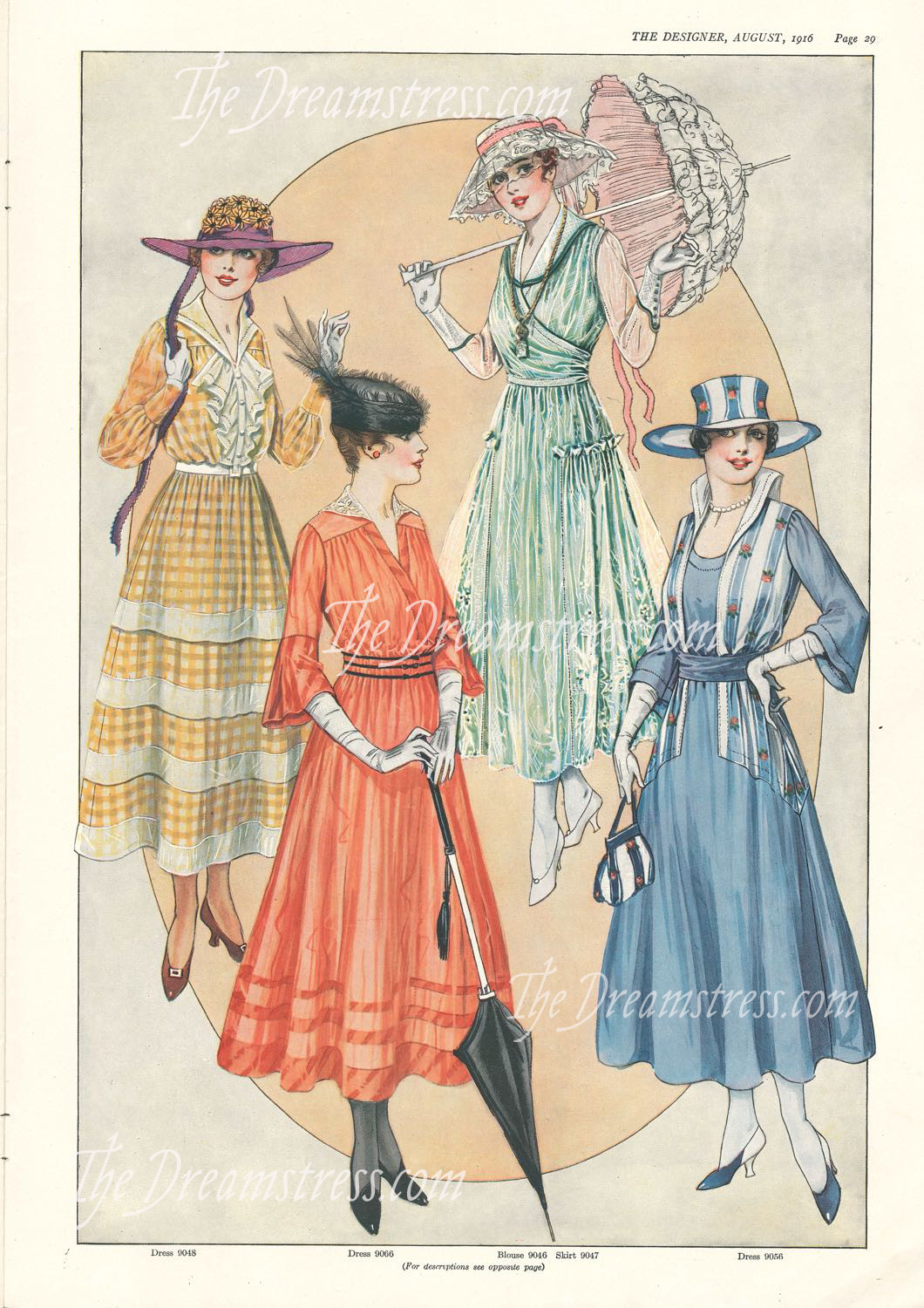
The Designer, August 1916 thedreamstress.com

Summer fashions from August 1916

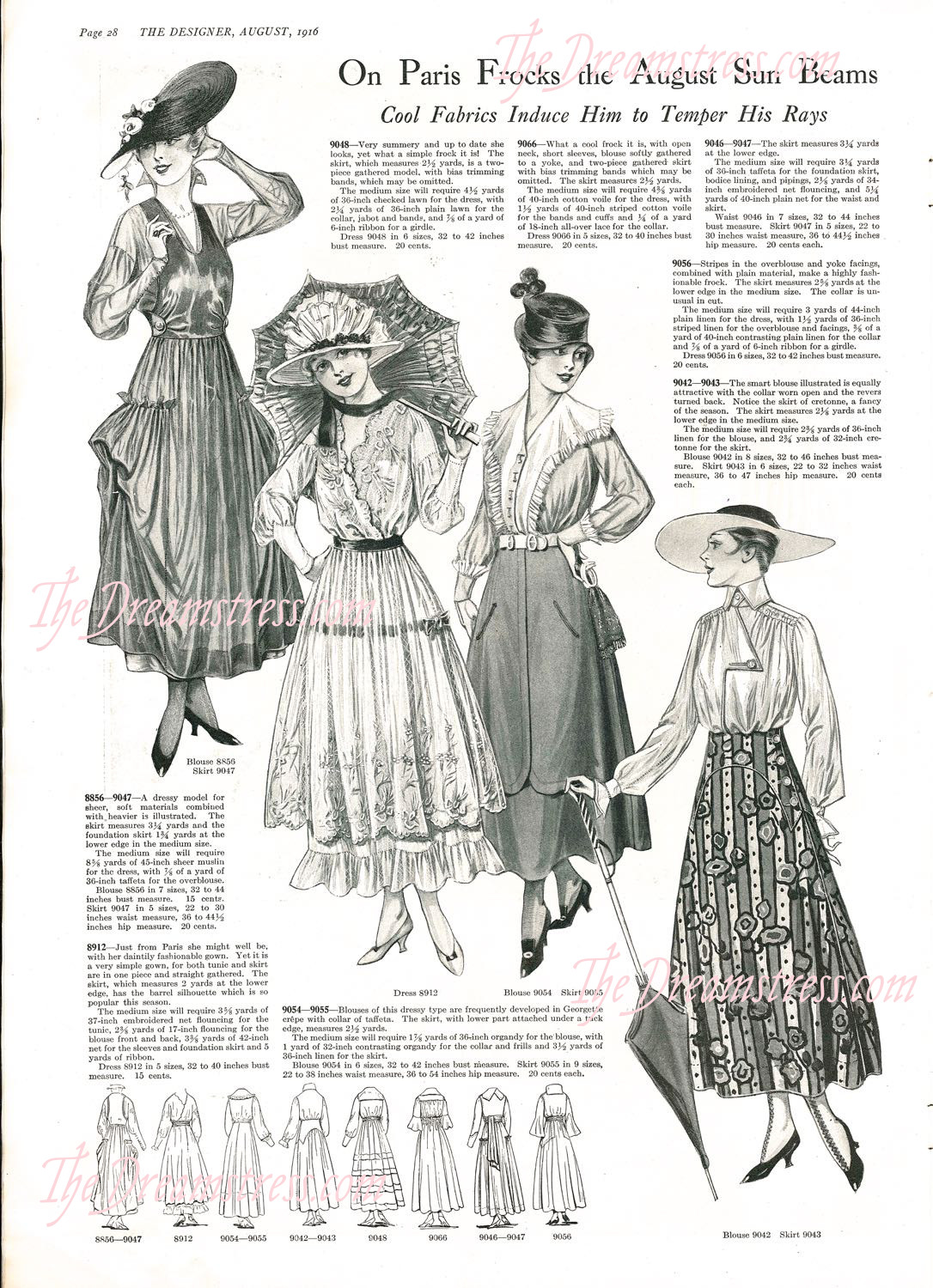
I shared a snippet of this fashion spread from the August 1916 issue of The Designer Magazine on Instagram, and thought you might enjoy seeing the full spread.

The Designer was the magazine issued to market Standard Patterns.  It had colour and black and white fashion spreads, advertisements, articles on current events, home advice, and an agony aunt.  Just about everything!

The Designer, August 1916 thedreamstress.com

There is something for everyone in these spreads: shirtwaist and skirt combinations, full dresses, dresses in two parts.  There are more streamlined numbers for the sophisticated girl; frothy, delicate numbers for the lady who likes her frills:

The Designer, August 1916 thedreamstress.com

What do you think?  Which is your favourite?