This July/August I got to go to Costume College in LA for the first time. It was amazing, and I had a fabulous time in every possible way.
Now that I’ve been, I desperately want to go back, and can’t believe I didn’t manage to get there sooner!
I also can’t believe how stressed I was about the thought of Costume College. I’m a worrier, I fretted and built up huge obstacles in my mind, which prevented me from really attempting to go for years, and which also made the run-up to it much more emotionally fraught that it needed to be.
I think a lot of the things I worried about with Costume College are pretty common among first timers, so I thought I’d address my biggest fears, and how they turned out to be not at all a problem, which will hopefully reassure some future attendees!
Worry #1: I’m not good enough, and my work isn’t good enough.
Like many people in the arts, I’m hyper-critical of my own work. I know every tiny fault in everything I make, and to me they are glaringly obvious (except creases — there are lots of times when I don’t care at all that a garment is creased, or feel it actually adds to the authenticity). Showing items off in a setting with so many amazing, talented people creating costumes at a level way above mine is super scary.
However, even when wearing things that are 5 years old, and that don’t reflect my current skills, I never once felt inadequate, or lacking in accomplishments.
No matter how spectacular and fabulous a garment was, I found seeing it in person both incredibly inspiring, and incredibly reassuring. I’m used to seeing costumes in photos, and when costumers post photos they post their favourite ones, where they, and the costume, appears to the very best advantage. Not only do nice angles obscure awkwardness that is pretty obvious in real life, but good lighting and lovely locales enhance even the most exquisite of garments. Everything looks better with a pretty backdrop!
Even when I’m studying photos for the technical and construction details I find myself getting swept away in the romance of the image: the atmospheric light, and the fabulous setting. In the reality of a hotel hallway, a costume may still be a triumph of technical skill and aesthetic artistry, but it is still clearly a garment made by a person. No matter how perfectly an outfit was constructed, being able to see it in person, and to see how it moved and was made, made it accessible. Even when a garment was even MORE amazing in person than in photos, seeing it in real life turned it from something that you looked at as a still image and felt you could never possibly do, to something where you saw how it had been done, and could aspire to.
I look at all my photos from Costume College, and instead of thinking “I’ll never be that good” I think “Yeah! I saw that thing and it was AMAZING but now I’m that much closer to being that amazing myself.”
This was really one of the biggest things I’ve taken from CoCo. Everything was SO fabulous, but I don’t feel diminished by it, I feel inspired. I’m pretty sure you’re going to see a massive leap in the level of things I create over the next 12 months, thanks to the things I saw at CoCo.

Worry #2: Everyone will judge my work
As hard as I am on myself about my work, it still really hurts when others critique it. There is a huge difference between knowing and pointing out your own faults, to having someone else point them out. So I was scared about wearing things like Ninon that I love, but know could be so much better if I made it now (more experience + so much new research has been published).
Of all the hundreds of conversations about the outfits at CoCo that I participated in or overheard, not one was a critique about construction or historical accuracy, and only one of them was a comparison (“my X being better than similar Y” – and it was pretty clear that the listeners on that one were a bit shocked and felt that a judged comparison was quite unnecessary, and did the speaker no favours). Bar that one comment, everything was a rave review. The weekend was a sea of “Oh my goodness, did you see that dress! It’s amazing! And that one, and that one, and that one…” and “You look FABULOUS, do you mind if I take a picture?”*
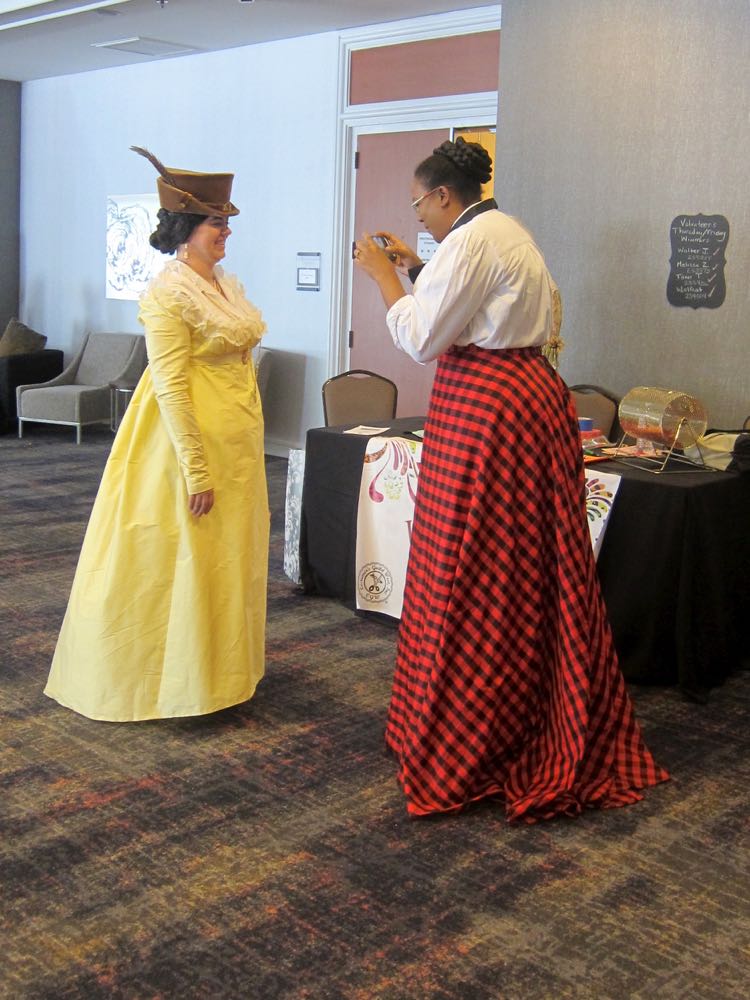
Photographing two awesome costumes, as one is photographed by the other
People were clearly not there to judge, and they weren’t there to compete, they were there to learn, admire, and enjoy. The only competition at Costume College is with yourself: how much better can you be than you were before?
Worry #3: I don’t know anyone.
There were only three people at CoCo that I had ever met in person before my trip, and with all three it was very briefly, at one event almost a decade ago. However, I did KNOW lots of people who were there. I’ve read their blog, and they have read mine, and I’m in costuming groups with them on Facebook.
The internet has made it really easy to know people, and to be part of the community even before you arrive. If you take an effort to participate in groups, and blogs, you’ll already have friends when you get there. You don’t even have to have a blog or make things: trust me as a blogger and group facilitator when I tell you we LOVE frequent supportive commenters, and are very excited about meeting them!
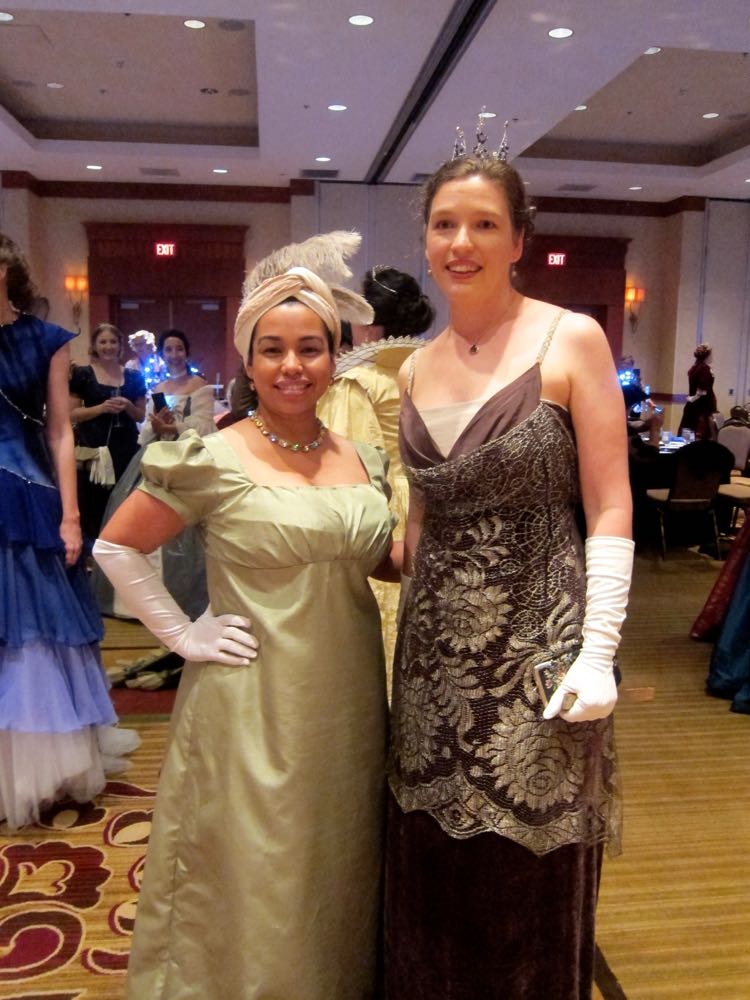
Hanging out with fellow Historical Sew Fortnightlier Maria
You can also make instant friends by using patterns from the small independent costuming patternmakers, and tutorials from the bloggers, as most of them were at CoCo. I was incredibly delighted whenever someone recognised me from my blog, and even MORE delighted when someone was wearing pocket hoops or stockings or something else from one of my tutorials. I made so many amazing friends because someone came up to me and showed me their legs!
I highly recommend trying to be part of the community online before CoCo, but even without that I don’t think it would be hard to make friends as long as you are willing to try too. The costumes make it really easy for people to come up and talk to you and vice versa.
Worry #4: People will be cliquish and unfriendly.
I’d heard numerous rumours of cliques and drama at Costume College before I went. I did not experience ANYTHING remotely drama-filled or cliquish at CoCo. Everyone was extremely friendly and welcoming. People were a bit shy at the Thursday night mixer pool party, but by Friday morning everyone was just bouncing up to anyone in costume and telling them how great it was.
Friend-making and getting togethers were happening all the time: I made friends with people I sat next to in classes and shared excited asides of ‘ooh, I’ve been doing it right’ as the teachers explained things, had breakfast with Cynthia of Redthreaded because we were the only CoCoers in the restaurant (also, because she’s awesome!), got taken out to a dinner for anyone at loose ends the last night, and was invited to sit at three different pre-booked reserved tables on Gala night, because I was walking around trying to find the table I was supposed to be at.
Those examples aren’t because I’m particularly fabulous or people were that excited about meeting me — they are just what happens at Costume College if you’re a little bit friendly and bounce up to lots of people and tell them how wonderful their outfit is, and how much you’ve learned from their blog.
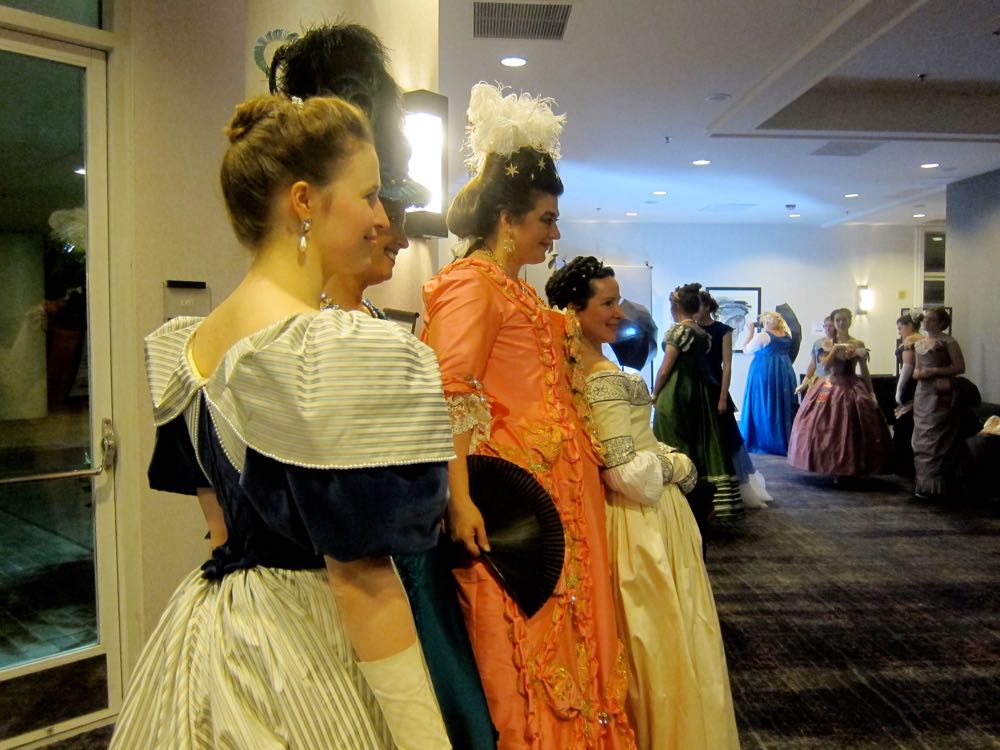
Yes, there are a lot of clusters of small groups admiring and talking, and group costume projects that all ‘go’ together, which can look superficially clique-y, but I really don’t think they are because…
The thing to remember about Costume College is that:
- This is the only time of year that many costumers from across the country and around the world get to see each other, so of course everyone wants to spend time with friends they haven’t seen in a year. That doesn’t mean they aren’t excited about meeting new ones too, simply that they want to catch up with everyone they already know, and already knowing them can be a bit easier for lots of people because…
- MANY historical costumers are introverts. I think this is particularly true of costuming bloggers (i.e. the ones who you will recognise and know about beforehand). Blogs allow us to be social and outgoing in very calm, controlled environments. CoCo is wonderful, but a little scary in person, because of all the persons. There were so many costumers who seem outgoing on their blog, and at CoCo I’d find them escaping to back corners, trying to get away from the crowd. This is great because it meant it was really easy to have proper conversations with people in small groups, but I did notice people getting a little shy and quiet when a group got too big, no matter how well they knew every individual member of the group. Be understanding of the introverts. We aren’t quiet because we don’t like you, or don’t want to know you, we’re quiet because there is already too much noise for us. We hang out in small groups because big groups are too hard, but that doesn’t mean we aren’t still excited about meeting lots of new people, just not all at once.Before Costume College someone posted a meme about fabric and hoopskirts etc. and ‘these are my people’. That’s true. But when I realised how much of the rest of Costume College was escaping back to their rooms for a few hours a day to decompress I though ‘Aha, these are my people!’
- From chatting to people in themed costume groups, and from watching them develop in blogs and Facebook for years, the themed groups aren’t about ‘Let’s do something so that we’re an exclusive group’, they are ‘I love X thing and think it would be fantastic if lots of people did X thing!’ Most of these groups are publicly mentioned/advertised beforehand on FB and in blogs (I know of four being planned for next Costume College, and all are delighted to let you join if you want), and everyone in them is happy to have anyone else in them. And if you happen to be there an outfit that fits the theme, without planning, the groups will include you with even more enthusiasm – the Star Wars group was very sad to find out I hadn’t brought my 1950s Jedi Knight/La Pieta with Stormtrooper outfit!
Worry #5: It will be hot and horrible
One of the biggest things that held me back from going to Costume College for years is the fact that it’s held in LA in August. I’m not very good at heat. And I’m even worse at dry heat. And I have perfume and chemical allergies. So a conference in LA, in August, in a hotel, with lots of people, when you’re expected to wear costumes, was scary.
LA was VERY hot this year, but the hotel has very good air conditioning. It not only made super elaborate costumes comfortable, but also did a good job of filtering a lot of the pollutants I’d usually have problems with. I actually didn’t even go outside for two full days, and was fine. Don’t worry about the heat!
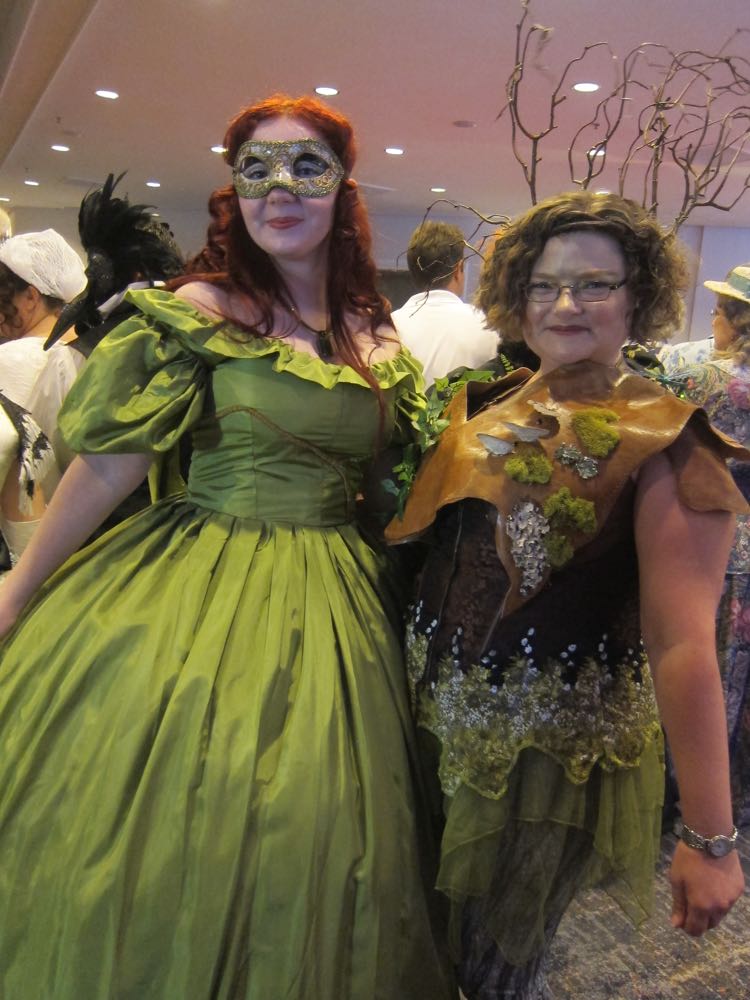
Perfume was still a problem (if I didn’t come up to you on Gala night and tell you your outfit was amazing, it was either because there were so many amazing outfits I didn’t manage to see them all, or because you were wearing perfume), and I had to leave one class because someone wearing lots sat near me, but if you’re a normal person who hasn’t ended up in the ER because someone drenched in scent sat next to you on a bus, you’ll be fine.
So that’s it – my biggest worries not at all an issue. If you’ve thought about Costume College, but have held back because some of these worried you, I really encourage you not to. Everyone is lovely. The event is fabulous. You’ll have a wonderful time, and you’ll learn so much.
Now that all my worries about Costume College have been laid to rest, I have a new worry:
#6: How on earth am I going to be able to afford to do this every year, because it’s SO FANTASTIC!
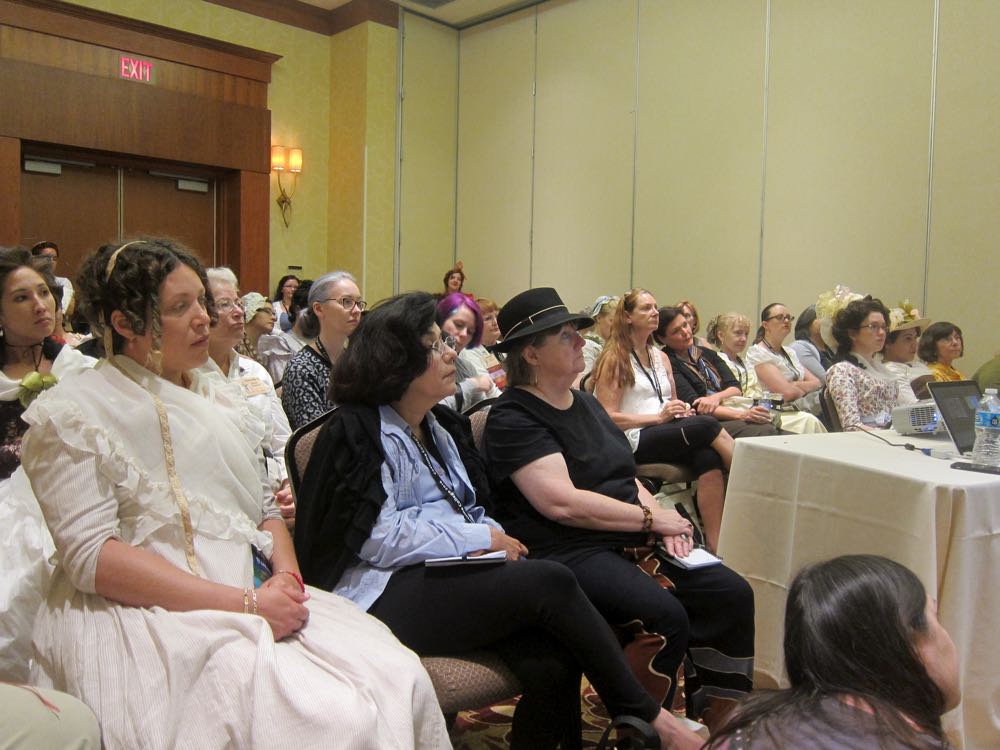
* I actually found it hilarious how often someone said to me “Oh, I hope you don’t mind, but I’ve been sneaking pictures of you from across the room.” It’s super sweet that people were so polite and asked, but I also felt that by dressing up at Costume College I had entered into an agreement that it was fine to photograph me!


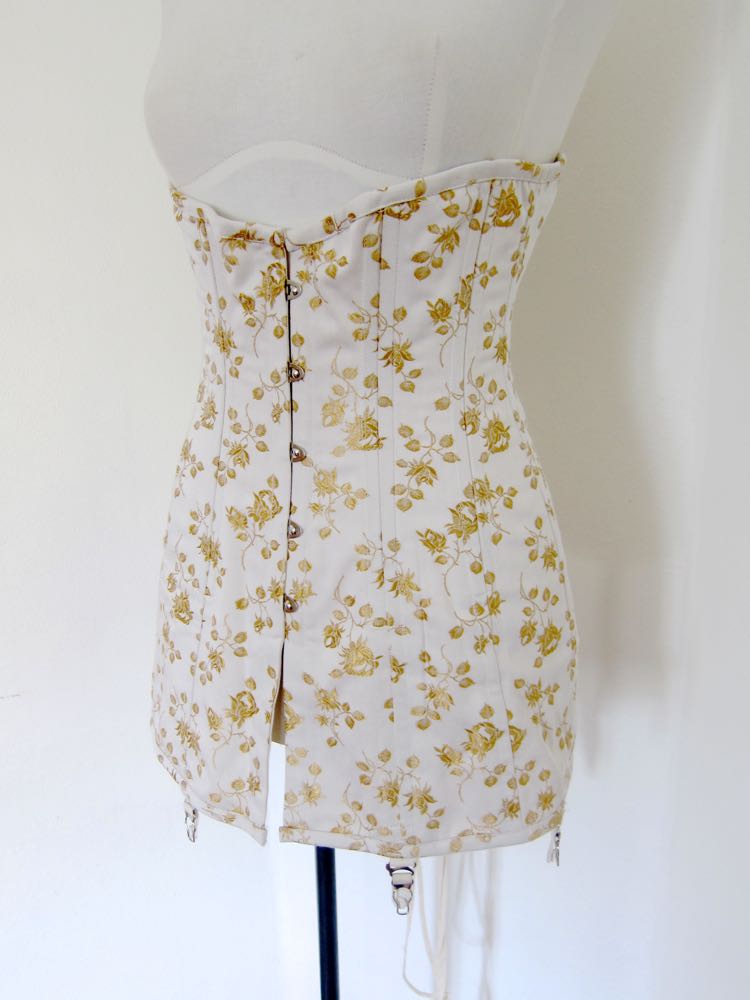
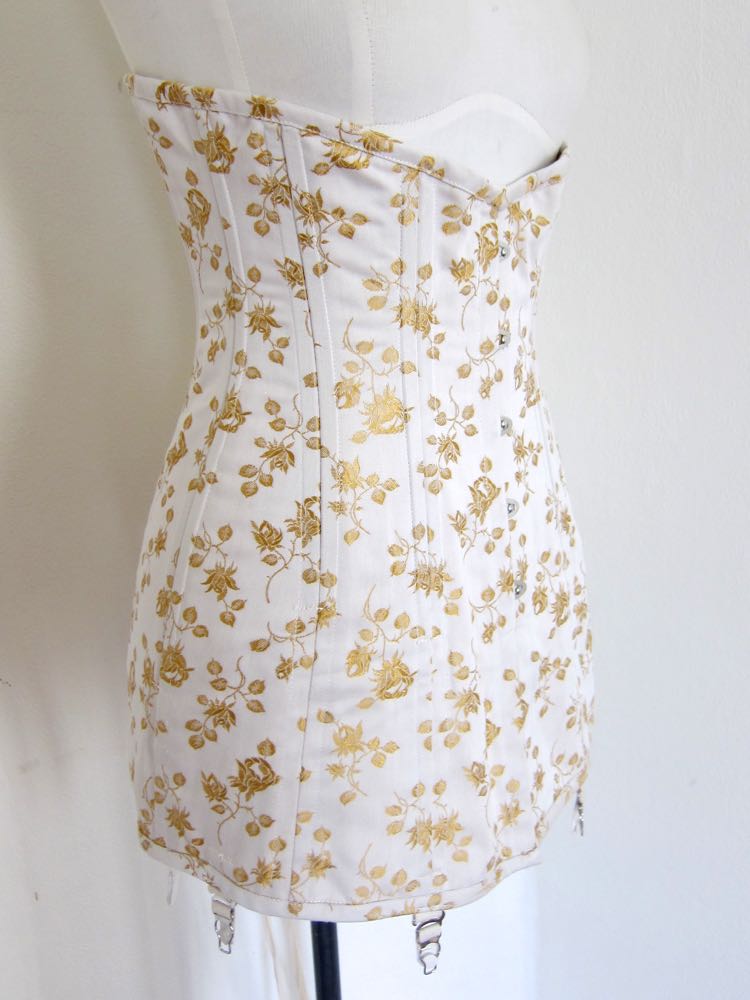
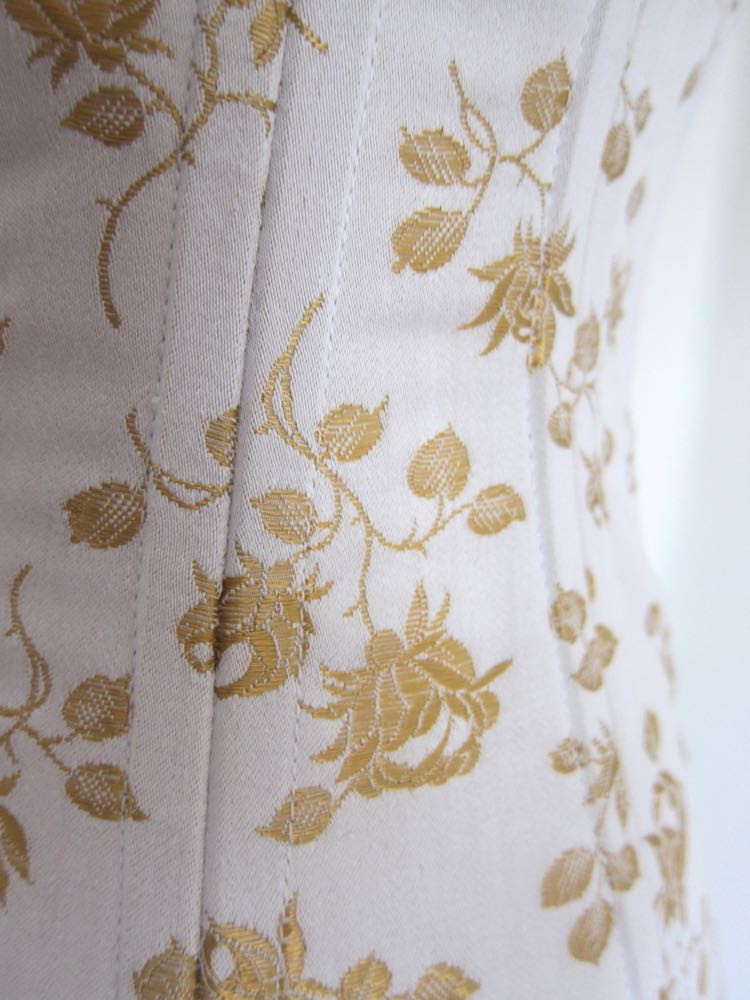
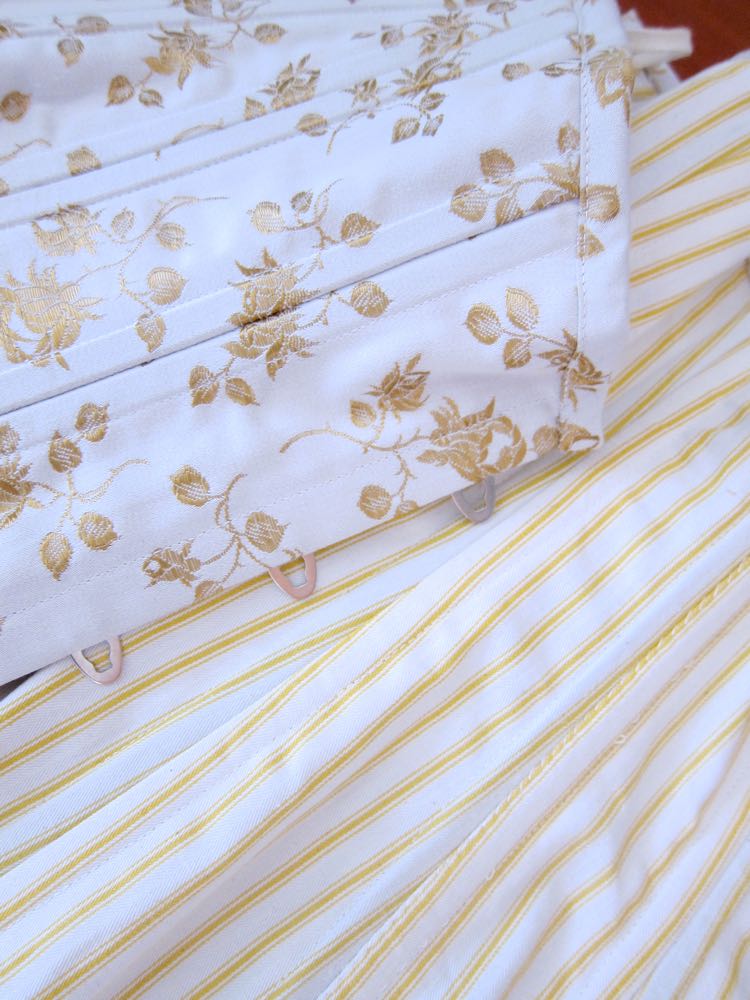
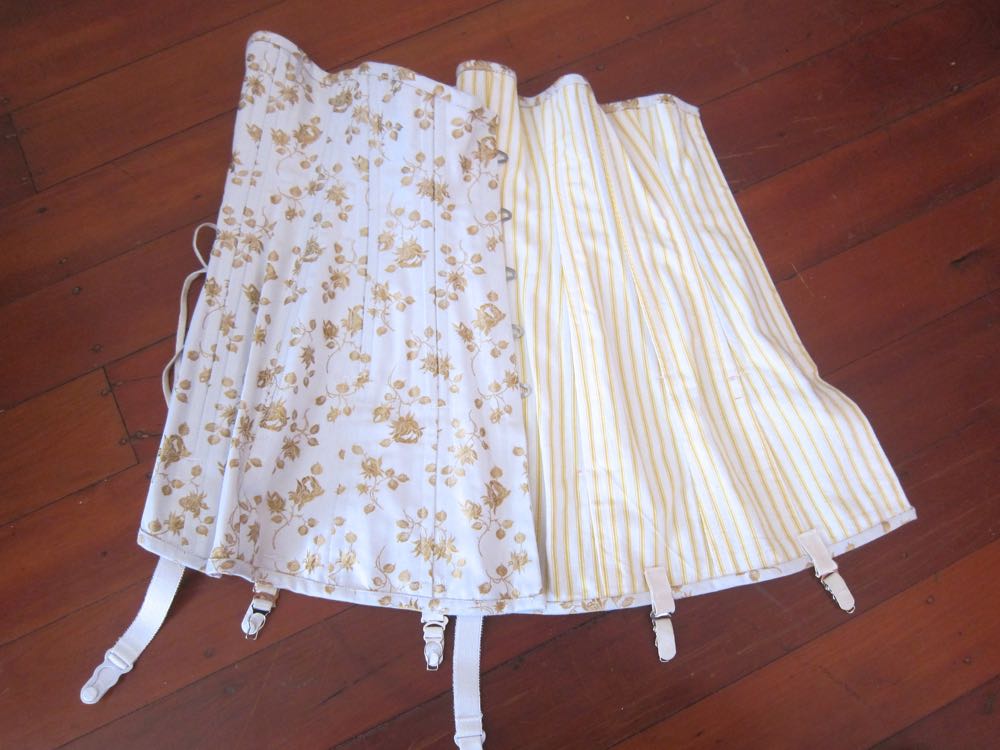 I’d originally intended to call this corset the ‘Rose Daughter’ corset, but with the addition of the yellow it became ‘Sunshine & Roses’*.