Latest Posts

Bluebell trousers and adventures with swans

I’ve been holding off on showing you photos of these trousers because all the photos I have of them are rubbish.  But they’ve been done for almost three months now, and I do have some photos of them, and even if the photos are rubbish, at least there is a fun story attached!

I started these trousers last autumn (so yes, well over six months ago!) along with a class who were making them:
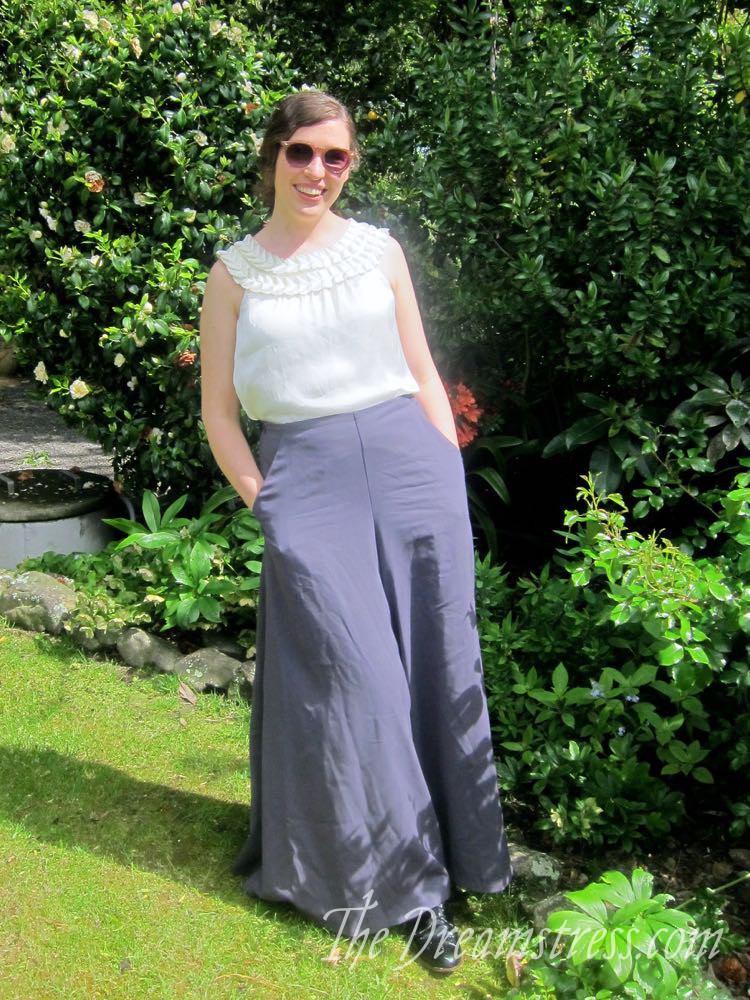
Bluebell trousers thedreamstress.com1

These are made from the same altered version of Wearing History’s Chic Ahoy trousers as my Pants that Never End.  The fabric is an absolutely delicious lightweight worsted wool that I was given by the wonderful Lynne.  It’s a fabulous colour: grey in some lights, purple in others.

The fabric isn’t quite as successful as the linen was, simply because it is so light and clinging that I feel the need to wear smoother pants underneath, which is more effort than I can usually be bothered with (tap pants are easy and wonderful, smoothers are a hassle.  I’m very specific!).  It also looks terrible the moment you put anything in the pockets, which entirely defeats the purpose of big pockets.  Still, I do love them

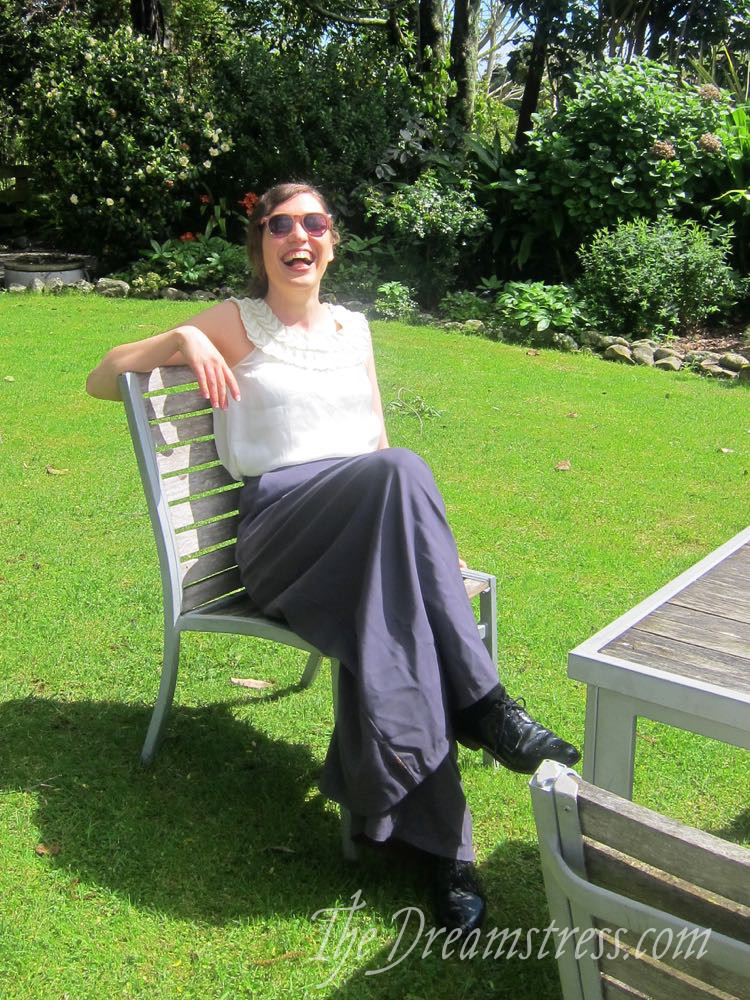
I have managed to wear them a number of times, most notably as my Wellington-to-Taranaki travelling outfit for our Anne of Green Gables weekend.
Bluebell trousers thedreamstress.com

We got photos of the trousers at our brunch stop, and again for an afternoon rest at Virginia Lake in Whanganui.

Nana lived very near Virginia Lake, and was very proud of it.  She always made us walk around it when we visited her, so I like to stop there every time I pass through.  It’s not exactly a hard task: the lake (it’s really a small pond) is beautiful, especially in springtime.

There were oak trees in full flower (an oak tree in flower is possibly one of the most underrated things in the world)
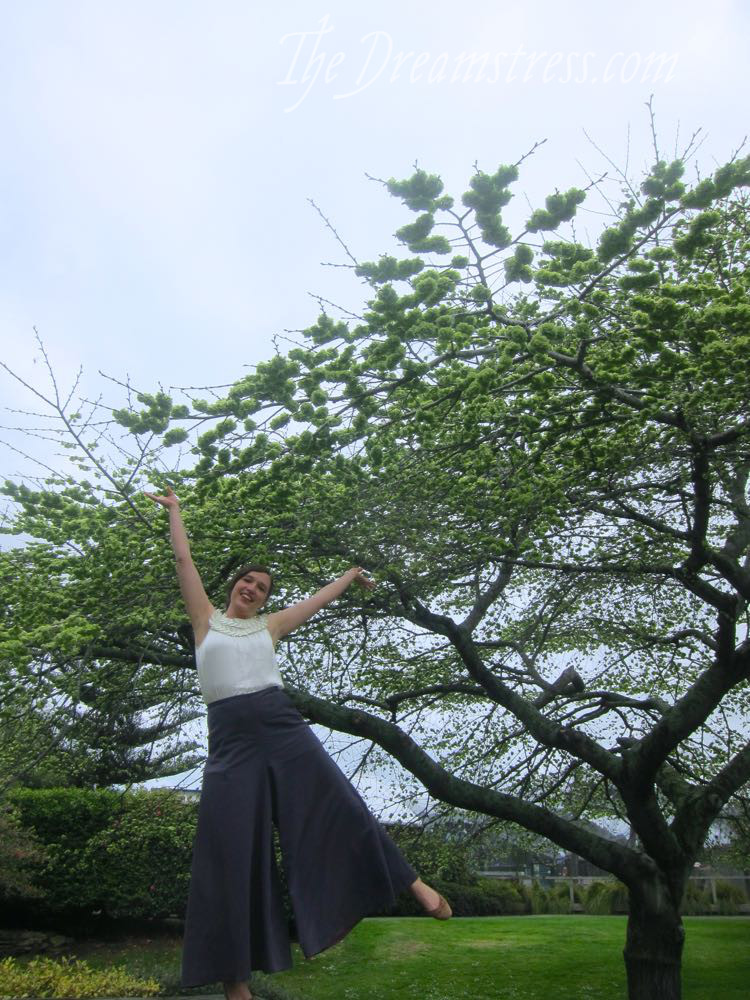
Bluebell trousers thedreamstress.com

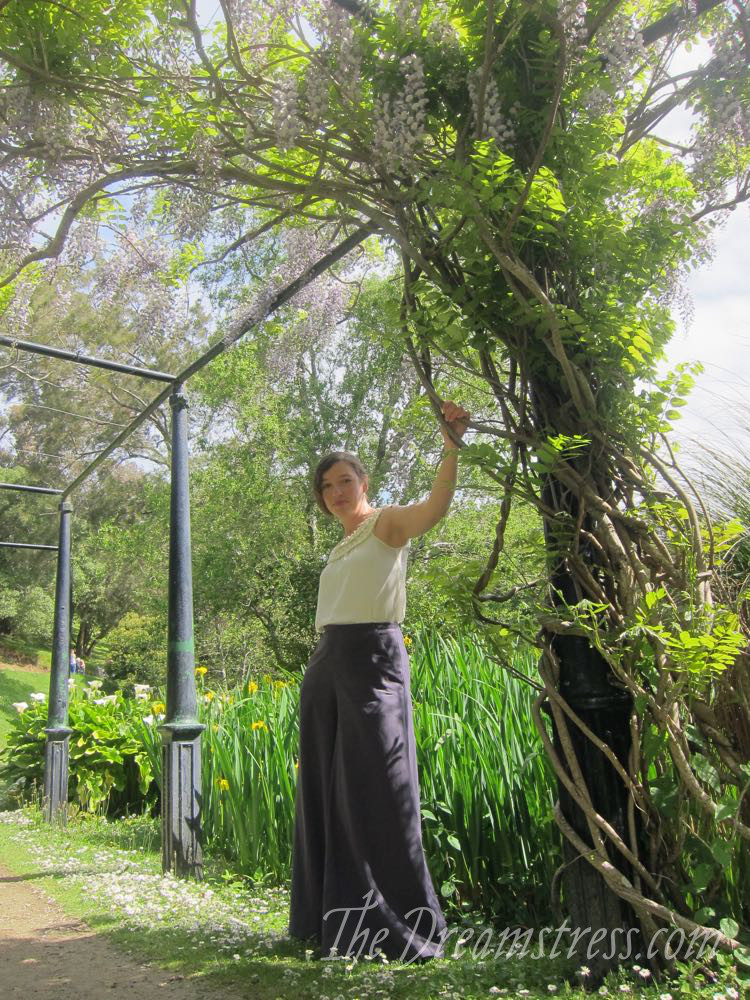
And wisteria arbours:

Bluebell trousers thedreamstress.com

And, best of all, a teeny bit of bluebell woods:
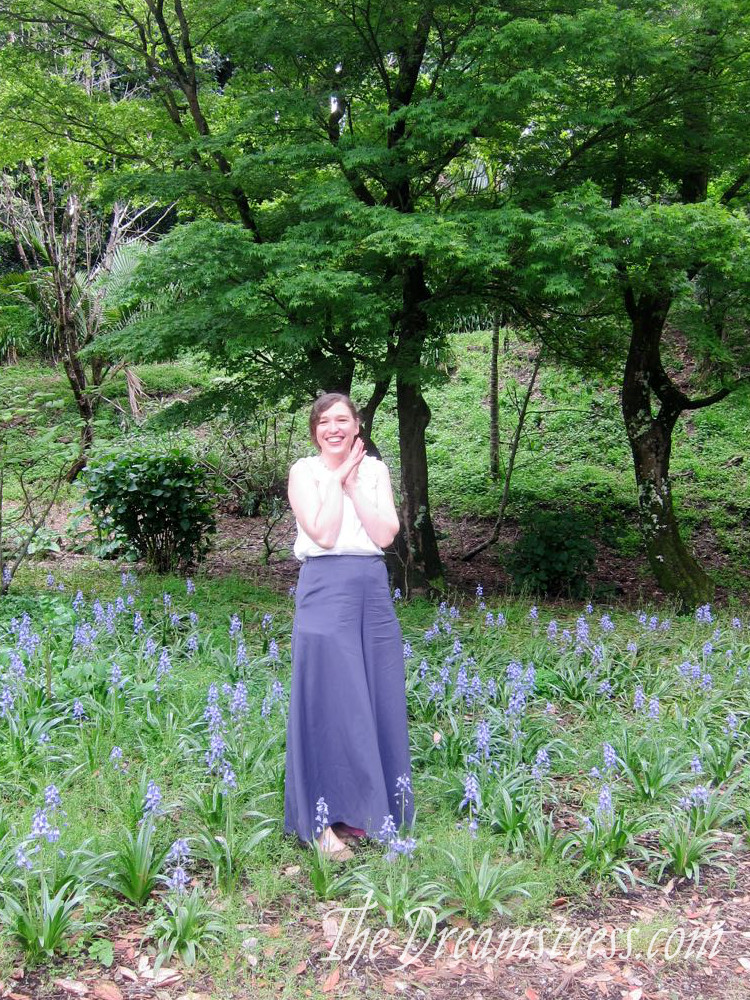
Bluebell trousers thedreamstress.com

One of my life goals is to go walking in a proper bluebell wood, with acres and acres of them.  This patch isn’t quite doing it, but  these trousers certainly work perfectly with them, so they immediately acquired their name.

In addition to flowers and bluebell woods, Virginia Lake has ducks, geese, swans, coots and pukeko, all of which were either nesting or had just hatched clutches of fluffy offspring.

We saw a black swan sitting on her nest, with mate on guard:
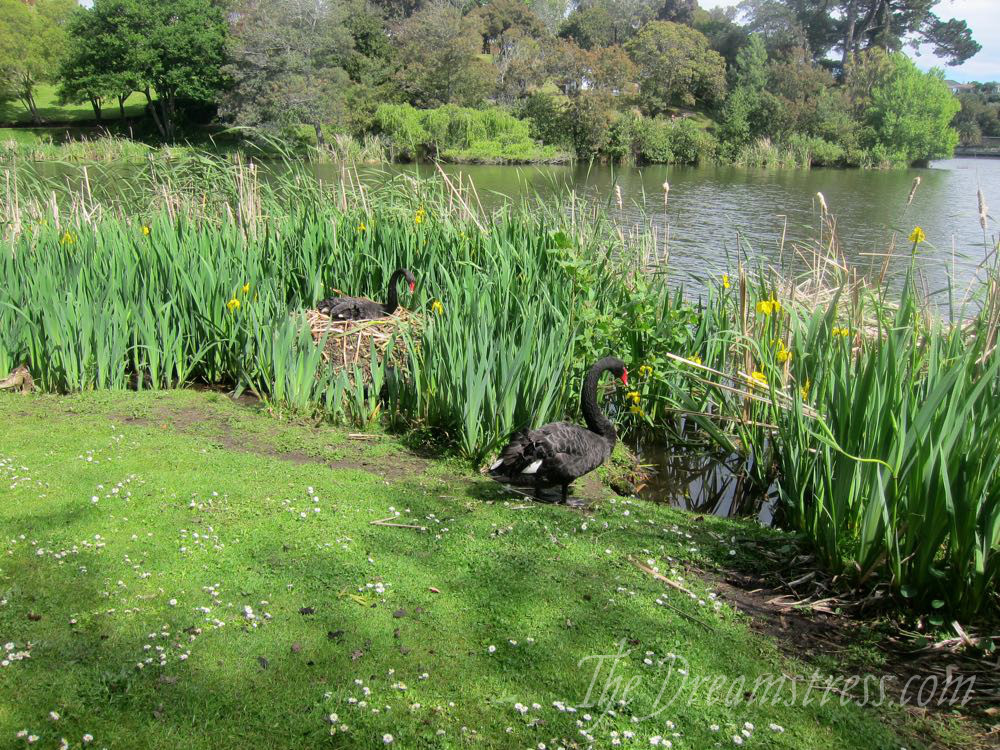
Bluebell trousers thedreamstress.comShe was doing a pretty good job of defending her nest from interlopers herself, like this nosy coot:
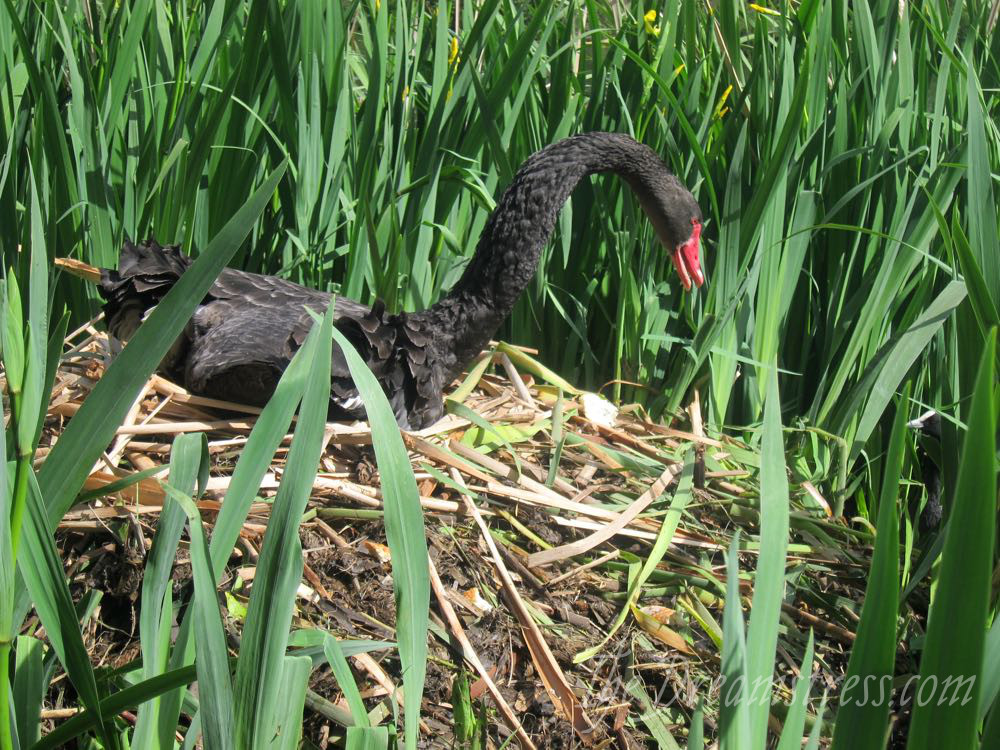
Bluebell trousers thedreamstress.com

Based on the nest, I thought we were too early for cygnets, but a few bends further on in the lake I spotted a pair in the reeds.  I crouched down to see them, and  they decided I looked like I would make a nice friend and came to investigate:
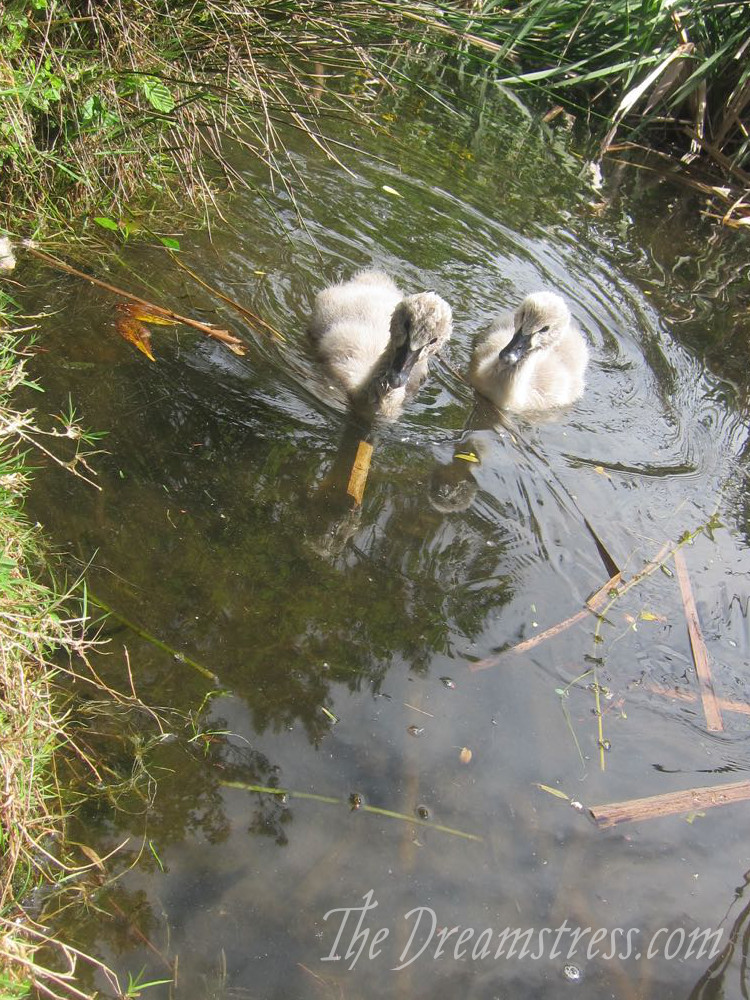
Bluebell trousers thedreamstress.com

Andersen got The Ugly Duckling all wrong, because there is nothing remotely ugly about these darlings!
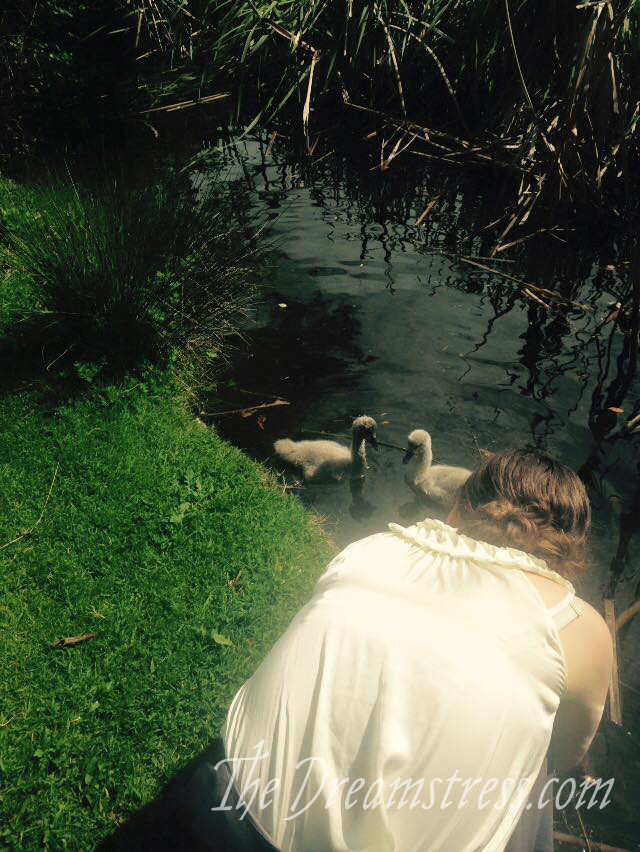
Bluebell trousers thedreamstress.com

Look at them.  They even know how to pose already:
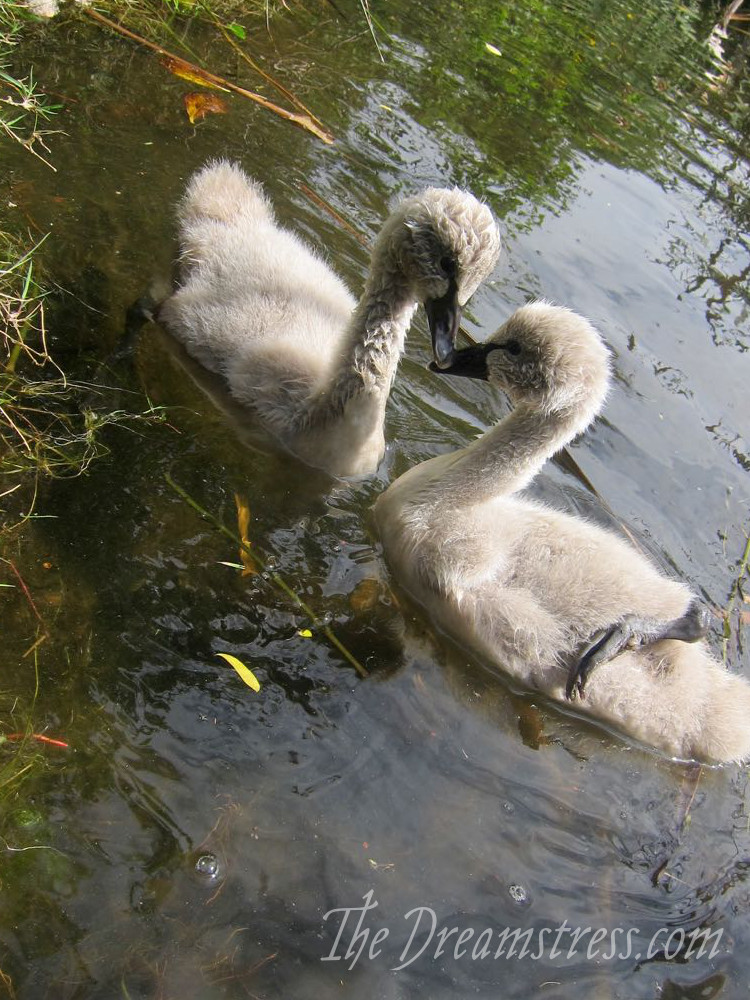
Bluebell trousers thedreamstress.com11

The cygnets were coming right up to me,  posing and flirting and generally making me excessively happy.

Stella & Priscilla were calling my name with increasing urgency, but I just waved them away, because baby swans.

Finally I turned around to see what they were so excited about, and discovered that the excitement was the mother swan, who was RIGHT behind me, and not at ALL  happy!

Cue mad scrambling away and hysterical laughter once I was at a safe distance.  I’m sorry mama swan!  I just wanted to be friends with your babies!


Rules of Conduct for Women Teachers, 1915?

My bookshelf holds a copy of  ‘Instructions for New Zealanders’: a collection of excerpts from the hundreds of instruction guides that have been issued to Kiwis over the last 150 years, covering everything from the clothing an immigrant should bring, to how to take a bath, to what children may be employed as street vendors.

One of the more interesting inclusions is a list of ‘Rules of Conduct for Women Teachers, 1915’.  ‘Instructions for New Zealander’s’  credits the list to the Museum of Transport & Technology, Auckland.  Some things in the list don’t read quite right to me so I did a bit of digging, and found that the National Library has a copy of the ‘original’, apparently located at the Tauranga Historical Village Museum.  It’s also reproduced on the Puke Ariki website.

Ok.  Lots of NZ Museums using it.  But…the language isn’t accurate for New Zealand, nor do the rules make any sense for what was going on nationally or globally.  So what’s up?

Sure enough,  a bit more looking also turns up the list on Snopes, along with another purported list from 1872, and the conclusion that while the list has been around for a long time, it was almost certainly created as a ‘Oh my, the past was terrible’ document, and isn’t a period original, much less a NZ original.

So what are these rules for women?

You will not marry during the terms of your contract.

Women were expected to give up their jobs when they married, and certain districts may have expressly forbid it, so this rule may have some basis in reality.  However, considering the labour shortages in NZ during WWI, it’s quite likely that  a number of married women taught while their husbands (and many men who might have been teachers) were overseas.

You are not to keep company with men.

What does that even mean?  (I mean, I know what it means, but the more you think of it as a rule that a school board would issue, the more ridiculous  it seems).

You must be home between the hours of 8pm and 6am unless attending a school function.

Unlikely.  Teachers in the early 20th century, particularly in NZ, often had dinner with the parents of pupils, and were expected to be part of the community in terms of church groups, ladies patriotic groups (WWI, remember), etc, all of which might meet at night.

You may not leave the city limits without the permission of the Chairman of the Board.

Chairman of the Board?  City limits?

You may not loiter downtown in ice-cream stores.

Downtown isn’t a Kiwi term, nor were ice-cream stores common, so this one is a dead giveaway as a fake.  And sounds exactly like what someone in 1955 would think a school board would be afraid a teacher would do in 1915.

You may not ride in a carriage or automobile with any man unless he is your father or brother.

Oh bless!

You may not smoke cigarettes.

You may not dress in bright colours.

Because the past was black and white.  Duh.

You may not under any circumstances dye your hair.

Once again, this sounds far more 1950s than 1915.

You must wear at least two petticoats

Fabrics were already scarce in NZ by 1915 due to WWI, directly leading to the popularity of simpler undergarments like combinations, and garments that took less fabric.  Skirts were very slim in 1910-13, and even as they widened again in 1914, they were more unlikely to be worn with  so many layers of undergarments, especially separate petticoats.

Your dresses must not be any shorter than two inches above the ankle.

See above

This is definitely a fake.  It’s not remotely accurate to NZ, nor is it accurate to anywhere else in the Western World in 1915.  It’s clearly written by someone with only a vague idea of the fashions and social mores of 1915, who simply had the idea that the past was extremely prudish and restrictive.

At first this seems fun and cute, good for a laugh, though it’s  certainly not an accurate picture of New Zealand in 1915.  However, it’s also a really dangerous example of how we warp history: someone makes up a silly list like this, it gets disseminated, and manages to make its way  into numerous museum collection.  From there, it gets published in books, and suddenly it has veracity: it’s citable in research papers.  The more it is believed and spread, the less we are able to get an accurate picture of what the past was really like.
Mythbusting the rules for teachers, 1915 thedreamstress.com

A photoshoot at the Katherine Mansfield Museum thedreamstress.com

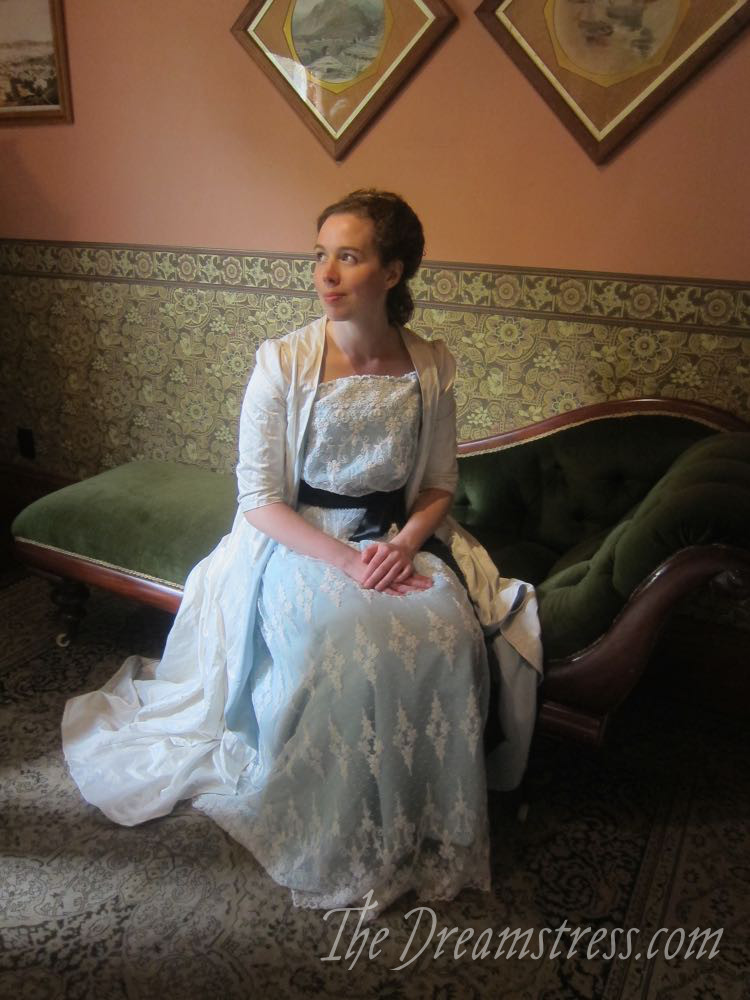
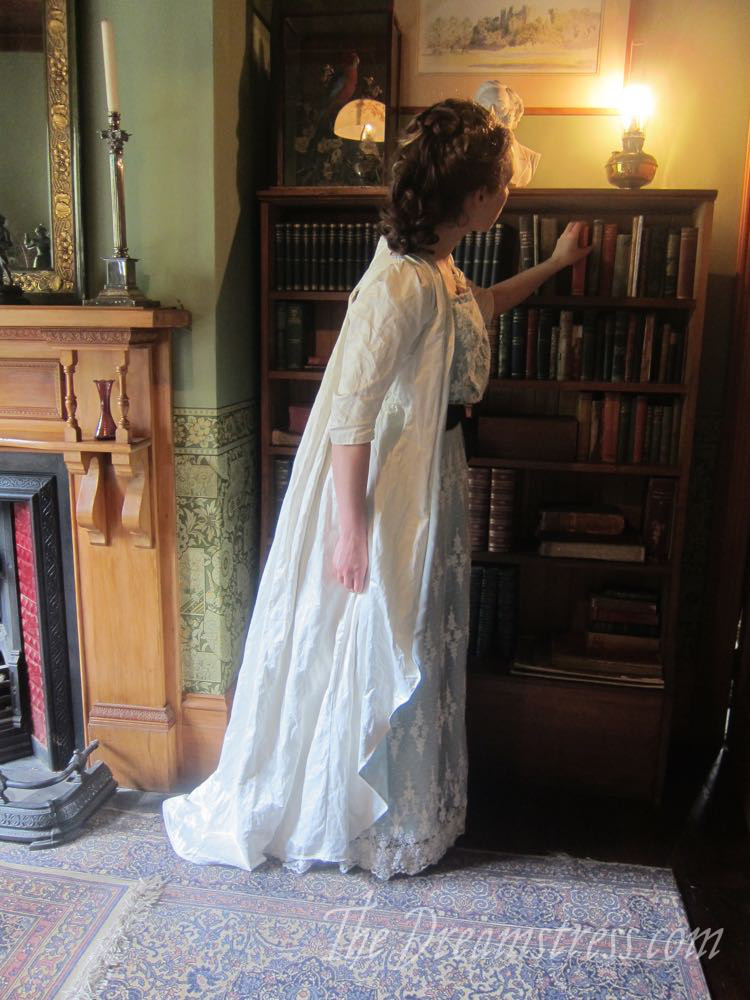
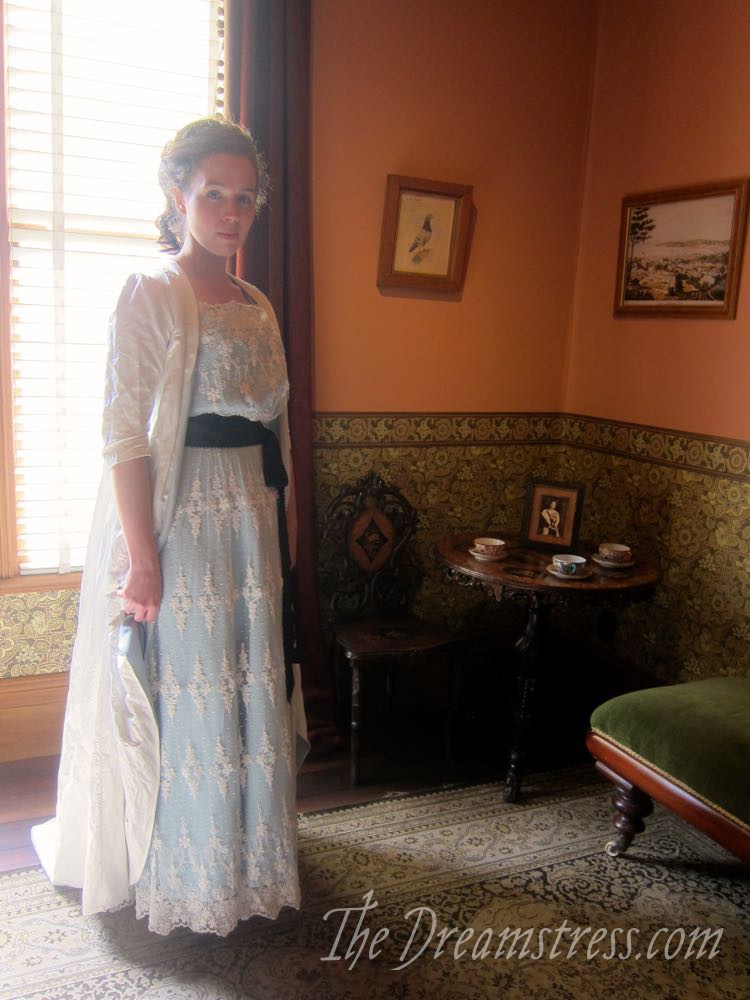
A tea gown at the Katherine Mansfield Birthplace Museum

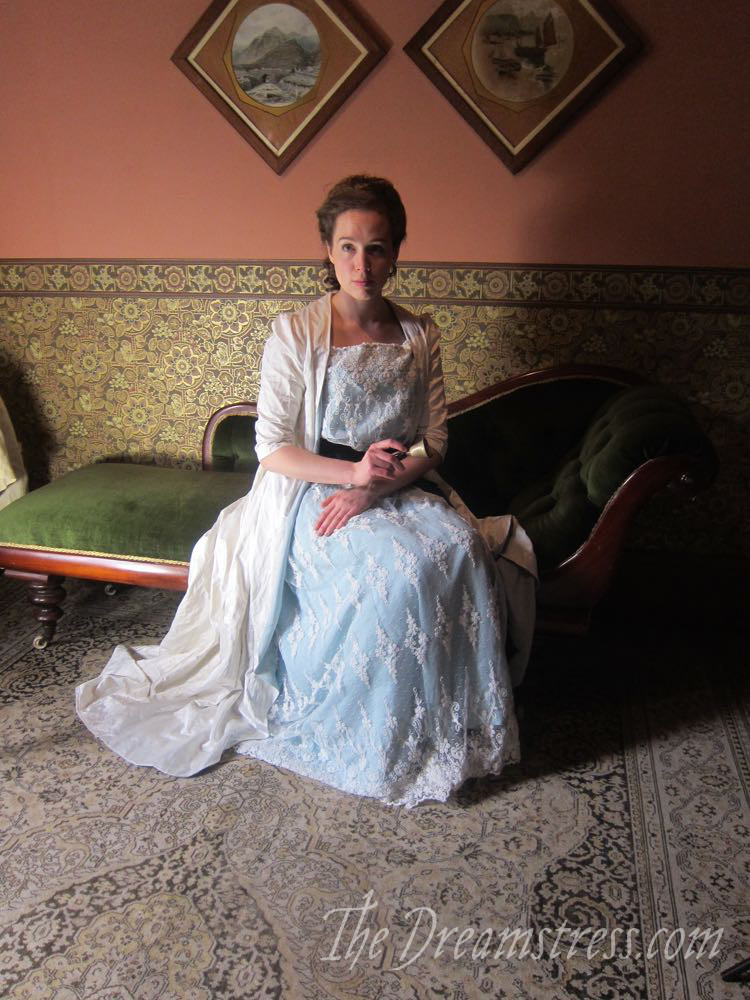
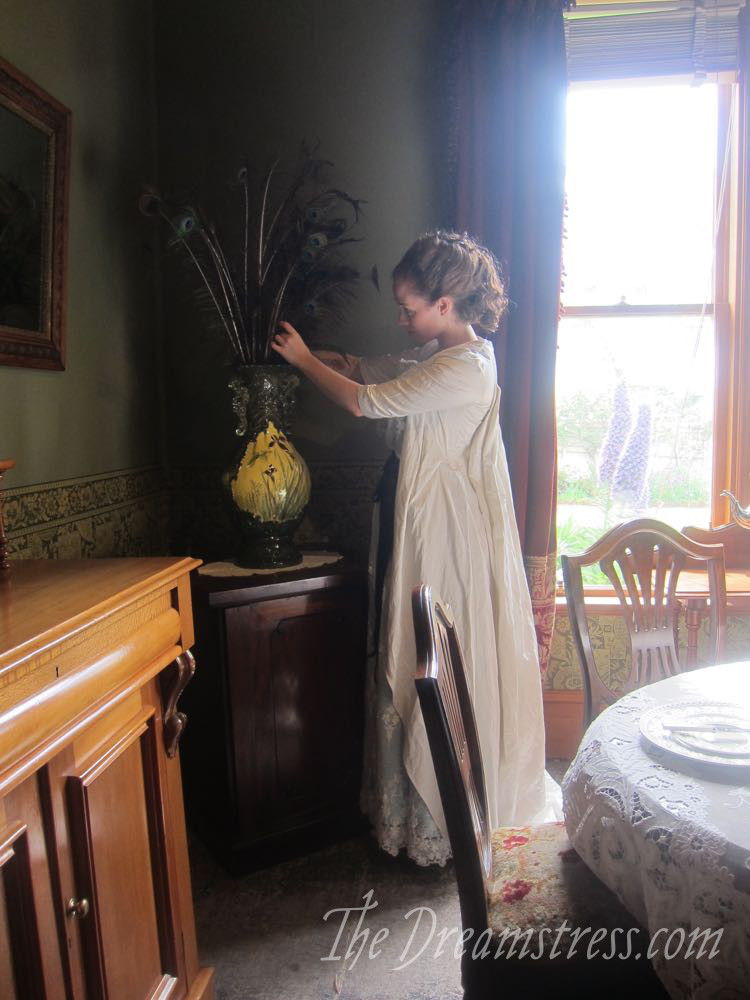
One of my favourite things about the photoshoot at the Katherine Mansfield Birthplace Museum was the opportunity to showcase my tea gown: it’s hardly been worn since I made it.

The tea gown was perfect for representing Mansfield’s mother.  Annie Beauchamp was an ambitious Wellington society hostess, and what could better represent the social aspirations and impractical elegance of the late Victorian society woman than a tea gown?

A photoshoot at the Katherine Mansfield Museum thedreamstress.com

A photoshoot at the Katherine Mansfield Museum thedreamstress.com

I absolutely love the photographs of Liz in the tea gown.  I feel they perfectly capture the slightly repressed, claustrophobic energy that I always imagine Annie having when I read Mansfield’s semi-autobiographical stories.  Well before I knew anything of Mansfield’s life I pictured  Annie as a woman who, had she lived today, would have had a quite interesting career.  Living in the 19th century she took the only acceptable path of marriage and motherhood, and then focused her energy on social climbing and on frenetically trying to create a ‘perfect life’ to try to hold back the constant suspicion that she was actually quite unhappy.  In the process I suspect she made her daughter quite unhappy in her own right.

A photoshoot at the Katherine Mansfield Museum thedreamstress.com

Quite a lot to put on poor Liz’s slim shoulders in terms of emotional baggage to emote!

A photoshoot at the Katherine Mansfield Museum thedreamstress.com

She did beautifully, and I think she looked beautiful as well!

A photoshoot at the Katherine Mansfield Museum thedreamstress.com