Latest Posts

Rate the Dress: ca. 1800 innovation & tradition

Last week  I was a little disappointed in the lack of interest in Élisabeth de Valois and her velvet dress.  I thought it was a fascinating fashion choice, but it just wasn’t a good week for discussions.  Those of you who commented did like it though – it came it at 8.6 out of 10, which was just off its most common rating (8.5).  And it was a big hit as a pinterest pin, which is always a good indication of popularity!

This week, let’s return to the HSF as a source of inspiration for my Rate the Dress choices.  The next fortnight’s theme is ‘Innovation’ and one of the most innovative fashion periods ever was the streamlined neoclassical styles of the end of the 18th and beginning of the 19th century.  Few fashion innovations are introduced completely out of nowhere: there is often a period of transition, in which elements of the old style mingle with the new trend.

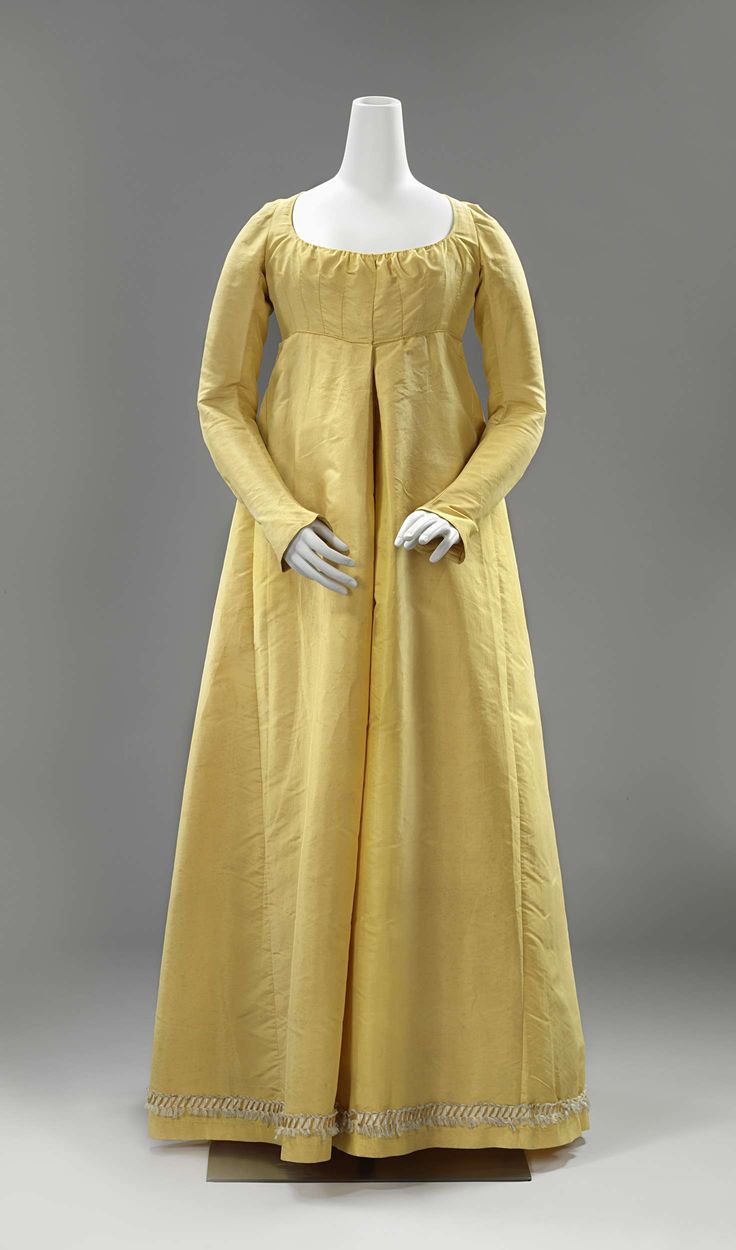
This dress represents both the innovation, and the transition: radical in its overall simplicity, it retains hallmarks of earlier 18th century styles.

Gown, 1790-1810, Dutch.  silk & linen, Rijksmuseum  Gown, 1790-1810, Dutch. silk & linen, Rijksmuseum

I really regret not being able to find more images of this gown in particular.  The tiny pleats or darts in the bodice beg to be examined in more detail.  The front pleat gives a clue to the dress construction (does it hide a front opening?) but more images might reveal its secret.  What does the back look like?  What, exactly, is the trim around the hem?

For now, we’ll just have to speculate.  At least we can decide if we think it is a sartorial win or not!

Rate the Dress on a Scale of 1 to 10.

The HSF ’14: the rest of the challenges

Last year I posted the HSF Challenge themes 8 challenges ahead: so that people had a bit of time to plan, but couldn’t see the whole year at one go. This year I said I’d post all the challenges for the entire year in January.  Good to my word, here they are!

Planning all the challenges so far in advance was really scary though.  Last year I had an idea of what each challenge would be, but could rearrange and adjust them based on feedback from the participants and the mood of the group.  This time, they are locked in!  We’ll see how it goes!

  • #1: Make Do & Mend  —  due Wed 15 Jan.  Let’s start of the year with a clean slate, and with a bit of a tidy up.  Use this challenge as an opportunity to get your historical wardrobe in order by fixing any little bits that have worn out and gone wrong.  Alternatively, you could focus on the  historical precedent of making-do by re-making something into a historical garments, whether it be a bodice from a worn-out skirt, a chemise from old sheets, a bosom-friend from an old cardigan, or a new historical hat from an old modern one etc.  Finally, you could just  those people who had to make-do by making something for a historical character who would have scrimped and saved and re-made and mended until the fabric entirely fell apart.
  • #2: Innovation  – due Sat 1 Feb.  To celebrate the way inventions, introductions and discoveries have impacted fashion, make an item that reflects the newest innovations in your era.  Be sure to share the research you did on your innovation, as well as your finished item.
  • #3: Pink  – due Sat 15 Feb.  Make something pink!
  • #4: Under it All  — due Sat 1 March.  Make the  foundations of your outfit: the things that go under it to provide the right shape and support, and to protect your fancy outer garments from sweat and grime
  • #5: Bodice  – due Sat 15 March.  Make a bodice — a garment that covers the upper body.  You can either abide by the strictest historical sense (see the blog post for history of bodice terminology) or can explore the idea of bodices in a more general sense.
  • #6: Fairytale  — due Tue 1 April:  imagine your favourite fairytale set in a specific timeperiod, and make a historical garment inspired by the fairytale.
  • #7: Tops & Toes  — due Tue 15 April.  Create an accessory that goes on your head, or on your feet.
  • #8: UFOs & PHDs – due Thur 1 May.  Use this opportunity to finish off something that’s never quite gotten done, or stalled halfway through.  Check out the post from last year for more information on how to interpret this challenge.
  • #9: Black and White – due Thur 15 May.  Draw on the opposite ends of the shade spectrum to create something in black and white, or black or white.
  • #10: Art – due Sun 1 June.  Make your own masterpiece based on a work of art.
  • #11: The Politics of Fashion – due Sun 15 June.  World affairs have both affected, and been affected by, fashions.  Craft something that demonstrates the interactions between dress and political history.
  • #12: Shape & Support – due Tue 1 July.  Make a garment that changes the silhouette of the human form through shaping and support.
  • #13: Under $10 – due Tue 14 July.  Whip up a fabulous item for under $10 (we’ll use US$ as the de-facto standard)
  • #14: Paisley & Plaid – due Fri 1 August.  Plaid is the most universal pattern, found in the textiles of almost all cultures and periods.  Paisley is more unique and recent, but has had a lasting impact on design.  Make something that utilises one or both of these patterns.
  • #15: The Great Outdoors – due Fri 15 August.  Get out into the weather and dirt with an item for outdoor pursuits.
  • #16: Terminology – due Mon 1 September.  Explore the etymology of fashion by make something defined in the Great Historical Fashion & Textile Glossary (new terminology posts and items will be added throughout the year).
  • #17: Yellow  – due Mon 15 September.  Embrace the sunny side with something in any shade of yellow.
  • #18: Poetry in Motion  – due Wed 1 October  Find inspiration for a garment in poetry and song.
  • #19: HSF Inspiration  – due Wed 15 October.  One of the best things about the HSF is seeing what everyone else creates, and using it to spark your own creativity.  Be inspired by one of the challengers item from HSF ’13 or HSF challenges 1-18 to make your own fabulous item.
  • #20: Alternative Universe – due Sat 1 November.  Create a garment from an alternative universe: fantasy, steampunk, dieselpunk, etc.  Your item can be perfectly historically accurate within our own universe as well.
  • #21: Re-do – due Sat 15 November.  Pick any previous challenge and re-do it (or do it for the first time).  It could be one that you didn’t finish, one that you wish you’d had more time for, or  any  time for, or one where you loved the theme so much you want to do it  again.
  • #22: Fort-nightliers Choice – due Mon 1 December.  This one is up to you!  In June I’ll ask for suggestions for a theme, and we’ll vote to pick the one you most want to do as our 22nd Challenge of the year.
  • #23: Modern History – due Mon 15 December.  Make something historical or historically inspired that is wearable in an everyday context.
  • #24: All that Glitters – due Thur 1 January.  Celebrate your completion of HSF ’14, and the New Year, with a glittery, glitzy, sparkly, shiny, something.

Oooh, all written down now!  That was scary!

And now, to figure out what I am making for each challenge!  Good luck with your own planning, and happy sewing!

The Jack’s Mill School house at Kotuku

Last week my sister the Chef and I were down in the South Island of New Zealand, having a road trip.

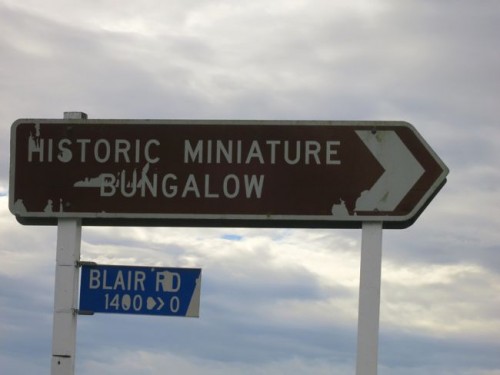
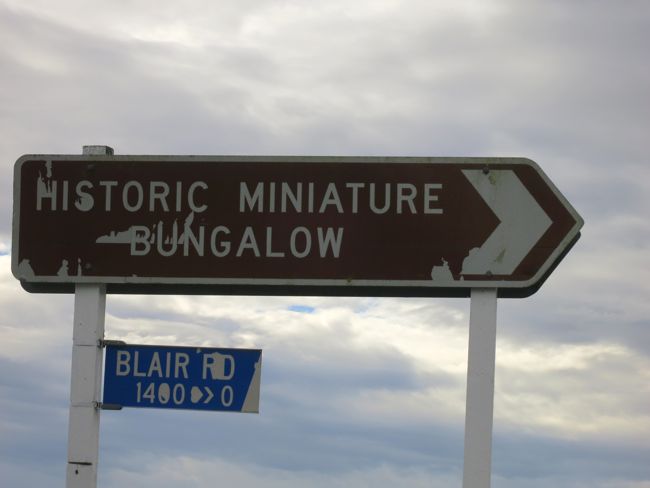
We were whizzing* along on the road from Arthur’s Pass to Greymouth† when we whizzed past this sign:

Historic Miniature Bungalow at Jack's Mill School, Kotuku, New Zealand thedreamstress.com

I slammed on the breaks** and pulled over to the side of the road.  The Chef and I looked at each other.

“Did you just see that?”

“Yep.”

“Did that sign just say ‘Historic Miniature Bungalow”?

“Yep.”

“Are we going to turn around and have a look?”

“OF COURSE!”

So we did.

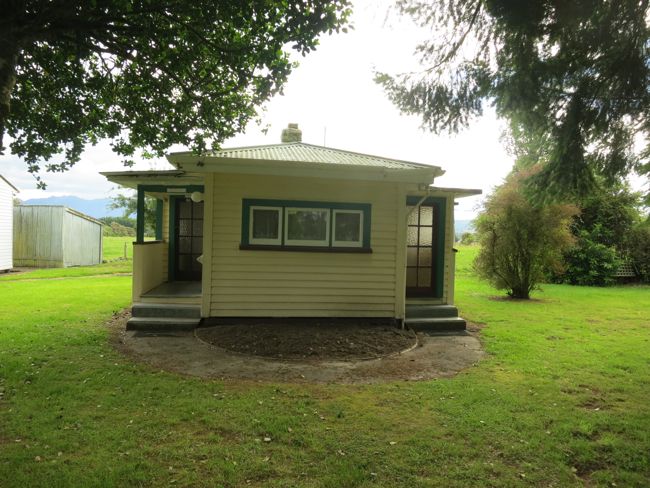
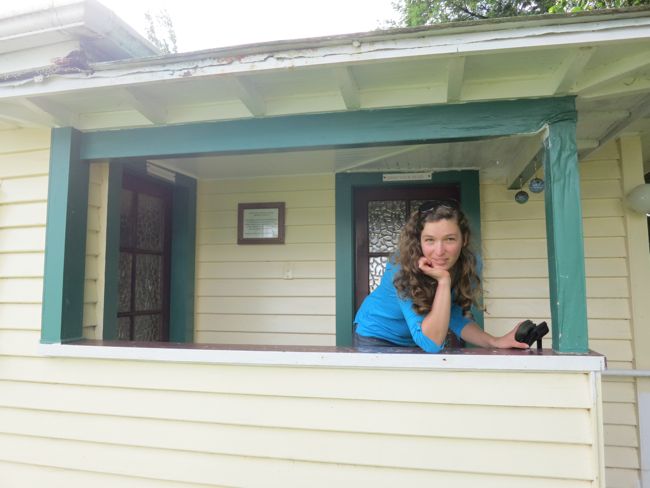
And it was historic (1930s), and it was miniature (3/4 scale), and it was a bungalow (self explanatory):
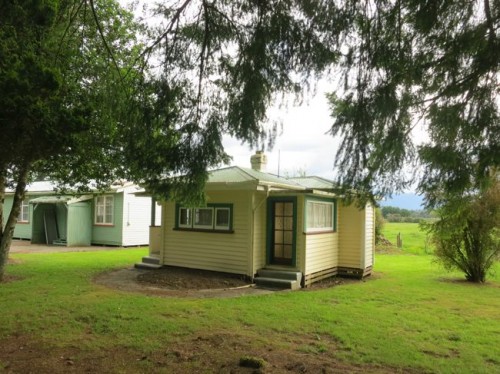
Historic Miniature Bungalow at Jack's Mill School, Kotuku, New Zealand thedreamstress.com

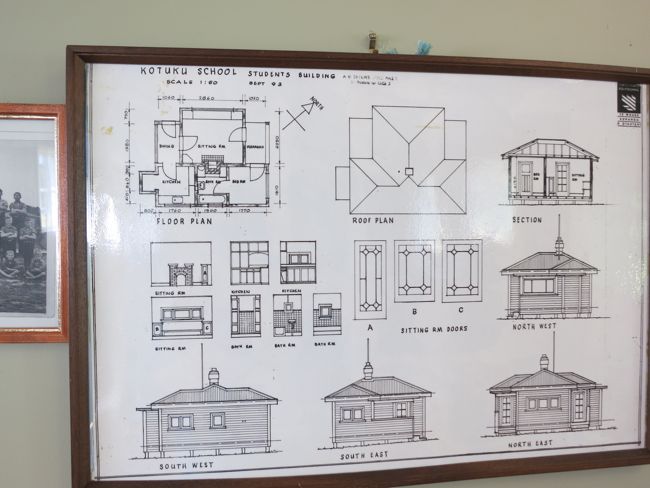
This teensy-weensy bungalow was built in 1938-40 by 10-12 year old students at the Jack’s Mill School at Kotuku, led by their headmaster who believed in hands-on learning and wanted to give the students practical  skills, and something to care about amidst the deprivations of the Great Depression.

The students completed every aspect of the construction: it was even design by 12 year old student Rosemary O’Brien.
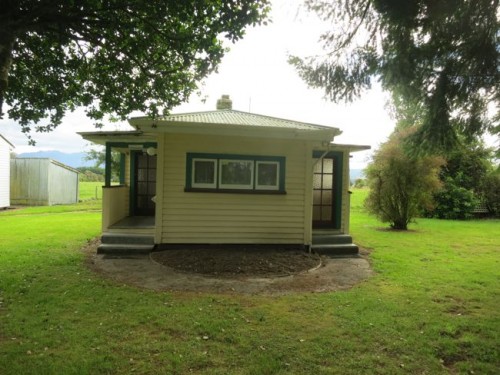
Historic Miniature Bungalow at Jack's Mill School, Kotuku, New Zealand thedreamstress.com

When we pulled up at the school grounds the sign said the house was only open on Sundays (boo), but decided we could at least have a look around the grounds and peer through the windows, and when we did, we discovered that the doors were all open!  So we got to explore the house all by ourselves.

At 3/4 scale, the house is big enough for two adults to explore, though you do have a weird sense of being a giantess.  You could sit on the bench-setee in the lounge:
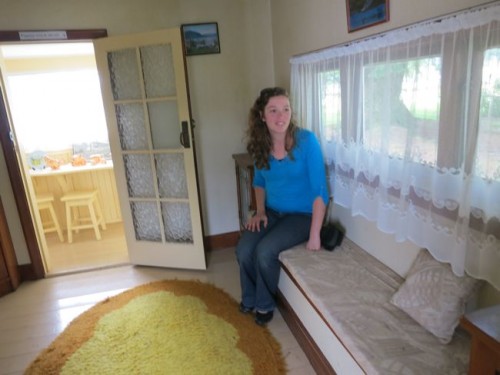
Historic Miniature Bungalow at Jack's Mill School, Kotuku, New Zealand thedreamstress.com

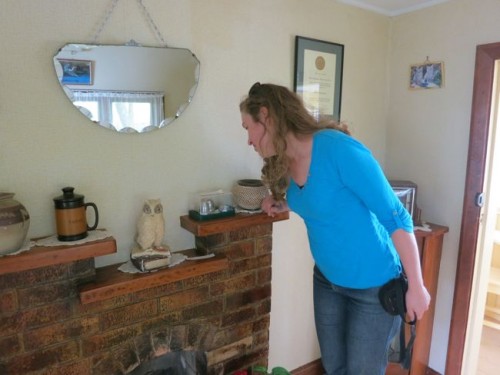
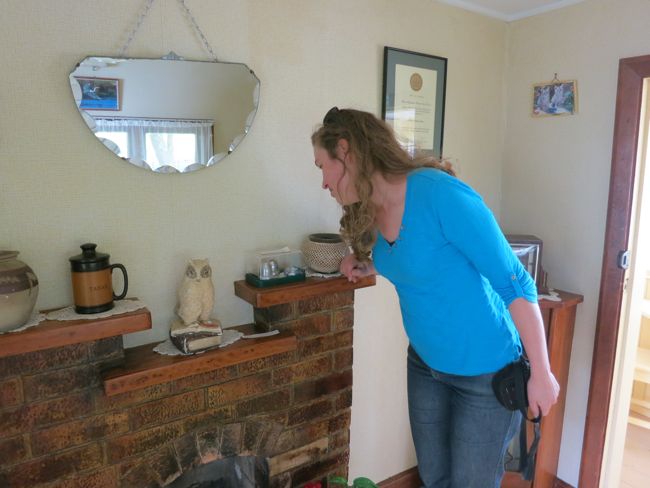
And lean on the brick fireplace:

Historic Miniature Bungalow at Jack's Mill School, Kotuku, New Zealand thedreamstress.com

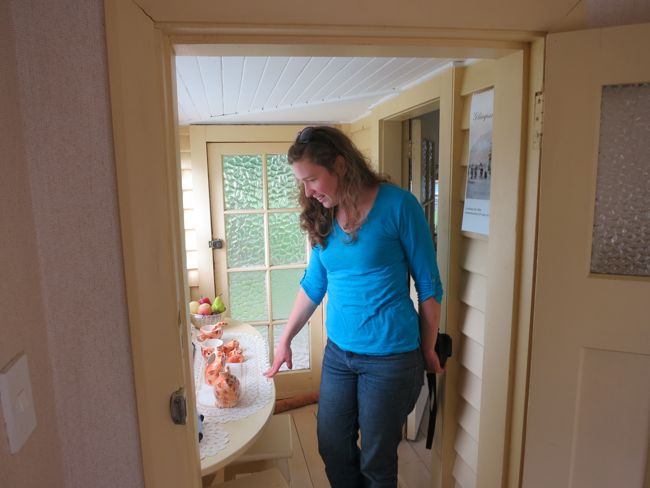
The doors were just tall enough for me to walk through without ducking, but I think I would have struggled to eat a meal at the tiny dinette table!
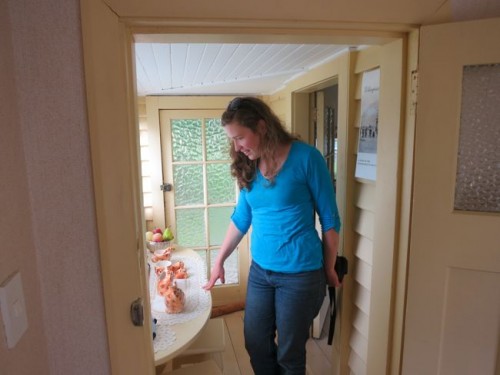
Historic Miniature Bungalow at Jack's Mill School, Kotuku, New Zealand thedreamstress.com

The house was built just like a real house, with electricity and running water.  The students even managed to source a special 3/4 scale stove, bathtub, and sinks:
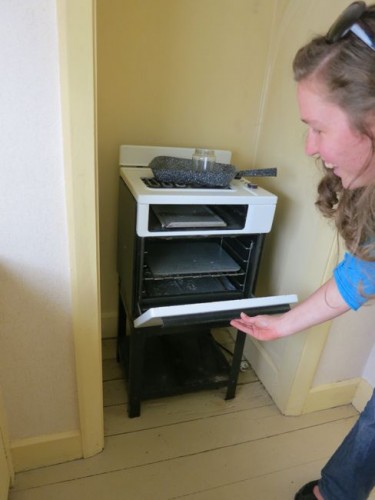
Historic Miniature Bungalow at Jack's Mill School, Kotuku, New Zealand thedreamstress.com

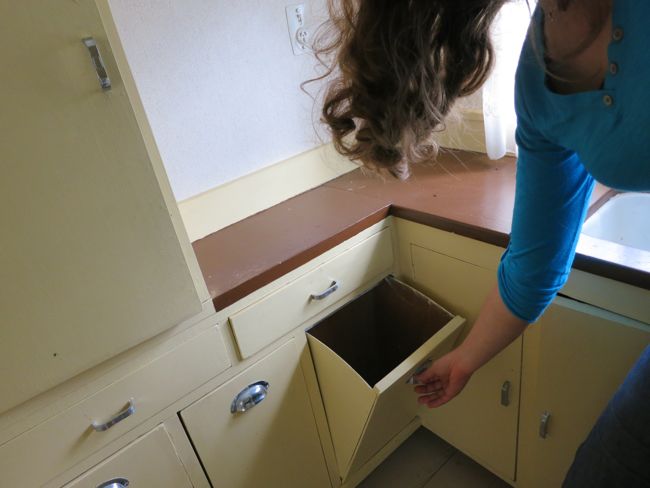
I had the most fun exploring the kitchen – I wished the cunning cupboards were still full of things, and that you could cook something on the little teeny stove.  Mostly I just liked seeing what a 1930s kitchen would really have looked like.  The most striking thing was how modern it actually was.  In full scale, it would have been quite an acceptable kitchen today!
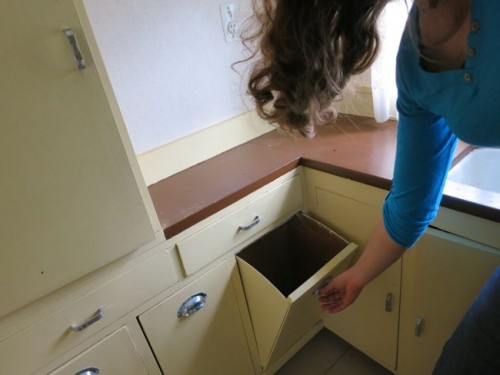
Historic Miniature Bungalow at Jack's Mill School, Kotuku, New Zealand thedreamstress.com

The lounge led on to the dining room, and then to the kitchen, and the dining room and lounge both had outside doors, but you had to go out on to the porch from the lounge to access the bedroom and bathroom.

Historic Miniature Bungalow at Jack's Mill School, Kotuku, New Zealand thedreamstress.com

It seems odd, but I suspect it is an accurate representation of a the type of  bungalow that was becoming popular in New Zealand at the end of the 1930s (though it was quite innovative of the students to design and build one in this style).  I’ve certainly seen houses that have rooms that were clearly made from outside porches that have since been closed-in.
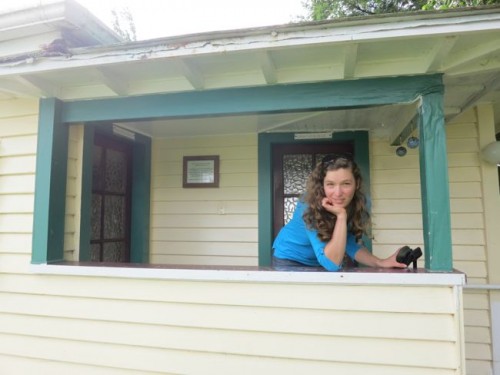
Historic Miniature Bungalow at Jack's Mill School, Kotuku, New Zealand thedreamstress.com

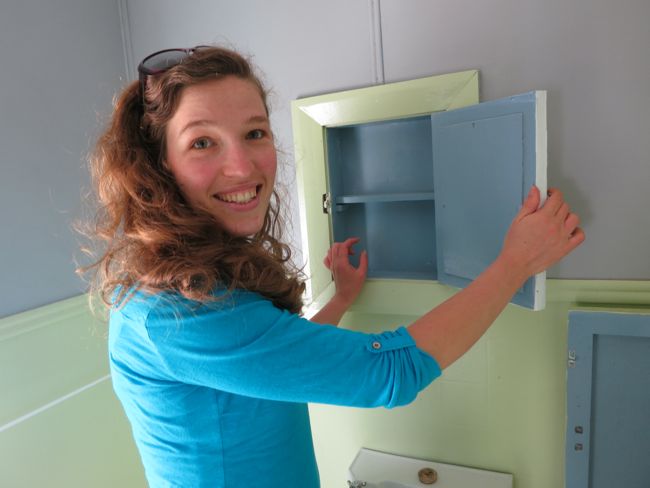
Sadly, I didn’t get a photograph of the bedroom with its narrow single bed (double beds clearly being a slightly  too  advanced educational concept for 10-12 year olds in the mid-20th century!), but we did our best to document the pastel bathroom, with its scaled-down medicine cabinet and functioning water heater.
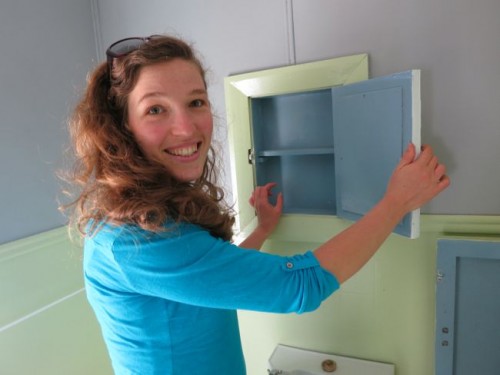
Historic Miniature Bungalow at Jack's Mill School, Kotuku, New Zealand thedreamstress.com

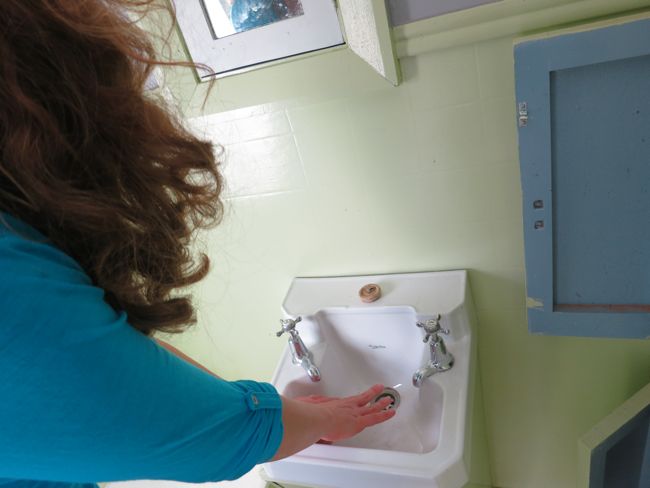
I didn’t try the taps in the sink to see if they would work, just in case they did!
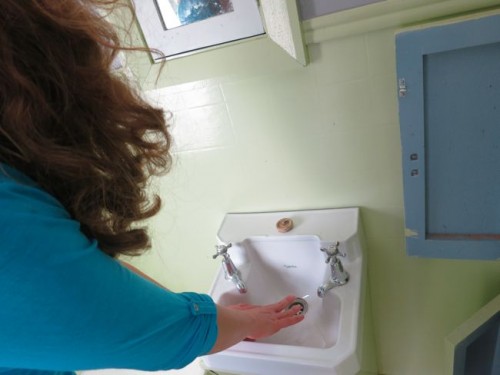
Historic Miniature Bungalow at Jack's Mill School, Kotuku, New Zealand thedreamstress.com

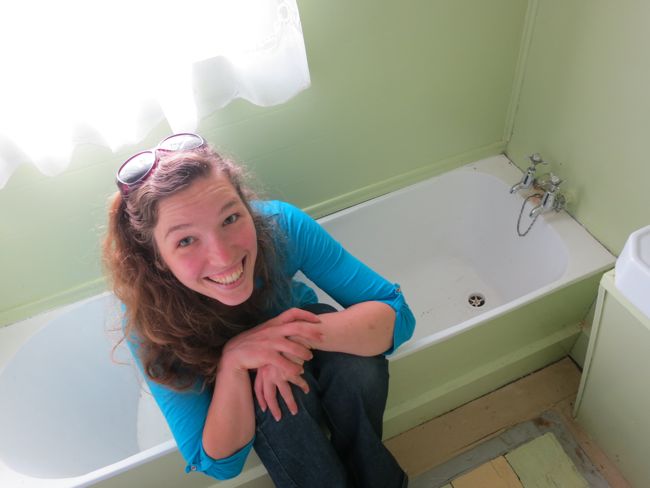
And, of course, the famous 3/4 scale bathtub, which it turns out is just the right size for me to get stuck in, which I suspect is karma for having got in it in the first place .
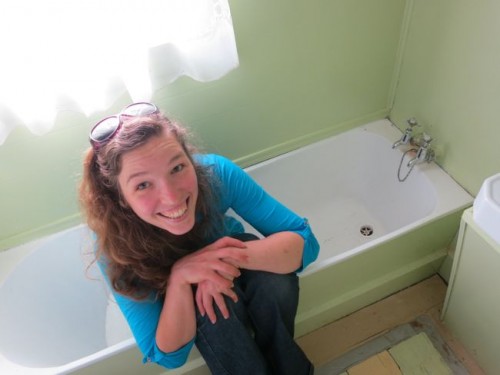
Historic Miniature Bungalow at Jack's Mill School, Kotuku, New Zealand thedreamstress.com

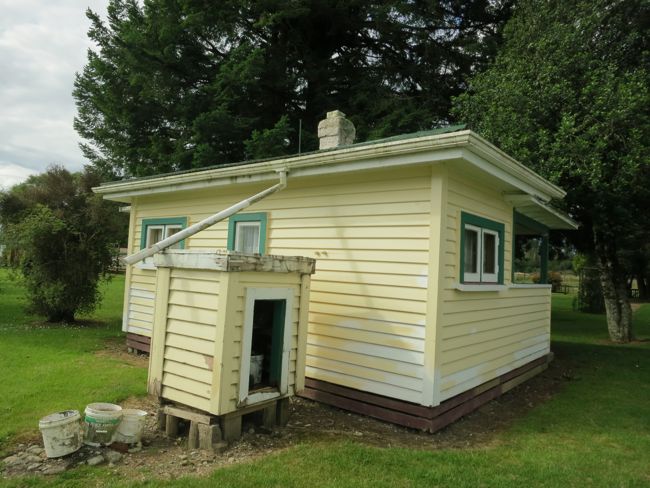
In addition to the fully functional bungalow (which was used as the world’s most awesome home-ec classroom until the school shut in 1955), the students designed a garden built around the points of the compass, and built a small outbuilding for the house.  For wood storage perhaps?
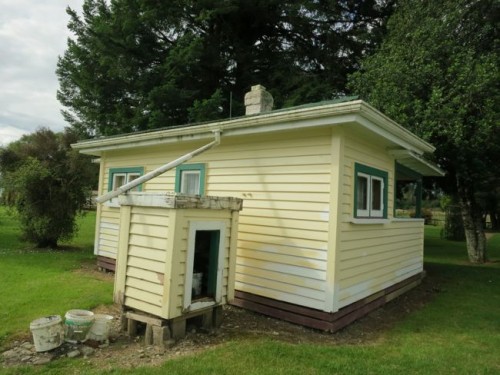
Historic Miniature Bungalow at Jack's Mill School, Kotuku, New Zealand thedreamstress.com

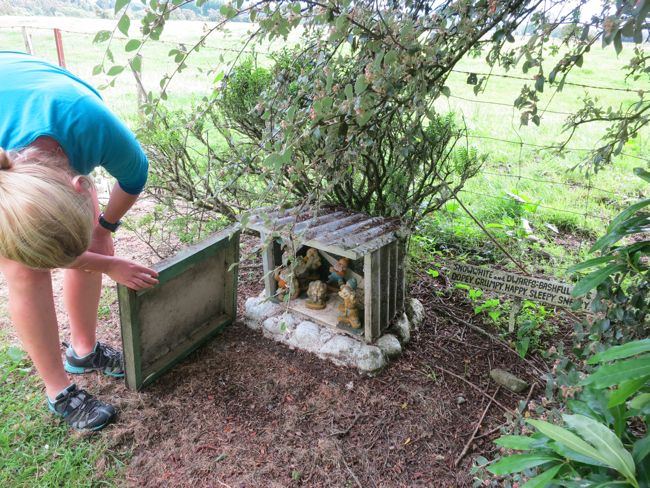
They also indulged in themed rock-gardens, which I can only surmise were a peculiar early-mid 20th century craze which has since died out.
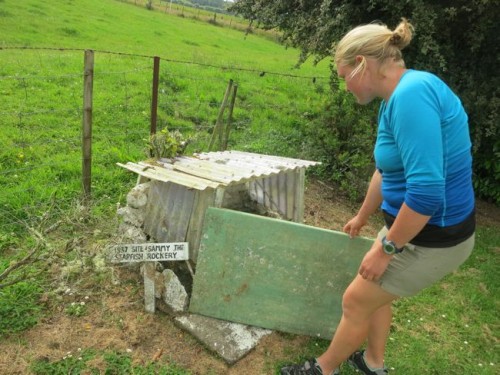
Historic Miniature Bungalow at Jack's Mill School, Kotuku, New Zealand thedreamstress.com

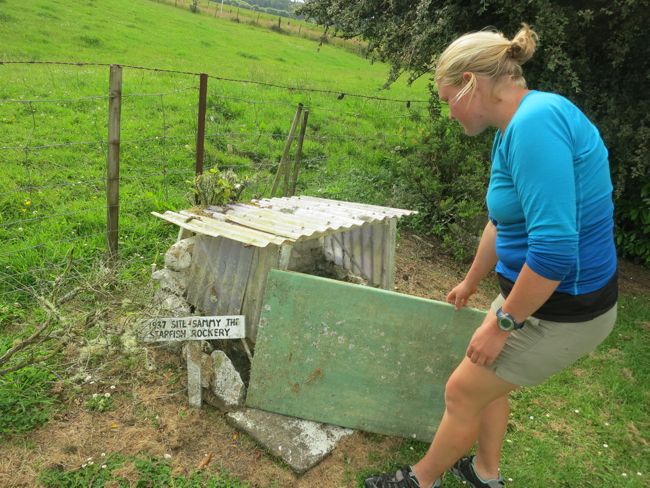
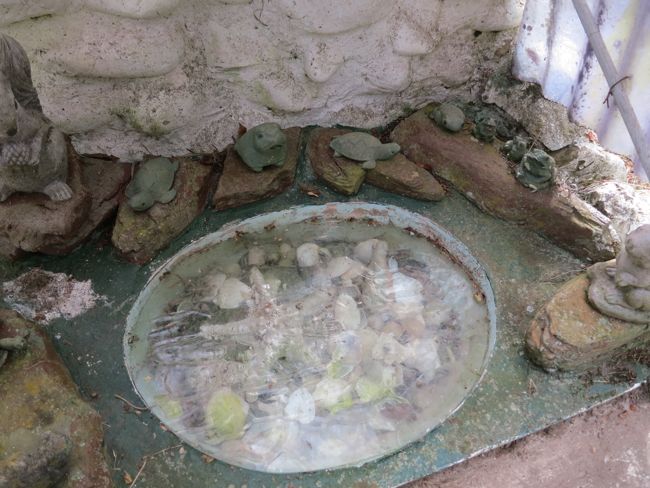
The rock gardens came with labels (‘1937 Sammy the Starfish Rockery’) and are protected by little corrugated plastic hutches.  Can you see Sammy?
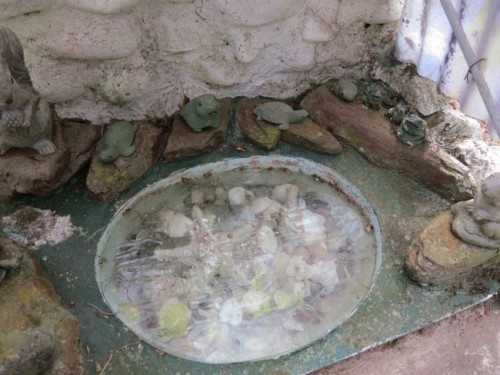
Historic Miniature Bungalow at Jack's Mill School, Kotuku, New Zealand thedreamstress.com

In addition to Sammy, there was a rockery for Disney’s Snow White and her seven dwarves, reflecting the latest cultural phenomena.  The film was showing in major cities in New Zealand in late 1938 (it came out in the US in 1937).  I wonder how far the students of Jack’s Mill had to travel to see it?
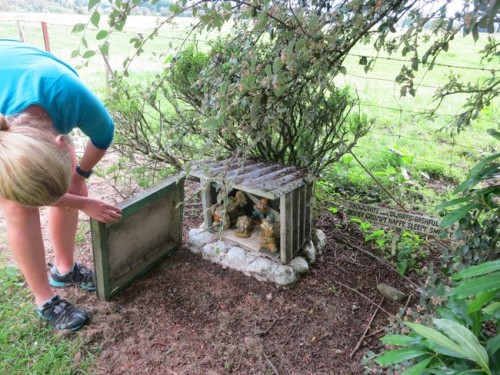
Historic Miniature Bungalow at Jack's Mill School, Kotuku, New Zealand thedreamstress.com

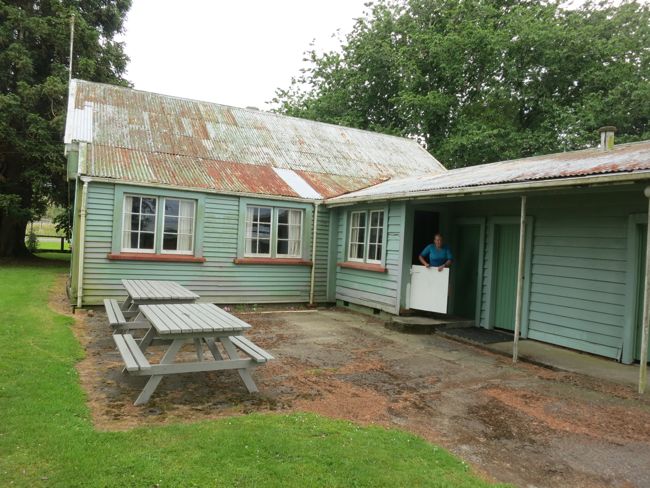
The grounds also included the actual schoolhouse (very important!) and a hall.
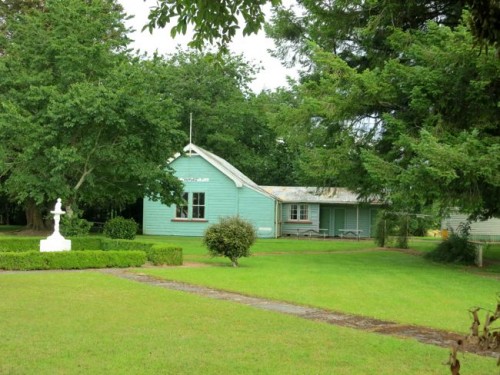
Historic Miniature Bungalow at Jack's Mill School, Kotuku, New Zealand thedreamstress.com

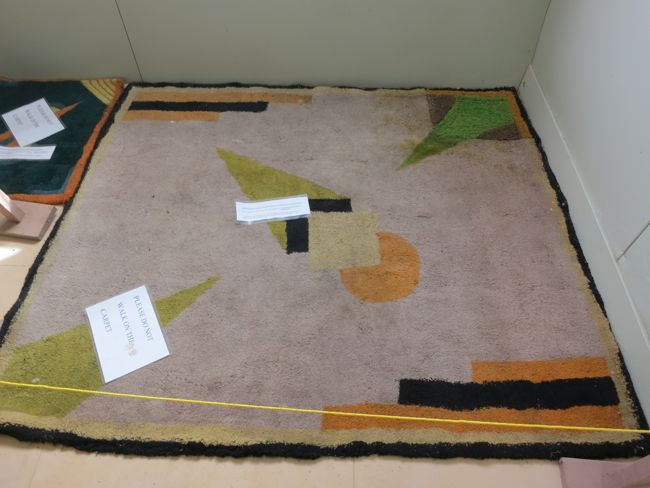
The hall contained fascinating displays about the surrounding area, and work done by the students, like this modernist rug made from wool that they spun and dyed themselves in 1941:
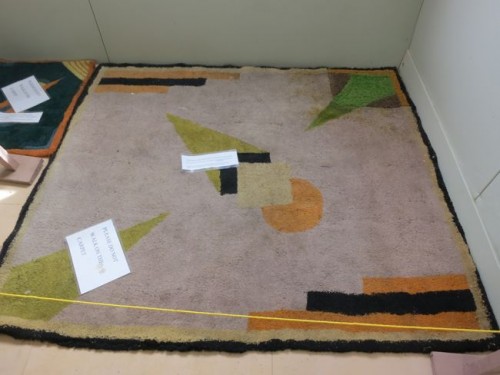
Historic Miniature Bungalow at Jack's Mill School, Kotuku, New Zealand thedreamstress.com

Everything in the halls was a bit grubby and dusty, and while the bungalow was nice and cool, the hall and school were stiffling hot, and I soon gave up on the displays and retreated outside.  I hope the students stuck in the hall and school on hot days at least got to have the windows open!
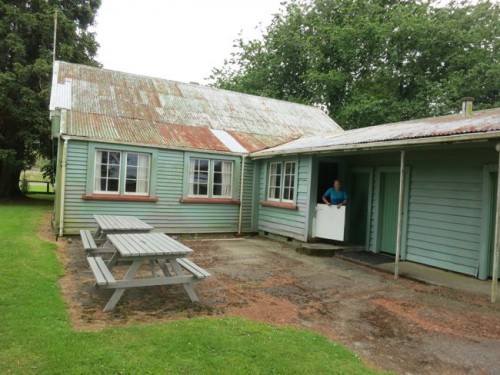
Historic Miniature Bungalow at Jack's Mill School, Kotuku, New Zealand thedreamstress.com

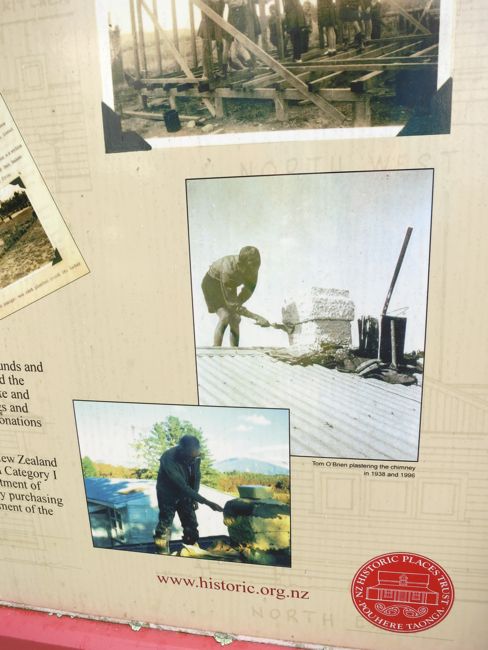
After the school was closed in 1955 the bungalow fell into disrepair, until the former students took an interest in it in the 1990s and worked to restore it.  The information board for the school had a wonderful photograph showing a student whitewashing the chimney in 1938, and again in 1996 when the bungalow was restored.
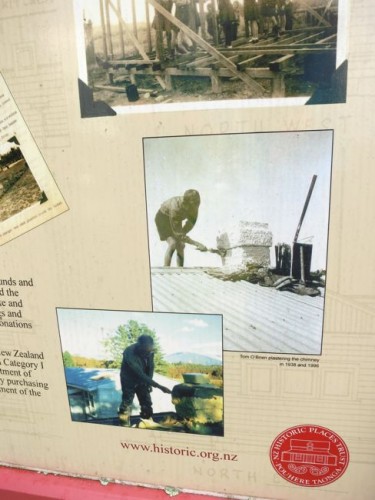
Historic Miniature Bungalow at Jack's Mill School, Kotuku, New Zealand thedreamstress.com


The miniature bungalow, school and grounds are a now historic reserve, and are owned and managed by the Department of Conservation and the New Zealand Historic Places Trust.  You can read more about the school on the Department of Conservation and the New Zealand Historic Places Trust websites.

* And by whizzing, I mean driving along at 5kph under the speed limit, because I’m expressly forbidden by Mr D from becoming part of the holiday road toll unless the circumstances are utterly and completely beyond my control.  But whizzing sounds better.

†At the mouth of the Grey River, because people giving European names to things in New Zealand ran out of ideas shortly after eureka moments like “Doubtless this is a bay, so let’s call it Doubtless Bay!” and “I’m doubtful this is a sound, but if it is, we’ll call it Doubtfull Sound”

** Well, slowly and responsibly applied the breaks while signaling that I was going to pull over and finding a suitable spot to do so.  But slammed sounds better.