Latest Posts

Rate the Dress: ’50s nautical Norell dress-off

Last week I posted an 1860s seaside frock in one of my (many) favourite colour combinations: white, yellow and aqua.  Alas, the colours, combined with the waistless bodice (so characteristic of 1860s outerwear, but so anathemic to modern aesthetics) elaborate scallops, and long tails with pom-poms had you calling ‘circus marquee’.  The circus left town with a disappointing  5.8 out of 10.

Intriguingly, of all the votes, only one of you gave it a x.5 score  – I guess you all had solid feelings about it!

Today’s Rate the Dress has a twist.  I’m not just showing you a dress to rate: I’m showing you two dresses with the same theme, by the same designer, but with quite different silhouettes, for a Rate the Dress-Off.

You’ll rate both dresses, and we’ll see how the overall look comes off, plus which dress you prefer.

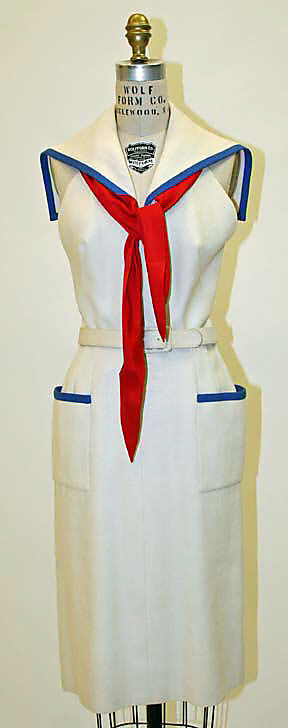
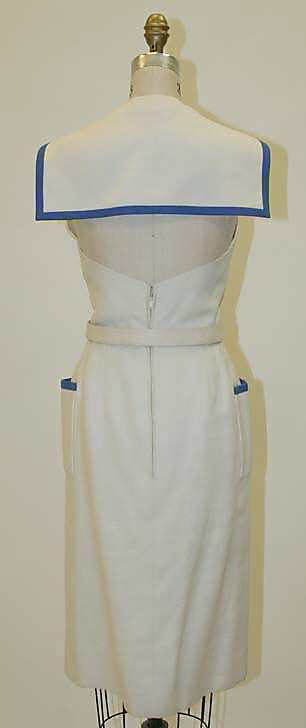
First, a sleek shift dress, with Norell’s classic sailor collar, red silk tie, halter back and blue trim:

Dress, Traina-Norell  (American, founded 1941), Norman Norell, 1954, linen, silk, Metropolitan Museum of Art

Dress, Traina-Norell (American, founded 1941), Norman Norell, 1954, linen, silk, Metropolitan Museum of Art

Dress, Traina-Norell  (American, founded 1941), Norman Norell, 1954, linen, silk, Metropolitan Museum of Art

Dress, Traina-Norell (American, founded 1941), Norman Norell, 1954, linen, silk, Metropolitan Museum of Art

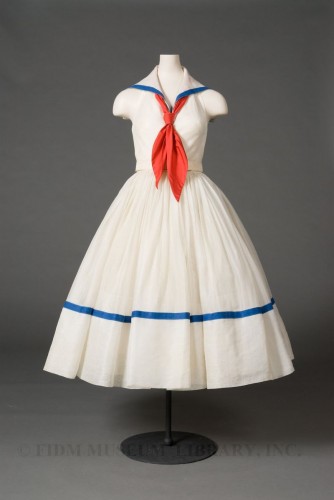
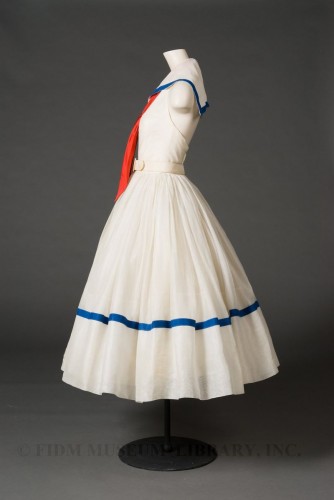
Then a full skirted sun-frock, with exactly the same bodice, but a gathered dirndle skirt instead of a pencil skirt, and a blue skirt border instead of pockets.

Day dress,  Norman Norell for Traina-Norell, 1951, FIDM Museum

Day dress, Norman Norell for Traina-Norell, 1951, FIDM Museum

Day dress,  Norman Norell for Traina-Norell, 1951, FIDM Museum

Day dress, Norman Norell for Traina-Norell, 1951, FIDM Museum

Do you prefer the slim shift dress, or the full-skirted frock?  Give each dress a rating on a scale of 1 to 10

Sea at Sunset dress: 1st wearing

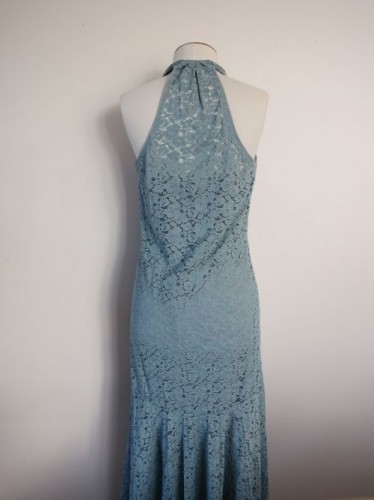
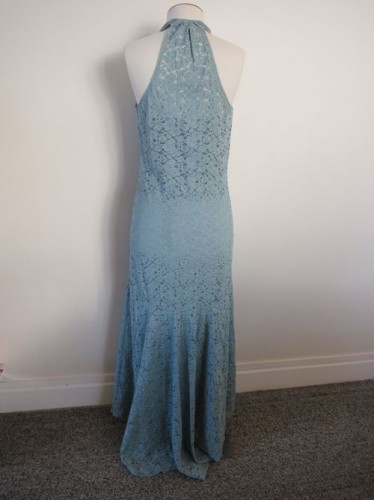
One of the three items I’m making for the By the Sea challenge is the lace evening dress inspired by the glowing hills and muted sea at sunset in New Zealand.

Sunset seas and skies, Wellington

The dress had a pressing deadline: I had a wedding to attend, and needed a frock to wear.  The wedding is past, the dress got made (in a massive rush, and only thanks to some help from the lovely Lynne), and worn, and I got lots of compliments on it.

But….

…I’m not quite happy with it.

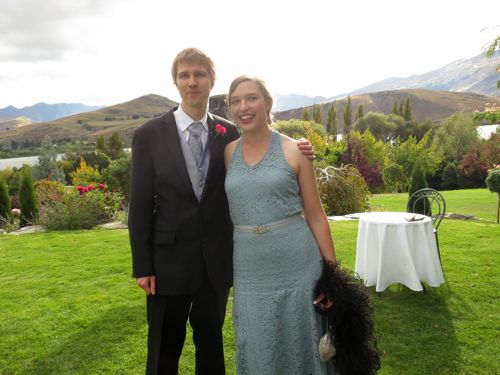
Here is what it looked like at the wedding.

'Sea at Sunset' 1930s lace dress

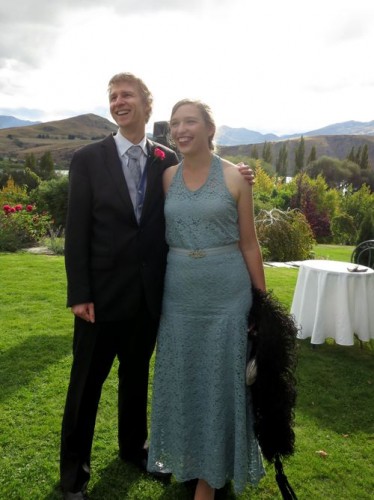
I ended up wearing it with a stunning early 20th century black feather boa (a gift from the wonderful Lynne) instead of the Capelet of Yay, because the Capelet paired with the dress was just a little  too  striking for the wedding, and the boa was  sooooooo  gorgeous and looked perfect with the dress.

'Sea at Sunset' 1930s lace dress

I felt great in the dress, it was really comfortable, it worked well for the wedding, and I got tons of compliments.

'Sea at'Sea at Sunset' 1930s lace dress thedreamstress.com Sunset' 1930s lace dress

But….

…looking back at the photos I don’t love it.

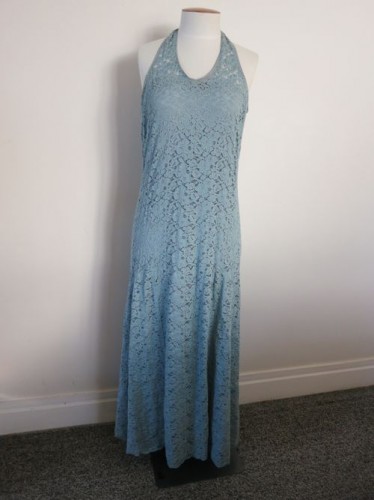
'Sea at Sunset' 1930s lace dress

It just feels very, very straight up and down, and I look a bit thick, and the proportions are off in front (I love the back).

'Sea at Sunset' 1930s lace dress thedreamstress.com

What do you think?  I’m trying to figure out how to fix it. Perhaps I should go back to my inspiration image, and add a upside down V under the bust, and a bit more width and volume around the bust, to balance my figure.

Simple Simple Simple - The tiny V decollete held by great clip. The back bare, sleeveless, a corselet front, and a skirt spreading in soft folds on the floor. Auckland Star, 19 Dec 1936

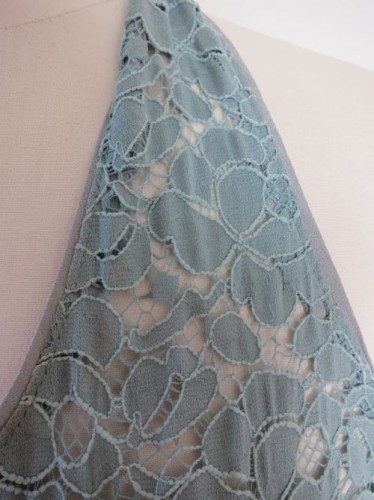
I’m also torn about the way I finished the neckline.  At the moment, I have it faced with the same fabric as my belt and slip, to tie that in.  I like the crispness of the line – the way it contrasts with the softer lace.

'Sea at Sunset' 1930s lace dress thedreamstress.com

But perhaps I should have used more traditional lace finishing techniques, where you use the built-in edge scallops, and laces brilliant ability to piece, to hide and blend the edges, like I did with the hem?

'Sea at Sunset' 1930s lace dress thedreamstress.com

And what about the skirt-to-bodice join?  I originally chose lapped joins, with no lace blending, or highlighting of the seams, because that is the most common technique seen on 1930s lace dresses.

'Sea at Sunset' 1930s lace dress thedreamstress.com

However, now that it’s done, I’m not sure I love the lapped join.  It refused to be nicely symmetrical in front because the lace is slightly thicker or thinner in spots.  And it’s just showy enough to be noticeable, without being a feature.  I could either use lace blending (still an option at this point because of the way I cut it), or could highlight the join in the same way I made a feature of the sleeve and neck binding.

'Sea at Sunset' 1930s lace dress thedreamstress.com

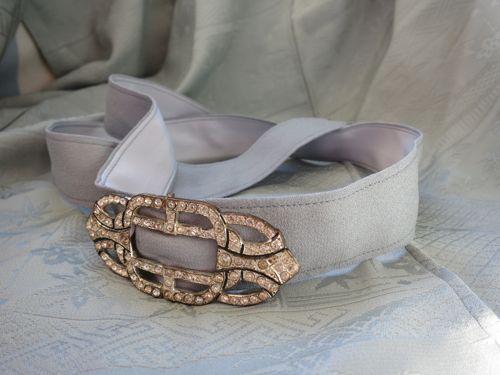
At least I am totally happy with the belt!

'Sea at Sunset' 1930s lace dress thedreamstress.com

Isn’t the buckle gorgeous?  It’s a vintage piece from Three Buckets Full which I rushed off to find the day before I left for the wedding.  I’m so lucky they had something perfect!

Back to the dress as a whole.  Gah!  I’m so confused!  So many options and things to think about.  So what do you think?  How could I make the dress work better?

While we think about it, the dress is off at the dry cleaners, having bits of lawn and lipstick and makeup removed.

The Spotty Not-Quite Nautical dress

While I showed lots of different colour options in my By The Sea inspiration post, the classic nautical colours are red, white and blue.

I’ve got one last dress from Art Deco Weekend that I haven’t blogged about, and it just happens to be red, white and blue and (almost) nautical.
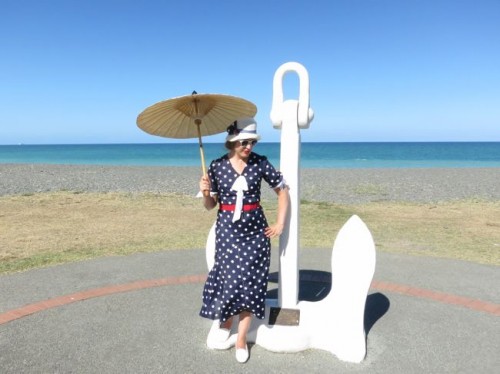
The early 1930s 'Spotty Not-Quite Nautical' dress

Everything is nautical when you pose by the sea and pair it with a giant white anchor, right?
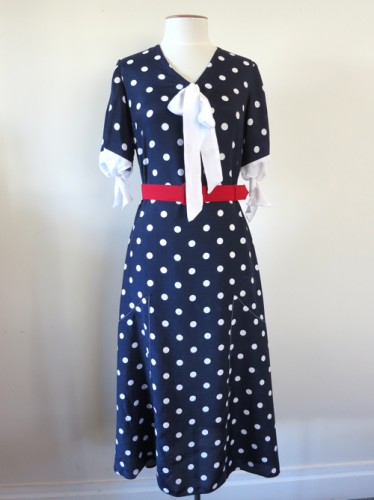
The Spotty Not-Quite Nautical 1930s frock thedreamstress.com

The dress was a prototype for my Garden Party Frock, with sleeves borrowed from Past Pattern’s 1931 McCalls pattern.   Interestingly, the skirt is nearly identical to the PP McCall’s pattern as well, but comes from one of my Excella patterns.
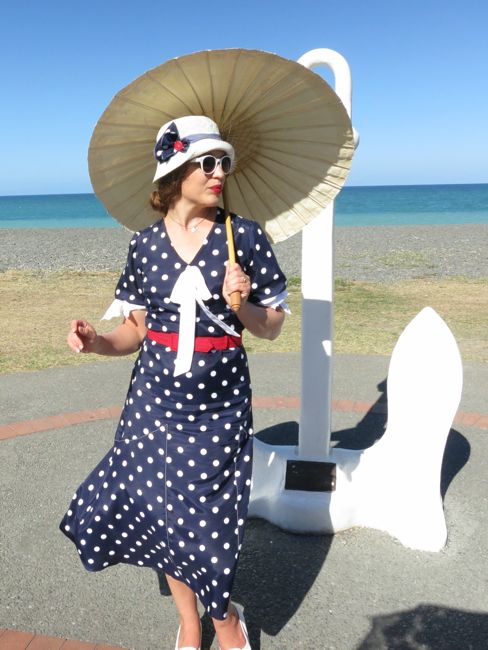
Early 1930s Spotty Not-Quite Nautical frock

I ended up going with a easier to wear, more universally flattering, fuller skirt for my final Garden Party Frock, but I do like the slim lines of this one.  The sleeves were another thing altogether.  They look darling, but I had to get Miss Rachel to re-tie them for me literally every 15 minutes, all.day.long. She was so glad when I changed out of the dress!

The Spotty Not-Quite Nautical 1930s frock thedreamstress.com

I wore the dress on the first day of Art Deco Weekend, and started out in quite high lipstick red suede shoes for our annual 1st photo of the day at the bed and breakfast.

The hat is a quickie reshape, but is made from synthetic fibres, so didn’t reshape well, and was uncomfortable to wear, so I’ve since discarded it.  The red belt is not of my making, it’s just something I have in the wardrobe.
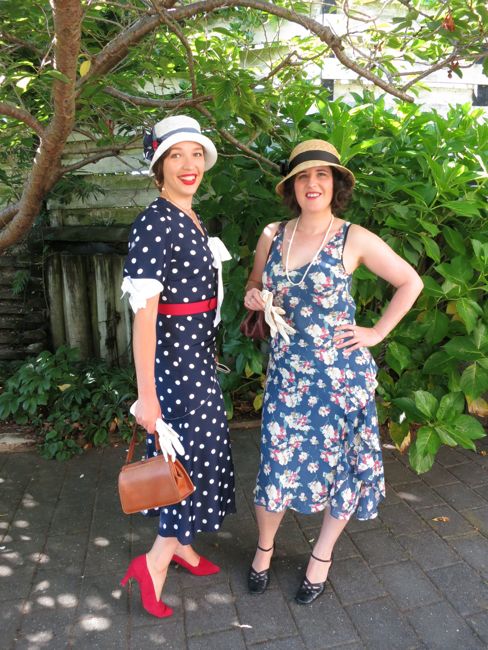
The annual 1st morning photo, Napiers Art Deco Weekend

Our lovely host was so enamoured of our frocks he got us to pose with his grandmother’s Art Deco tea set.  You can tell that Miss R is the hostess, and I’m visiting, because I’ve still got my hat and gloves!
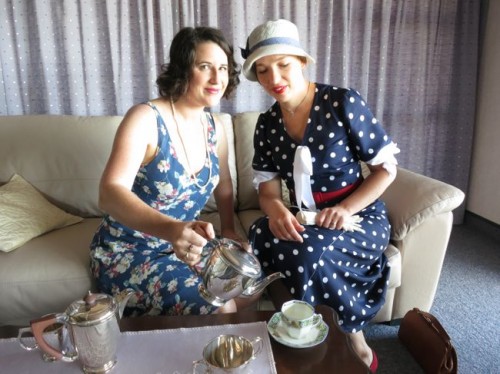
Early 1930s Spotty Not-Quite Nautical frock

After tea it was off to Hastings for op-shopping, and off to Napier for more op-shopping, and then we checked into our hotel for the rest of the weekend, I gave up on the heels (my knee was still injured), and we took a walk on the waterfront in much more sensible shoes.

Early 1930s Spotty Not-Quite Nautical frock

I was really hesitant about making this dress up in polka dots, because they are such a vintage cliche, but I ended up loving the dress (other than the annoying sleeves).  It’s so crisp and fresh, was perfect for shopping in, and the tiny nod to nautical worked so well at a seaside town like Napier.
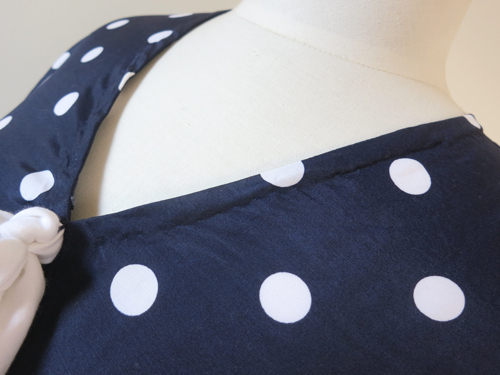
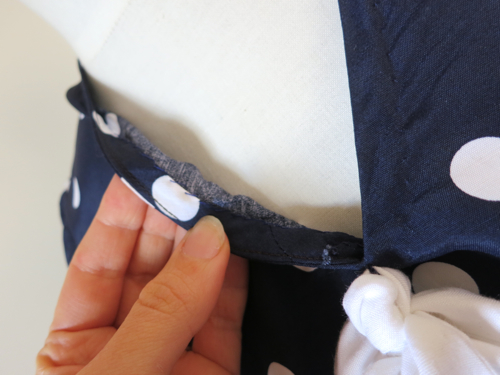
The Spotty Not-Quite Nautical 1930s frock thedreamstress.com

The Spotty Not-Quite Nautical 1930s frock thedreamstress.com

The dress is my extremely soft nautical entry, eligible on grounds of slight nautical inspiration, and because I realised two months after Art Deco weekend that I hadn’t actually finished hemming one of the sleeves (because you’d think after two hours of machine hemming you’d be done hemming a pair of sleeves, but no), and I needed to sort the sleeves so they weren’t a total pain in the neck to wear.  So it did get finished during the challenge!
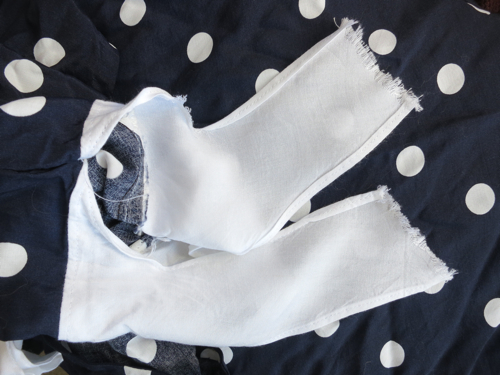
the Spotty Not-Quite Nautical 1930s frock thedreamstress.com

To fix (or at least help) the sleeve untyeing issue, I sewed a little loop of hat elastic to the sleeve for the ties to slip through, so hopefully they won’t come undone as easily.
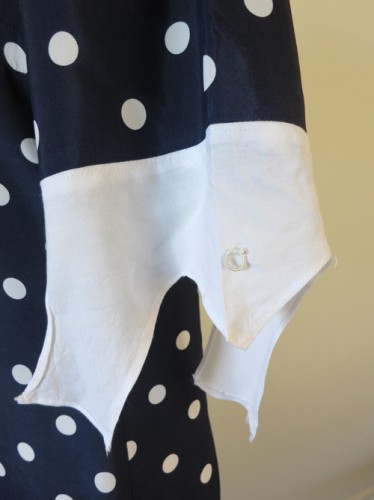
Loop of elastic on the sleeve the Spotty Not-Quite Nautical 1930s frock thedreamstress.com

Here is what the improved sleeves look like tied now:

The Spotty Not-Quite Nautical 1930s frock thedreamstress.com

The Challenge: By The Sea

Fabric: 3 metres vintage (1980s) blue and white polka dotted rayon from Fabric-a-Brac, 30cm vintage (1940s) white rayon for sleeves and bow.

Pattern:  My own, cobbled together from three different vintage Excella patterns and Past Patterns #6731 (1931 McCalls frock)

Year: 1931

Notions:  Thread

How historically accurate is it?  Quite accurate.  All the sewing and construction techniques are period appropriate, and the fabrics used, while not always period, are quite similar to what would have been available.  Say 90%

Hours to complete: 5 (and half of that was sleeves)

First worn:  Napier Art Deco Weekend, Friday Feb 15

Total cost:  $12