Latest Posts

Glimpses of the past

Whenever I am down south visiting my in-laws I like to pick up a selection of old photos from antique shops (don’t ask me why the North Island antique stores never seem to have such a thing).

This year I focused on two collections – my long-running ‘Fancy Dress’ collection, and a just-started ‘Aprons’ collection.  And I got a few other pretty things as well.

I’m just tickled about my two fancy dress finds.

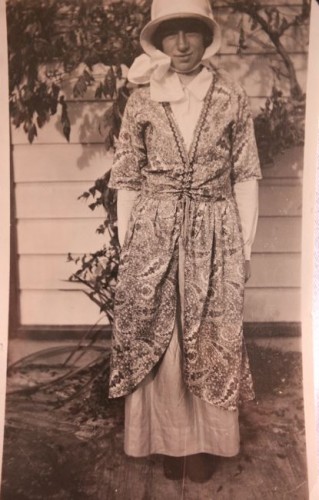
The back to this one reads “myself in fancy dress as an old English lady”.  I think it is 1930s.  I love the paisley fabric of her dress, and the ‘bonnet’ made by tying a bow over a brimmed hat, and how terrifically bad the whole outfit is.  There is something so delightful about how amateur it is.
IMG_5246

The second fancy dress photo is much more professional.  It’s a studio setting, and the costumes are quite elaborate:

IMG_5249

Awww…  It’s Aladdin and Jasmine!  Or just a generic harem girl and Arab sheik.  The photo is signed ‘With Love, Roma’ and is pasted to an album sheet with the notation “One is Bernard Betheridge’s daughter Roma” (I presume the one sitting).

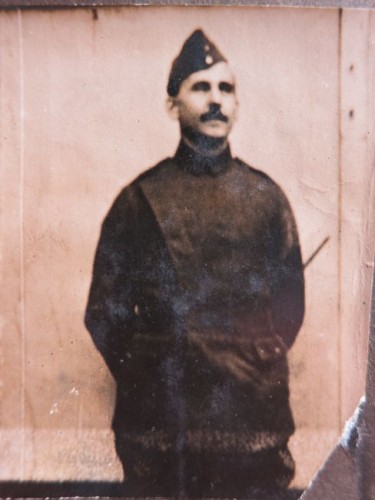
Speaking of which, this is Charles Betheridge (an uncle?):
IMG_5247

Can anyone identify his uniform?

And Charles’ daughter, wearing what I think is an early set of bathing flotation devices:
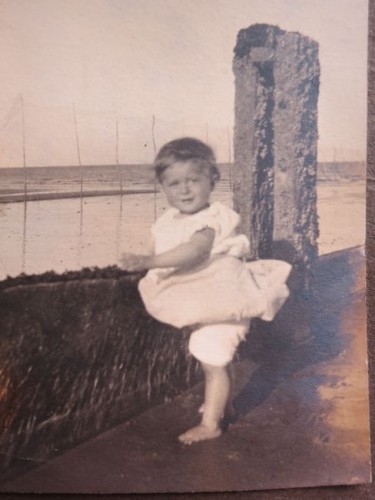
IMG_5248

I picked up baby Betheridge and her father Charles because they were pasted to the back of the album leaf with Roma’s fancy dress photo, but I’m just delighted to have a bigger picture of the Betheridge story.

I chose this ca. 1900 couple because the lady’s blouse was just too delicious to pass up on.  Perfect inspiration for the Historical Sew Fortnightly Stripes challenge  (due March 25)!  The back reads “With Compliments from May Taylor and Alick Copland”.  Is that the couple?  I’ve actually found one Alick Copland on a genealogy site, and he’s just the right age to be this Alick Copland.  He’s married to Catherine instead of May though.  I sense a story…
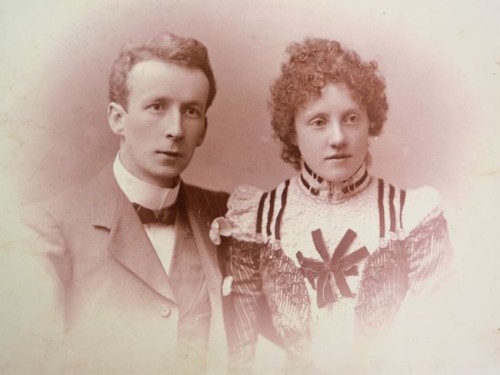
ca. 1900 couple "With Compliments from May Taylor and Alick Copland"


I loved how informal this late 1910s/early 20s photo is, and am touched by the hint of sadness – the gangly kids in their socks and sandals, their sleeves too short, the woman clutching her bag in front of her.  The back reads “Jill, Vera, Jim”.  I bet Jill and Jim are the kids.
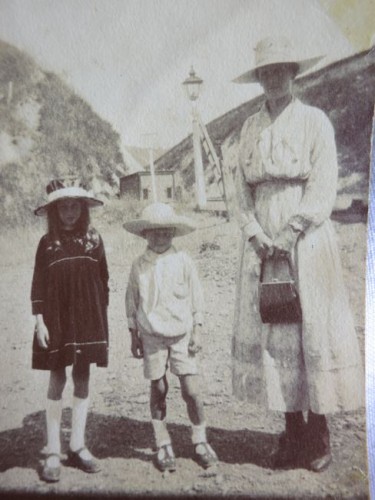
Late 1910s/ early 1920s Mother & children.  Jill, Vera & Jim


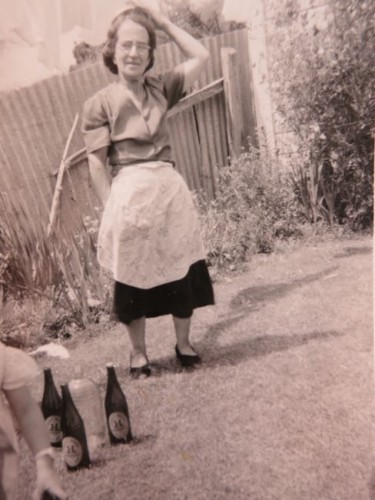
Last of all, two 1940s photos with women in aprons.  I like apron photos for the reality – people usually take photos of their best clothes, not their work clothes, so apron photos are rare.

I wonder what the group in this photo is.  A scout group perhaps?  Are they showing off their just-finished aprons?
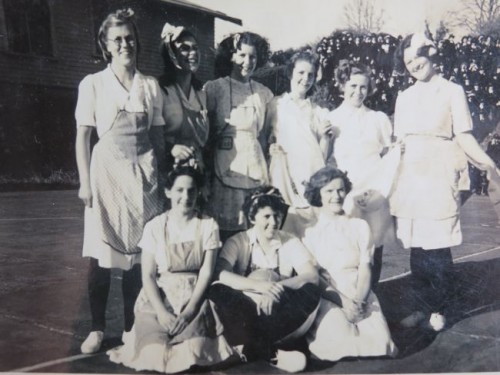
Girls in aprons, 1940s.  "Back Row from left: H. Smith, M Boyes, M Swaff, ord M. Howard, W Walsh, M Harris, A Ching, J Lucre, T Harley

The reverse reads:  “Back Row from left: H. Smith, M (or H, or A) Boyes, M Swaff, ord. M Howard, W Walsh, M Harris, A (of H) Ching, J Lucre, T Harley

And finally, an older woman in an apron with a child running out of the picture.  Can anyone identify the labels of the bottles on the grass?  Were they bottling, or playing lawn bowling or using them as cricket stumps perhaps?
IMG_5227

Holiday delights

Christmas this year has not gone according to plan.  It’s been full of family, and love, and goodies, and delicious food, and bits of fun, but far too much sadness, and I’m not ready to talk about it properly on the blog.  Instead I just thought I’d keep things cheerful and show you the lovely things that I was given for Christmas or bought at my favourite antiques store with holiday money.  It was a very vintage Christmas for me.

From Mr D, a fabulous vintage handbag from Japan.  The Japanese import shop I love so imported a few in, all in different colours, and I told Mr D about them, and he went in and picked his favourite.  I love the way this combines a Western aesthetic with a very typically Japanese fabric – a silk with little tiny dots arranged in scales.

Vintage japanese handbag

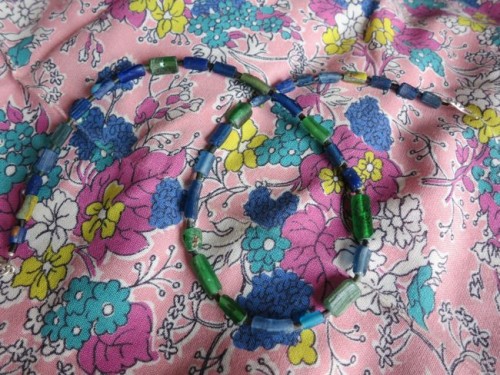
From my darling Mother-in-law, this gorgeous necklace:

Roman glass necklace

Did you guess what is so exciting about it? It’s made from Roman glass dated to between 60-200 AD.  (I do have my doubts about the ethical implications of buying Roman glass beads, but I haven’t researched it, I might be completely wrong, and I adore my gift, and I’m so tickled that MIL picked something so perfect, and it’s certainly better than Emily’s Egyptian princess necklace).

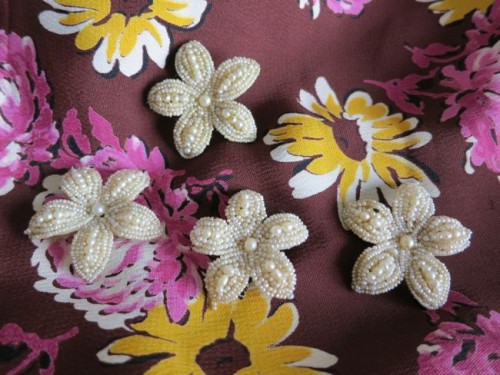
From a very thoughtful aunt-in-law, from the collection of a great-aunt-in-law, these sublime 1940s buttons.  We suspect they may have come off a wedding dress:

1940s buttons on 1940s floral rayon fabric

1940s beaded flower buttons


And these sweet metal buttons:

Vintage metal flower buttons

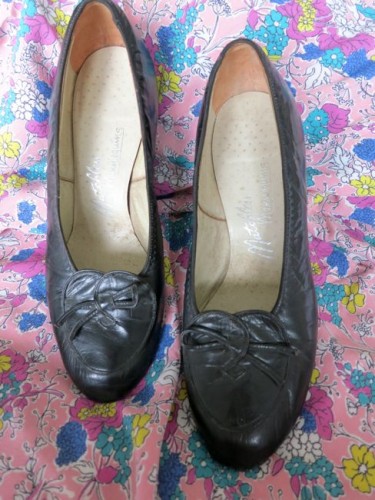
From my personal purchases with Christmas monies, an utterly scrummy pair of 1930s shoes in fantastic condition that fit like they were made for me. They are soooo amazing on, and so comfortable.  They just don’t make shoes like this anymore!

late 1930s heels - Made in New Zealand

I just love the little heart twist detail on the front:

late 1930s shoes, Made in New Zealand

I photographed the shoes and buttons and my Roman glass beads on a 4.5 yard length of late ’30s-early 40s cotton.  The pink is not usually my favourite shade, but I love all the accent colours, and it’s so hard to find original cottons of that era.

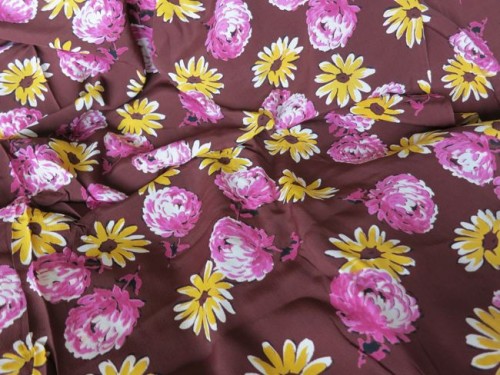
Also not in my usual favourite colours is this 4.5 yard length of 1940s rayon.  The fuschia and yellow are favourites, I just generally avoid brown.  Despite this, the overall effect of this was just too delicious to pass up on though:

1940s rayon floral fabric

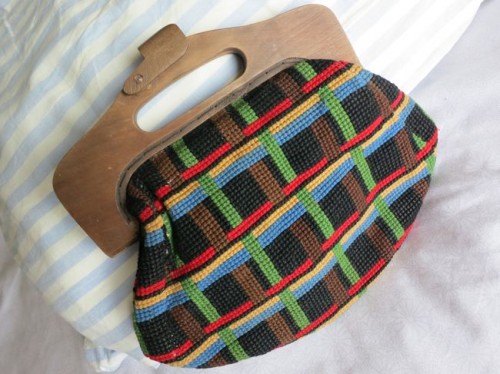
More in my usual colour scheme is this gorgeous 1940s handbag.  I’ve got some perfect reproduction ’40s fabric in all these colours.  And wouldn’t it go perfectly with my Aloha Ka Manini blouse and tomato red ’40s shorts made from the same pattern as my Nostalgia shorts (or, for that matter, the aloha shirt I am wearing with the Nostalgia shorts)?

1940s wood and tapestry handbag

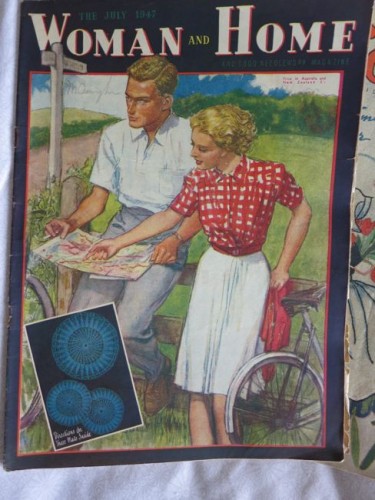
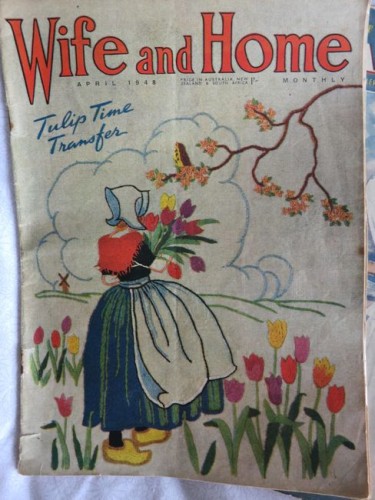
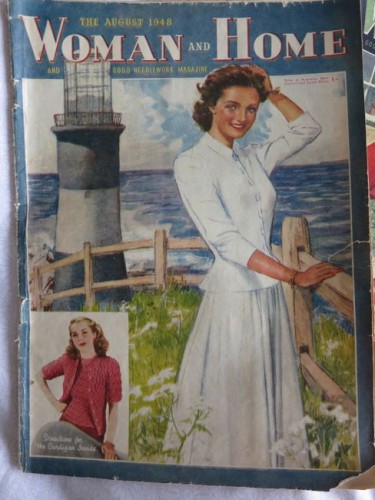
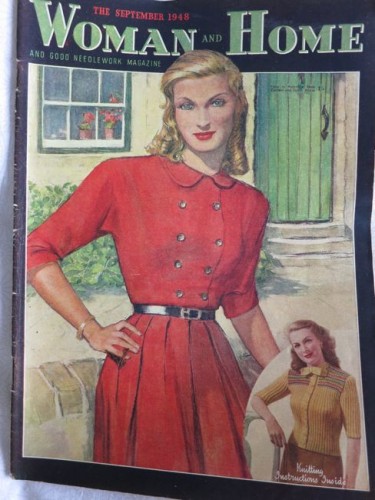
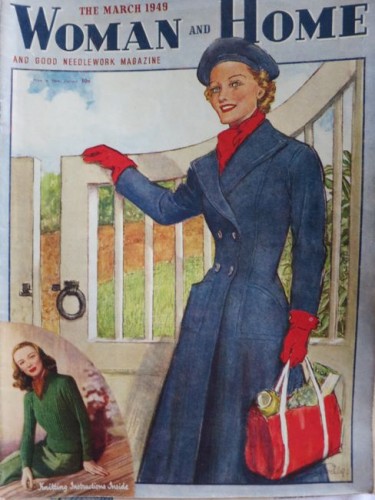
Keeping with my 1940s theme, five late 1940s Wife and Home (and good needlework) Magazines.

Women and Home (and good needlework) Magazine

Aren’t the cover illustrations divine?  They make modern magazine covers look even more cheap and dreadful.

Woman and Home, July 1947

Wife and Home Magazine, April 1948

Woman and Home, August 1948

Woman and Home, September 1948

Woman and Home Magazine, 1949


For now I’m using the magazines and the pogey bait as distraction from when everything going on gets to be too much.  Once the sadness has faded these things will make me think of the best of this Christmas, and all the happiness and love that can come out of hard times.

I hope your Christmas was full of only the good parts – family and love and good times and good food and beautiful and useful things.

The Historical Sew Fortnightly: The ‘Something Simple’ challenge

To ease into the  Historical Sew Fortnightly challenge for 2013 there is a bonus challenge due on the 31st: ‘Something Simple‘.

I thought it would be nice to give us something a bit easier to start with, and I think it’s good to remember that not every important historical garment is massively elaborate and over-the-top.

Throughout history people have depended on simple, workable garments – the historical equivalent of our T-shirts.  There are lots of periods when even the very rich wore mix-and-match separates that were (relatively) washable and easy to make.  One of the things about Princess Alexandra that particularly impressed Queen Victoria when they met was her frugality in dress – Queen Victoria commended her for wearing the same jacket with multiple skirts, and thought it demonstrated a praiseworth restraint and sensibility in dress and character.

I was hoping to do a whole post of simple historical inspiration, but the problem with simple, easy to wear, easy to make garments is that not many of them have lasted to come down to us.  We tend to wear T-shirts until they are unwearable, and carefully preserve our fanciest garments, like wedding dresses, for posterity.

In my mind there are three ways to interpret ‘Something Simple’;

  1. Make a type of historical garment that you are really comfortable sewing up.  I can whip up a full 1850s cartridge pleated skirt or a 1930s day dress in a couple of hours, whereas an equally easy (technically) 18th century chemise takes me a little longer, just because of practice.
  2. Make something that really is simple in design and techniques, like a Roman pallas (it’s just a hemmed rectangle), or a fichu (a hemmed triangle), or an apron.
  3.  Make something that is a wardrobe basic for your favourite period, like  the aforementioned 1850s cartridge pleated skirt or 18th century chemise.

If you are stuck there have been some fantastic suggestions on the Facebook page, and here are a few inspiration pieces:

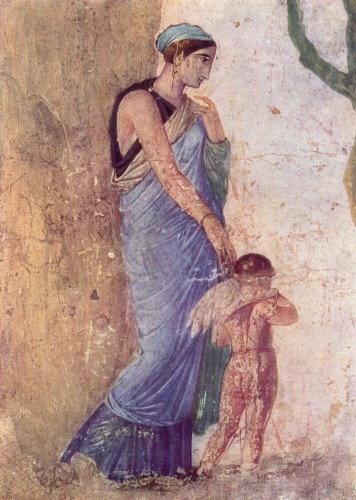
First, the aforementioned pallas and stola:

Venus in a pallas and stola, Pompeii

Venus in a pallas and stola, Pompeii

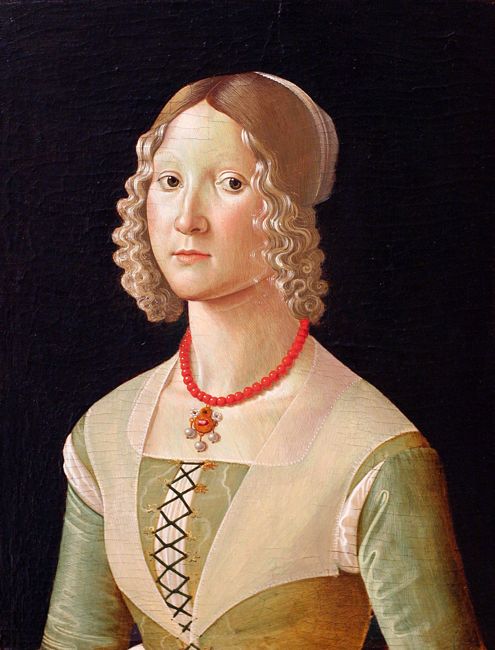
Second, I am obsessed with the sheer fichu (I’m sure there is a proper Renaissance name for it) that Ghirlandaio’s blonde is wearing.  I want to make the whole outfit, but I’m wear just the fichu over a modern strapless cocktail dress because I love it that much.

Portrait of a Woman, Domenico Ghirlandaio, probably 1480s

Portrait of a Woman, Domenico Ghirlandaio, probably 1480s

Another obsession?  These pockets.  All you need is some fabulous 18th century appropriate fabric, and a few hours:

Pocket, printed cotton & linen, 18th c, American, MFA Boston, 48

A little more complicated, but so eminently practical, a mid 19th century chemise:

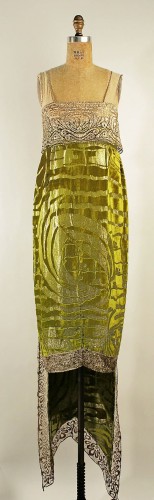
This ‘teens evening dress didn’t get the highest Rate the Dress rating, but that had a lot to do with the fabric.  In a different fabric, it would be a stunning and easy dress:

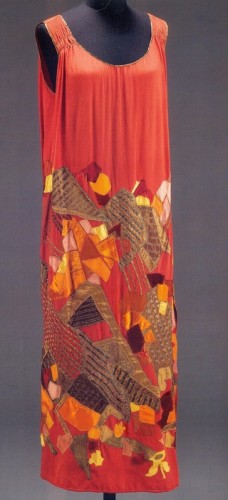
Speaking of stunning, I adore Natalia Goncharova as a fashion and textile designer, and her dresses really rely on simple cut (a basic tube with shirred shoulders) and fabulous fabric – so very easy to imitate.

Evening dress of multi-coloured silk and velvet applique on red silk. Designed by Natalia Goncharova for Maison Myrbor, Paris, about 1923, V&A

Evening dress of multi-coloured silk and velvet applique on red silk. Designed by Natalia Goncharova for Maison Myrbor, Paris, about 1923, V&A