In my Absolute Beginners sewing class I teach students to set zippers using a simple zipper cushion-cover tutorial. The cushions are fun and easy to make and the students love them. I thought you might enjoy a tutorial, so you can make them yourself.
This method of setting a zip is a bit longer and more involved than some, but it yields a fool-proof result, which is important when you are first learning to sew. And even now, I’d rather use a technique that is always going to work perfectly than one that can go wrong!
For this tutorial you will need:
- One 35cm/14 ” zip
- 1/2 metre of mid/heavy weight fabric cut into 3 pieces: one square that is 49cm x 49cm (19.25″ x 19 1/4″”) (for your cushion front), and two rectangles (for your cushion back) that are each 49cm x 26cm ( 19 1/4″ x 10 1/4″”)
- One 18″ square cushion inner
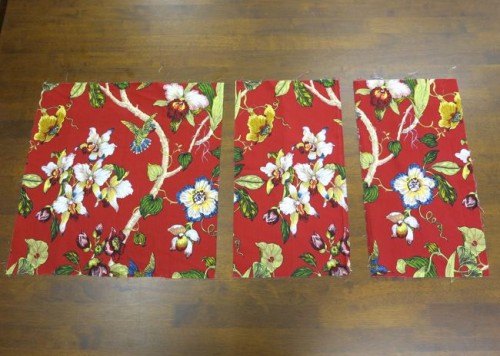
Cushion front piece (left) and back pieces (right)
Step 1: Sewing the zipper seam
- First, finish the two long inside edges of your rectangular back pieces with zig zag stitching
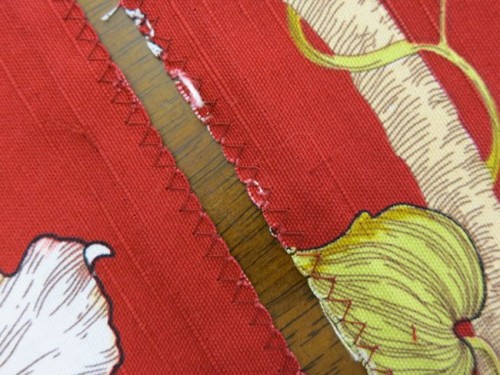
The two inside edges finished with zig-zag stitching
- Now, lay your zip down along one of the zig-zagged edges, centering it on the piece of fabric. Mark the top and bottom of the zip (the top and bottom of the part that actually zips – so the metal and and the top of the slider) with chalk.
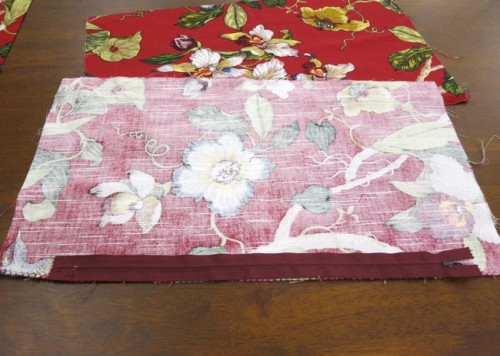
Centering the zip along the finished edge
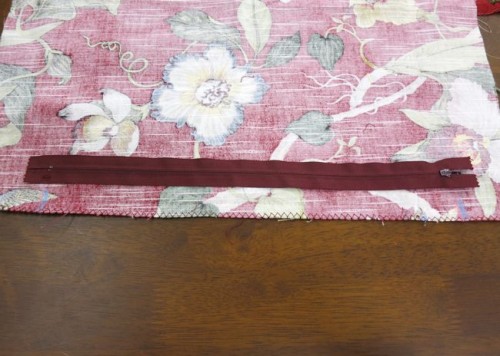
Marking the top and bottom of the zip
- Place your two rectangular pieces right sides together, with the zig-zagged edges aligned. Using a 1.5cm (5/8″) seam allowance, stitch down the seam, using a regular (2.6ish) stitch length as you start, backstitching at the top, stitching down to the first chalk mark, backstitching again, and then switching your stitch length to a long basting length stitch (4) to sew the section between the chalk marks where your zip will go. When you get to the next chalk mark, switch your stitch length back to a regular (2.6ish) stitch length, sew three stitches past the chalk mark, backstitch to the chalk mark, and then sew to the end of the fabric, backstitching again at the end.
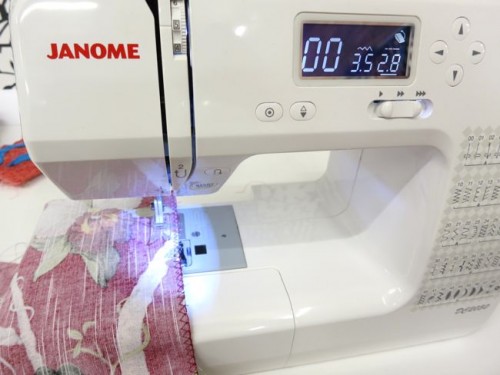
Sewing to the first chalk mark with a regular stitch length (I’ve used 2.8 here)
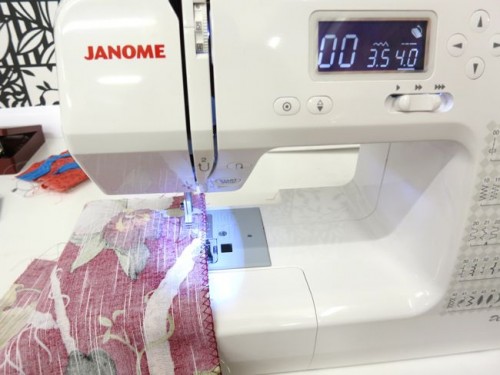
Switching to a basting stitch (4) for the long section where the zip will be
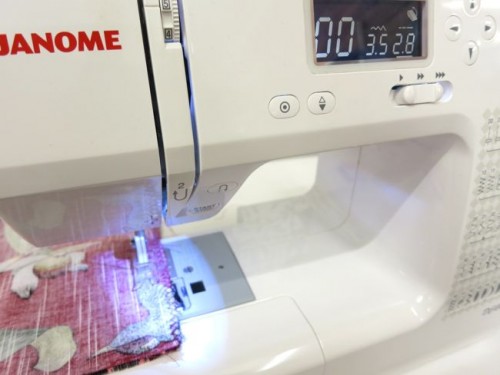
Switching back to a regular stitch length (2.8) at the 2nd chalk mark for the final end section
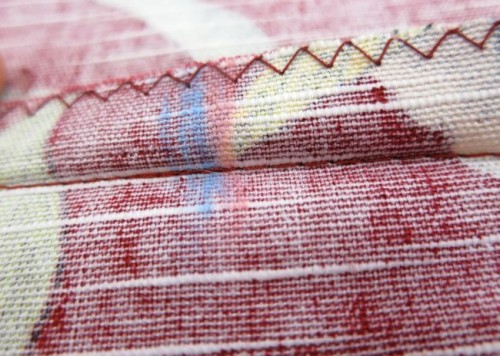
The finished seam, with backstitching just before the chalk mark
- Once your seam is sewn, press it open. Lay the zip along the seam, matching the top and bottom of the zip to your chalk marks, and carefully centering the coils of the zip exactly on your seamline. Pin the zip down.
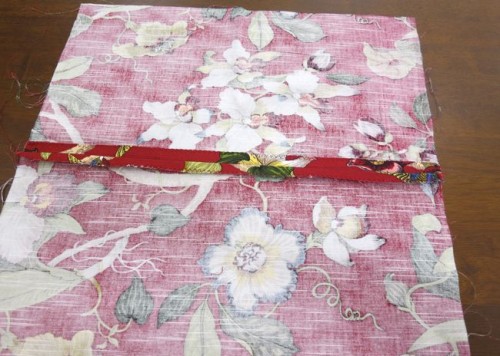
The pressed-open seam
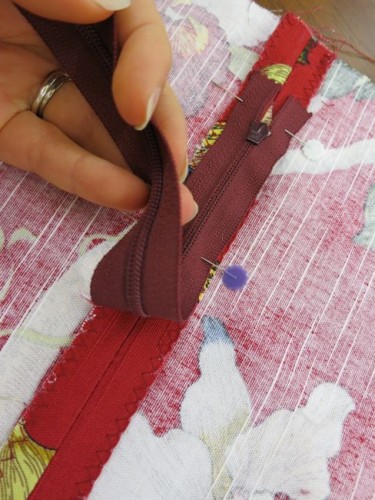
Laying and pinning the zip along the seam, checking that the coils exactly follow the seamline
- Once your zip is pinned down, hand baste the zip through all the layers of fabric along the outside of the zip. For ease of removal, use a contrasting thread, and stitches that are approximately 1cm long. Once you have basted the zip on you can remove all of the pins.
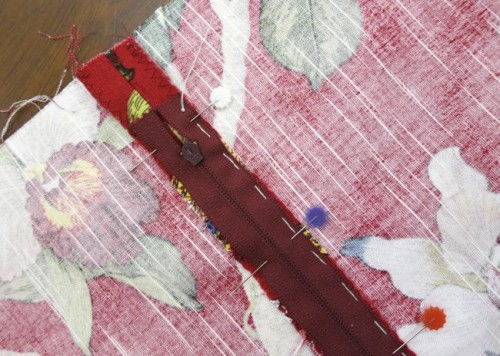
Basting down one edge of the pinned zip
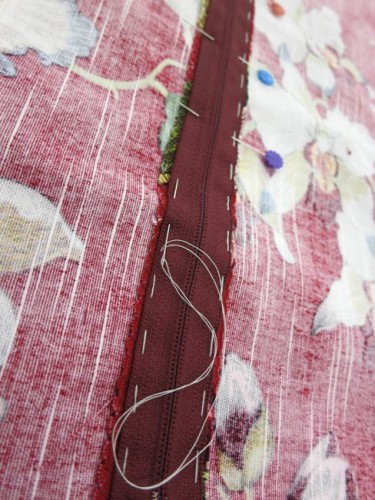
Basting back up the other side of the zip with 1cm stitches

The fully basted-on zip
- In order to have a really easy guide line to follow, I like to mark my zips stitching line with chalk. Using a straight edge and a tailors chalk, mark a line on the right side of the fabric 1/4″ or 7mm from the centre seam line all along the zip. Mark off the top and bottom of the zip, just above the metal pull and below the bottom stay.
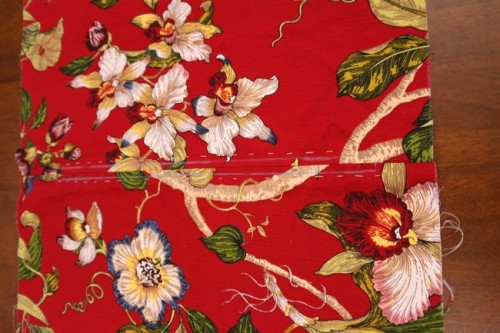
The line for stitching the zip marked with chalk
- Now you are ready to machine sew your zip on. Using a zipper foot and a regular stitch length (2.4-2.8), start at the top corner of your zip, backstitch, and slowly and carefully, sewing right on the chalk lines, sew down the zip to the bottom corner. At the bottom corner, sink your needle, lift your foot, turn the cushion 90 degrees, lower the foot again, and sew across the bottom of the zip to the next point. Sink your needle again, lift your foot, turn your fabric another 90 degrees, lower your foot, and sew back up the other long side of the zip. At the top, turn another 90 degrees, sew across the top of the zip to finish it off, and backstitch.
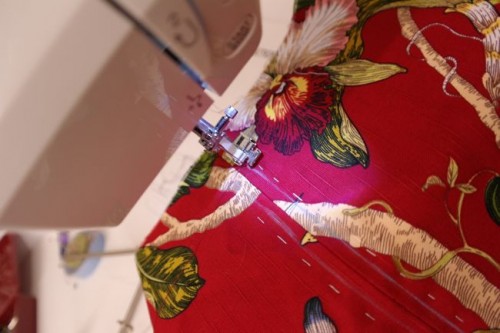
Starting at the top of the zip, backstitch and sew down the first long side
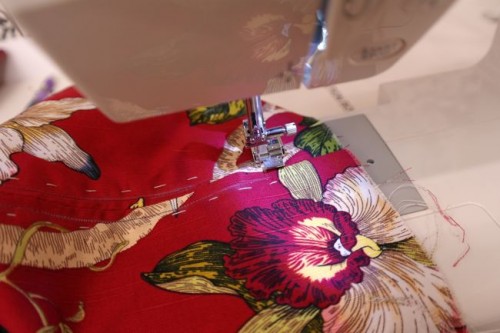
Turning and sewing across the top of the zip to finish it off
- Ta da! You’re zip is sewn on. Double check that your zip remained centred on the fabric, and is fully sewn on on all four sides, and remove the hand-sewn basting stitches.
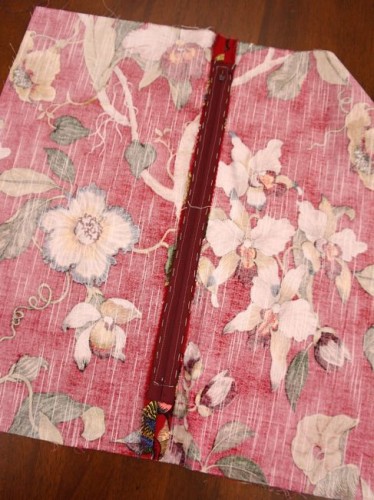
The sewn-on zip from the back
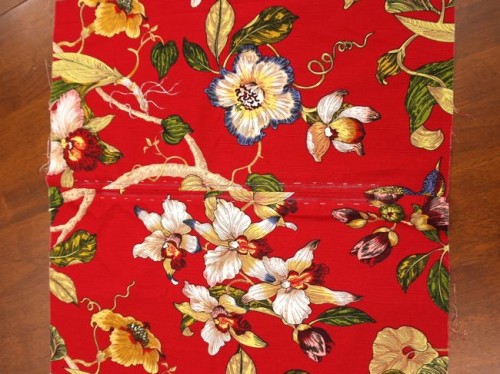
The sewn-on zip from the front
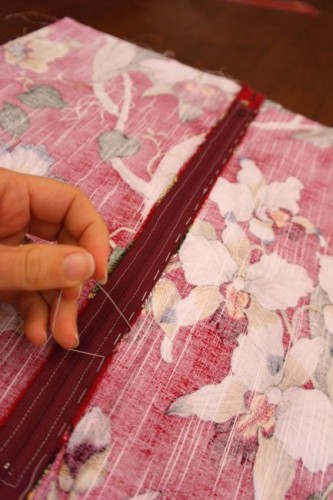
Taking out the hand-sewn basting stitches
- Now you can unpick the line of basting stitches covering your zip. Using an unpicker, carefully cut through the threads holding the seam closed.

The sewn-on zip with no basting stitches
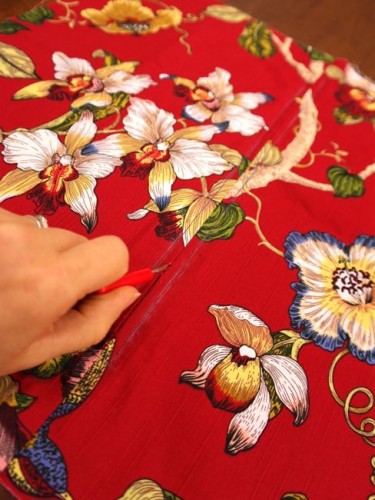
Unpicking the seam that covers the zip
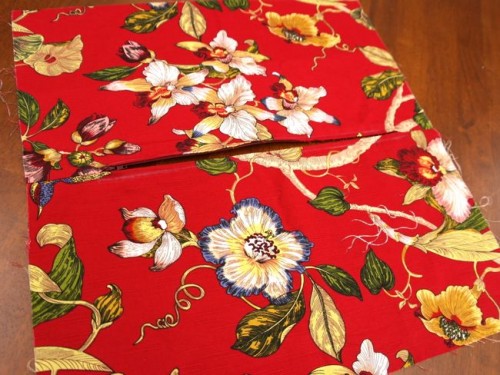
Checking that the zip opens
- Finally, it’s putting the cushion-cover together time. With your zip partly open(that part is really important) place your cushion back (with the zip) over the square you cut for the cushion front, right sides together. Trim off any extra fabric, so that both sides are exactly the same. Pin your front and back together on all four sides.
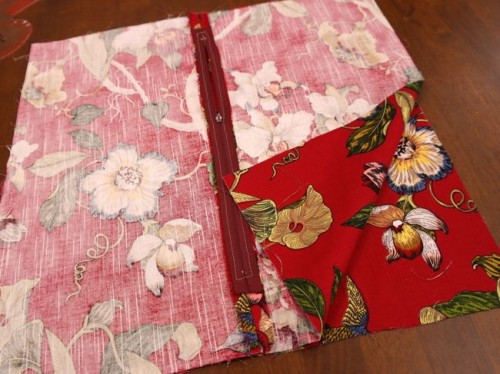
Front and back placed right sides together
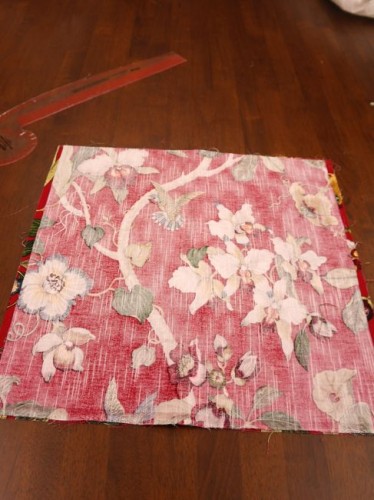
I have a little bit of extra where my back is wider than my front
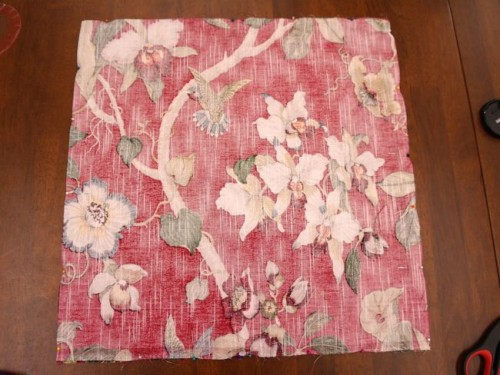
Extra trimmed off, both sides are even and pinned together
- Using a 1.5cm seam allowance (5/8″) and a regular stitch length, start at one corner of the cushion, backstitch, and stitch down one side. When you get to the next corner stop 1.5cm from the edge, lower your needle, lift your foot, and turn your cushion 90 degrees so that you can stitch down the next side. Do this at all the corners, until you come back to where you started. Backstitch, making sure that your stitching exactly meets or overlaps with your start point, so there is no hole in the corner.
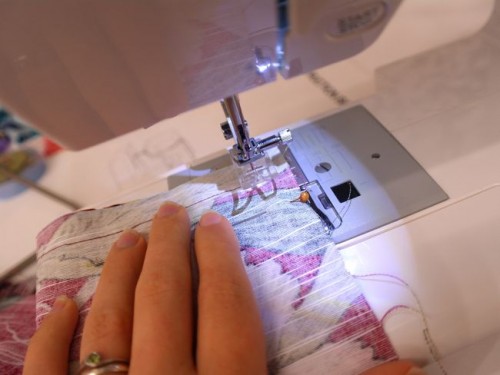
One edge sewed down, lifting and turning at the corners
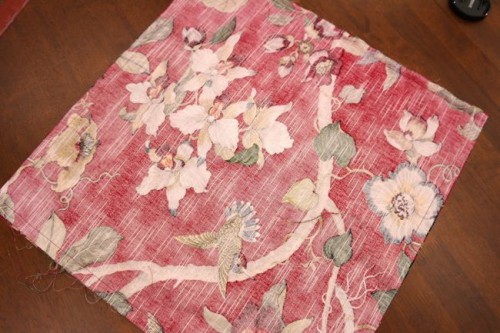
The sewn-together cushion cover
- Now for your last bit of sewing. Set your sewing machine to a zig zag stitch and zig zag all four edges, lifting and turning your foot at the corners. Backstitch at the end.
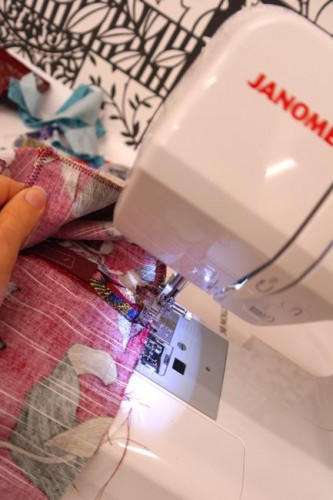
Zig-zagging the edges
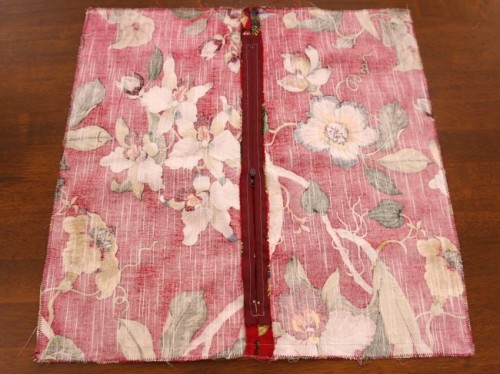
The cushion cover with all the edges finished with zig-zag stitching
- Final step! Trim off all four corners so that the cushion will turn nicely, and turn it inside out. Press the seams, put your cushion inside, put the cushion cover in, and stand back and admire your handiwork.
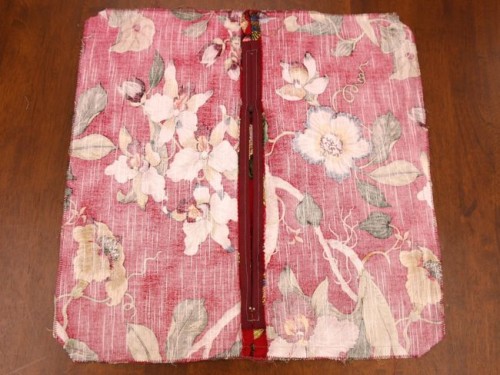
The cushion cover with trimmed-off corners
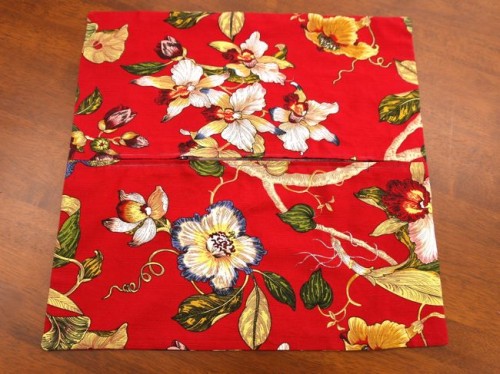
The finished and pressed cushion cover
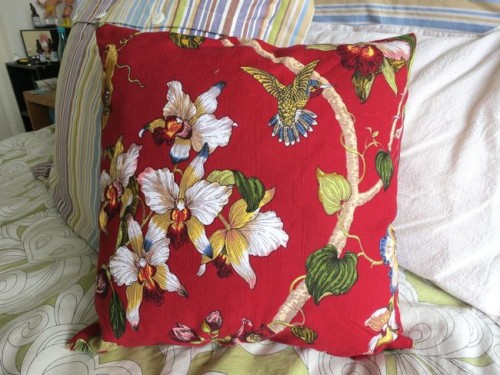
Now with a cushion – yay!
I hope that was fun and helpful! Let me know if you have any questions
Felicity approves