Today is Waitangi Day – New Zealand’s version of Nation Day or the 4th of July.
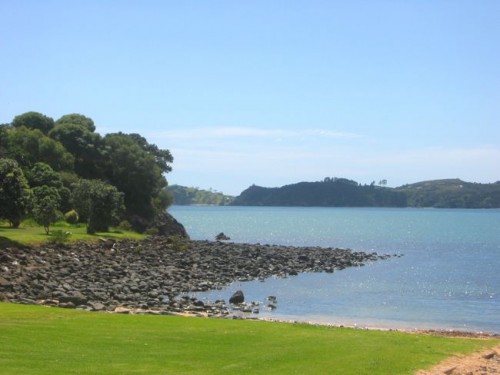
Waitangi in the Far North
As an outsider, I find Waitangi Day a most peculiar holiday, because it isn’t a celebration. It is, at best, a sort of uneasy acknowledgement of the beginnings of New Zealand as a nation.
This is my understanding of Waitangi Day:
Waitangi Day specifically commemorates the signing of the Treaty of Waitangi at Waitangi in the Bay of Islands on 6 Feb 1840.

The beach at Waitangi, looking out over the Bay of Islands
The Treaty of Waitangi is to New Zealand what the Magna Carta is to the UK, or the Declaration of Independence is the US: it’s our founding document.
In some ways, it’s a good founding document. It’s short, and simple. It did three basic things: it establishes a British governorship over NZ (the NZ government essentially inherited this governorship), recognised that the Maori owned NZ, and had a right to their land and properties, and, finally, gave Maori the rights of British citizens.
Well, sort of. At the same time, it’s a terrible founding document.
You see, the problem with the Treaty of Waitangi is that it wasn’t written by experienced treaty writers. It wasn’t written to be a nation’s founding document. And, worst of all, it was translated into the language of the most important half of the signers (the local Maori) by people who weren’t translators, and didn’t speak the language they were translating well.
So the English and Maori versions of the Treaty say isn’t the same thing. What the Maori chiefs who signed the Treaty probably thought they were getting and giving, isn’t what the British signees thought they were getting and giving.
Talk about a recipe for disaster!
To make it worse, it wasn’t like every single Maori chief in NZ signed the Treaty: a small group of chiefs in the Far North of New Zealand signed it. And quite a few Far North chiefs refused to sign it.

See that bit up the top called 'Bay of Islands'? See how far it is from the rest of NZ?
And after the initial signing of the Treaty, copies of it (many of which said different things than the original Treaty) were taken around New Zealand for other chiefs to sign. But many, many chiefs didn’t sign it, and the initial problem with the translations not agreeing was compounded.
And despite the Treaty recognising that the Maori owned the land, much of it was still bought at unfair prices, or flat-out stolen, over the next few decades.
So today Waitangi Day is not a celebration. Depending on where you stand, it is source of anger, or grief, or guilt, or frustration, or (at the best) indifference. Very few people appreciate Waitingi Day as anything more than a day off work.
An annual commemoration is held at the Treaty Grounds at Waitangi where the Treaty was signed. As often as not the Prime Minister is harrassed, shouted at, and has to be rushed away from the event by security. Sometimes members of the Royal Family, as representatives of the Commonwealth, attend and experience the same sentiments. In one particularly memorable event, the Queen attended Waitangi Day and was treated to the ultimate traditional Maori insult by a protestor: the whakapohane.
Yes.
The Queen got mooned.
There are also commemorations in Wellington at the Beehive (the government offices) and the Parliament buildings next door. They are just as fraught.
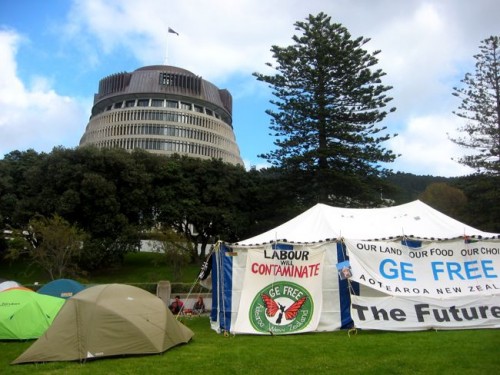
GE protestors camping outside the Beehive
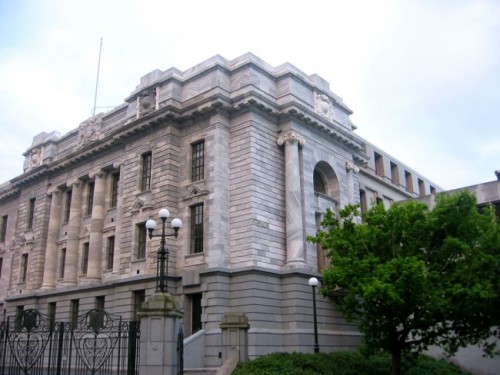
The new parliament buildings in Wellington
So today, everyone will be off work, but no one will really be celebrating. Instead we’ll be wondering: did we get it right? Can we do better? Where to now?
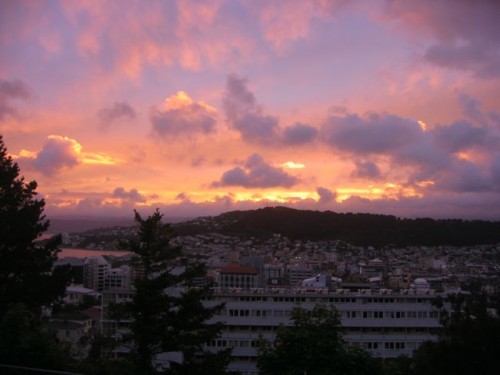
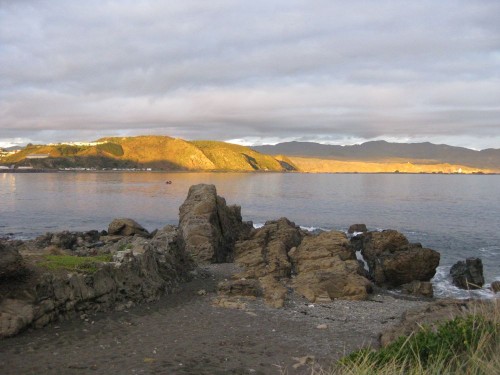
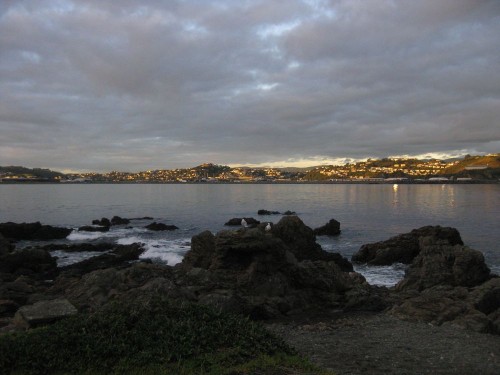
Dawn over Wellington