Latest Posts

Dress (c. 1840), England, wool, silk National Gallery of Victoria, Melbourne Purchased through The Art Foundation of Victoria with the assistance of David Syme & Co. Limited, Fellow, 1977

Rate the Dress: 1830s excess meets 1840s restraint

Apologies for the late Rate the Dress. But, the late post means I found an dress I’d entirely forgotten about in my inspiration file, and it’s so fabulously fascinating I’m hoping it makes up for a late post!

Last Week: an Empire era spencer & petticoat

I’m not usually a brown fan, but I’m obsessed with the particular ochre shade of last week’s spencer, but alas, many of you do not share my love. And even those who loved the spencer weren’t sure about it paired with the frilly petticoat – though you liked each garment on its own merits. However, I’m afraid I may have cheated the score every so slightly by showing that interior view, because I suspect some of the costume nerds among you were so charmed by the details you gave the outfit a higher score for it!

The Total: 7.9 out of 10

An improvement on the week before, but hardly brilliant.

This week:  an 1840 dress in harlequin pattern

This week’s Rate the Dress carries on my love for rust-y, ochre-y hues, this time paired with a blue-grey. It also carries on the blend of simplicity and frivolity seen in last week’s outfit, although here the order and the whimsy are spread evenly across the dress.
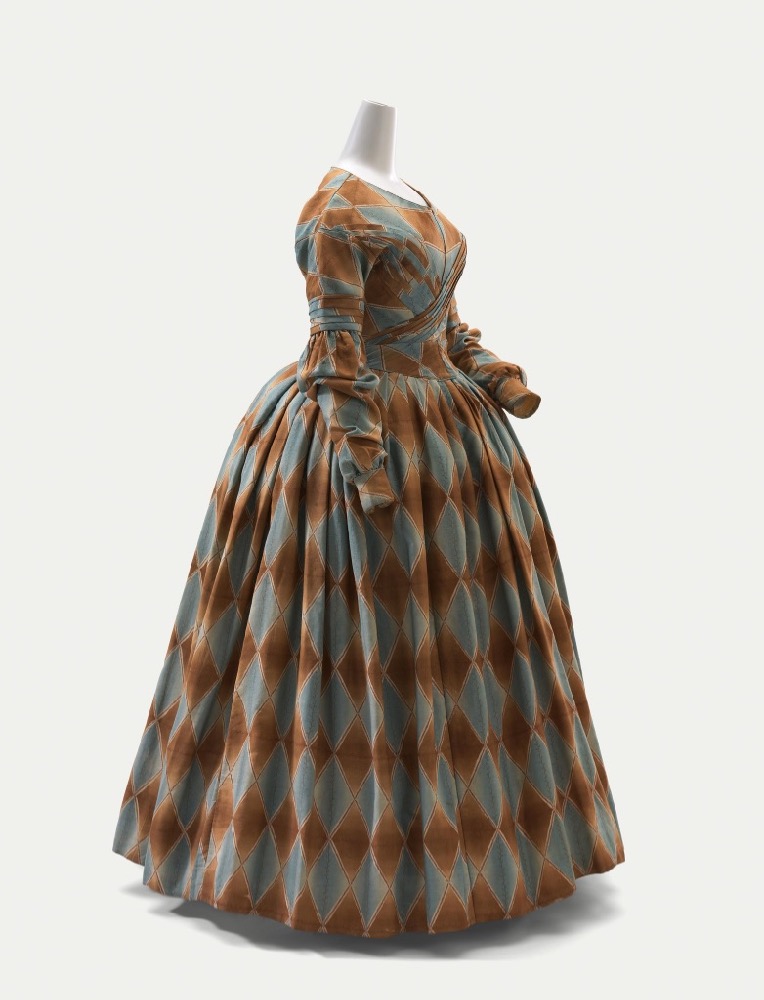
Dress (c. 1840), England, wool, silk National Gallery of Victoria, Melbourne.
Purchased through The Art Foundation of Victoria with the assistance of David Syme & Co. Limited, Fellow, 1977

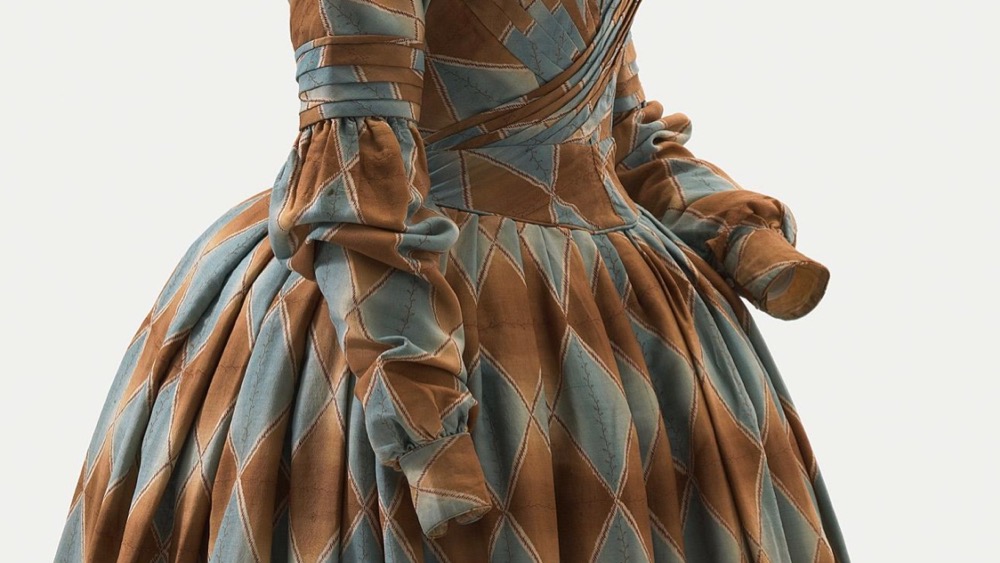
The whimsy is easy to see: the entire dress is made in harlequin patterned fabric (wool or silk or a blend of the two, according the catalogue record), albeit in a very restrained colour scheme. Note the very delicate vine pattern running through the centre of each blue-grey diamond.
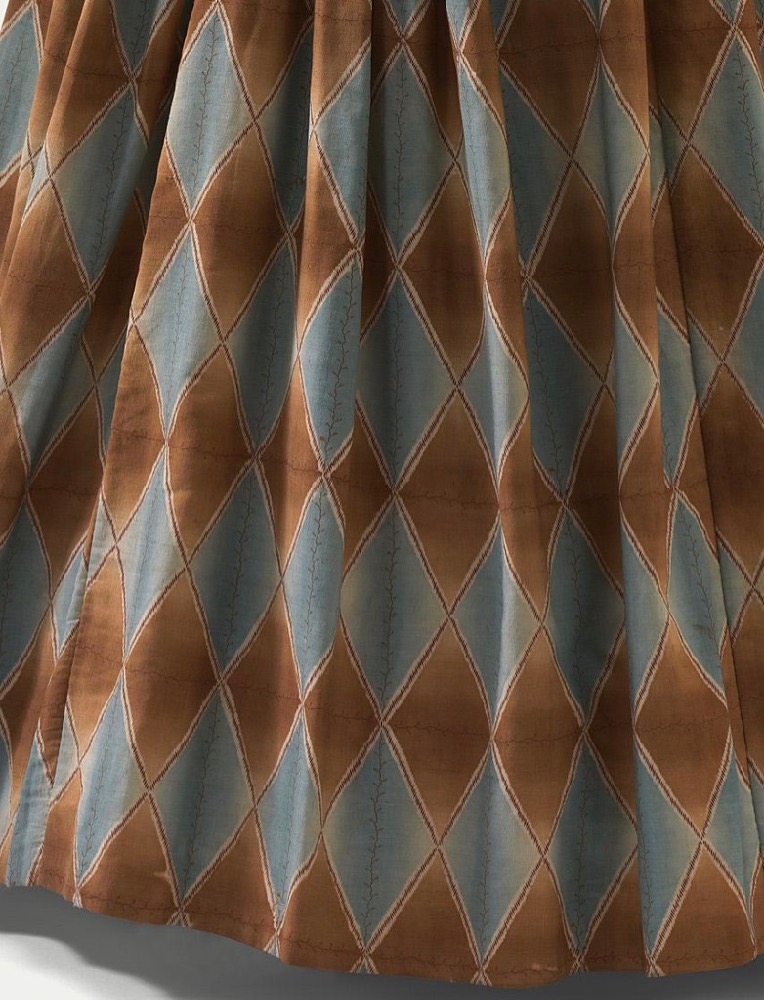
Dress (c. 1840), England, wool, silk National Gallery of Victoria, Melbourne Purchased through The Art Foundation of Victoria with the assistance of David Syme & Co. Limited, Fellow, 1977
Dress (c. 1840), England, wool, silk National Gallery of Victoria, Melbourne
Purchased through The Art Foundation of Victoria with the assistance of David Syme & Co. Limited, Fellow, 1977

The cut is also 1830s ridiculousness moving into 1840s restraint. The sleeves retain a bit of detailing and the last of the Romantic era poof. The elaborate bodice decorations so often seen in the 1830s have resolved into subdued pleating wrapping across the front of the bodice.
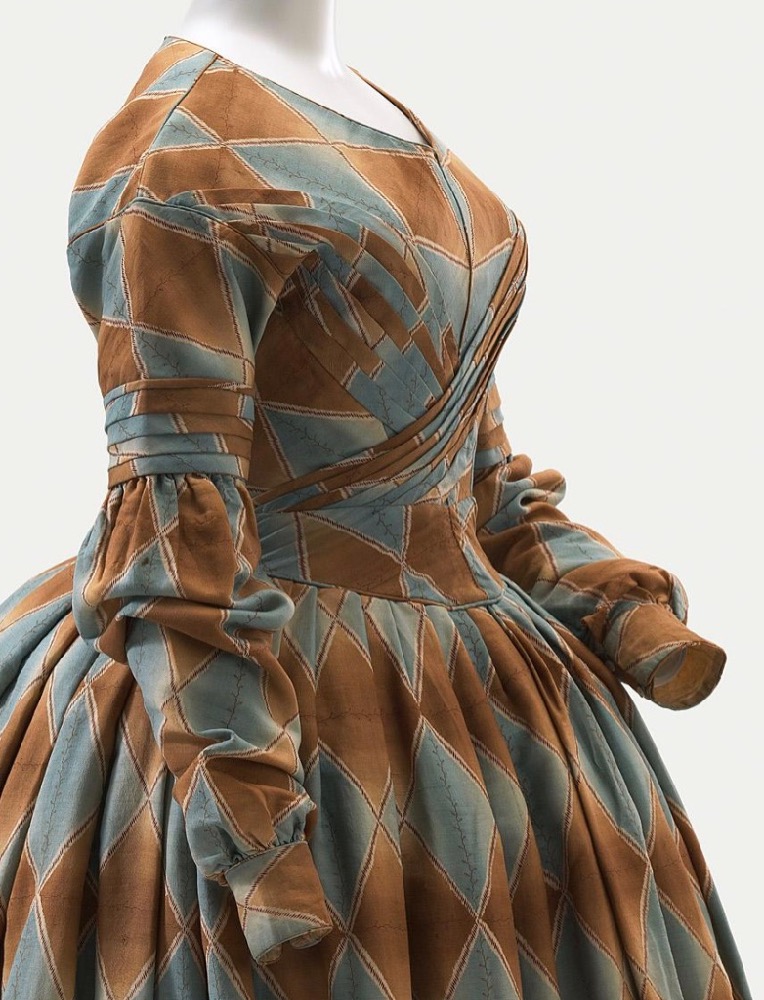
Dress (c. 1840), England, wool, silk National Gallery of Victoria, Melbourne Purchased through The Art Foundation of Victoria with the assistance of David Syme & Co. Limited, Fellow, 1977
Dress (c. 1840), England, wool, silk National Gallery of Victoria, Melbourne
Purchased through The Art Foundation of Victoria with the assistance of David Syme & Co. Limited, Fellow, 1977

It’s a perfect example of one era merging in to the next, all done in a memorable fabric.
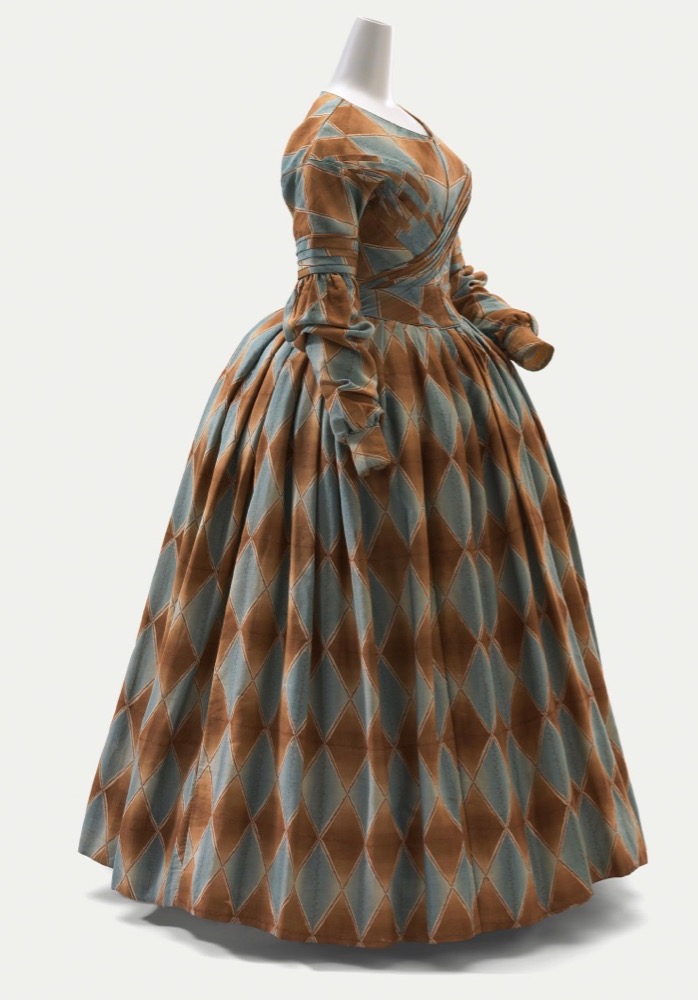
Dress (c. 1840), England, wool, silk National Gallery of Victoria, Melbourne Purchased through The Art Foundation of Victoria with the assistance of David Syme & Co. Limited, Fellow, 1977
Dress (c. 1840), England, wool, silk National Gallery of Victoria, Melbourne
Purchased through The Art Foundation of Victoria with the assistance of David Syme & Co. Limited, Fellow, 1977

Of course, a perfect example does not necessarily mean something is perfectly elegant. How do you feel about large scale harlequin print and Romantic heads towards Gothic details?

Rate the Dress on a Scale of 1 to 10

A reminder about rating — feel free to be critical if you don’t like a thing, but make sure that your comments aren’t actually insulting to those who do like a garment.  Phrase criticism as your opinion, rather than a flat fact. Our different tastes are what make Rate the Dress so interesting.  It’s no fun when a comment implies that anyone who doesn’t agree with it, or who would wear a garment, is totally lacking in taste. 

(as usual, nothing more complicated than a .5.  I also hugely appreciate it if you only do one rating, and set it on a line at the very end of your comment
A 1910s-20s hat re-fashion

A 1910s-20s hat re-re-re-re-make

Welcome to a long, involved story about how a hat went through many design permutations before it finally became a lovely thing that I enjoy wearing!

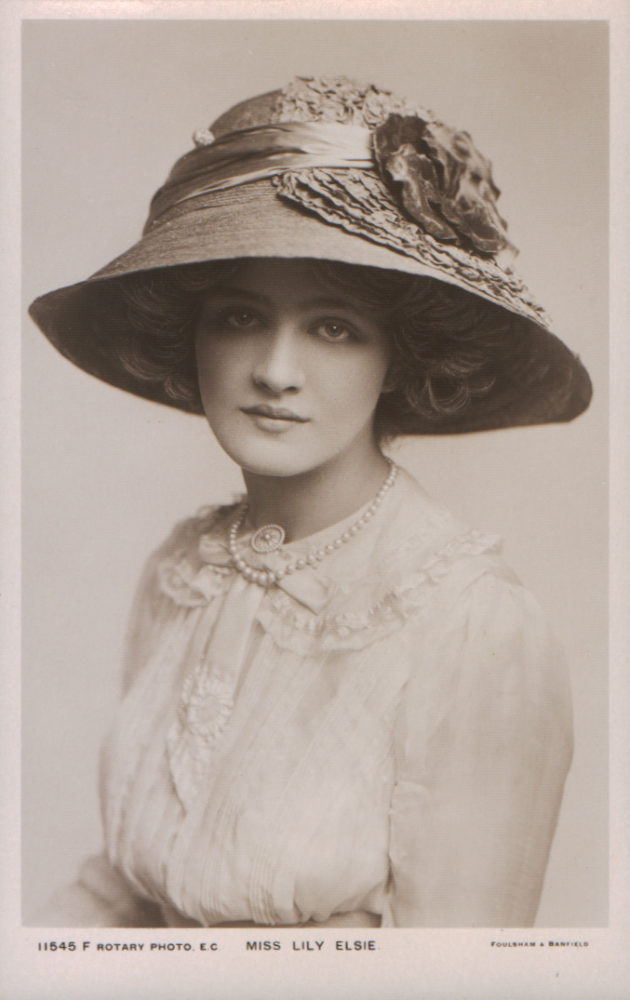
I originally (all the way back in April 2017…) started out wanting to make this Lily Elsie mushroom hat to wear with my Miss Muffet dress:

Lilie Elsie, ca 1912
Lily Elsie, ca 1912

I began with a fairly generic straw sunhat I’d found at an op shop. I soaked it and re-shaped it over a hat-block and towels to get that mushroom shape. Somewhere there are photos of the process, but I just can’t find them.

Update: I have found one of the original re-shaping photos! The curved-up back brim is based on a catalogue image from 1913:

And…it looked terrible on me.

So it went in the naughty pile.

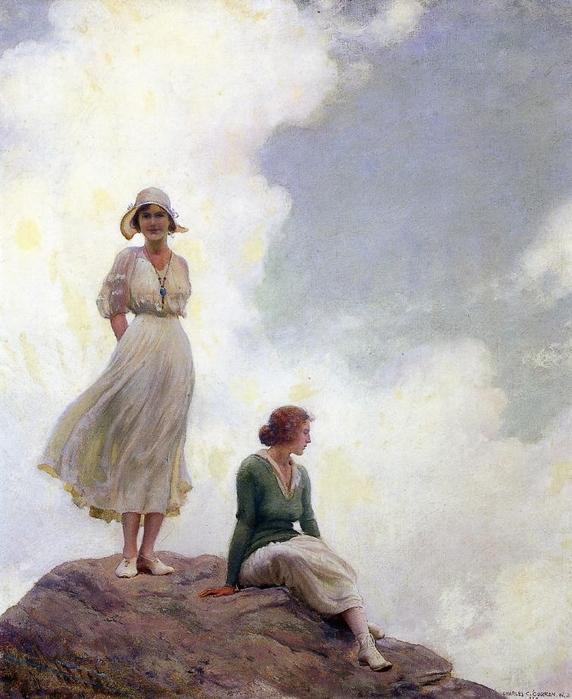
And then I needed a hat to go with the 1918-19 Not Another Blue Dress, so it came back out, and I re-shaped it again intp a shape halfway between this painting:

Charles Courtney Curran, The Boulder, 1915

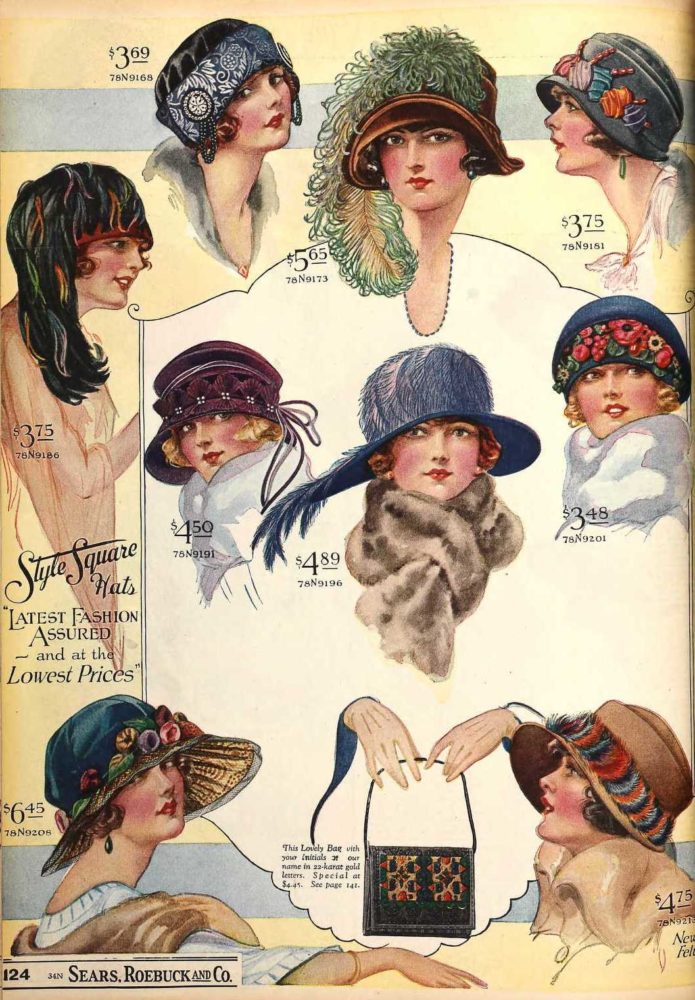
And the bottom left hat:

Hats, 1923
Hats, 1923

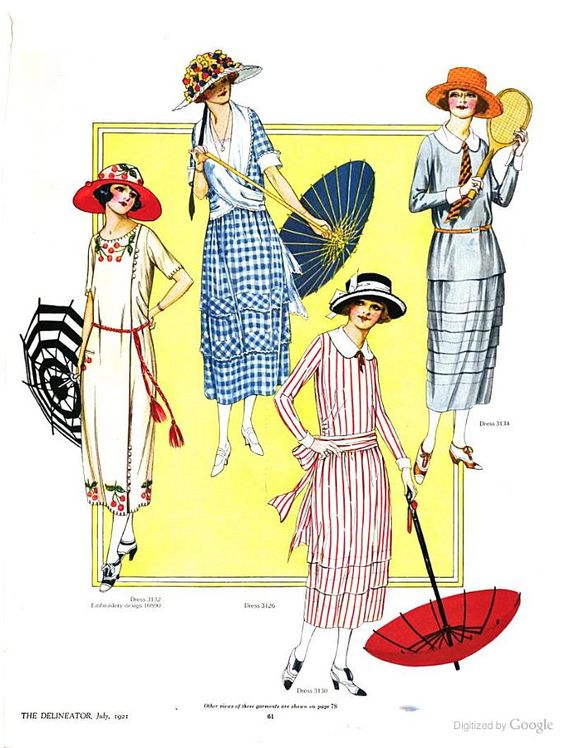
And then added a dark blue ribbon under the brim, and started trimming it with flowers all over the crown like the hat worn with the blue gingham dress:

The Delineator, Fashions for July 1921

And it looked really cute, but not with the Not Another Blue Dress – which happily did look amazing with my Tricorne Revival hat! (so at least one costume orphan got another use!).

So half finished, it went back into the naughty pile.

With the Waitangi Day garden party coming up I decided I needed a really good garden party hat to wear with my new dress. Something lovely and spring-y. This hat was the right shape, but the dark blue ribbon and flowers weren’t right.

So I pulled them off, and went back to the drawing board!

I assembled a pinterest board of mid-teens hats, and one of 1920s hats, and then started finding elements that I liked, and that I had the materials for.

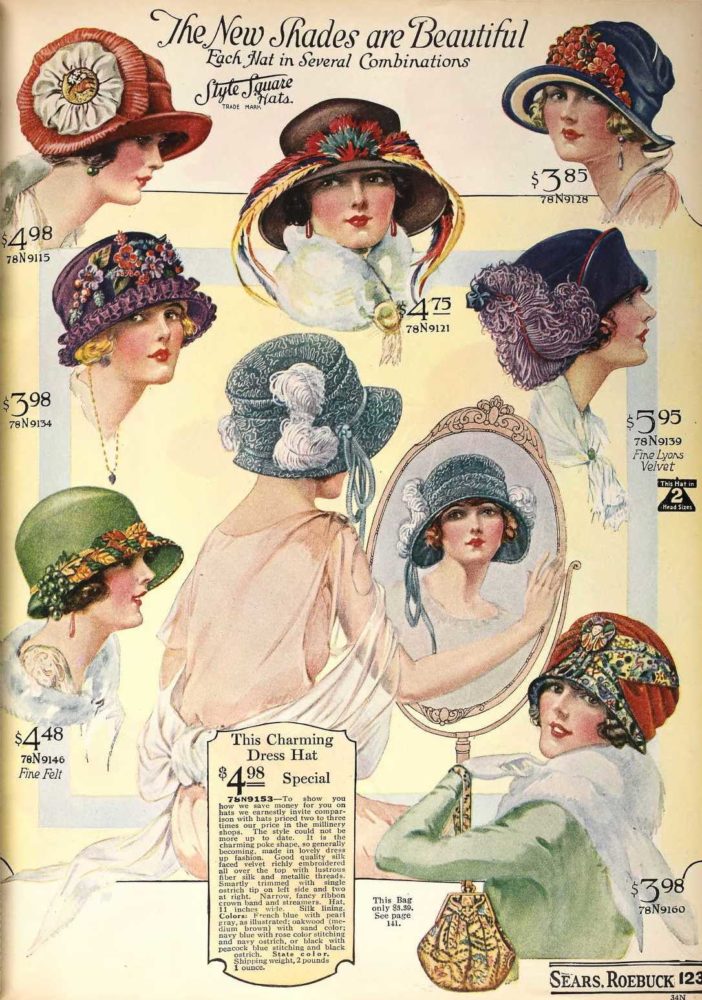
I decided I really liked the fabric covered crowns you see with some teens & 20s hats. They are mostly shown with fabric brims, like the blue one in the top right, but there are definitely examples with straw brims and fabric crowns.

Hats, 1923
Hats, 1923

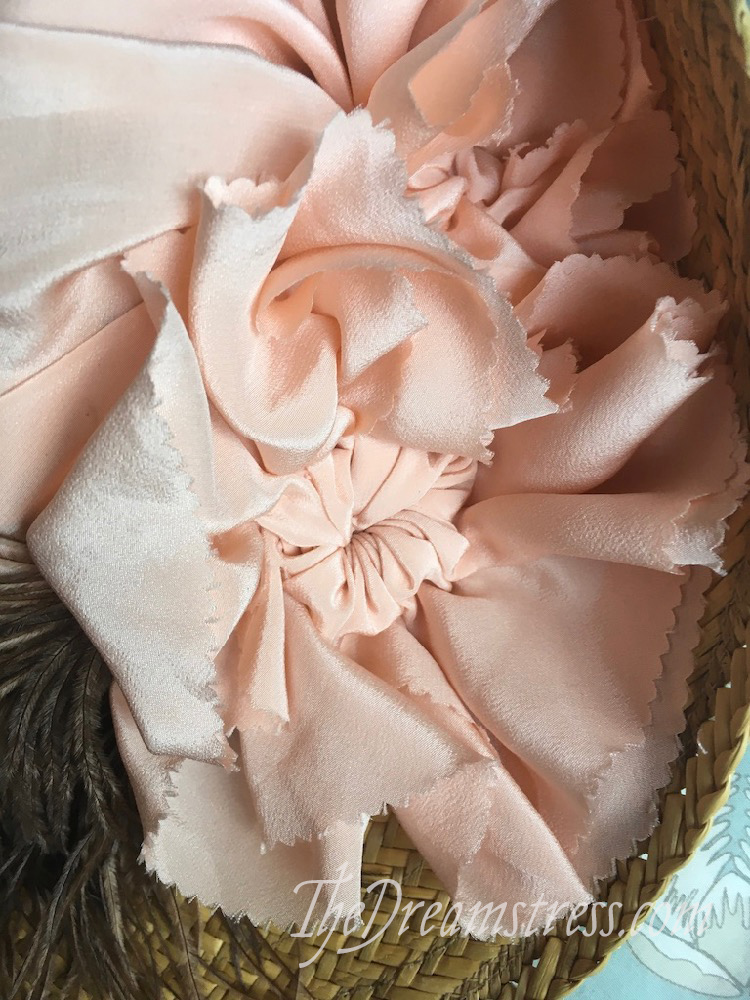
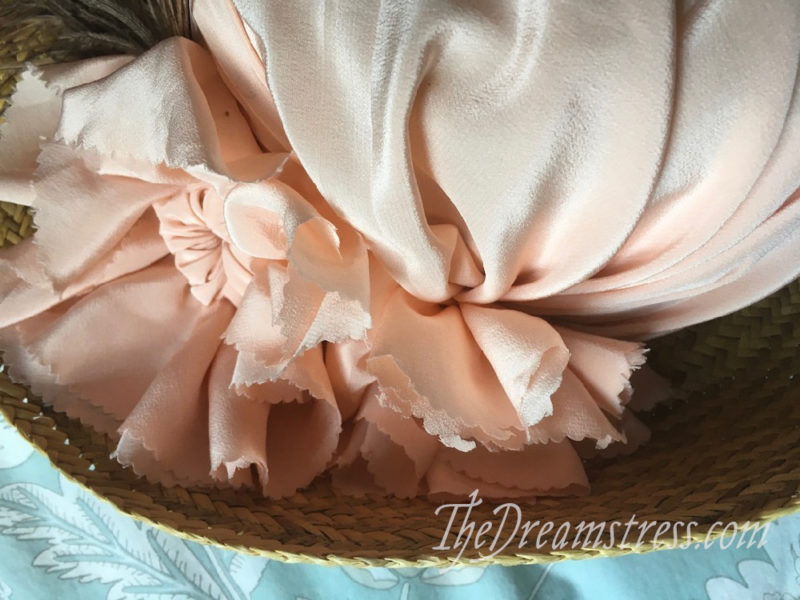
I had a scrap of silk crepe de chine from an end-of-bolt. It had tape marks and writing on it, but by cutting carefully I could cover the crown and make some lovely lush decorations.

A 1910s-20s hat re-fashion
A 1910s-20s hat re-fashion thedreamstress.com

The rosettes are made by cutting wide strips of crepe de chine on the bias using scalloped pinking shears. I then hand basted along one edge, gather the ribbon in, and then sewed a second line of stitches a bit out from the centre one, to create a floral centre, and to control the fullness of the ‘flower’

A 1910s-20s hat re-fashion thedreamstress.com

I went through my entire ribbon stash, and couldn’t find a better match for the under-brim ribbon (which hides the millinery wire, and is a very 10s-20s touch) than a satin ribbon.

1920s dresses thedreamstress.com

The colour was right, but the satin ribbon looked terrible eased around the crown, because viscose satin simply doesn’t ease. You can see every wobble and tiny sewn in crease in it.

A 1910s-20s hat re-fashion

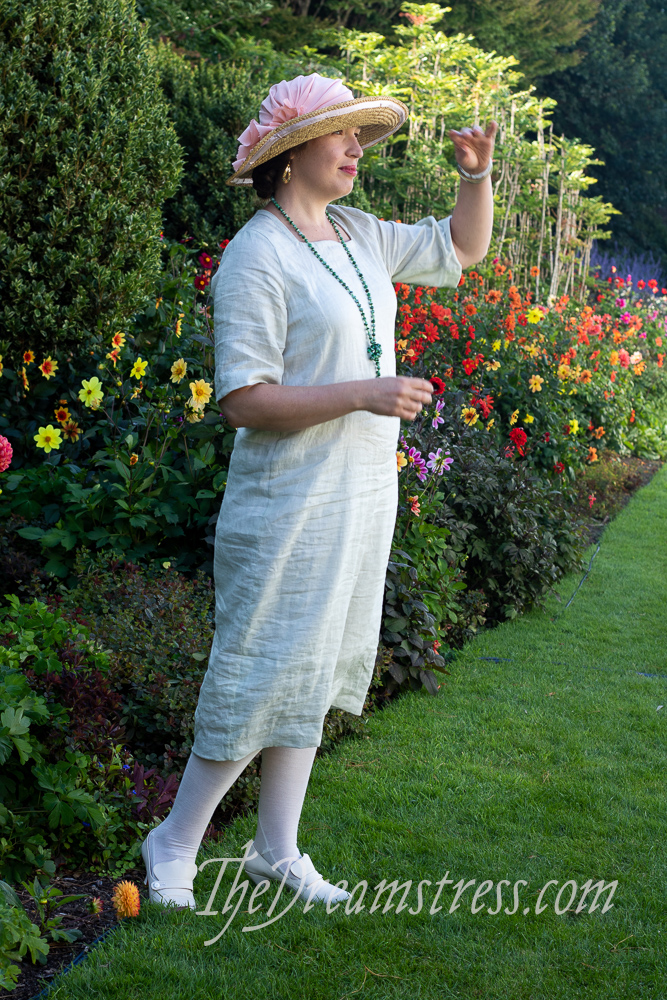
The trip to Fernside Gardens gave me another chance to wear the hat, and a chance to fix the brim ribbon – and re-trim the hat to be a bit more 1910s instead of 20s.

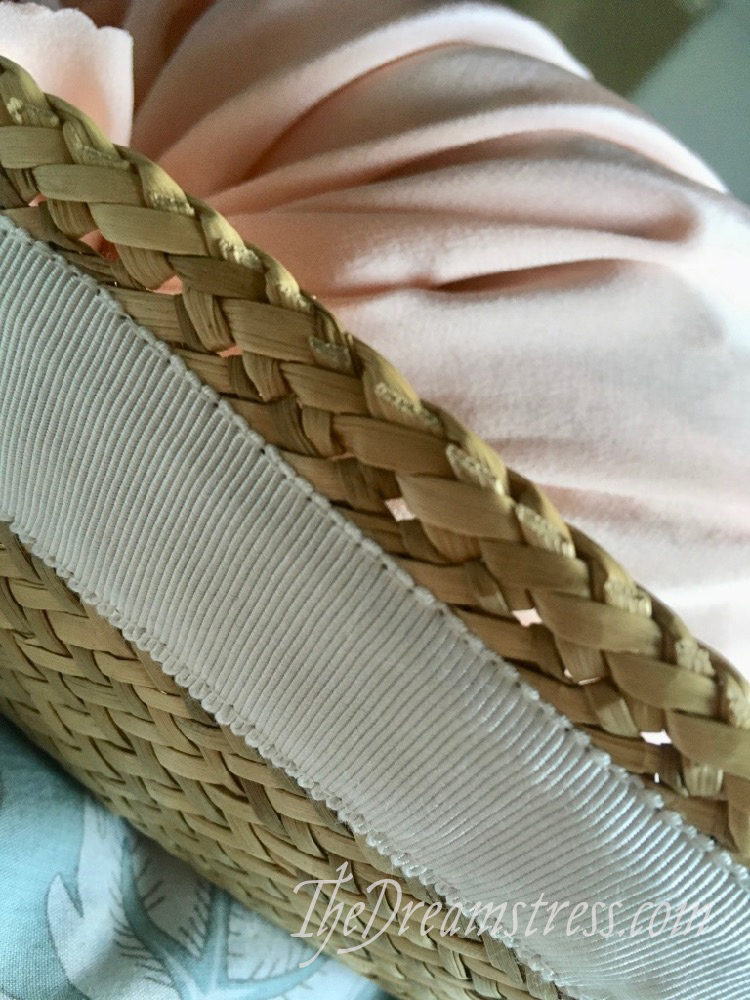
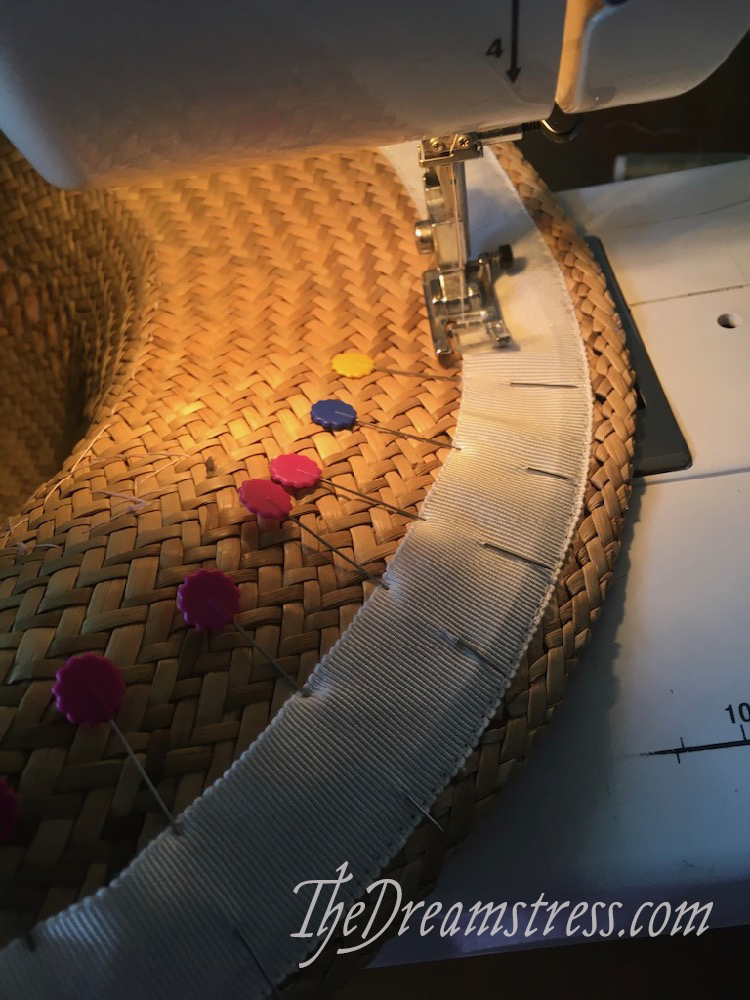
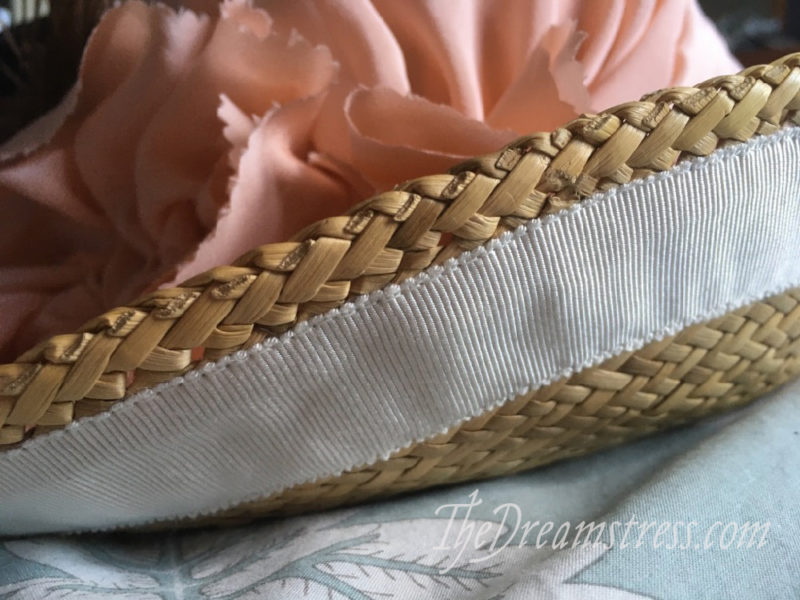
I searched every store in Wellington, and finally found a cream petersham ribbon for the poor much-unpicked and re-sewn brim.

A 1910s-20s hat re-fashion thedreamstress.com

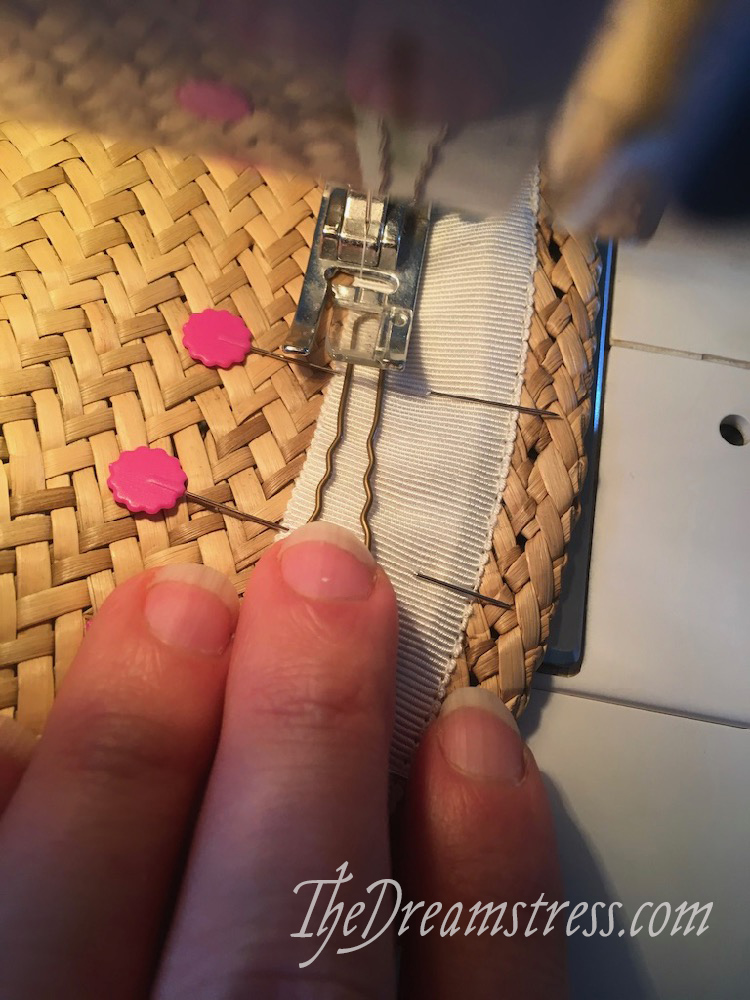
With the help of judicious amounts of steaming, pinning, and the assistance of a hairpin (my favourite finessing tool for really delicate sewing), I got the 3cm wide petersham tape to go on smoothly and perfectly:

A 1910s-20s hat re-fashion thedreamstress.com

It’s one of those things that you can only achieve through the wonderful shape-ability of natural fibre petersham.

A 1910s-20s hat re-fashion thedreamstress.com

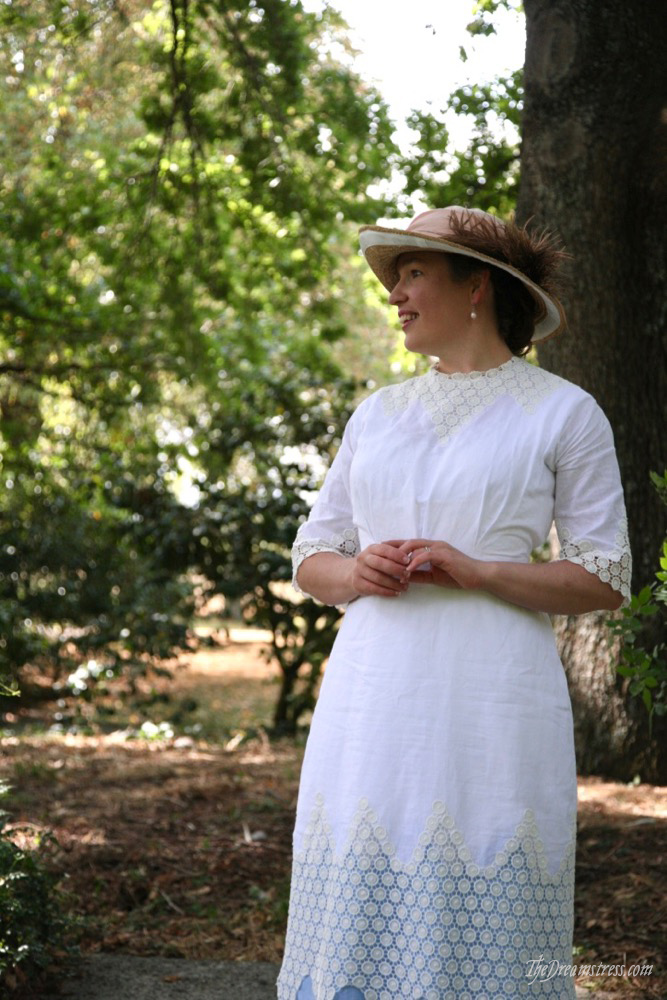
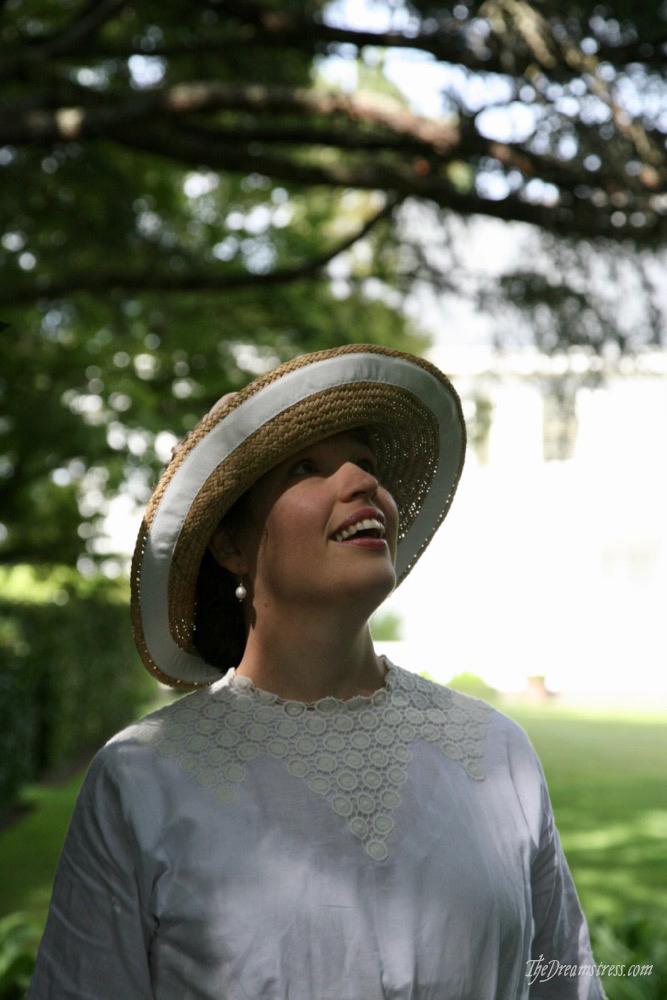
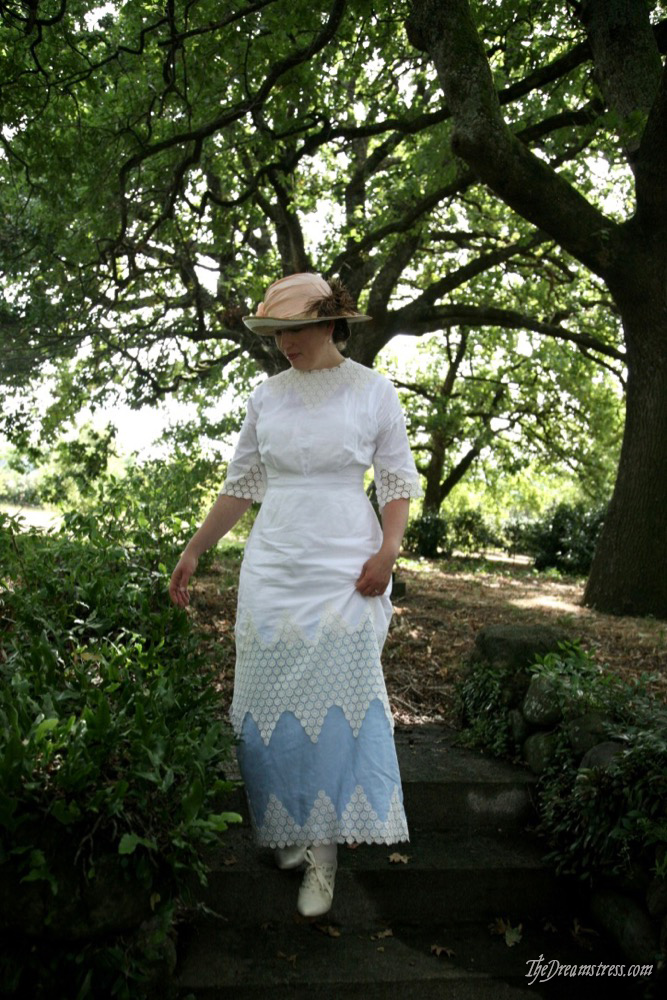
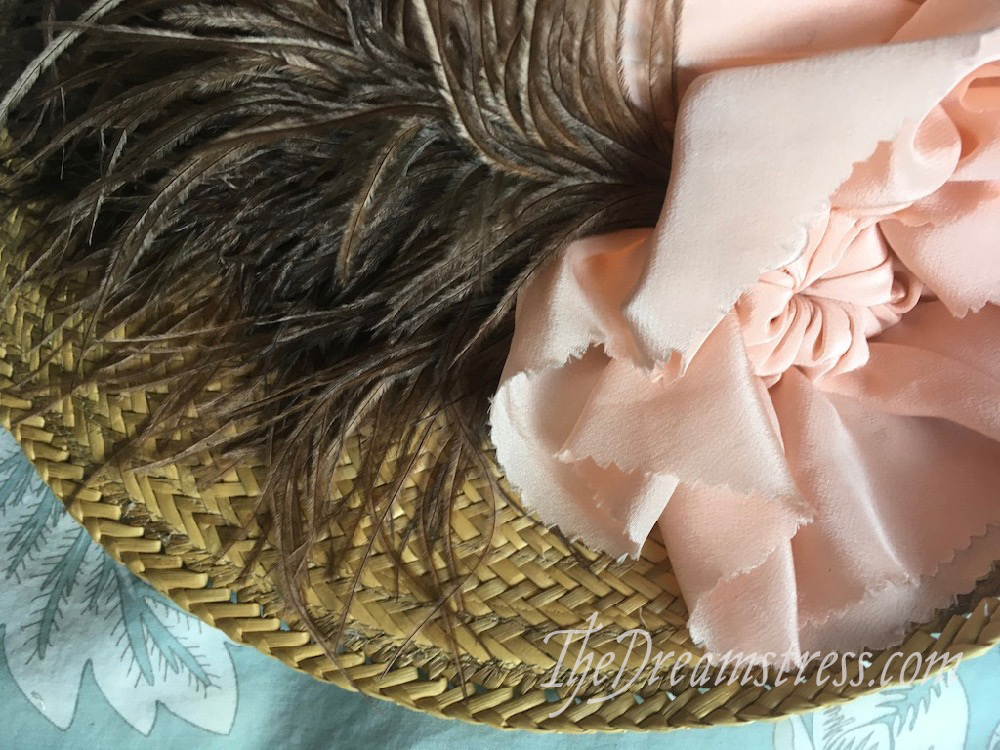
And how do you get a hat to look more Edwardian? Add feathers!

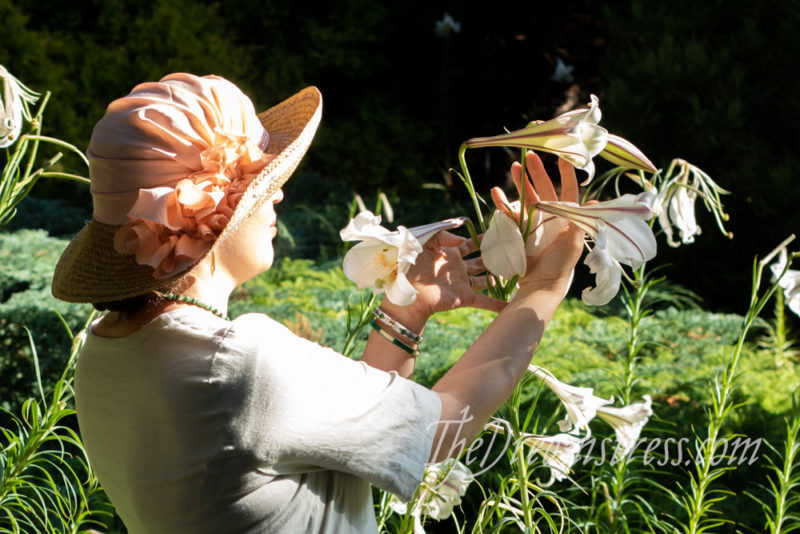
I had some vintage brown ostrich feathers in my stash, and the pinky brown hues worked perfectly with the peachy crepe-de-chine.

A 1910s-20s hat re-fashion thedreamstress.com

A swoosh of them across the back and up one side of the hat added just the right touch.

A 1910s-20s hat re-fashion thedreamstress.com

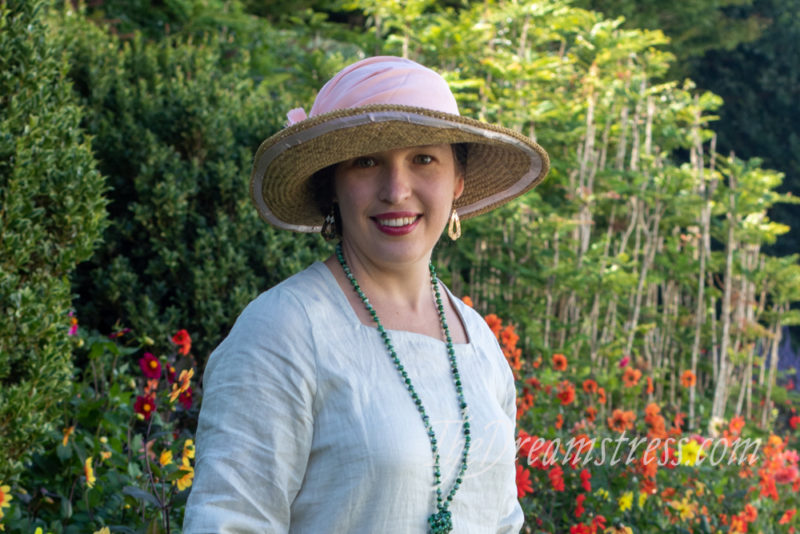
If needed, I can take them off again, and restore the hat to its more 20s look. I love it either way though!

A 1910s-20s hat re-fashion thedreamstress.com

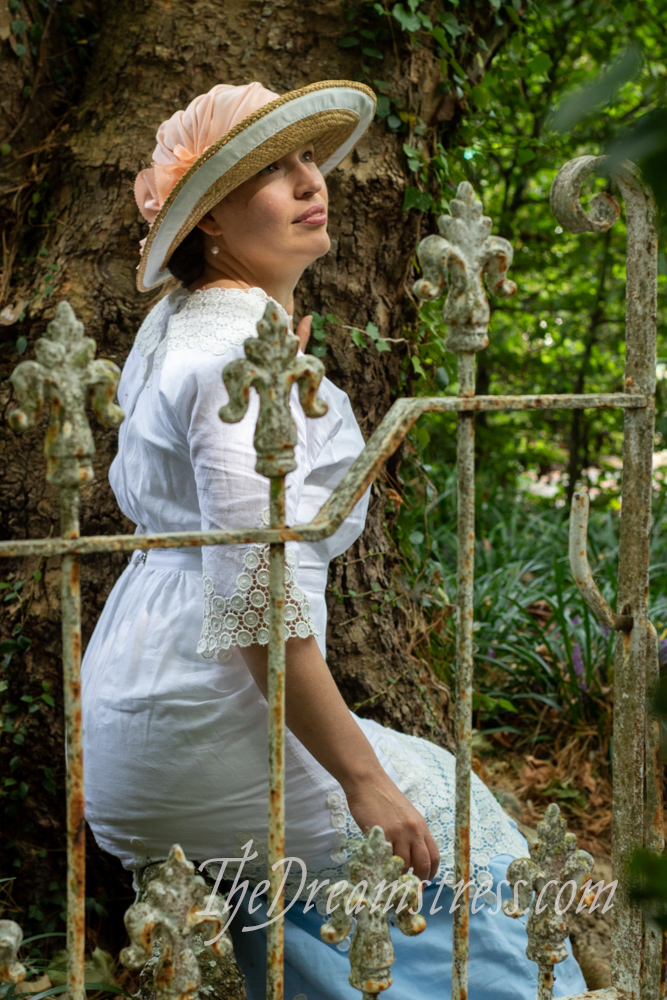
Many thanks to Miss A for additional pictures of me at Fernside Gardens (anything with a tiny logo is Miss A’s)

A 1910s-20s hat re-fashion thedreamstress.com

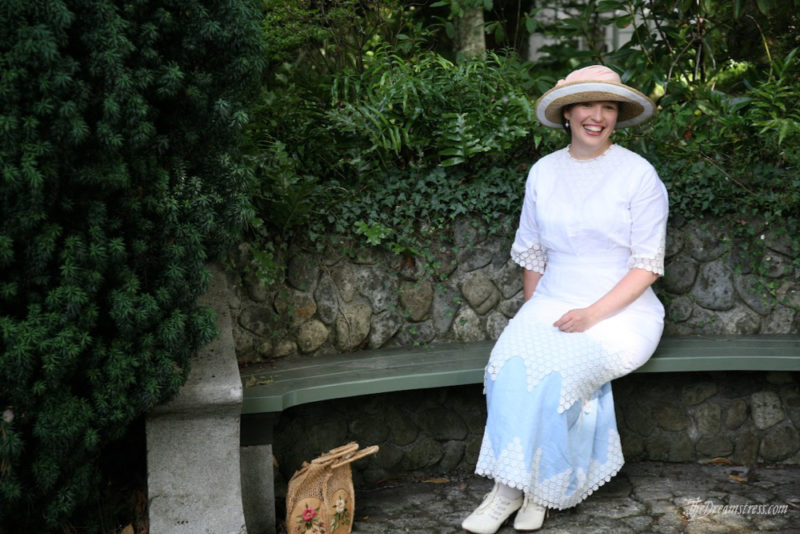
Best of all, the hat fits perfectly into the Historical Sew Monthly February Challenge theme of ‘Re-Use’

“Use thrifted materials or old garments or bedlinen to make a new garment. Mend, re-shape or re-trim an existing garment to prolong its life.”

A 1910s-20s hat re-fashion thedreamstress.com

What the item is: A teens-early 20s hat 

How it fits the challenge: The hat is re-shaped from standard sun-hat, bought at an op-shop. The millinery wire was repurposed from another old hat. It’s trimmed with an end-of-bolt silk remnant that had tape glue and pen marks on it, and vintage ostrich feathers. The only totally new thing on it is the petersham ribbon.

Material: a straw hat, silk crepe de chine

Pattern: None, inspired by a bunch of 1910s & 20s photographs and fashion plates

Year: 1913-23

Notions: millinery wire, grosgrain ribbon, thread, ostrich feathers

How historically accurate is it? It’s inspired by the general shape and trims of teens and 20s hats, but not based on a specific example. The construction is much more basic than most (although not all) hats of this era, and mostly I just kept tweaking and adding stuff till it looked good. A few elements are very accurate, but the overall look is plausible rather than totally accurate.

Hours to complete: 5-8, depending on whether you count all the re-shaping and trimmings before I got to a good result!

First worn: Feb 6, Waitangi Day, to a garden party at the Governor General’s residence

Total cost: $12-ish. All bits were from stash and purchased years ago from op-shops, but that’s my best guess.

A 1910s-20s hat re-fashion thedreamstress.com
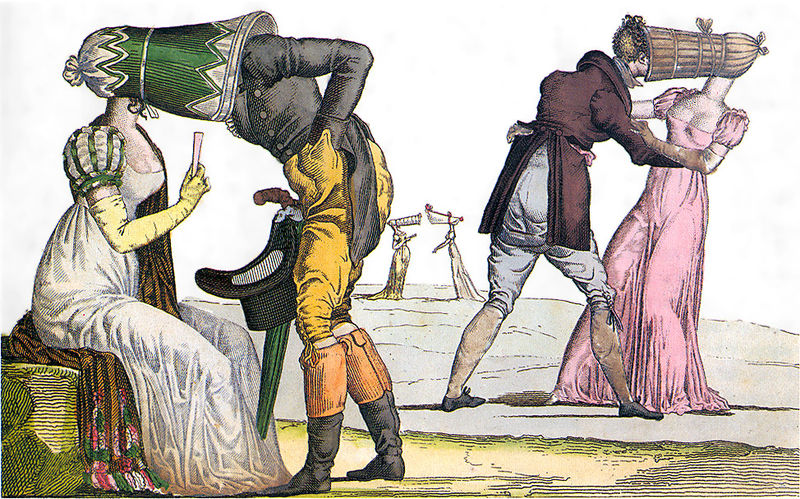
Aaron Martinet French, 1762 - 1841 Les Invisibles en tête-à-tête (Tête-à-Tête with Poke Bonnets) Le Supreme Bon Ton, pl. 16 (series) c. 1805

Emma echoes Regency Era prints

Have you seen the new Emma movie yet?

Some of the Wellington historical sewists and I went to see it earlier this week. We thoroughly enjoyed ourselves. If you haven’t seen it, you may wish to skip this post to avoid spoilers.

Mini review: The cinematography was lush and deliciously beautiful, the screenplay was brilliant and gave a new twist to a story that has been done many times before (well done Eleanor Catton), the costumes were exactly what you’d expect from Alexandra Byrne (costumes rather than clothes, but very pretty, with many gorgeous covetable pieces, quite a few where you could immediately point to the extant piece that inspired them, and the occasional weird misfit that yanks you right out of the world), and Anya Taylor-Joy was skilled enough of an actress to overcome my misgivings about her as Emma. The only drawbacks were a few small moments when the film got weird (*cough* *cough* first look at Mr Knightley and after the ball at the Crown), and Emma’s hairstyles, which were so awful that they distracted me for half the film.

But the best part was picking up all the references to late 18th c & Regency fashion plates and satirical prints. It was a delicious treat for the more serious Regency aficionados.

If you’ve seen the film, you may recognise Comfort:

Comfort, Lewis, M. G. (Matthew Gregory), 1775-1818, NYPL b18200023

And Emma’s ball dress from the ball at the Crown, both in style, trim, and pose in a few scenes:

And Harriet and Mr Martin’s kiss near the end of the film is a pretty obvious reference to this rather saucy satirical print:

Aaron Martinet French, 1762 - 1841 Les Invisibles en tête-à-tête (Tête-à-Tête with Poke Bonnets) Le Supreme Bon Ton, pl. 16 (series) c. 1805
Aaron Martinet French, 1762 – 1841 Les Invisibles en tête-à-tête (Tête-à-Tête with Poke Bonnets) Le Supreme Bon Ton, pl. 16 (series) c. 1805

(saucy because there is a clear subtext about men sticking things in holes…)

Did you notice any others?