Latest Posts

Rate the Dress: 1770s pretty in prints

Last week I showed you an 1880s gown in persimmon orange brocade with a slightly historical flavour.  While orange can be tricky, the fabric was generally popular.  The sleeves, however, were generally un-popular, and most opinions found it very nice, but not spectacular.  A few of you loved it, but a few of you hated it, balancing the rating at a 7.1 out of 10 – which seems a pretty fair assessment of the general feeling toward it.

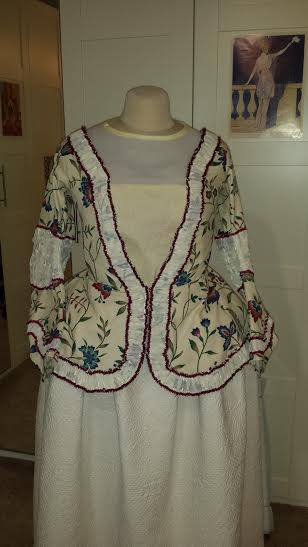
Since the warm persimmon orange of last week’s frock was so popular last week, I thought I’d stay in the warm, autumn-y colour range for this week’s Rate the Dress.  This ca. 1775 robe a la francaise  from the MFA Boston features a busy cotton print with a dark red ground.  The MFA have chosen to pair the dress with a cream border printed (or painted) cotton petticoat.

Cotton was still a luxury fabric in the last quarter of the 18th century, and  the heavy glazed cotton  of this dress was likely to have been a particularly expensive cotton: dark red grounds were generally more expensive than light coloured grounds.  The very desirable fabric may explain the unusual juxtaposition of the fabric and the more formal dress style: cotton robe a la francaise are quite rare compared to silk.  Cotton fabric was more likely to be used for slightly less formal dress styles, like robe a la anglaise.

While the petticoat that the MFA have paired the gown with was probably not worn with it originally, it’s in keeping with the luxurious gown: the border printed fabric of the petticoat would have been equally expensive, and equally exotic and novel.

The mannequin may be slightly distracting, but hopefully you can look past it to envision what the ensemble might have looked like in 1775.  With that in mind, what do you think of  it?  Beautiful use of a busy but very ‘of its time’ pattern, or cluttered and fussy?

Rate the Dress on a Scale of 1 to 10
The HSF/M: Favourites for Challenge #6: Out of Your Comfort Zone

We pick all of the challenges for the HSM in the hope that people will use them to push their boundaries: to sew better, to learn more, and to try new things, but the Out of Your Comfort Zone challenge was picked in the hope that everyone would take this to a whole new level, and for the most part, you really did.  There were so many amazing things: people trying new periods, people making things that challenged them from a personal aesthetic level, and people trying things that really challenged their skills and patience.  I was so proud and inspired!

My own entry for the OOYCZ challenge ended up being quite easy: I made cloth buttons for my medieval gown.  I’d been intimidated by the buttons for years, and  was afraid they would be really hard, but they turned out to be really fun, and really easy, which is a great lesson for out of your comfort zone: you don’t know if something will be hard until you try it.

For my favourites  I select items that really represent the spirit of the challenge: the more something pushed your comfort zone, the more it impressed me.  My favourites all demonstrate research, daring, and a willingness to really challenge yourself.  We’re all starting from different levels, so a challenge isn’t always something  that looks hard: it’s about something that pushed the maker personally.

There are always amazing things that I can’t show you (because almost all the submissions were AMAZING)  I do recommend you check out the comments under  the blog post  and  the photos in the FB  album  (yep, you do have to be a member to see it, yep, if you ask to be a member we’re going to ask you some questions, and yep, it might take us a few days to answer, but if you are really interested in the HSF, as a participant or  active  cheerleader, we’d LOVE to have you) to see the rest of the fabulous  things that were made.

Without further ado, my  favourites!    Entries with photos link to FB, entries without link to the blog post of the maker.

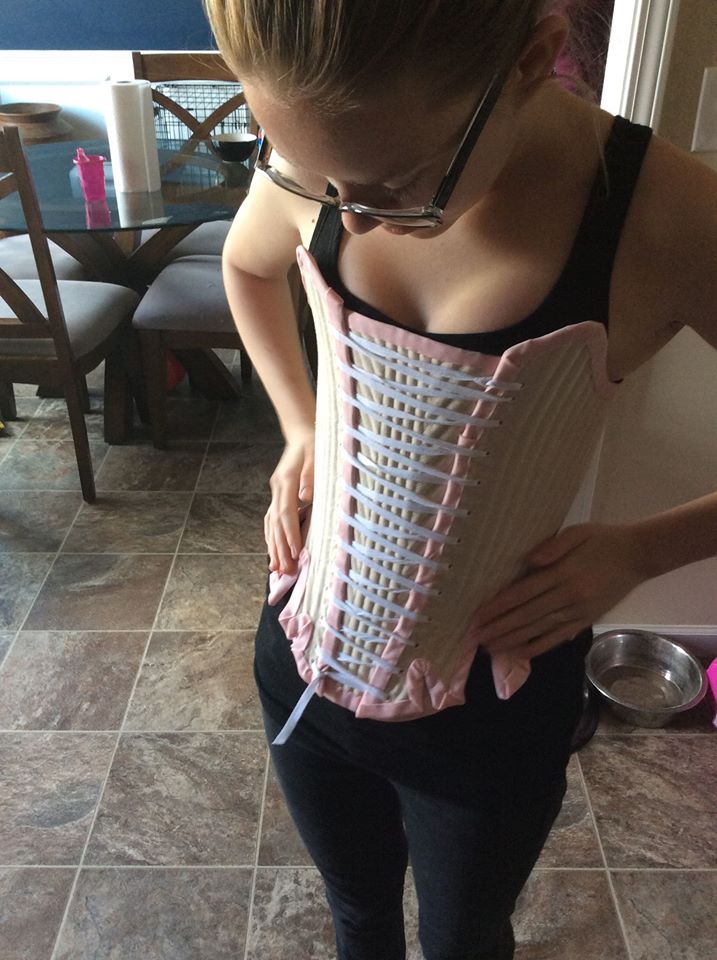
  1. Caitlin’s mid-18th c stays.  These is the first garment she has ever sewed.  Ever.  Need I say more!
    6 Catilin's mid 18th c stays for the Historical Sew Monthly
  2. Urban Simple Life’s embroidered 1920s dress:  She tackled a new period (and one that she wasn’t comfortable with as a look), adapted a pattern to do so, did a bunch of research on it, and the end result is gorgeous (plus, it’s one of three items she did for this challenge!)
  3. Trumpets & Trimmings 1740s waistcoat:    She tackled a new era, a bit of pattern alterations, total handsewing, and a few techniques that are totally new or terrify her, and the end result is great, so all in all, very impressive!
  4. Cate’s 1720s-40s jacket:    Janet Arnold is practically the patron saint of historical costuming post 1500, but her scaled patterns can be a bit daunting.  Cate tackled scaling up an Arnold pattern for the first time, and the end result is beautiful:
    6 Cate's 1720-40s jacket
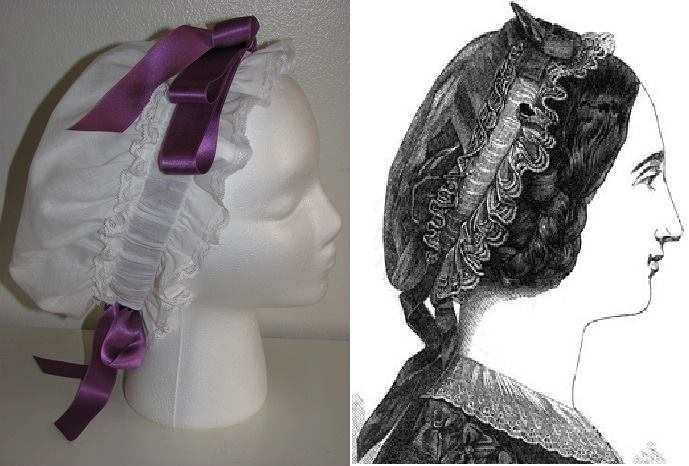
  5. Christina’s 1860s breakfast  cap.    Christina really challenged herself to thoroughly research this item, so that she understood both its construction, and implications as a garment, and to make it as close to period accurate as possible.  It’s a challenge we should all aspire to!  Just look how much it looks like the fashion plate:
    6 Christina's 1860s breakfast cap for the Historical Sew Monthly

For the rest of the favourites posts see:

Favourites for  Challenge #5:  Practicality

Favourites for  Challenge #4: War & Peace

Favourites for  Challenge #3: Stashbusting

Favourites for  Challenge #2: Blue

Favourites for  Challenge #1: Foundations

A medieval moment in my 1350s-80s gown

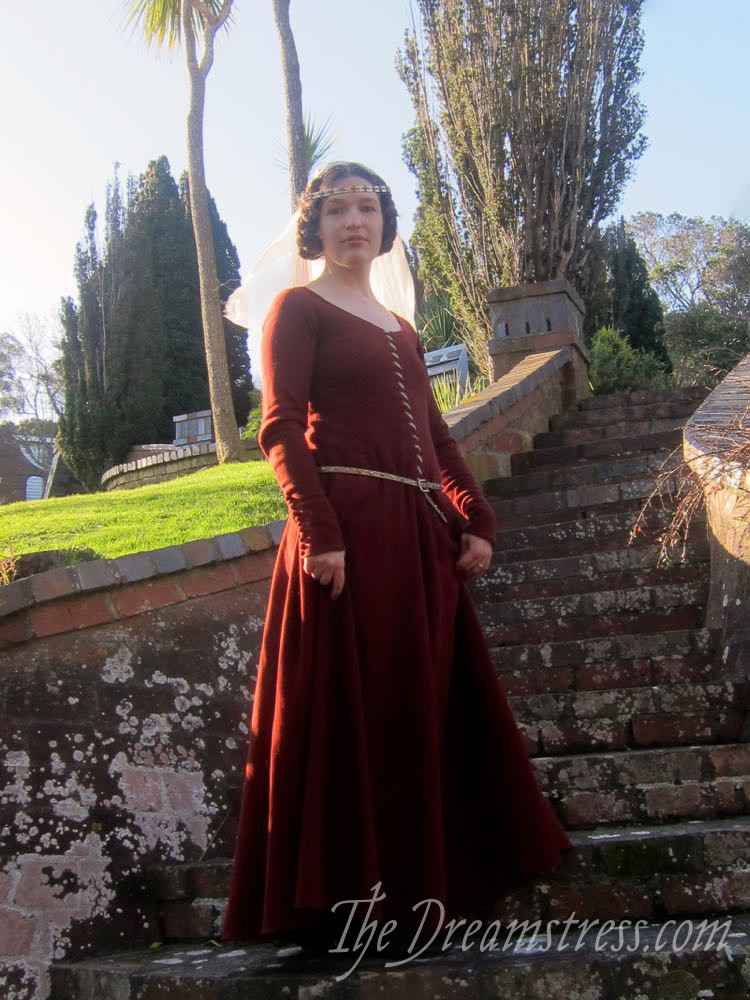
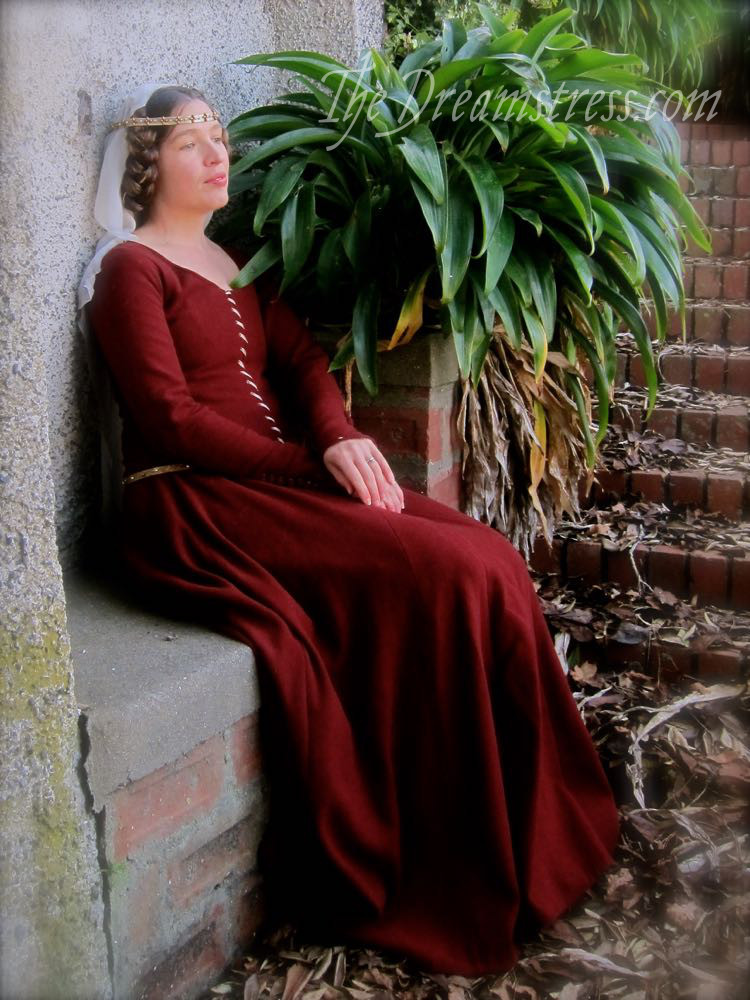
At long last, after lots of research, lots of work, some triumphs, and a few setbacks, I’ve finished my first proper medieval garment.

I got it completely ready to wear, except for sewing four buttons on the cuffs, for a historical dinner on Saturday.  I wore it for the dinner with cuffs unbuttoned,  and then I finished the buttons on Monday.

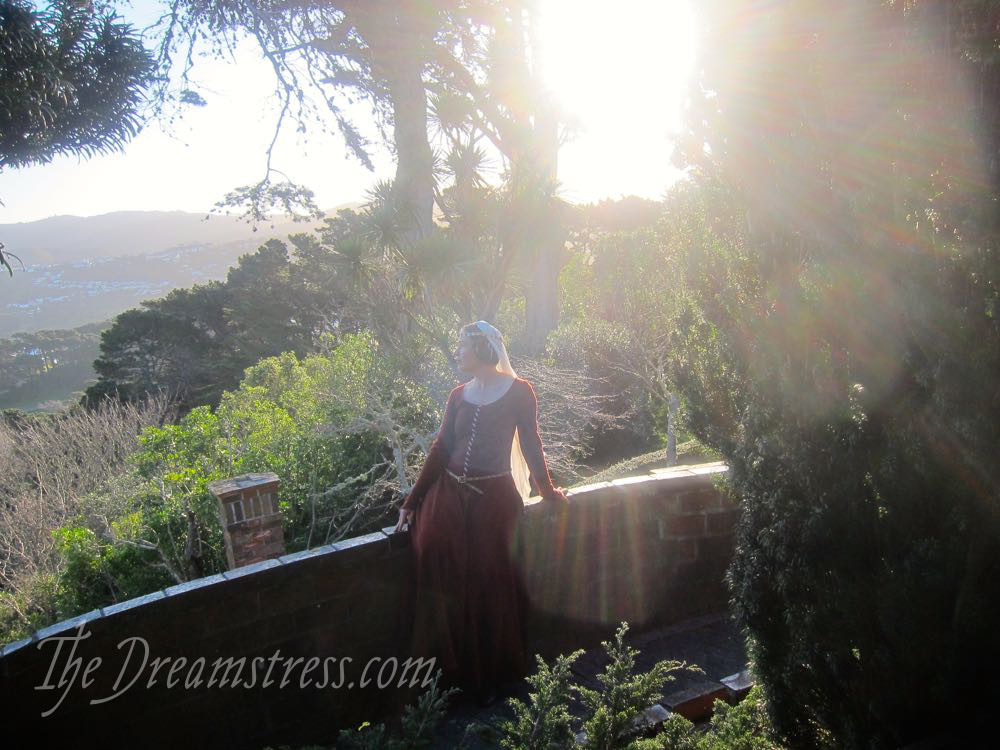
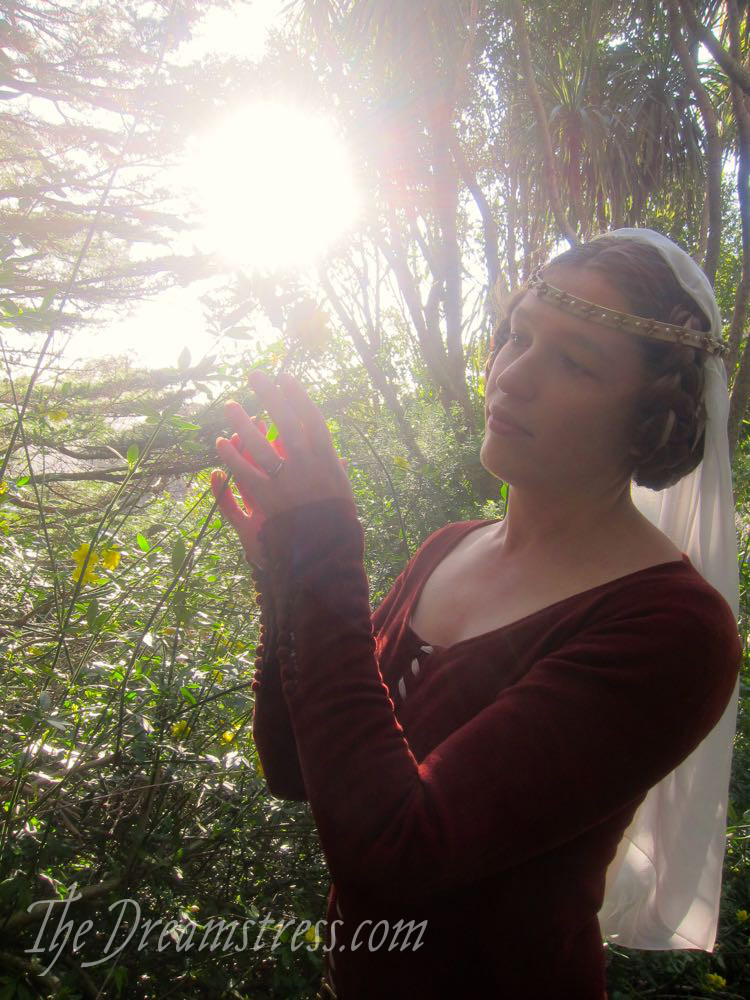
On  Thursday the weather was beautiful (if cold) and the gorgeous Elizabeth of Ills Winter  and I spent the late afternoon hanging out at the Sir Truby King gardens, taking pictures and generally having fun.

1350s-80s medieval gown thedreamstress.com01

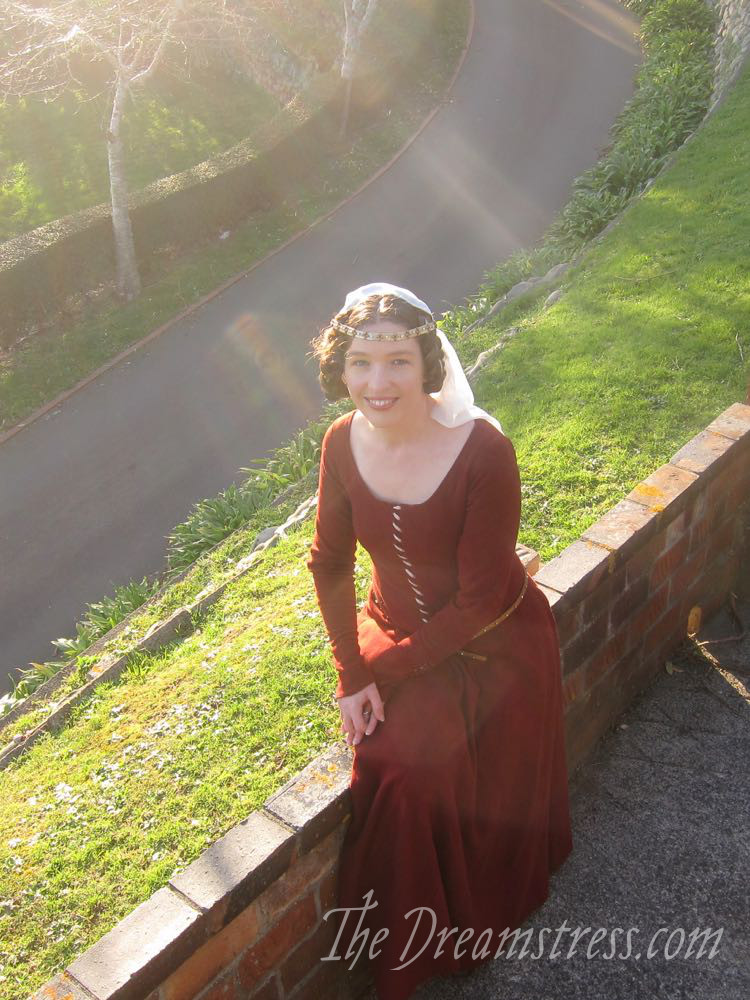
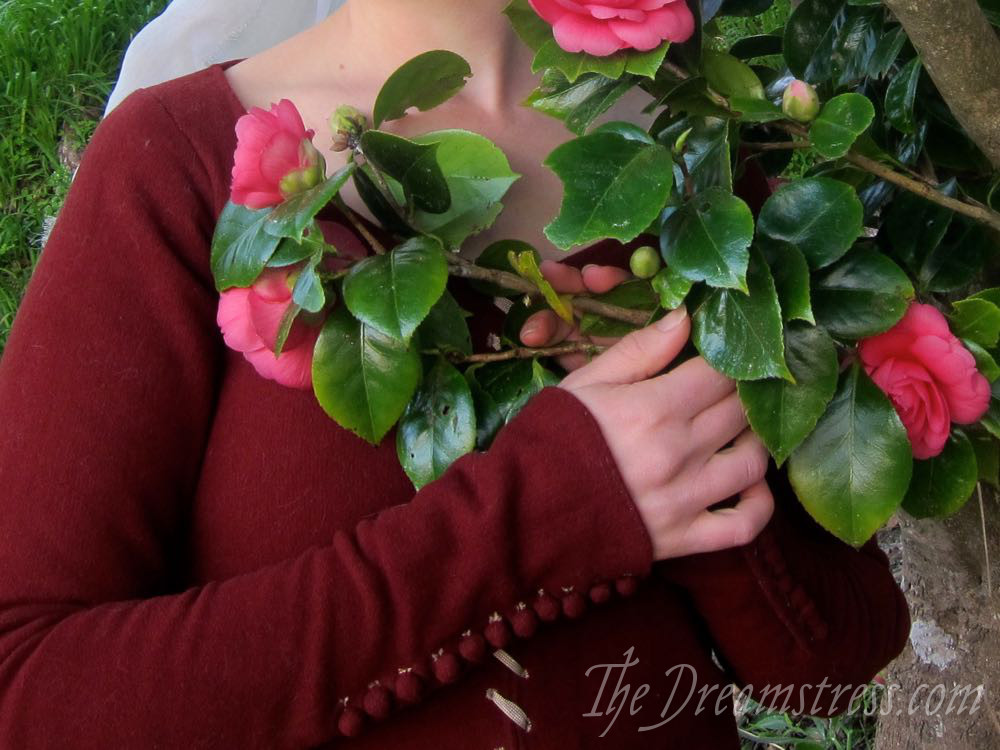
I only ended up putting 11 buttons on the sleeves, because of buttonhole issues (more about that in a later post), but I could add more later if I wished.

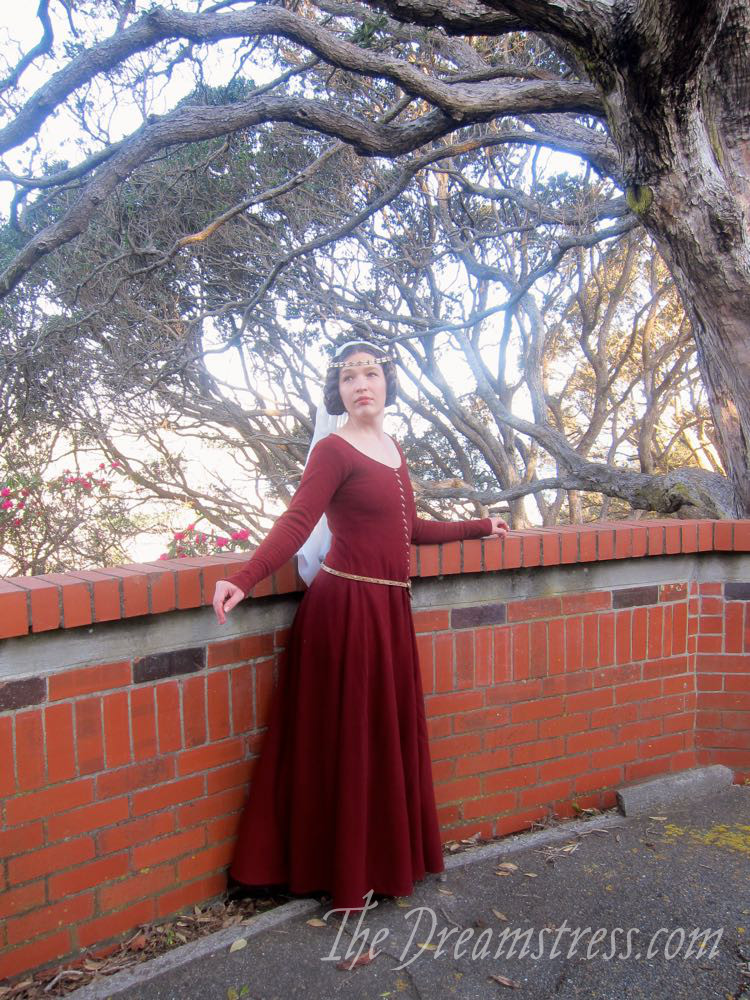
1350s-80s medieval gown thedreamstress.com02

I’m reasonably happy with the finished result.  The neckline is a little too scooped, the sleeves a little too long, my buttonholes more than a little rubbish, but as a learning piece, it’s not bad at all!  The next one will be much better!

1350s-80s medieval gown thedreamstress.com11

I definitely feel I’ve got the right silhouette for the 1360s-70s – the quite androgynous, flattened chest, the dress beginning to tighten at the waist, but without the real waist emphasis of later decades.  In a pinch it will do for anything from 1350s-90s.  Not that I have many  events  to go to where real date-specific period accuracy for this period is called for!  Still, I think looking at a very specific, narrow period, and trying to make it fit exactly that really helped me to think about period accuracy vs. modern interpretations of fit an attractiveness.

1350s-80s medieval gown thedreamstress.com06

Side note: can we talk about my seriously impressive hemming job?  I got a friend to pin the floor length at all the seam lines, but too many pins fell out before I was able to get to hemming it, so I ended up doing it almost entirely by myself, using a mirror propped on the floor, and carefully cutting away tiny bits where the fabric brushed the ground, until it was even all around.  It almost makes up for the buttonholes!

1350s-80s medieval gown thedreamstress.com08

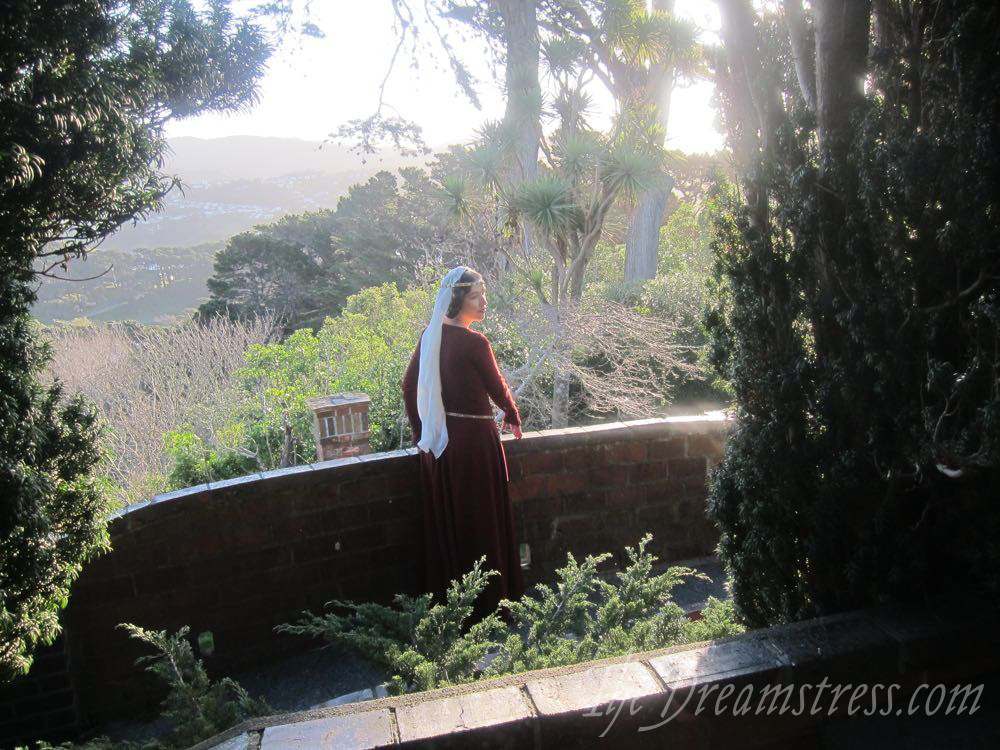
The circlet, belt and veil are just quick costume jobs, but they were quite fun to do and are very effective.  I’m almost done with a proper veil in very fine linen, but didn’t quite get the rolled hems done in  time for the photoshoot.

1350s-80s medieval gown thedreamstress.com09

Taking photos at the Sir Truby King gardens, or anywhere in NZ for that matter, pushed the medieval boundaries a bit.  Everywhere I look there were trees that did not exist in Medieval Europe!  Like that cabbage tree in the photo above.

Or this ringa ringa lily:

1350s-80s medieval gown thedreamstress.com04

Or this camellia:

1350s-80s medieval gown thedreamstress.com03

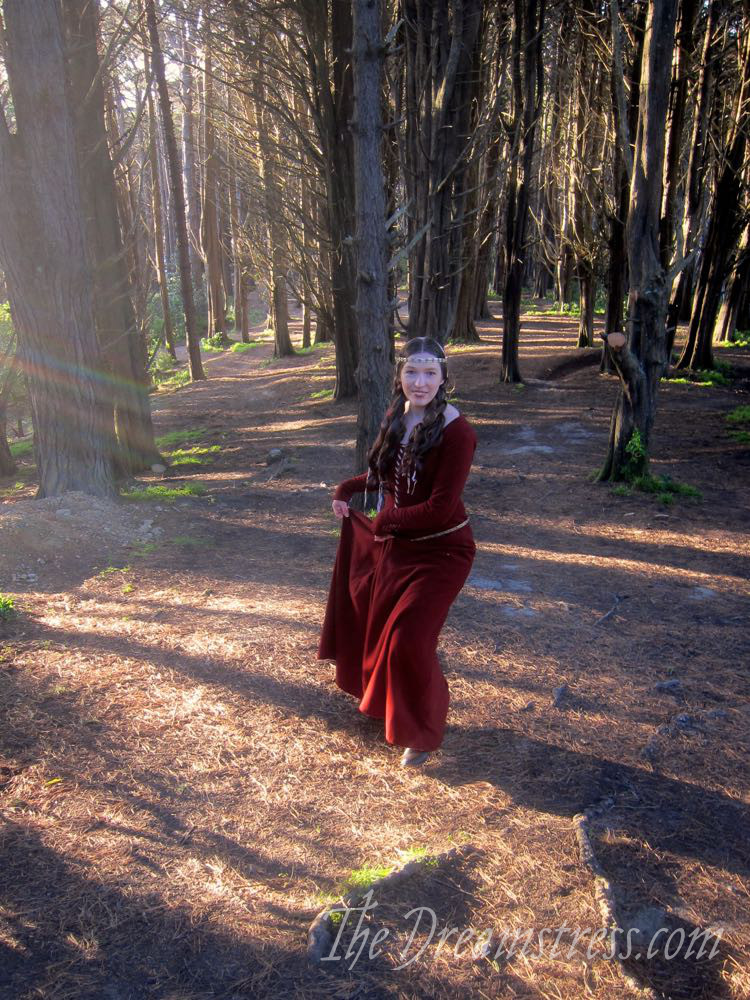
We finally settled on a pine wood as reasonably plausible.  For those ones I unpinned my braids and took off the veil, for a more romantic Pre-Raphealite take on the Middle Ages.

1350s-80s medieval gown thedreamstress.com13

And just to be totally a-historical, the final  photo works best if you either make Jaws noises or sing ‘Little Bunny Frou Frou, creeping through the forest…’  in your spookiest voice to it.

1350s-80s medieval gown thedreamstress.com12