Latest Posts

Otari Hoodie Sew Along thedreamstress.com

The Otari Hoodie Sew Along #9: The Zip tape

It’s time for the the final bits of the Otari Hoodie zipper: covering the zip tape with a finishing ribbon or tape, and doing topstitching.
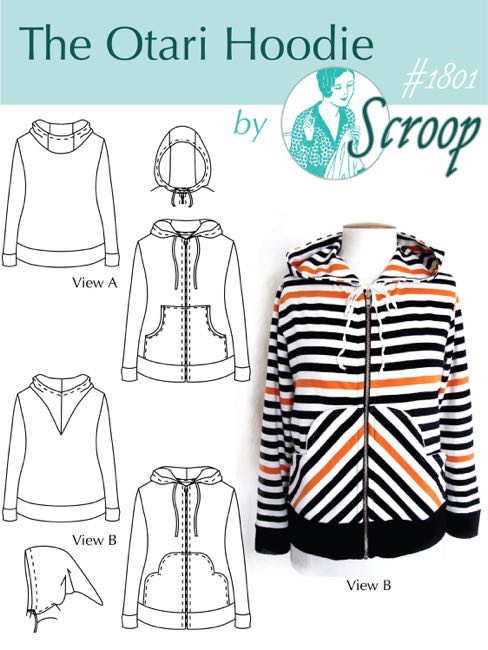
The Otari Hoodie by Scroop Patterns scrooppatterns.com

Buy the Otari Hoodie Pattern Here

In the previous Otari Hoodie Sew Along posts I covered:

The numbering of the instructions in this post corresponds to the numbering of the pattern’s  instructions.

The Zip Tape

Tip>>>

Covering the zip tape where it sits on the inside of the hoodie results in a smoother finish, that feels nice against the skin, and looks nicer when your zip is open.

I usually use twill tape to cover my zip backs, but you can also use bias tape, and more robust types of ribbon, like rayon (viscose) grosgrain.  I wouldn’t recommend polyester tapes, as they tend to be scratchy, and polyester satin ribbon isn’t strong enough to last well over time.  

I’ll refer to covering tape as twill tape in the instructions, just to clearly differentiate it from the zip tape.  

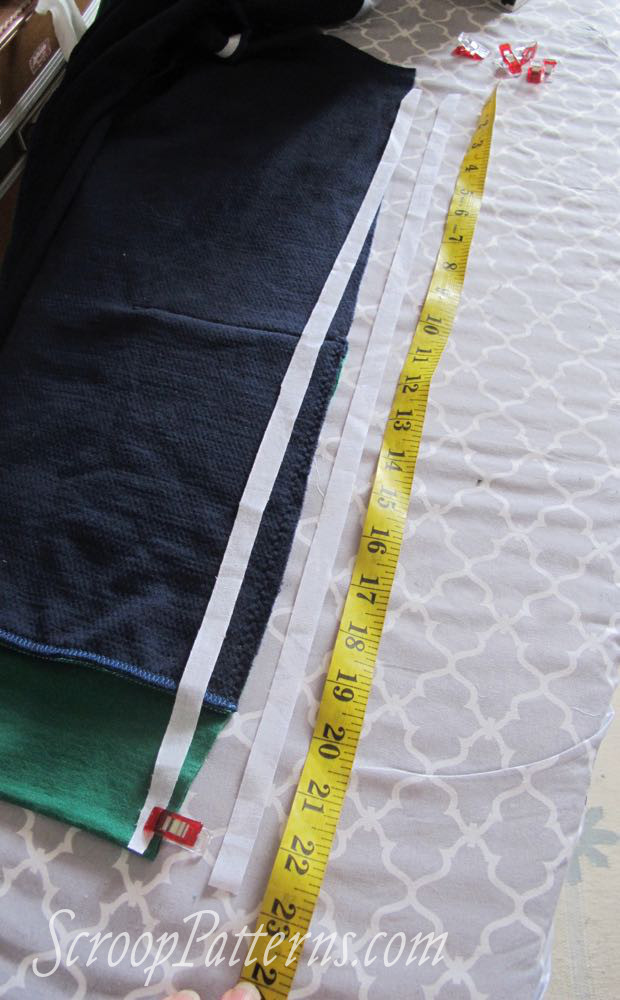
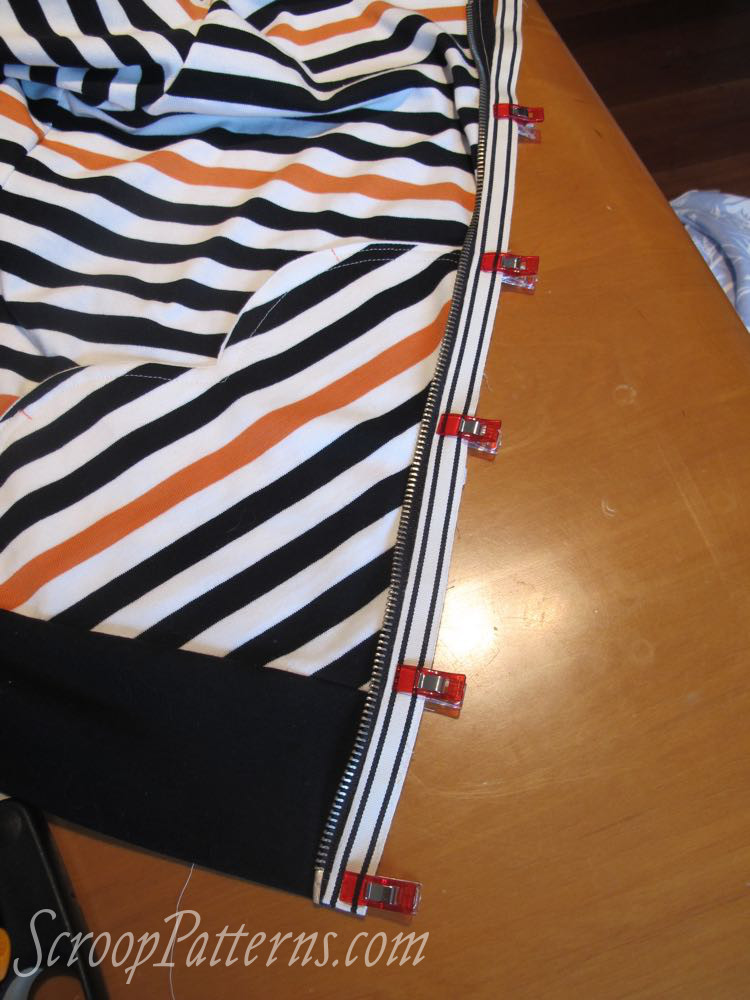
27.  Cut two lengths of twill tape the length of the centre front of your hoodie, plus 3/4″/2cm.
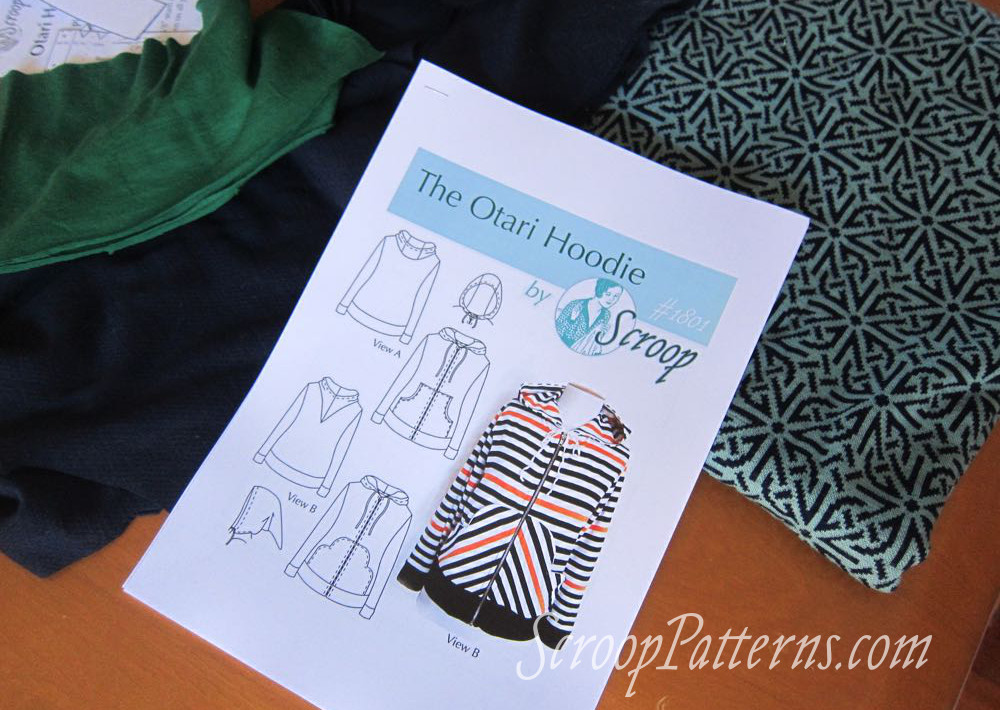
Otari Hoodie Sew Along Part 9 Zip Tape scrooppatterns.com

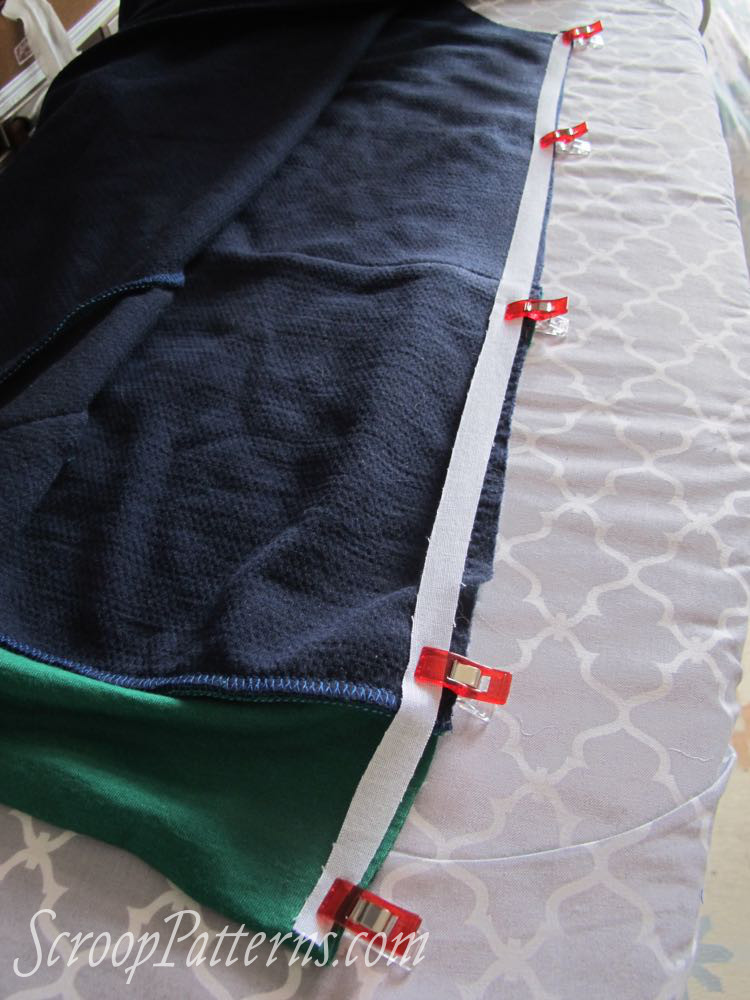
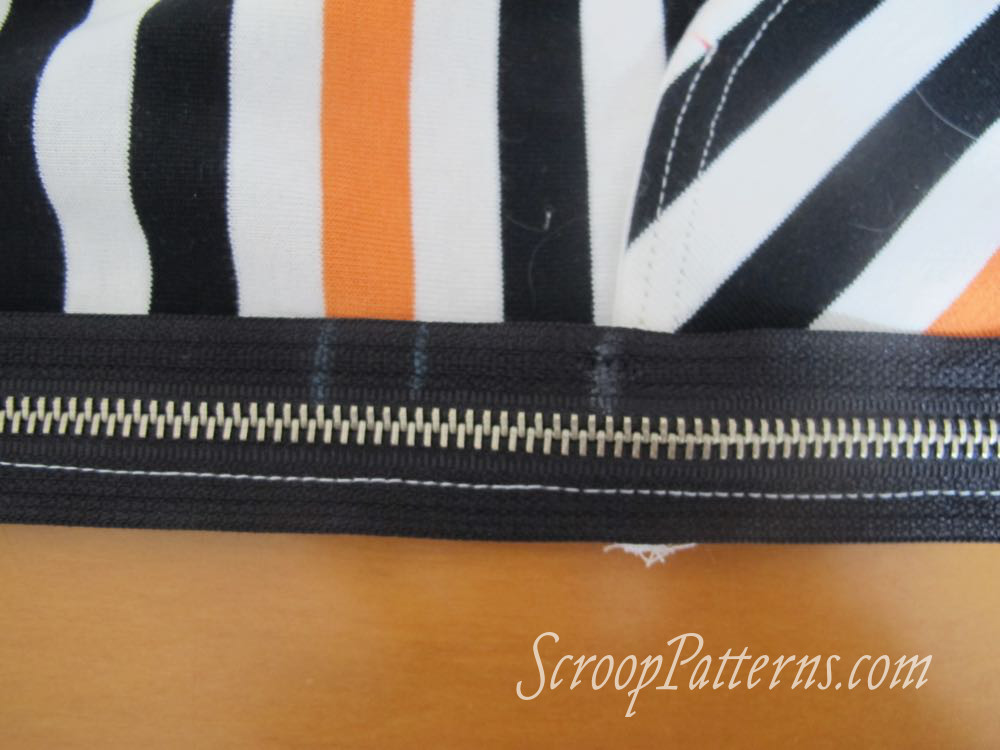
28. Place your twill tape along the zip tape, just covering the stitching attaching the zip to the hoodie, with the bottom edges of the twill tape folded under.  The folded bottom edge should be aligned with the bottom of the zip.  The top edge can extend past the top of the neck: it will be covered up once the hood is attached.

Otari Hoodie Sew Along Part 9 Zip Tape scrooppatterns.com

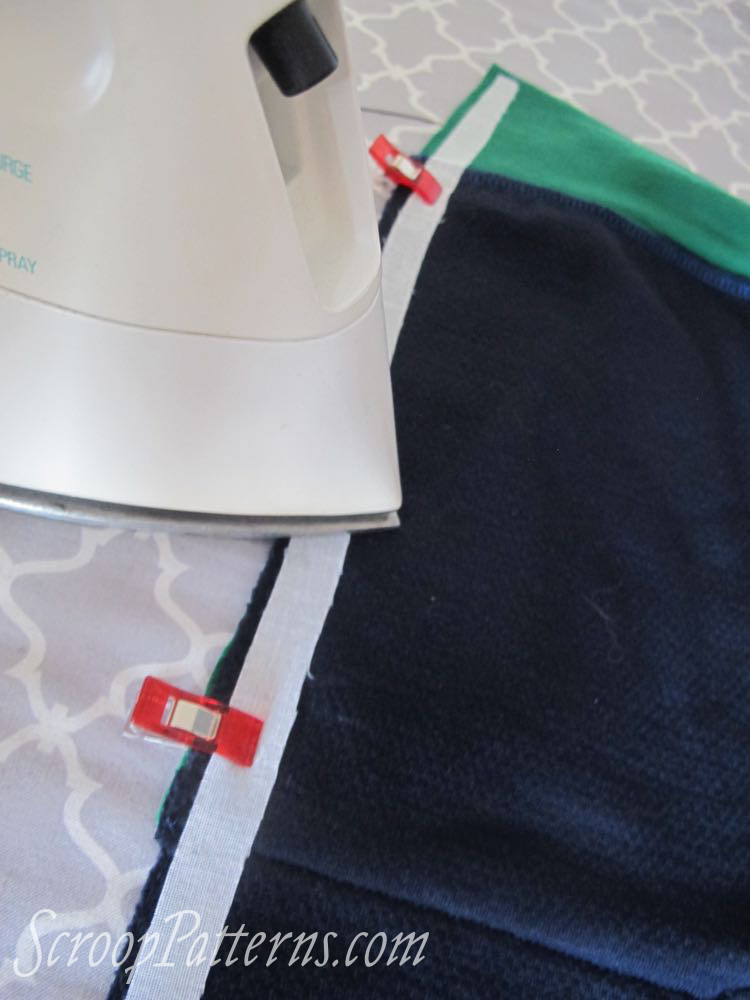
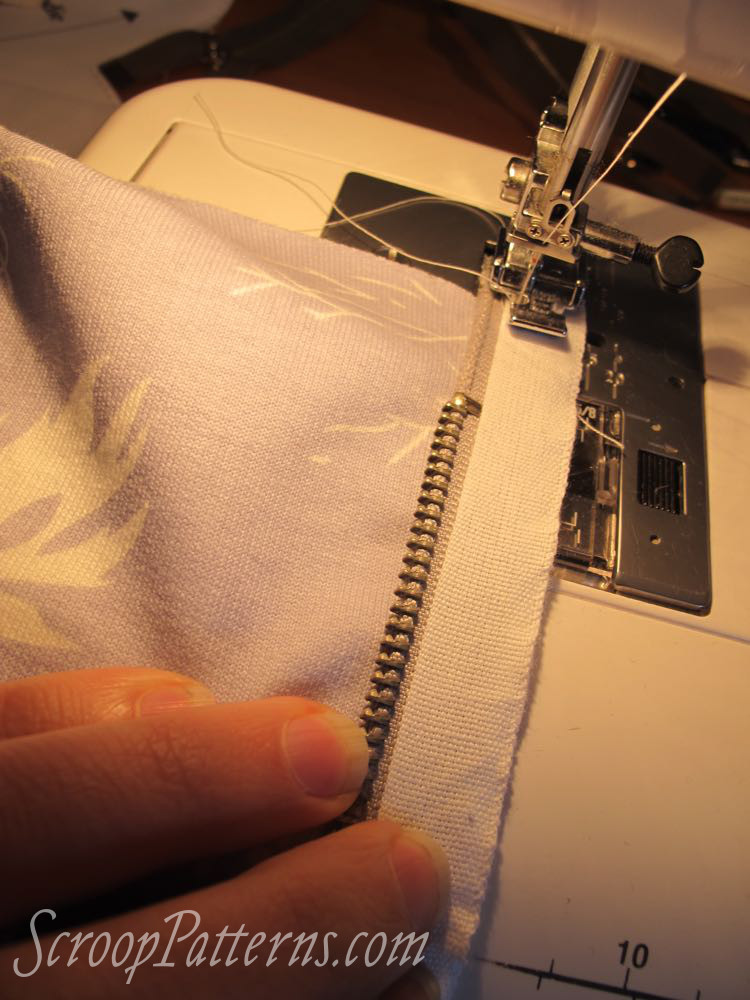
29. Stitch down the twill tape, sewing 1mm from the edge of the twill tapes.  Turn your needle at the bottom, and sew across the bottom fold of the twill tape, securing it to the bottom of the zip tape.
Otari Hoodie Sew Along Part 9 Zip Tape scrooppatterns.com

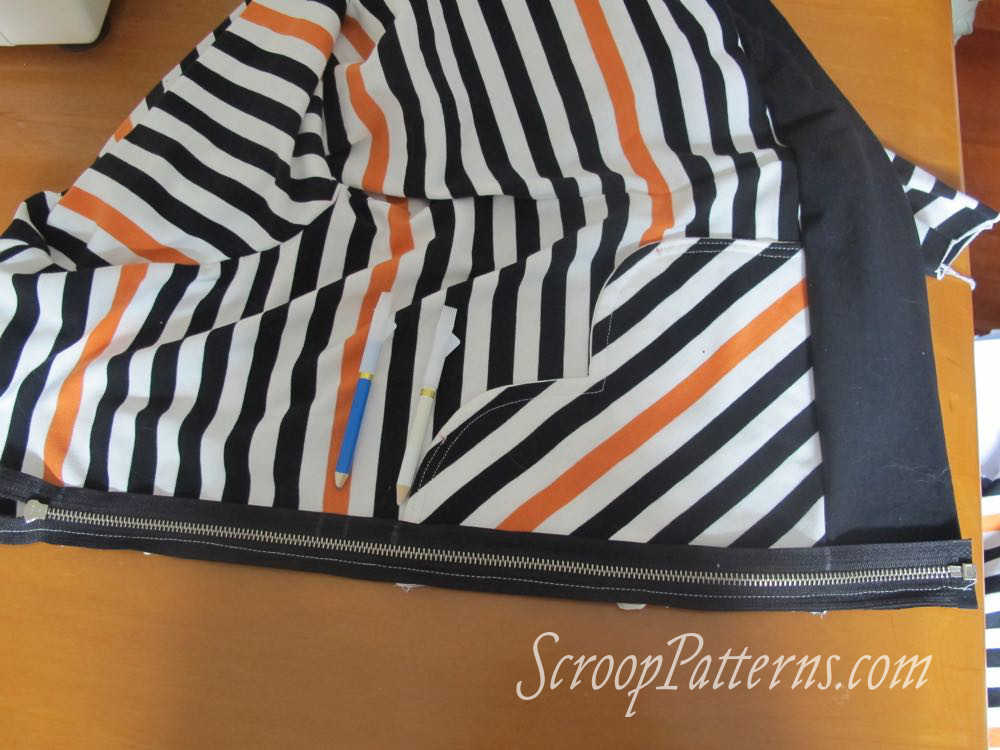
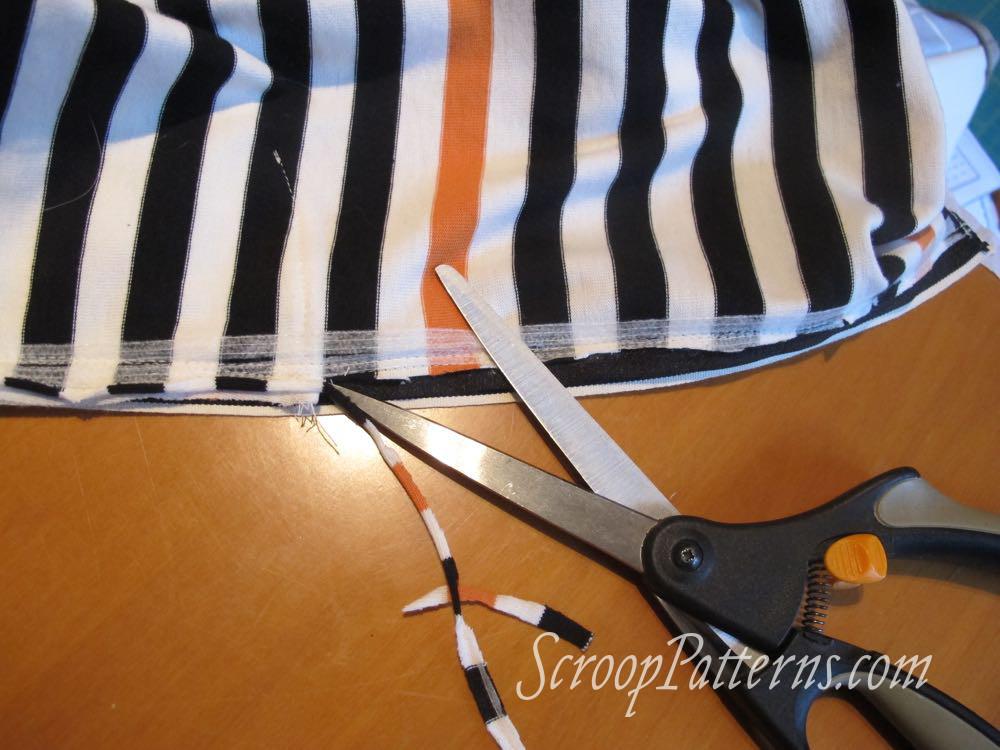
30.  Press the zip and zip tape with sewn down twill tape back to the inside of the hoodie.  Grade the seam attaching the hoodie to the zip.
Otari Hoodie Sew Along Part 9 Zip Tape scrooppatterns.com

31. Carefully pin or clip the twill tape/zip tape in place on the wrong side of the hoodie, and then topstitch from the right side of the hoodie, securing the outer edge of the twill tape.

Tip > > > Make sure to leave the pin heads or clips accessible from the right side of the hoodie, so you can remove them as you sew.
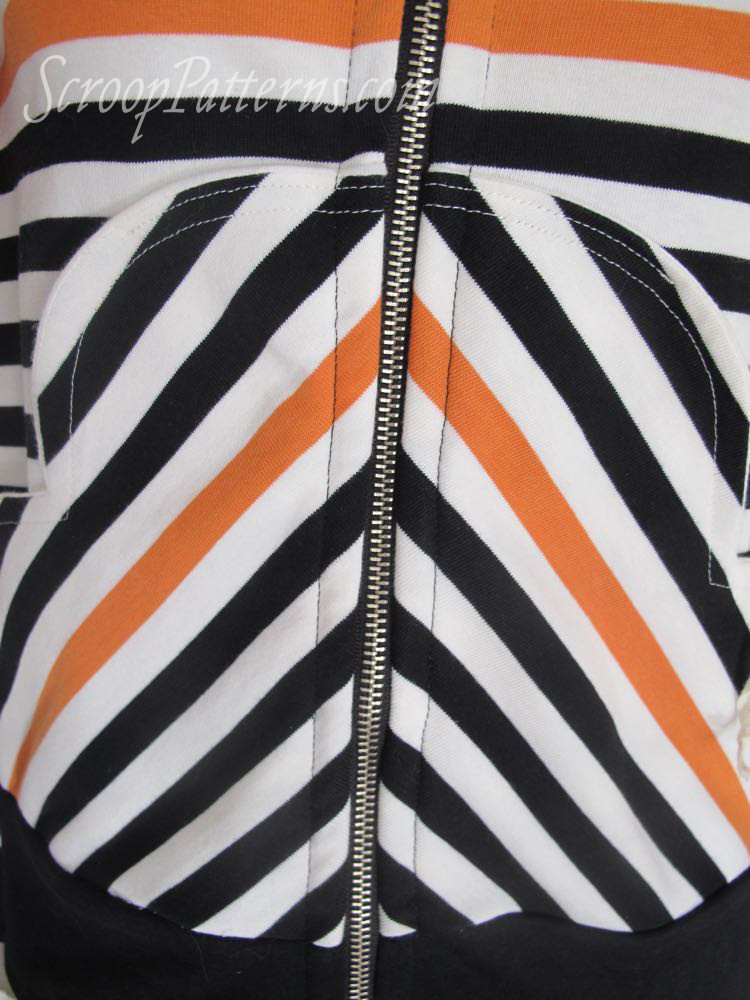
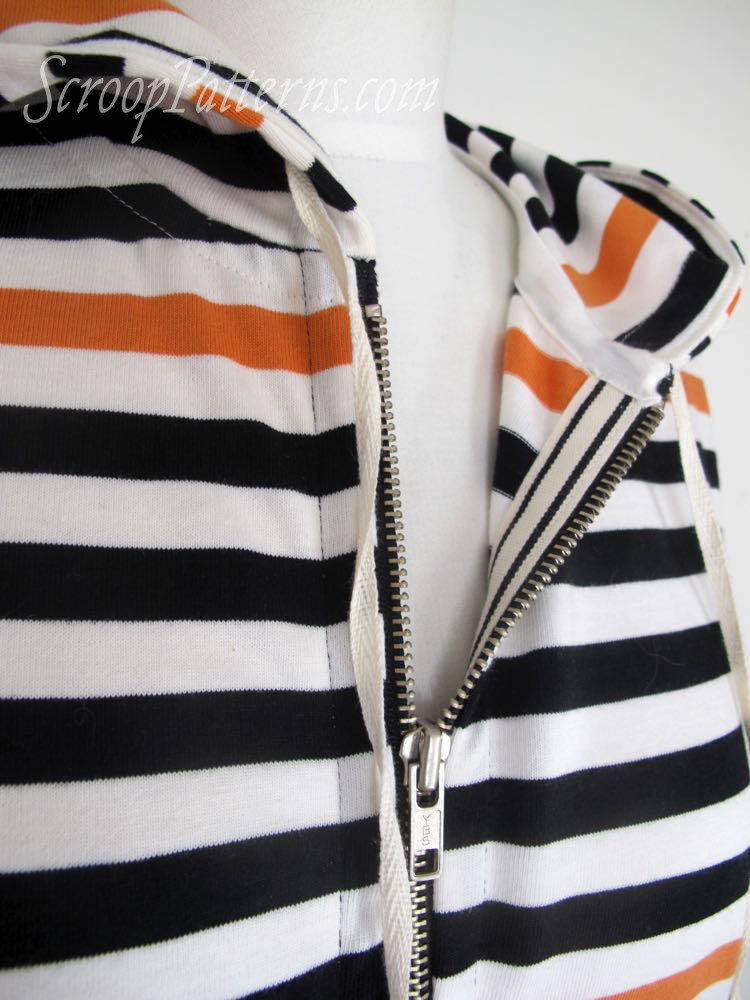
Otari Hoodie Sew Along Part 9 Zip Tape scrooppatterns.com

Otari Hoodie Sew Along Part 9 Zip Tape scrooppatterns.com

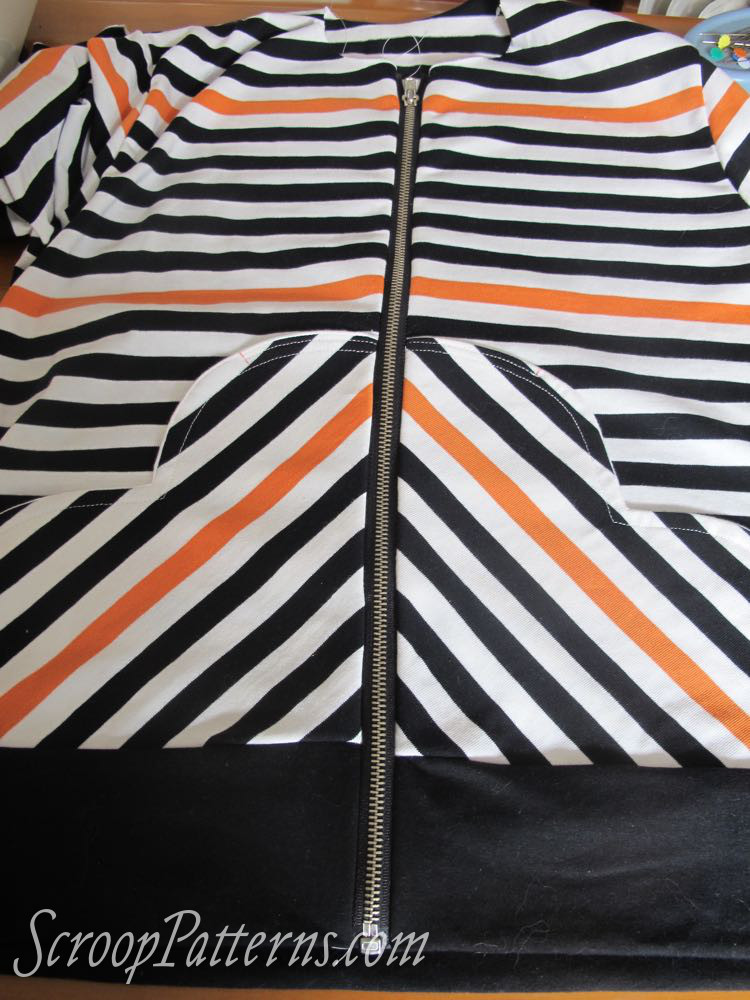
And there is your finished zip!

In the next Sew Along post:

Assembling the hoods!

Want to join in?  Buy your Otari Hoodie Pattern Here  

Rate the Dress: Puffed sleeves & polka dots

Last week’s Rate the Dress was very spring-y, and extremely popular.  This week’s puffs and polka dots Rate the Dress looks towards winter, and the coming holidays (because November 20 is my arbitrary date for Christmas-y stuff not being disgustingly early).  Will it be equally popular?

Last week:  an 1770s-80s pink gown

Well, strawberry ice cream is everyones favourite flavour of dress, because no one disliked last week’s dress.  In fact, every score but one was a 9 or above.  And most were 10s.

The Total: 9.9 out of 10

In Rate the Dress terms, that is a PERFECT score!

This week: an 1890s dress in dark green ribbed velvet and chiffon, with appliqued polka dots, puffed sleeves and more

Jeanne Hallee isn’t the most famous of late 19th century label, and unlike her better known contemporaries (Worth, Pingat et al), she is considered a dressmaker, rather than a couturier.  Nonetheless her creations were very high end in their own time, and certainly came with a fair bit of cachet.

Her extent garments all show the unmistakable signs of being extremely well made, and generally have a very distinct character, almost a quirkyness.

This week’s dress is no exception.  The soft, draping ribbed velvet (almost a silk corduroy), blouson bodice, and full, sloping sleeves lean towards the aesthetic movement.  Their swish and slight droop setting them apart in an era of stiff fabrics and aggressively padded sleeves.

Dinner dress, Jeanne Hallee (French, 1880—1914), 1894—96, French, cotton, silk, metal, Metropolitan Museum of Art, 2009.300.374a, b

Dinner dress, Jeanne Hallee (French, 1880—1914), 1894—96, French, cotton, silk, metal, Metropolitan Museum of Art, 2009.300.374a, b

The dress is made more unusual, even amongst its aesthetic counterparts, by the touch of vivid crimson at the neck, boldly contrasting with the moss green velvet and chiffon, and by the playful polka-dotted appliques which adorn the chiffon of the upper bodice and skirt stripes.

Dinner dress, Jeanne Hallee (French, 1880—1914), 1894—96, French, cotton, silk, metal, Metropolitan Museum of Art, 2009.300.374a, b

The dots are so similar in hue to the chiffon that from a distance they would be very subtle: visible only by the way the light caught the ridges of the velvet.

Dinner dress, Jeanne Hallee (French, 1880—1914), 1894—96, French, cotton, silk, metal, Metropolitan Museum of Art, 2009.300.374a, b

Up close they are a bold, distinct, and integral part of the dress design.

Dinner dress, Jeanne Hallee (French, 1880—1914), 1894—96, French, cotton, silk, metal, Metropolitan Museum of Art, 2009.300.374a, b

In contrast to the almost graphic simplicity of the skirt, the bodice yoke and sleeves are elaborately detailed and ruffled.

The fine pleating of the chiffon echoes the ridges of the corduroy, and the metallic banding, now sadly tarnished, is used to form trompe l’oeil bracelets and necklaces at wrist and yoke.

This is definitely a very distinctive garment – one for someone with a strong personal sense of style.

What do you think of it?

Rate the Dress on a Scale of 1 to 10

A reminder about rating — feel free to be critical if you don’t like a thing, but make sure that your comments aren’t actually insulting to those who do like a garment.  Our different tastes are what make Rate the Dress so interesting.  It’s no fun when a comment implies that anyone who doesn’t agree with it, or who would wear a garment, is totally lacking in taste.

(as usual, nothing more complicated than a .5.  I also hugely appreciate it if you only do one rating, and set it on a line at the very end of your comment, so I can find it!  And 0 is not on a scale of 1 to 10.  Thanks in advance!)

The Otari Hoodie Sew-Along #8: The Zip

We’ve come to the tricky bit in the Otari Hoodie Sew-Along: zips.  (oooh!)  I’ll be showing you the zip interfacing step (and explaining why it’s so important), and how to install your zip.

To keep the post from getting too long, I’ll do the finishing bits, with ribbons/tape and topstitching in tomorrow’s post.

Buy the Otari Hoodie Pattern Here
In the previous Otari Hoodie Sew Along posts I covered:

For this part of the Sew Along I’m going to be using images taken when making the original sample Otari Hoodies for the pattern launch, AND images from the hoodies I’m sewing along, because there are different ways to do some steps, and I want to show you the options!

The numbering of the instructions in this post corresponds to the numbering of the pattern’s  instructions.

Interfacing

Tip>>>

Interfacing the front edge of the hoodie with a strip of interfacing that is slightly shorter than the front measure is VERY important.  If you don’t ease the front edge in to your interfacing (and thus your zip), your zip will ripple and bulge up your front, rather than sitting smoothly.  It’s a small change that makes a huge difference in the finished hoodie.  

You should be aiming to ease the front edge in at least 1″/2.5cm – more can be better, depending on how stretchy your hoodie fabric is, and how willing it is to ease in.  

22. Cut two lengths of 5/8″/1.5cm wide interfacing (you can cut strips of interfacing, or use pre-made tape) for the front edge.  If you’ve lengthened or shortened your hoodie you’ll need to lengthen or shorten your length a corresponding amount.

Otari Hoodie Sew Along Zip scrooppatterns.com

23.  Use clips or pins to evenly distribute the length of the one side of the hoodie front along one length of tape, making sure there is an equal amount of ease between clips/pins:

Otari Hoodie Sew Along Zip scrooppatterns.com

Fuse between each clip/pin, and then remove the clips, pins, and fuse the remaining length, carefully easing in the fabric as you do so:

Otari Hoodie Sew Along Zip scrooppatterns.com

Lay your other length of fusing tape next to the first edge, mark on any match points (notches, the top of pockets, stripes if you have them) and then pin/clip to the second edge, matching any relevant points to the marks on the tape.


The Zip

Tip>>>

Depending on the type of zip you have, your zip pull may sit on the Wearer’s Left, or the Wearer’s Right.  Either works equally well: just make sure to start sewing with the side of the zip tape that has the pull.  

24.  Place the zip tape side with pull right side down on the front of the hoodie, pin/clip.

Placement:

The teeth will be facing away from the centre front.

The bottom of the zip should sit 1mm above the bottom edge of the hoodie

The zip pull stop should sit 5/8″/1.5cm below the top of the front edge.

Otari Hoodie Sew Along Zip scrooppatterns.com

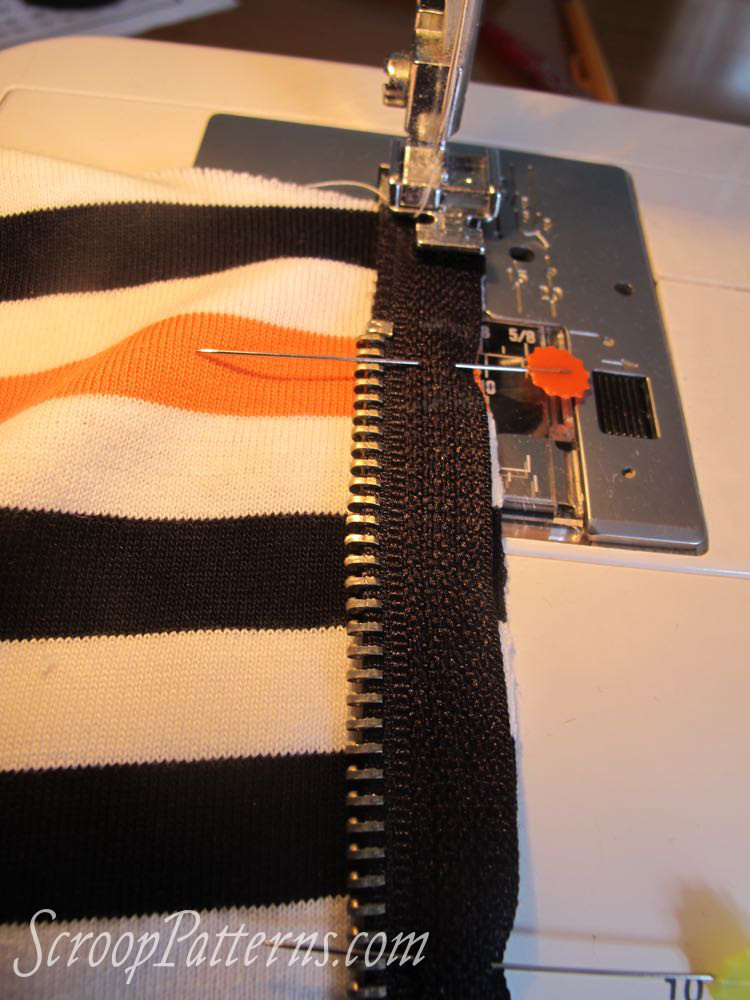
24. Sew with the stitching line sitting a generous 1/8″/4mm from the teeth.

Otari Hoodie Sew Along Zip scrooppatterns.com

Tip>>>

If you have trouble sewing past the zip pull, sink your needle when you get to it, lift the foot, move the zip pull back, past the foot to where you have already sewn, put the foot back down and keep going.

25.  Close the zip, and mark the placement of the pocket, hem band, and any other design lines (stripes, pattern matching etc) across the zip:

Otari Hoodie Sew Along Zip scrooppatterns.com

Otari Hoodie Sew Along Zip scrooppatterns.com

26. Pin/clip and sew the non-pull side of the zip to the loose front edge of the hoodie, taking care that all pocket, hem band, and design lines match.

Otari Hoodie Sew Along Zip scrooppatterns.com


And there is your installed zip!

In the next Sew Along post:

Finishing the zip with pretty tape for a nice, polished finish (and no scratchy bits!).

Want to join in?  Buy your Otari Hoodie Pattern Here