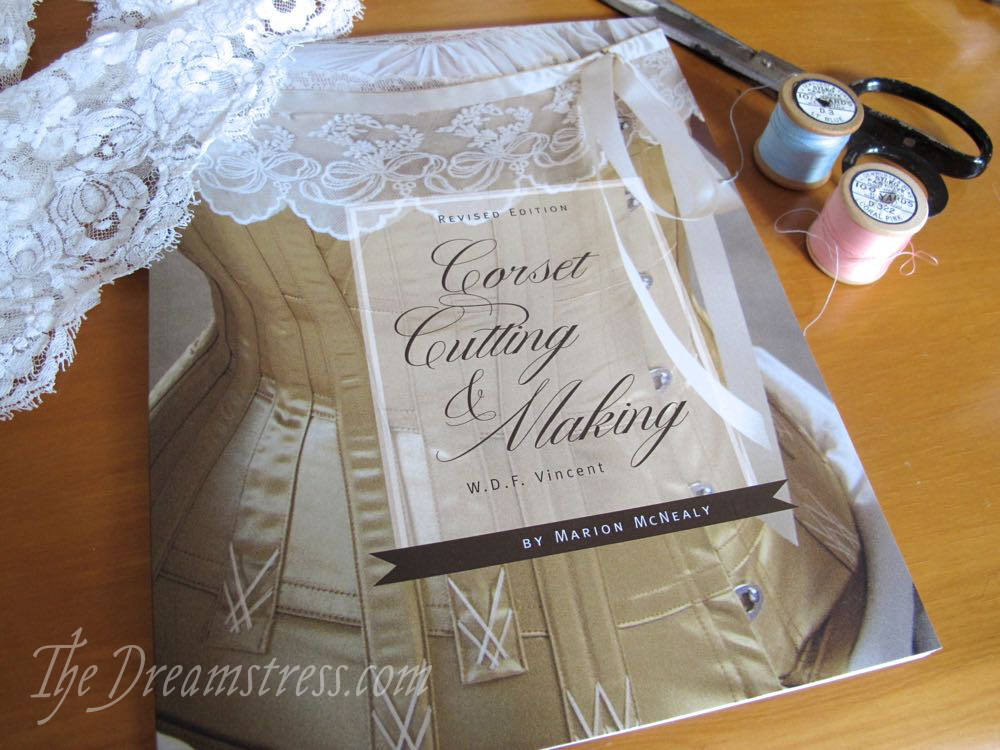
Last April I saw the kickstarter for a Marion McNealy’s ‘Revised Edition: Corset Cutting & Making‘: an annotated reprint of a rare early 1920s corset book. It was right within my area of study, and being able to get the patterns as digital copies was a nice perk. So I signed up.
The book arrived last week, and I’ve had a thorough read of it. Time for a review!
The Research:
Revised Edition: Corset Cutting & Making takes an original 40-page early 1920s publication, which features 19 patterns for corsets and related items, and re-organises it into a form that is more logical for the modern corsetmaker and researcher. McNealy supplements the original patterns and texts with additional research and annotations. These set the corsets within the design contexts of their time, and clarify period terms and construction techniques.
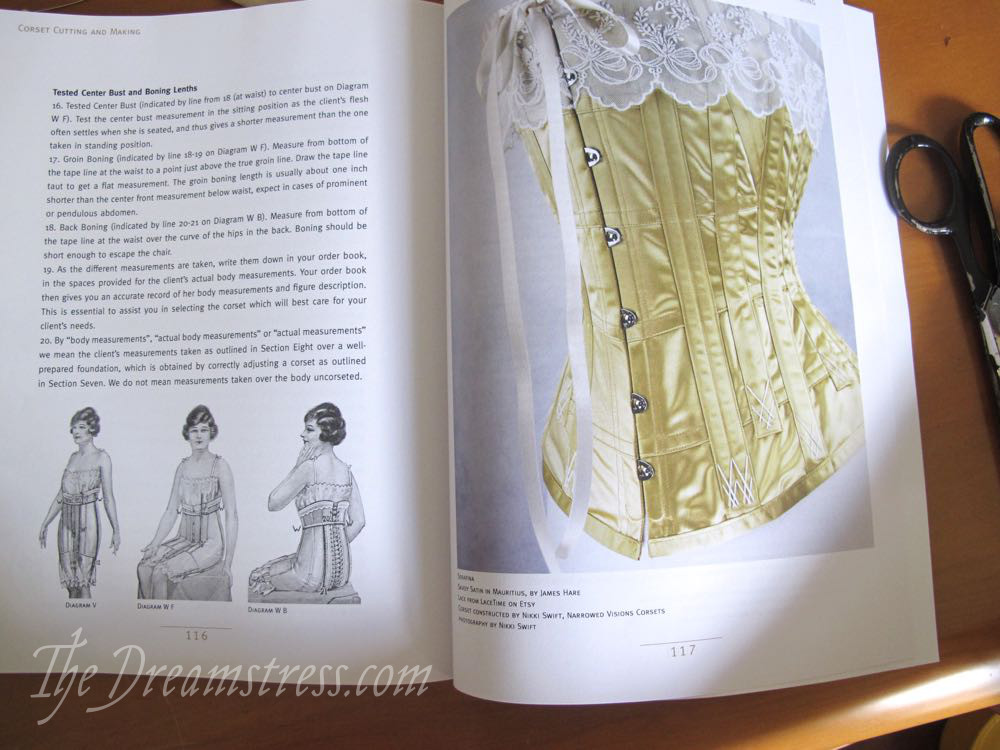
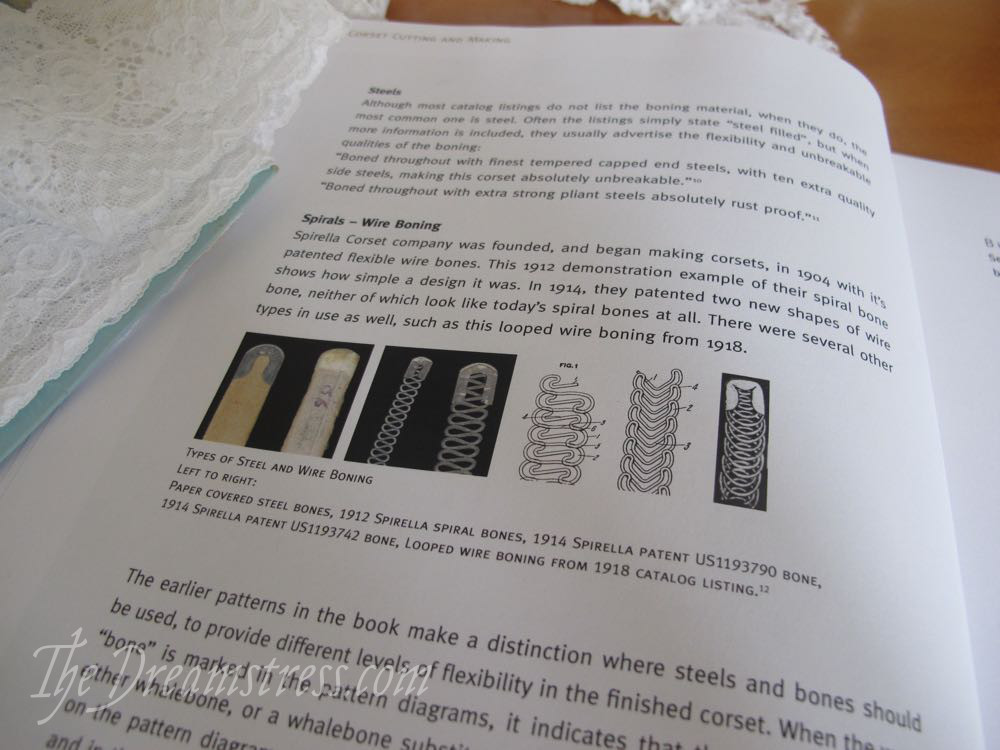
The depth and quality of the supplementary annotations are excellent. All aspects of corset materials and construction from 1900-1924 are covered. There is a step-by-step breakdown of construction techniques taken directly from period sources. There are detailed descriptions of the materials to use, including boning, binding, and fabrics. The most popular fabric colours by year are even covered!
There are guides to measuring yourself using period techniques:
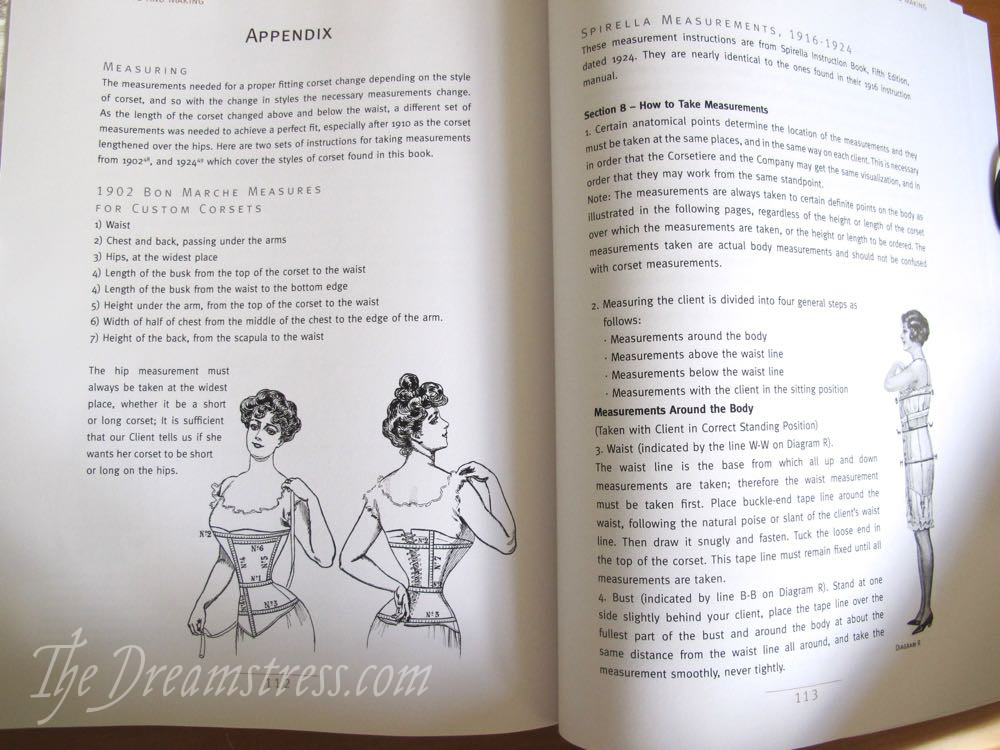
Every aspect of the research is exemplary. It’s clearly been thoroughly thought-out, and meticulously checked.
The Patterns:
There are 19 patterns in the book. These include a variety of fashionable corsets that will appeal to a broad range of costumers, as well as patterns for more specialised garments, including a nursing corset, a WWI munitions workers corset, and children’s corset-waists. There is a even pattern for one of the support bras that fuller-busted costumers are so eager for – rejoice!
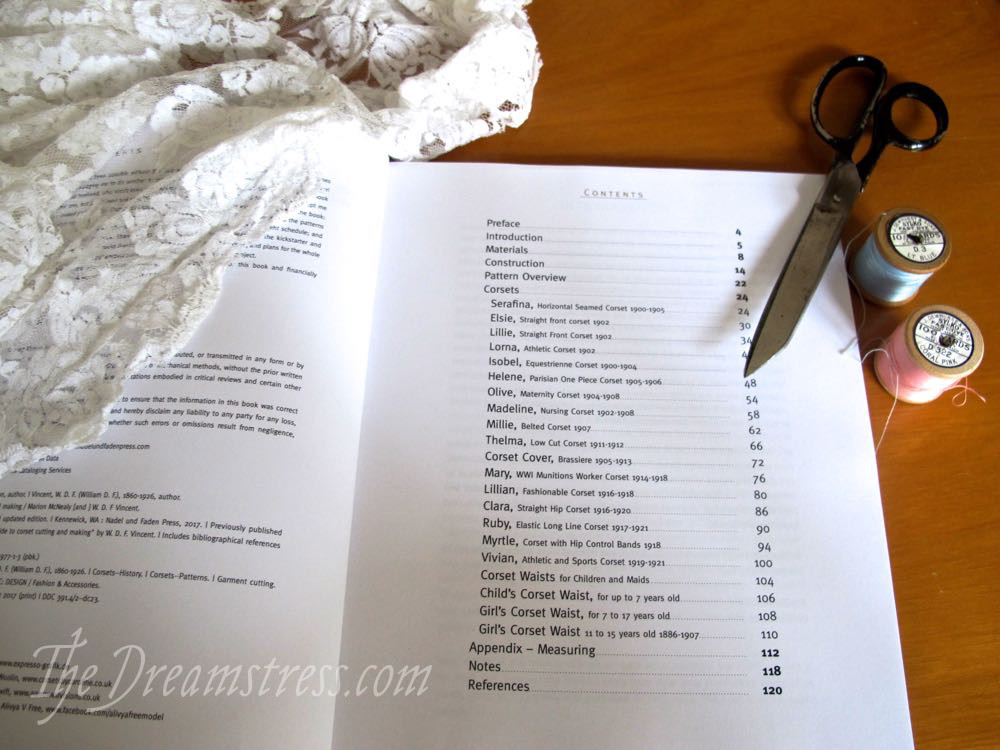
While McNealy can’t be credited for the choice of corset patterns, as they are exactly the ones that were presented in the original book, they are the perfect balance of broad-spectrum popularity, and hard-to-find specialist patterns.
Each pattern includes additional images of similar advertised corsets, information on specialist aspects of making the corset, and discussions of the materials used, all logically and clearly organised:
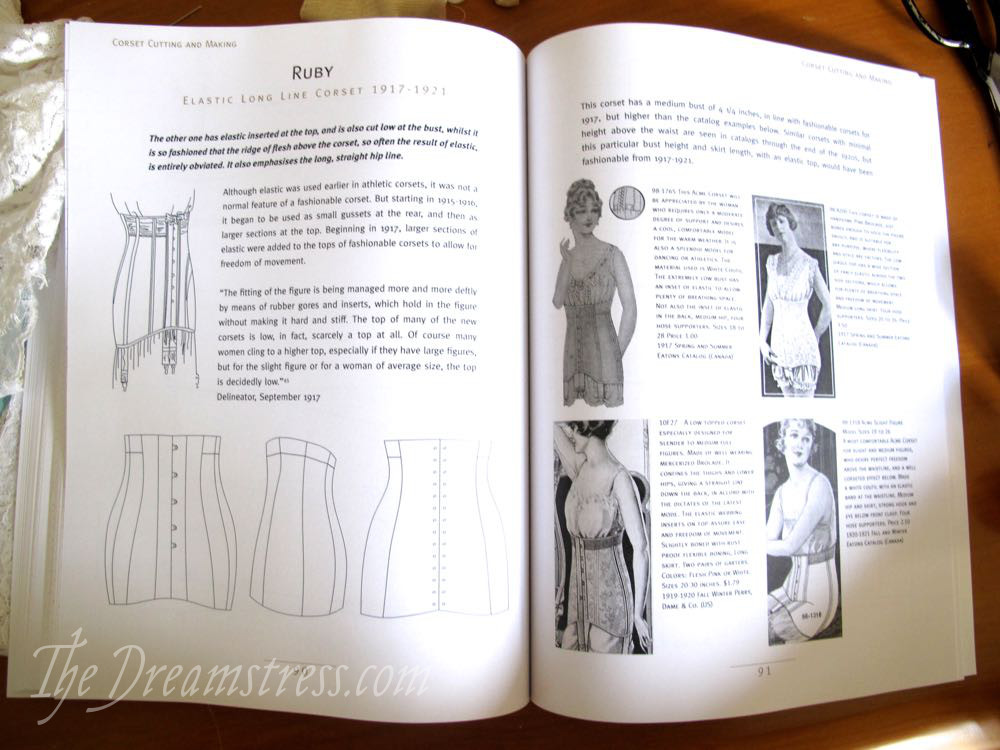
The patterns are all shown as front, side & back line drawings. Best of all, there is a complete chart with finished measurements for each corset, seam types, and recommended boning types.
The patterns are shown both in a scaled gridded version, and then in a measurement-between version, as they were originally presented. Plus, they are available to purchase as one-size-only digital patterns.
There are some issues with the construction of the earlier Edwardian reproduction corsets. Some of the reproductions have a significant amount of wrinkling and warping, which is probably as a result of poor fabric choice. However, it may also be caused by drafting deficiencies in the original patterns themselves.
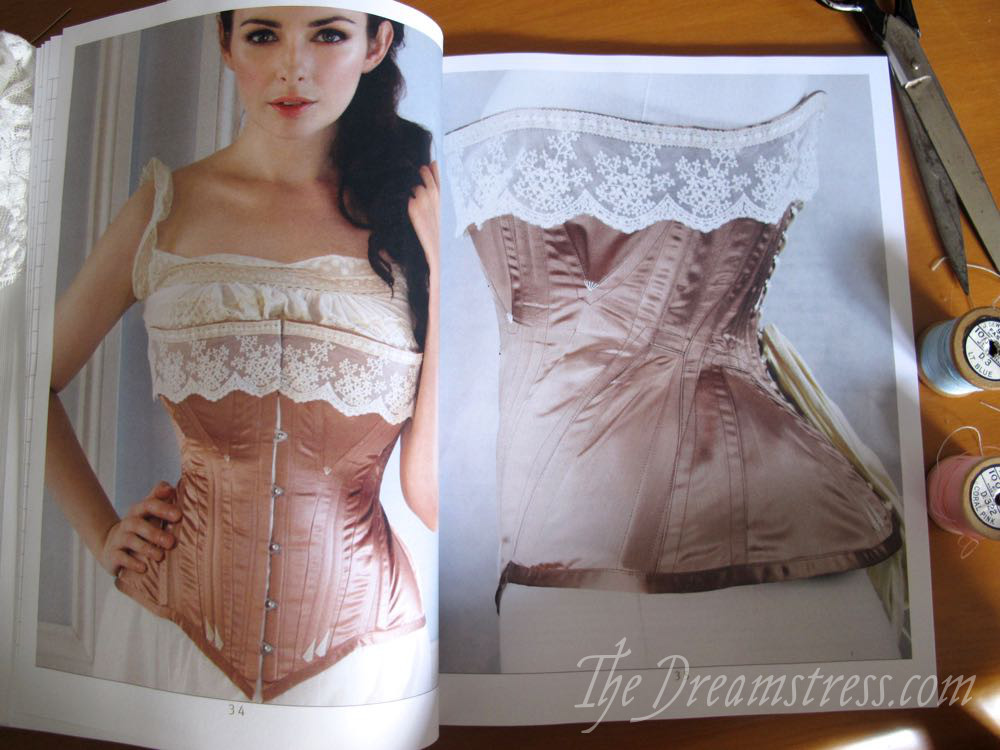
As McNealy acknowledges, we’re not sure where W.D.F Vincent sourced the original patterns. The problem with working with historical magazine patterns is that they vary hugely in quality. Especially with specialist items like corsets, which were rarely homemade, magazine patterns do not compare to manufactured garments in testing and fit. It’s part of the reason I used a popular ready-made corset as the basis for the Rilla Corset: we know it was created by an experienced corset manufacturer, and was comfortable and well fitted enough to be a best seller for almost a decade.
I fully trust that McNealy has checked the patterns to ensure they fit together perfectly, but I don’t completely trust that every single one of the patterns in the book was a good one to start with. This doesn’t detract from the value of the book as a research source, it’s just something to keep in mind when making up the corsets. Any flaws in the original pattern will carry through to made up versions. Even with more suitable fabrics, the Edwardian corsets may have the wrinkling and warping issues shown in the reproductions.
The Drawbacks:
I do have some quibbles with the book. The paper quality is one of them. It just feels flimsy and cheap. It would have been nice if the pages of the book were a slightly thicker, more robust, paper. Ditto for the cover. Given the calibre of the research inside, it’s a pity that the materials used don’t match that. If there is ever a second printing, I’d happily pay an additional US$20 over the full price of the first printing for a second copy with better paper and cover (yep, it’s so good it would be well worth paying that much more for a more durable edition!).
I also can’t say I love the styling of the photographed reproduction corset. It’s very 2010s and is likely to date the book.
Finally, in regards to the reproduction corsets, I really wish that some of the reproductions demonstrated a grommets-under-the-lace construction, rather than a grommets-through-the-lace construction.
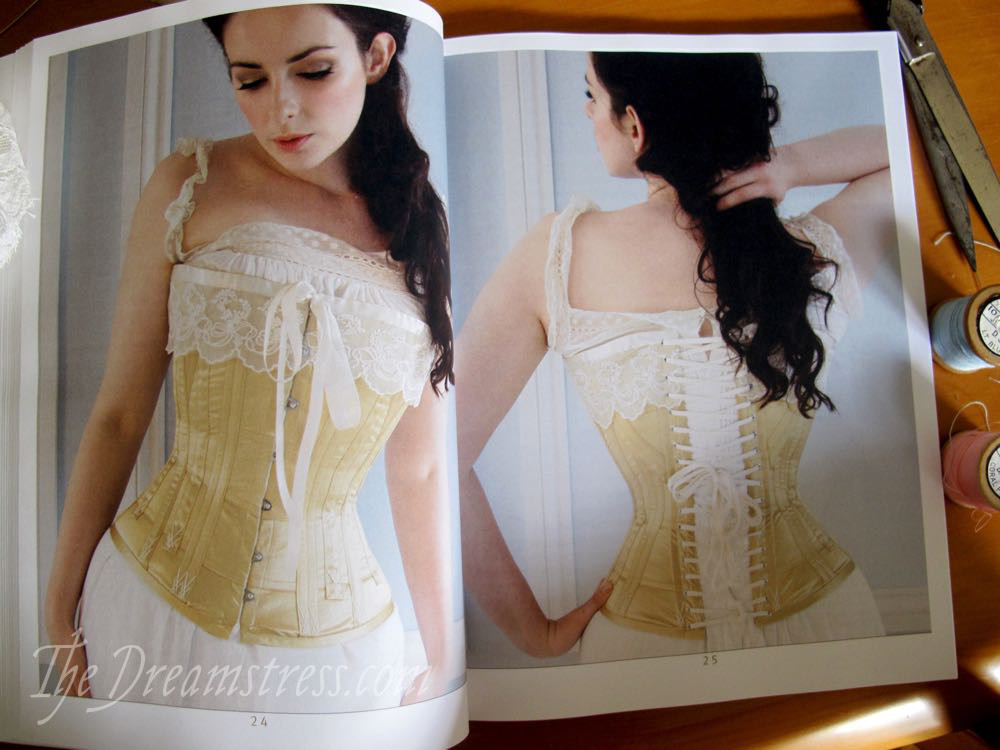
Grommets-through-the-lace is pretty unusual in extant Edwardian corsets. It’s particularly unusual in ones with loose lace that hangs free of the corset – as most of the decorative lace edgings in the reproductions do. Loose lace makes practical sense on a number of levels. Delicate lace is less likely to be damaged by lacing cords if it hangs over them, rather than having the lacing cords cross it, and rub against it. Lacing over grommets also allows the lace to be removed if it tears or soils.
It’s a small detail, but is the one place where I noticed a lack of attention to period accuracy and the most common construction methods of the time – including the ones specifically described in the book. As many seamstresses will to use the reproduction corsets for visual reference, they are likely to replicate the anachronism.
The Verdict:
I’m going to go out on a limb here, and say that this is the best book* on corsetmaking since Norah Waugh’s Corsets & Crinolines.
The patterns are extremely detailed, and the supplementary material is excellent. It’s not a hand-holding book, but the combination of original period materials with modern commentary is perfectly balanced. The research is both clear and simple enough for the corset novice to learn from, and in-depth enough for the corset expert to learn from.
If you have any interest in corsetry, or in first-quarter-of-the-20th-century fashion, buy this book. You will not regret it.
Get the book on Amazon, and buy the digital copies of the corset patterns on etsy.
* In English. I’ve read (and own) almost every one in English, but can’t speak for other languages.