Latest Posts

Historical Sew Fortnightly ’14 Challenge #4: Under It All

The fourth Historical Sew Fortnightly challenge for 2014, due March 1, is the first repeat of a ’13 Challenge theme: Under It All.

This theme is all about the foundations to a garment: the things that go under it to provide the right shape and support, and to protect your fancy outer garments from sweat and grime.

What could you make?

Chemises and shifts:

Chemise claimed to have been worn by Marie Antoinette during her imprisonment, 101 x 83 x 67 Musee Carnavalet, Paris, France

Chemise claimed to have been worn by Marie Antoinette during her imprisonment, 101 x 83 x 67 Musee Carnavalet, Paris, France

Chemise, 1840—59, American, linen, Metropolitan Museum of Art

Chemise, 1840—59, American, linen, Metropolitan Museum of Art

Corsets (and stays and jumps, but not, of course, swiss waists):

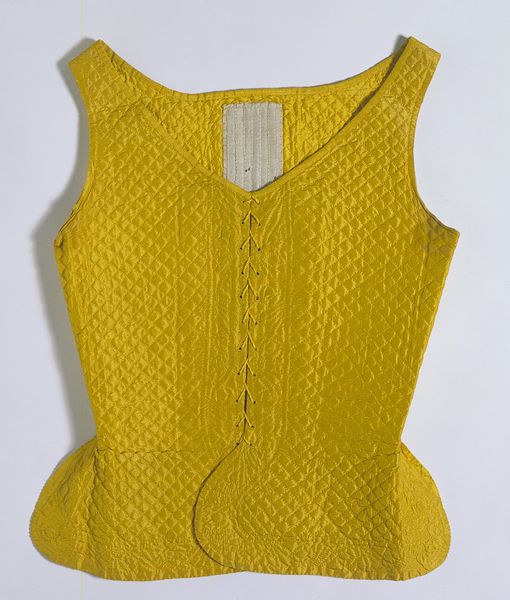
Waistcoat (probably of the type also known as jumps) England, ca. 1745, Silk quilted and bound with grosgrain silk ribbon and braid, with boned canvas, Victoria & Albert Museum

Waistcoat (probably of the type also known as jumps) England, ca. 1745, Silk quilted and bound with grosgrain silk ribbon and braid, with boned canvas, Victoria & Albert Museum  

Petticoats and slips:

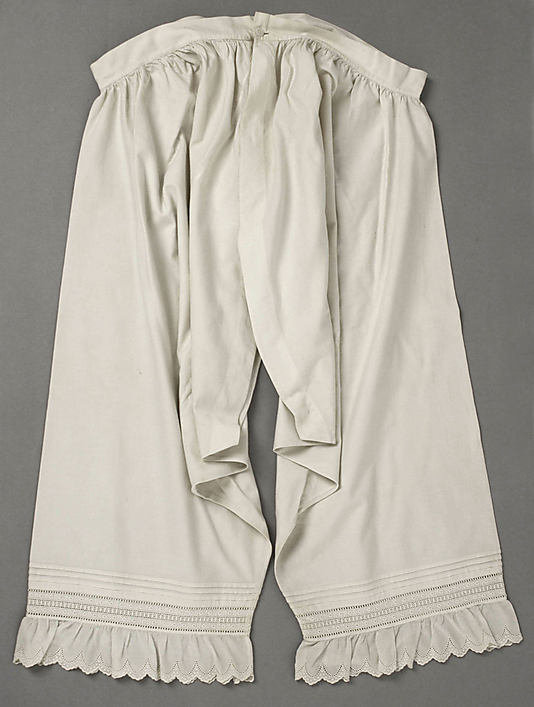
Petticoat, 1855—65, American, cotton, Metropolitan Museum of Art

Petticoat, 1855—65, American, cotton, Metropolitan Museum of Art

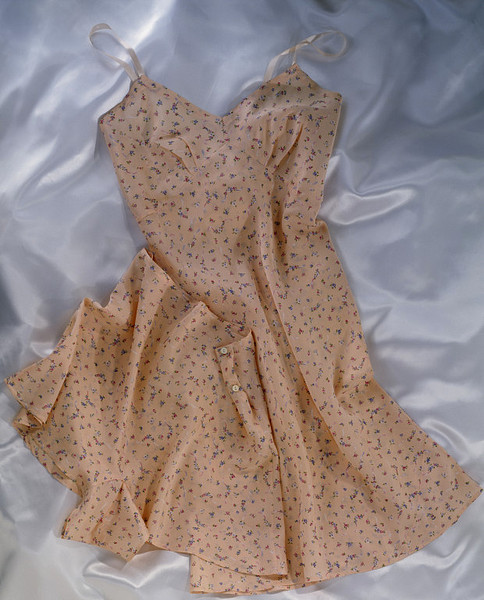
'Utility' slip and cami-knickers, rayon, England, 1940s

‘Utility’ slip and cami-knickers, rayon, England, 1940s  

Drawers and pantalets and tap pants:

Tap pants & Brassiere by Boue Soeurs, French, 1920's via Vintage Textiles

Tap pants & Brassiere by Boue Soeurs, French, 1920’s via Vintage Textiles

Hoopskirts and bustles and bum rumps:

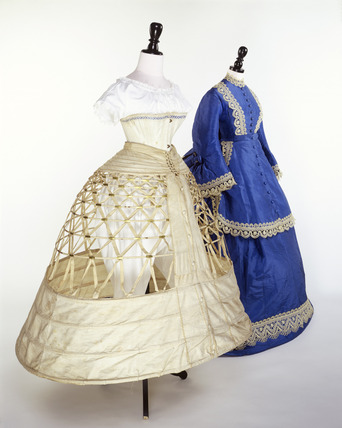
Hoopskirt, corset & wedding dress, mid-1860s, Museum of London

Hoopskirt, corset & wedding dress, mid-1860s, Museum of London

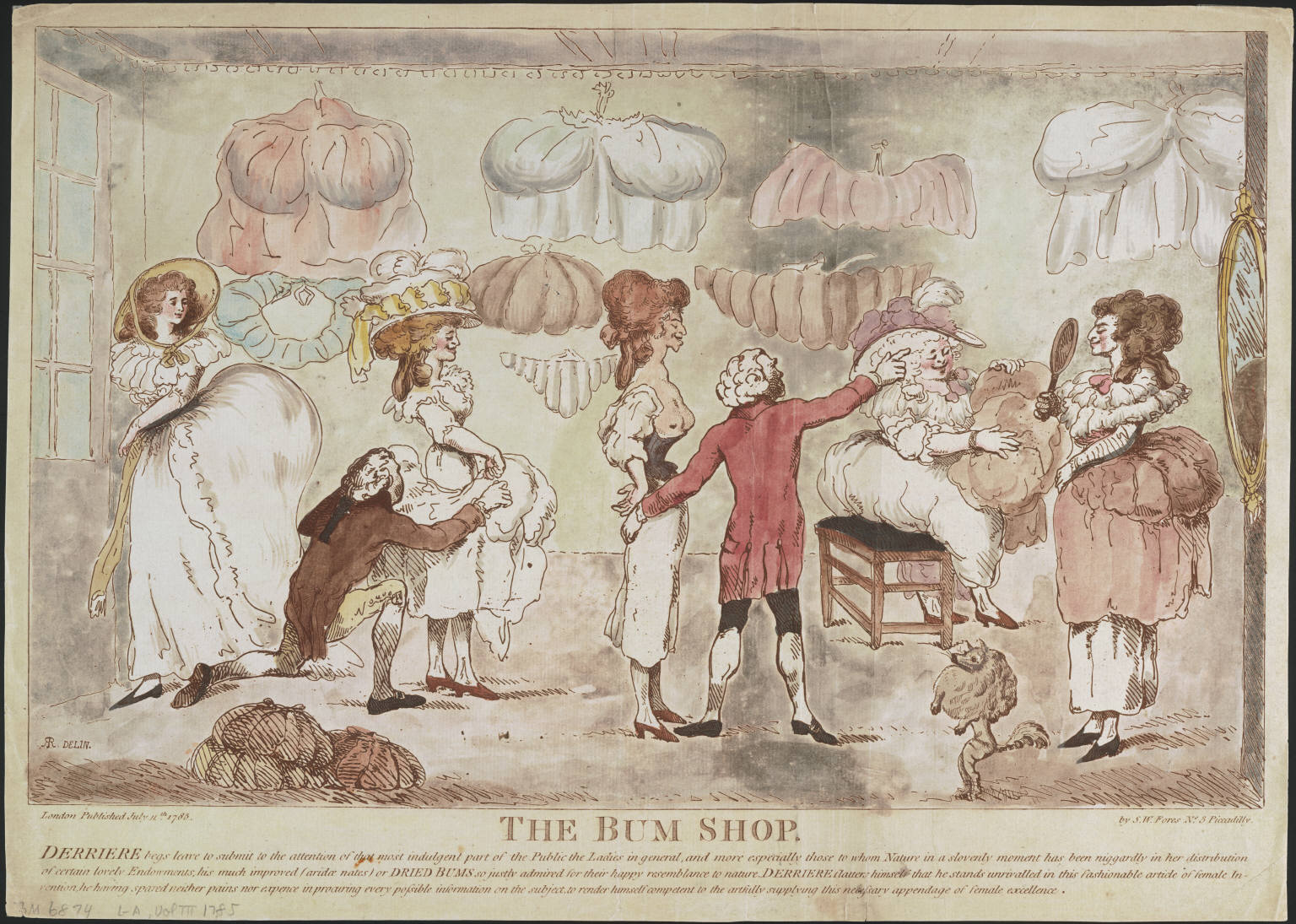
Bum rump, 1785, Lewis Walpole Library

Bum rump, 1785, Lewis Walpole Library

Plus garters and stockings and lots of other little bits!

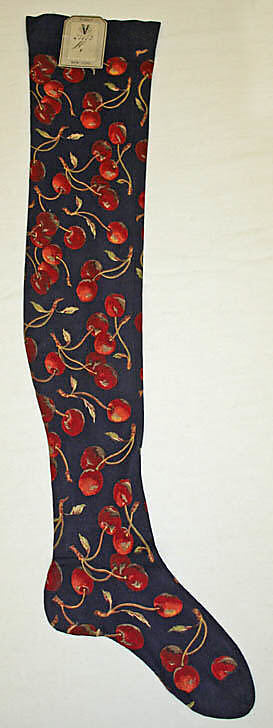
Stockings, 1870, French, cotton, Metropolitan Museum of Art

Stockings, 1870, French, cotton, Metropolitan Museum of Art

To sum it up, if it goes under your garments, it qualifies!

For more inspiration, I have some pinterest boards with undergarments sorted by date:

1700-1750  

1750-1790

1790-1820

1820-40

1840-70

1870-80

1890s

1900s

1910s

1920-40

Rate the Dress: Subtle stripes and purple pops in the 1820s

Last week’s 1920s fashion plate got some interesting reactions that divided into three distinct categories: Oooh!, Meh and Blech.  Balanced out, the resulting rating was 6 out of 10 – just above Meh, and not a rating that anyone gave the dress!  To my surprise, many of you liked the orange dress better than the blue and green one – I should have done a Dress Off!

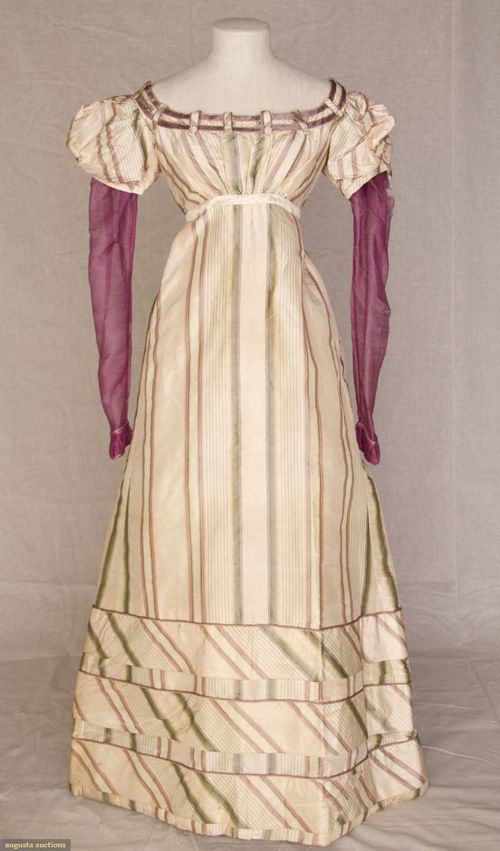
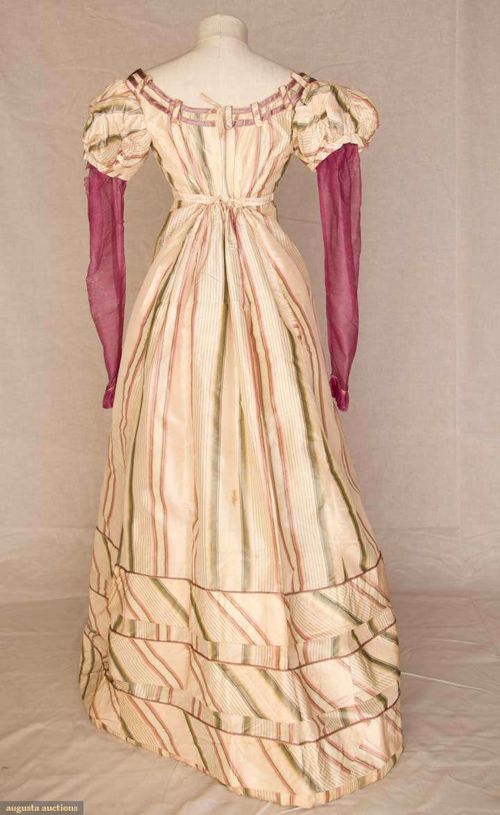
This fortnight’s theme in the HSF is ‘Re-do’, which leaves the field wide open for me to pick Rate the Dress garments to go along with it.  I’ve been feeling like it was time to post something 1820s for a while now (not sure why, it just felt like the right thing to do), and since Stripes is one of the HSF themes I’ll be ‘re-doing’ over the next fortnight, a striped 1820s frock it is:

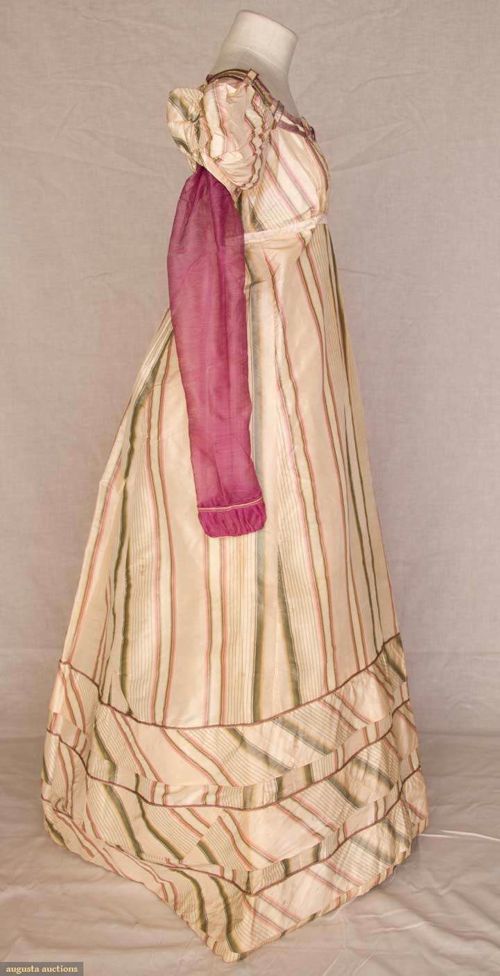
In addition to the fascinating use of stripes (and is that fabric a very simple warp-printed taffeta?  I think so!), this dress attracted me because of its under-sleeves of gauzy wool in what Augusta Auctions erroneously calls magenta.  The shade is clearly not magenta, because magenta, named for the 1859 Battle of Magenta, was originally a particular shade of aniline dye.

Still, whatever the name, the pop of the vivid pink-purple sleeves with the ivory fabric with its rose and green stripes is striking.  I wonder if the trim around the neck originally matched the pinker shades of the sleeve and stripes, or if it always had a distinctly lilac twinge.

What do you think?  Do you like this example of late Regency fashions, with its elaborate striped hem trim, button and tab neckline trim, and contrasting sleeves?

Rate the Dress on a Scale of 1 to 10.  

The HSF 23 – One afternoon tutorials

The Historical Sew Fortnightly Challenge #23: Generosity & Gratitude is due tomorrow, and I’m a bit frantic about it.  I’ve been so busy the last few weeks with the university semester ending and marking to be done, and parties to plan, and new sewing classes starting and planning to be done for the next round of sewing classes and everything else that I haven’t had any time to sew.

I’ve gone trawling through all the tutorials that I’ve saved for inspiration, and everything that I really want to do is extremely time-consuming, and at this point I’m time poor.  I’m still working on my frou-frou  française, which is based on numerous online tutorials, but it needs another 12 hours worth of work.  I want to make Jen’s Easy Italian chemise, but I haven’t designed a whole Italian Renaissance costume yet and don’t want to end up with an orphan, plus it mentions the phrase “obscenely time consuming”, so that’s not viable!  At this point I’m hand sewing all my pre-1860s shifts, which I really do need, but don’t have the time to hand sew, so that’s out, though there is tons of good research on that.  And I have boughten patterns for all my post 1860s stuff, so that doesn’t qualify.  etc. etc. etc.

I got rather frustrated trawling for ideas and ended up grumbling “why does no one but me post tutorials for items that can be made in an afternoon!”  I’m sure there are actually tons of easy one afternoon tutorials for a range of reasonably historically accurate or not-too-cheat-y items out there (and please do post them in the comments), but for now, here is a round-up of my quickest, easiest, least time-consuming tutorials for those who need some last minute inspiration!

1. How to turn a straw sunhat into an 18th century bergere style hat.  Not period accurate, but quick and fun and effective!
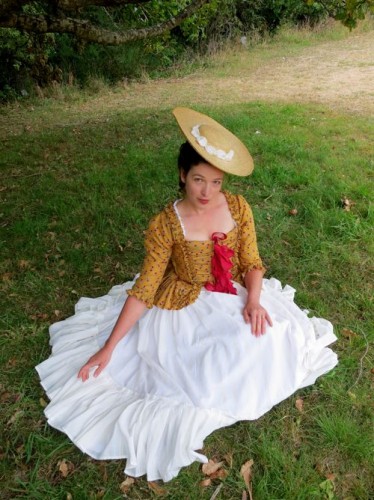
18th century inspired bergere

2. How to turn a modern fedora into a ’20s style cloche.  Super easy, and the result is actually pretty period accurate, depending on how you trim it.

How to turn a modern fedora into a '20s style cloche

3. How to dye leather goods, from shoes to handbags.  Super easy, takes less than an hour, and then you still have plenty of time to trim your shoes in a more period accurate fashion!
1780s shoe remake thedreamstress.com My 1780s shoe refashion  

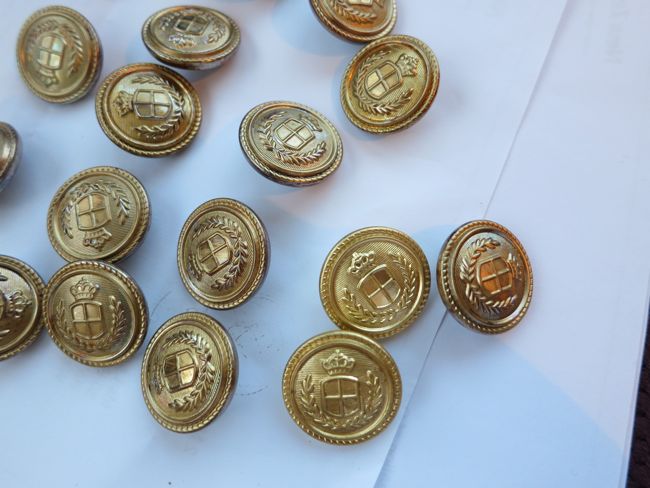
4. How to ‘antique’ cheap gold buttons.  This isn’t period accurate, but is an instant way to make an outfit look a little older and more natural.
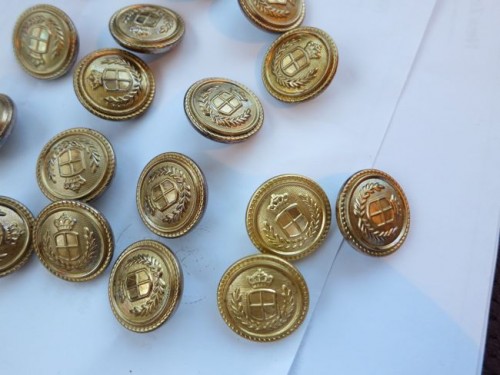
How to 'antique' cheap gold buttons & jewellery thedreamstress.com

I used this technique on my Polly Oliver outfit:
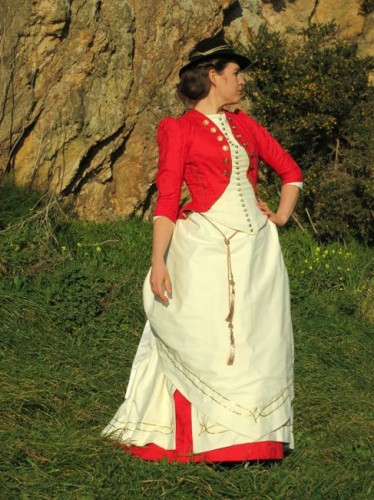
The ca. 1885 'Polly / Oliver Perks' Terry Pratchett inspired ensemble

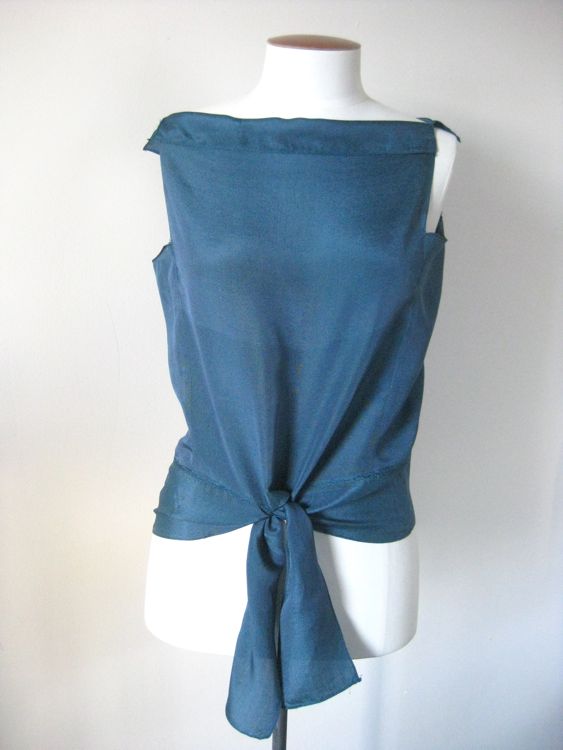
5. How to make the simple 1930s inspired ‘Deco Echo’ blouse. Super fast and easy and totally do-able in an afternoon.
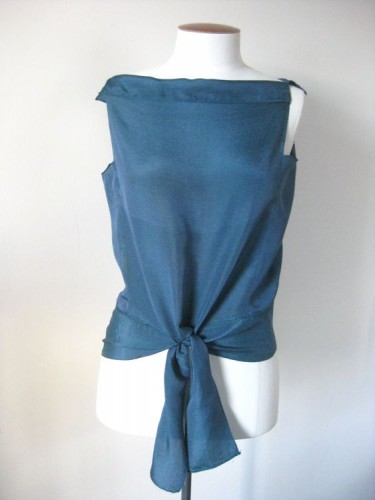
The Deco Echo blouse
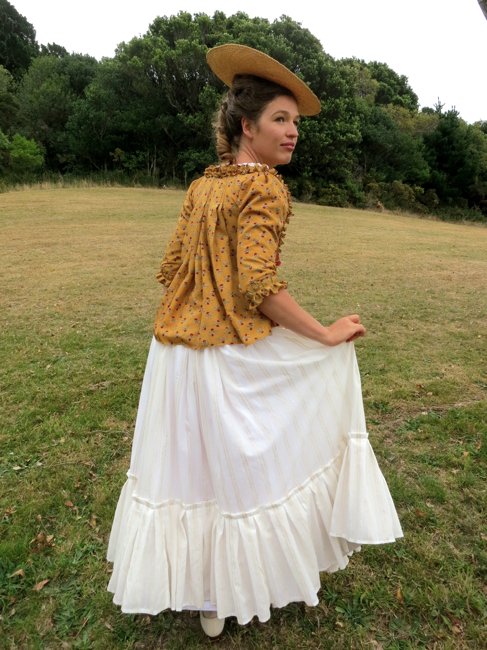
6. How to make a drawstring petticoat to go over a hoopskirt.  Not accurate if you use the drawstring, but adapting it to have a waistband instead is super easy, and it can be made in an afternoon.

The petticoat gathered on to the waistband

7. Or, use my cord gathering tutorial and turn your petticoat into a real skirt.   I did this for a quick 18th century petticoat skirt to go with my pet-en-l’aire, and you could also use it for some 19th century applications.  It’s not strictly accurate, but it’s quick and effective.
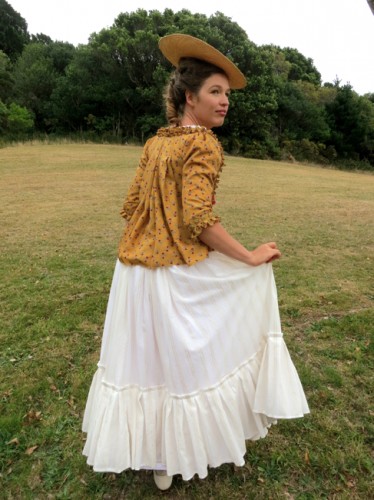
1780s pet-en-l'aire and pleated petticoat

Or you could just have a trawl through the Great Historical Fashion and Textile Glossary and find a period accurate term for an item you’d like to make, from a Balmoral Petticoat to a Buffon

And now, I’m off to go try to make something quick and easy based on someone else’s research, and to wish I had time to utilise all the fantastic research on elaborate items that is out there.