Latest Posts

NZ Sew & Eat Historical Retreat Food thedreamstress.com

The Sew & Eat Historical Retreat – the food

Aren’t you glad that the Otari Hoodie Sew Along is finished?

First, it means that some of you have awesome hoodies that you can wear.  And second, it means that I can stop blogging hoodie instructions, and go back to blogging about random historical things, and whatever else I’m working on.

Right now, the ‘random historical things’ means catching up on all the stuff I haven’t been blogging about while I was hoodie-ing, starting with the Sew & Eat Historical Retreat.

I promised menu details in my first post, so here is more information.

The real credit for the menu and cooking goes to Nina, who put together all the more spectacular and involved items, most of which I would never dare attempt*.  Hopefully she’ll blog more details about her food, so mine will be a briefer overview.

I didn’t manage to photograph everything, as I got too excited about actually eating things, and just having fun.

Friday Dinner:  ‘Malaga-tawnee Curee’ with potted hare
NZ Sew & Eat Historical Retreat Food thedreamstress.com

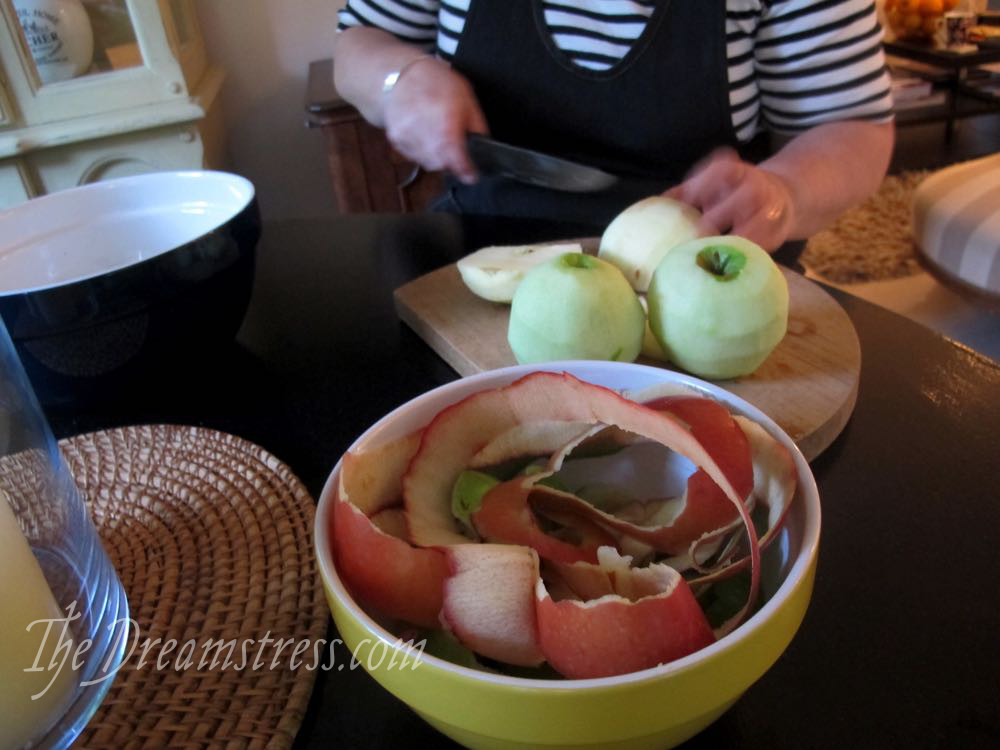
Friday’s dinner was based on two extent Regency curry recipes (one belonging to Jane Austen’s sister in law), the description of curry eating in Vanity Fair***, and recipes for potted hare.

I couldn’t find an original Regency curry recipe that used potted hare as the meat, but it was certainly a common meat source, and I was able to find a whole wild hare at Moore Wilsons (the fancy Wellington supermarket†).

The curry included apples and lentils, and there was so much of it that we had it for lunch on Saturday too.  And it was delicious.  In fact, a vegetarian version†† of it has become part of my regular meal rotation.  You can find a similar-ish recipe here (just omit the coconut milk).

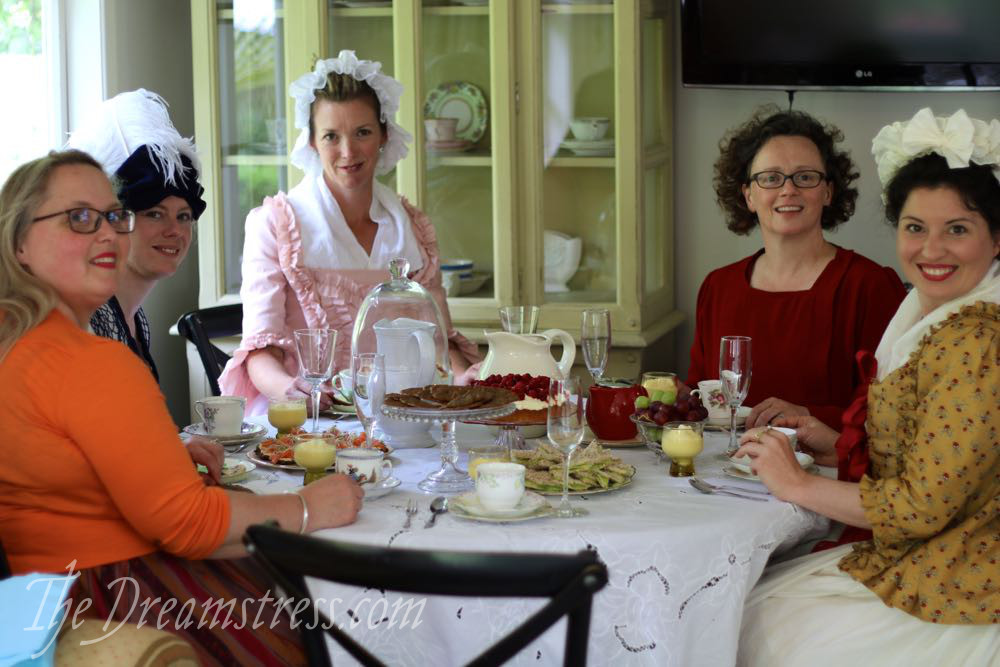
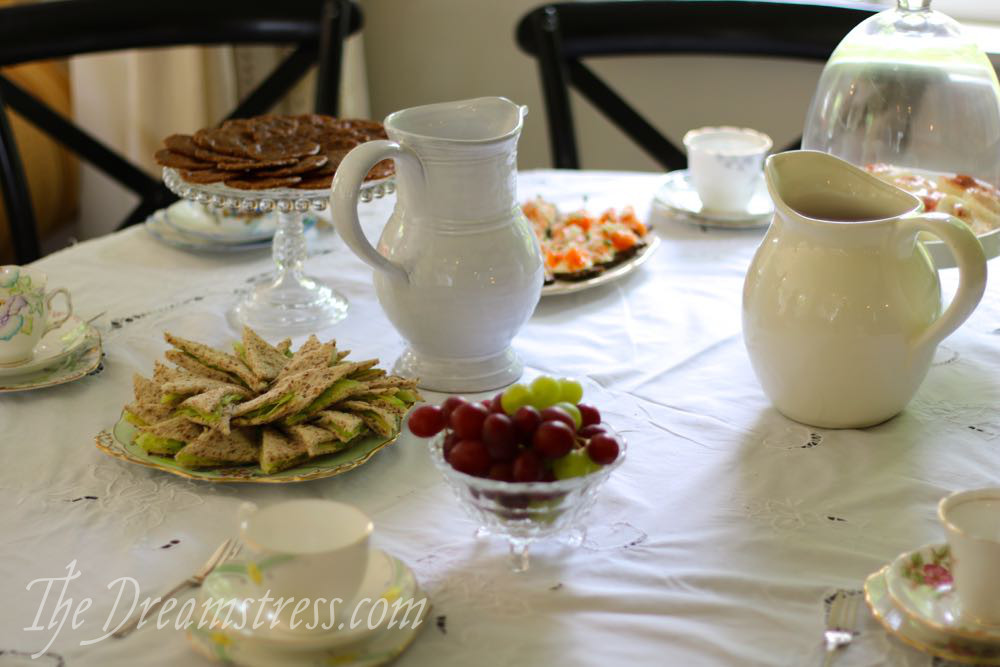
Saturday Afternoon Tea:
NZ Sew & Eat Historical Retreat Food thedreamstress.com

Menu:

Cucumber sandwiches
Devilled eggs
variations on devilled eggs date back to Roman times, and the little savoury egg-parcels were definitely popular in the 19th century.  
Salmon & capers with cream cheese on pumpernickel  â€ â€ â€ 
Fruit
Ginger honeycomb biscuits‡
Rice flour Victorian cake‡
Lemon ices (Jane Austen wrote of eating ices at her brother Edward’s estate, and Gunter’s Tea Shop, which took over from the Pot & Pineapple‡‡ in 1799, was famous for its ices)
Tea
Rhubarb & Ginger Cordial  
NZ Sew & Eat Historical Retreat Food thedreamstress.com

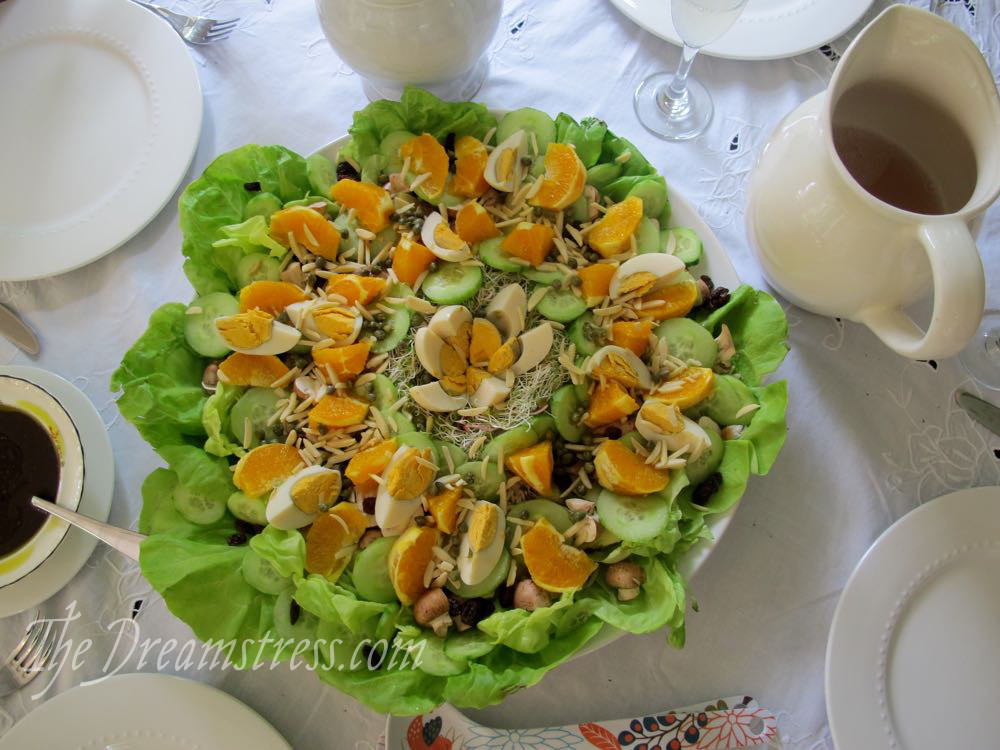
Sunday Lunch: Salmagundi

NZ Sew & Eat Historical Retreat Food thedreamstress.com

I used the recipe in the 17th century The Good Huswives Treasure  (quoted on Wikipedia) as my starting point, and added lots of lettuce and sprouts.  Instead of chicken (which I don’t eat) we used smoked mackerel as the protein, as well as hard boiled eggs, which appear in numerous other salmagundi recipes.  We omitted oysters because of a shellfish allergy‡‡‡, and olives, because I forgot to buy them.  We meant to include broombuds because there is feral broom all over Wellington, but sadly we didn’t see any around our cottage.

And it was delicious and wonderful and just what we all wanted to eat…

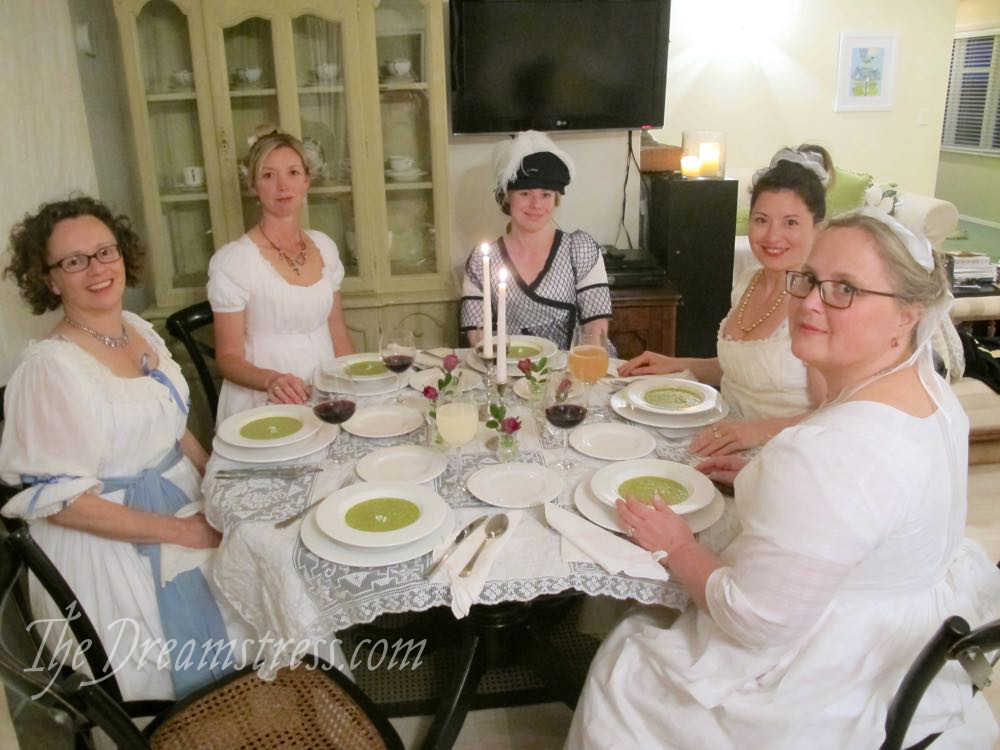
Sunday Gala Dinner:
NZ Sew & Eat Historical Retreat Food thedreamstress.com

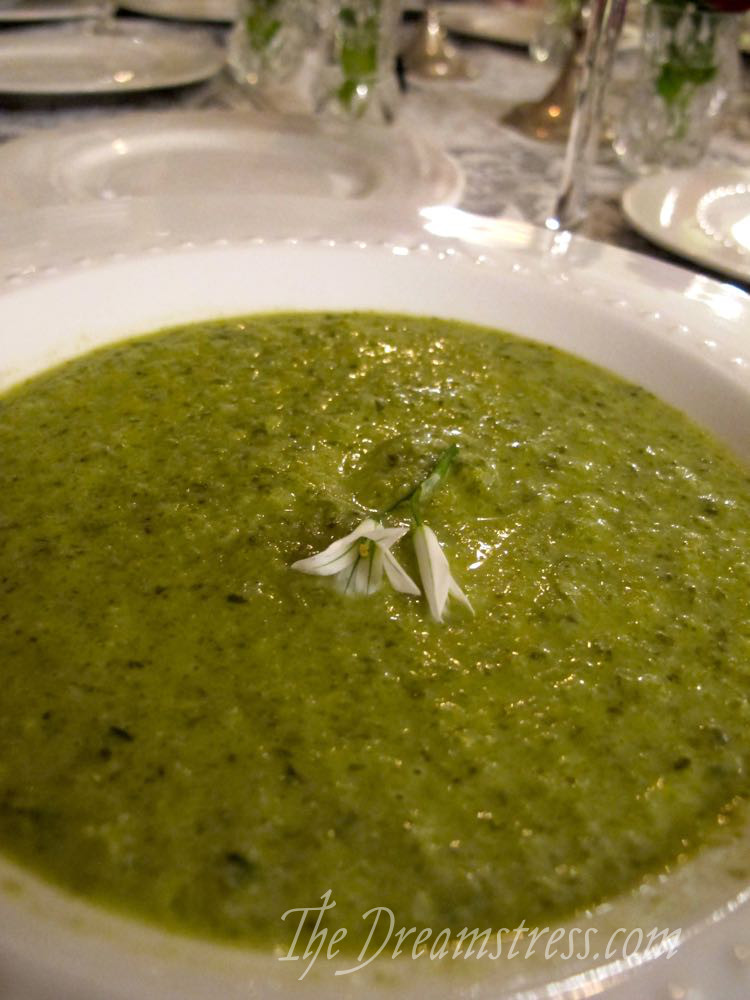
First Course: Swiss Soup Meagre  

NZ Sew & Eat Historical Retreat Food thedreamstress.comThere are numerous historical variations of this recipe, dating from the early 18th century, to the late 18th, but generally it calls for you to take any sort of spring greens you can rummage up, saute them in copious amounts of butter, add beaten eggs, and push through a sieve.

We used the one given here as a starting point.  Our vegetables were spinach, lettuce, cabbage, watercress, leeks, and, for a very authentically harvested-from-your-spring-garden touch, onion weed collected from the cottage yard.  You can see the onion weed flowers as garnish.

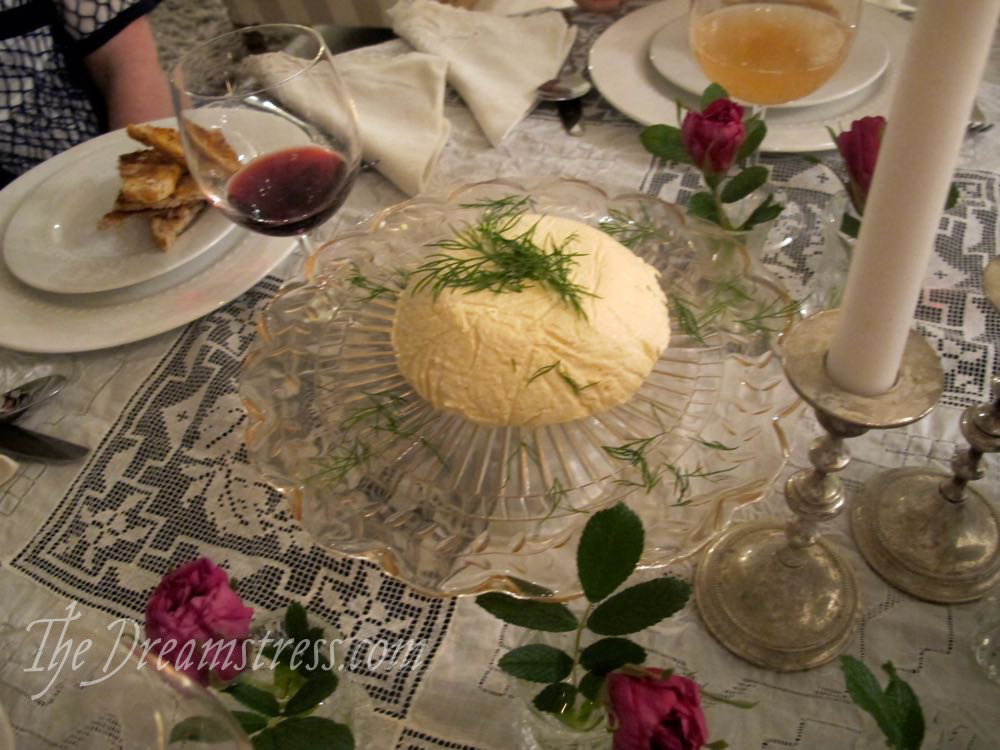
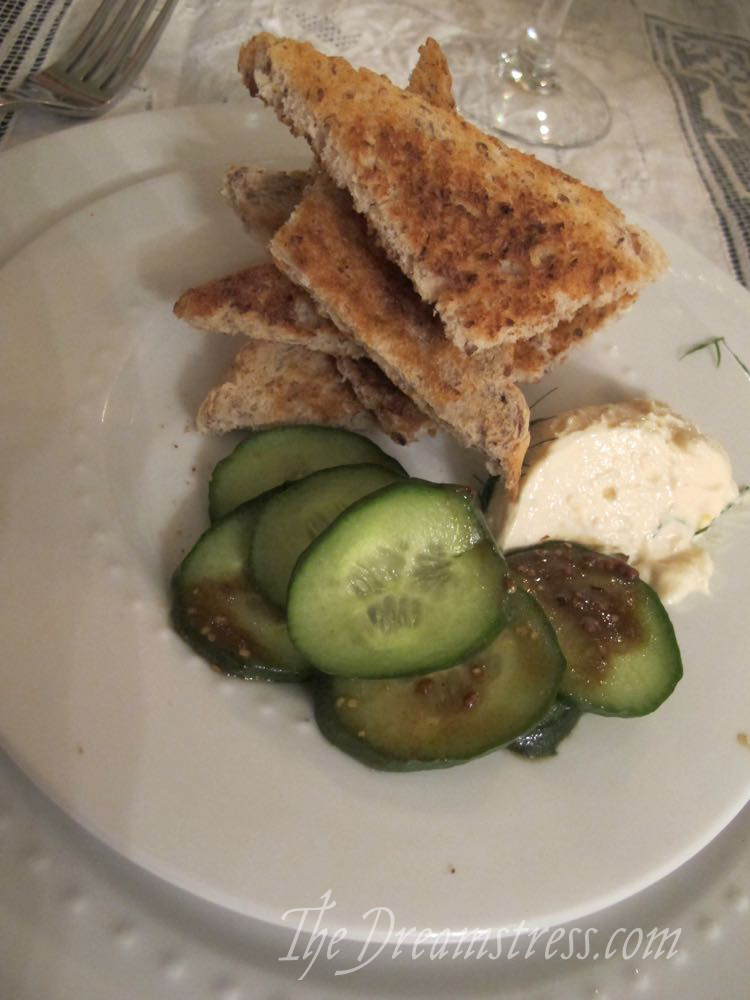
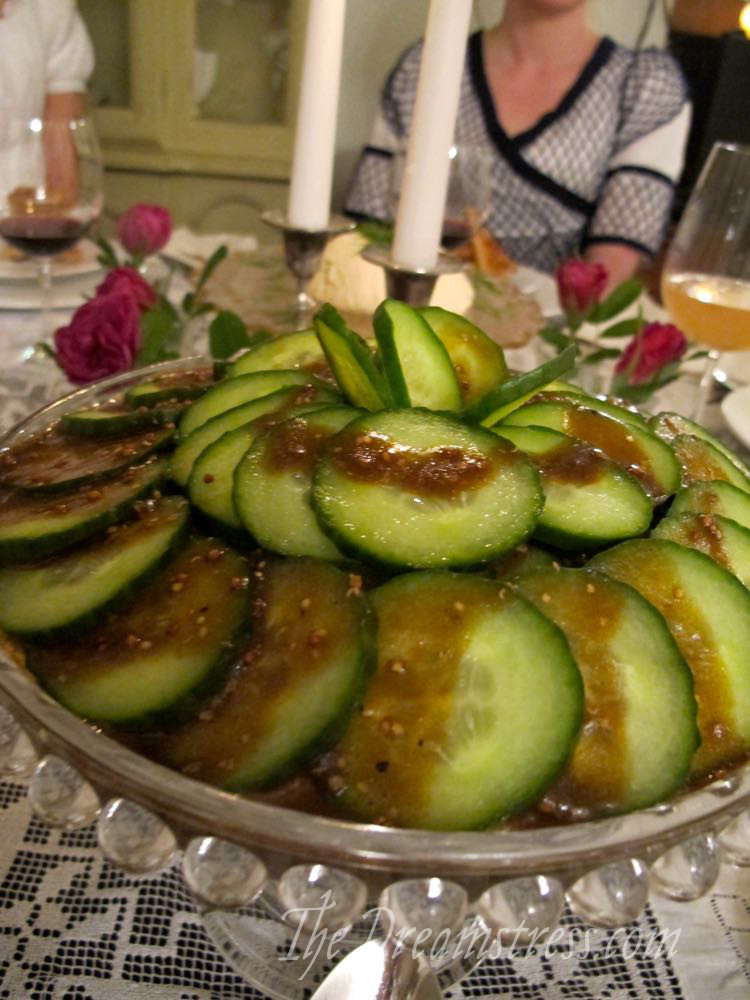
Second Course:  Salmon mousse and cucumber salad with toast
NZ Sew & Eat Historical Retreat Food thedreamstress.com

NZ Sew & Eat Historical Retreat Food thedreamstress.comNZ Sew & Eat Historical Retreat Food thedreamstress.com


Main Course: Venison en croute (gluten free)
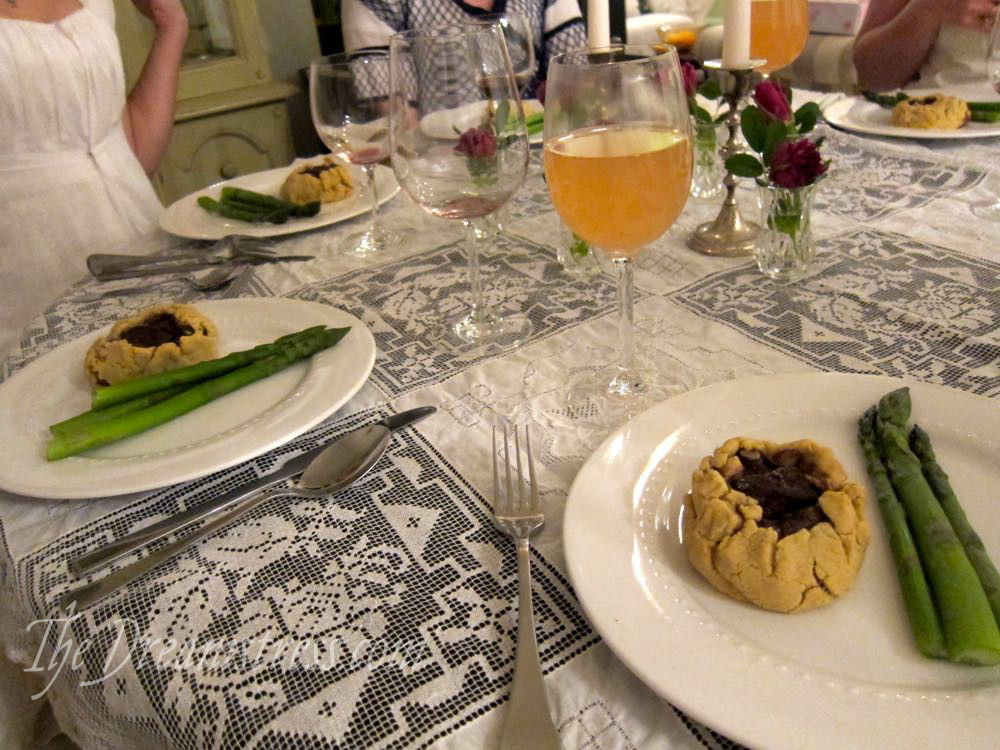
NZ Sew & Eat Historical Retreat Food thedreamstress.com
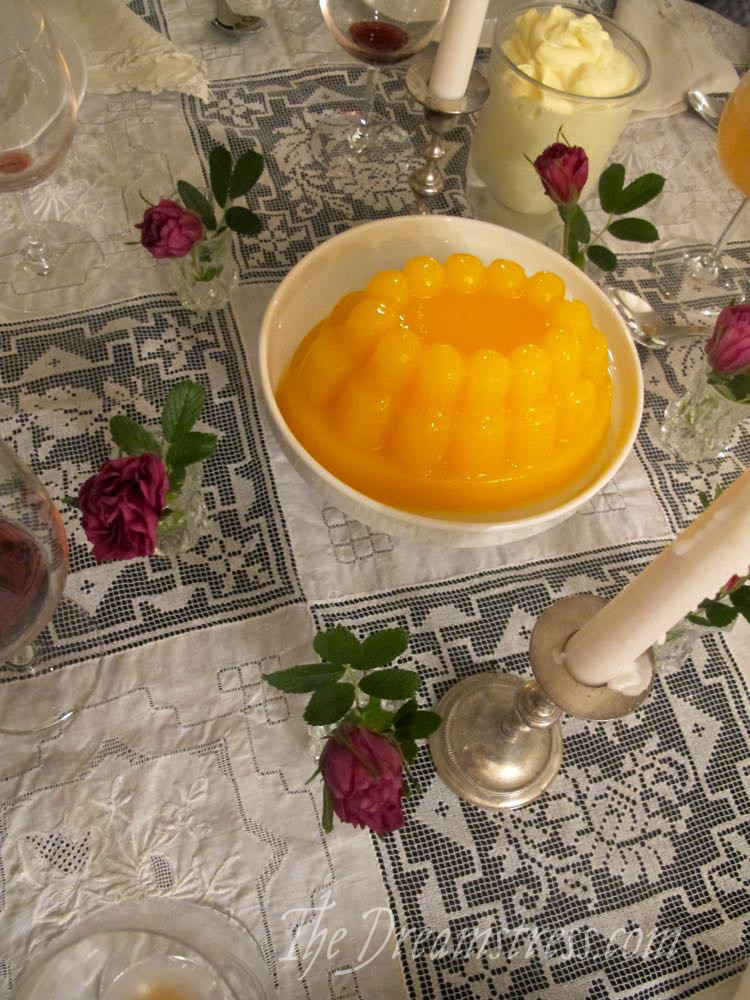
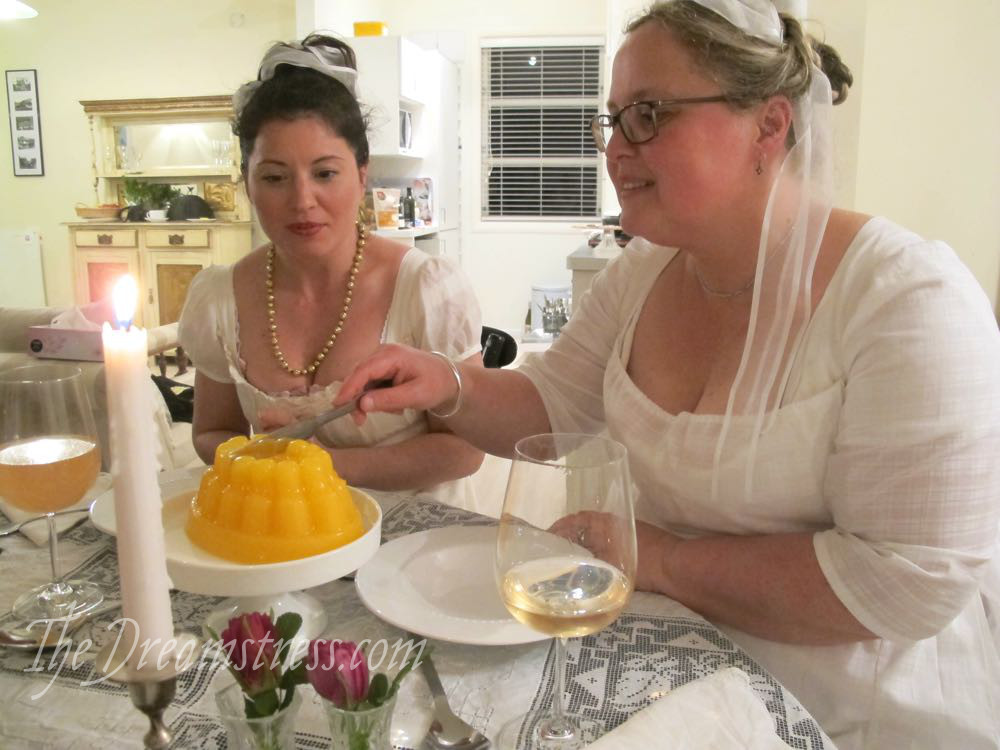
Dessert: Orange Jelly

NZ Sew & Eat Historical Retreat Food thedreamstress.com

Nina made this spectacular jelly in the tiny kitchen, in an antique mould, using vegetarian gelatine.

She was understandably quite pleased with herself when it came out of the mould
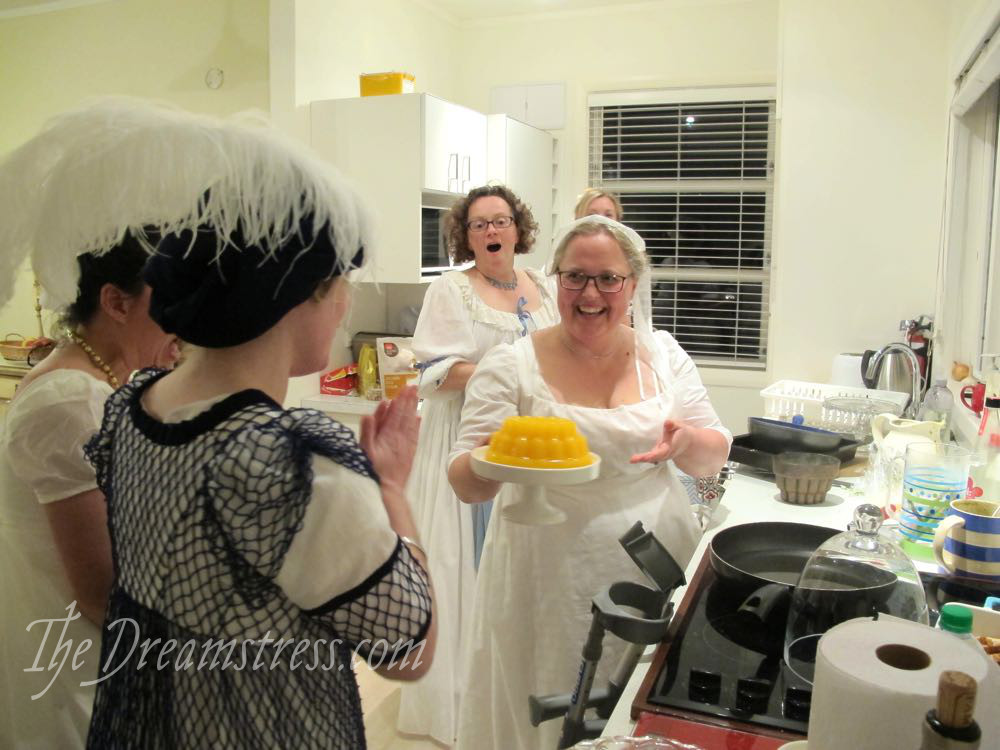
NZ Sew & Eat Historical Retreat Food thedreamstress.com

Nina had been so excited about making a jelly dessert the whole time we were menu planning that I didn’t have the heart to tell her that I absolutely loath jelly. §

So I thought I’d be in food purgatory for the last course, gagging down jelly and pretending to like it.

Happily, it turns out that true homemade jelly, made with vegetarian gelatine, two dozen oranges and no food colouring at all, is an entirely different beast § than the jello we got served at school.
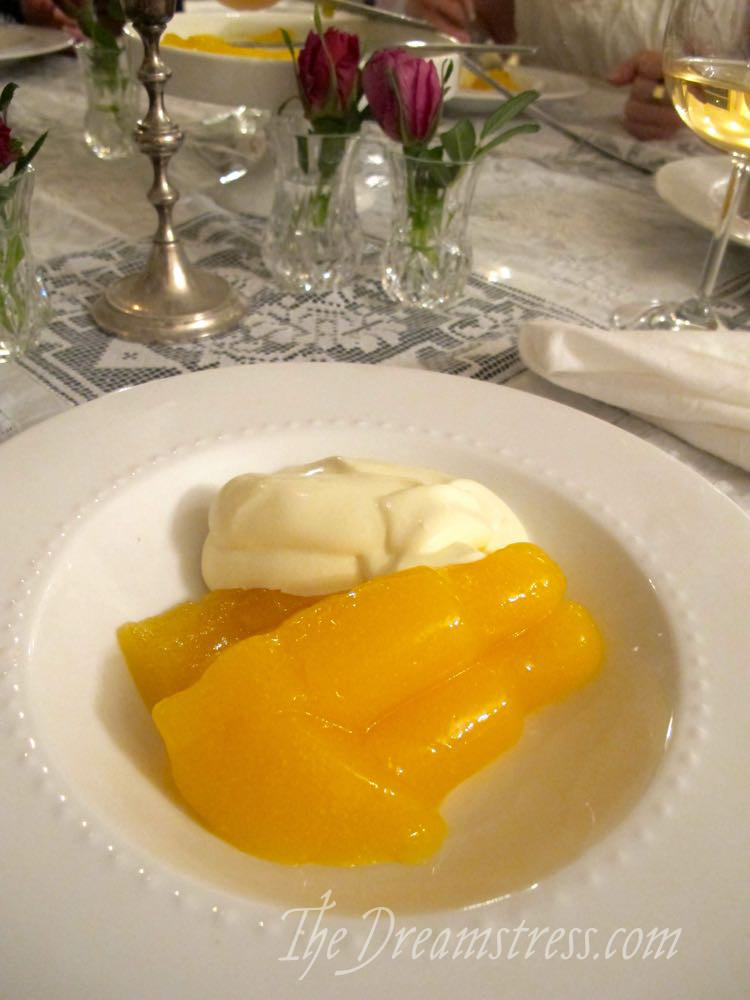
NZ Sew & Eat Historical Retreat Food thedreamstress.com

It’s delicious

Breakfast

Just in case you were wondering, our morning food choices all three days weren’t quite so historic, but we didn’t let our standards slip:

NZ Sew & Eat Historical Retreat Food thedreamstress.com

Lace tablecloths, roses, marmalade in fancy bowls, pots of tea and fancily arranged fruit!

And, just because it’s funny, aprons and fancy dresses:
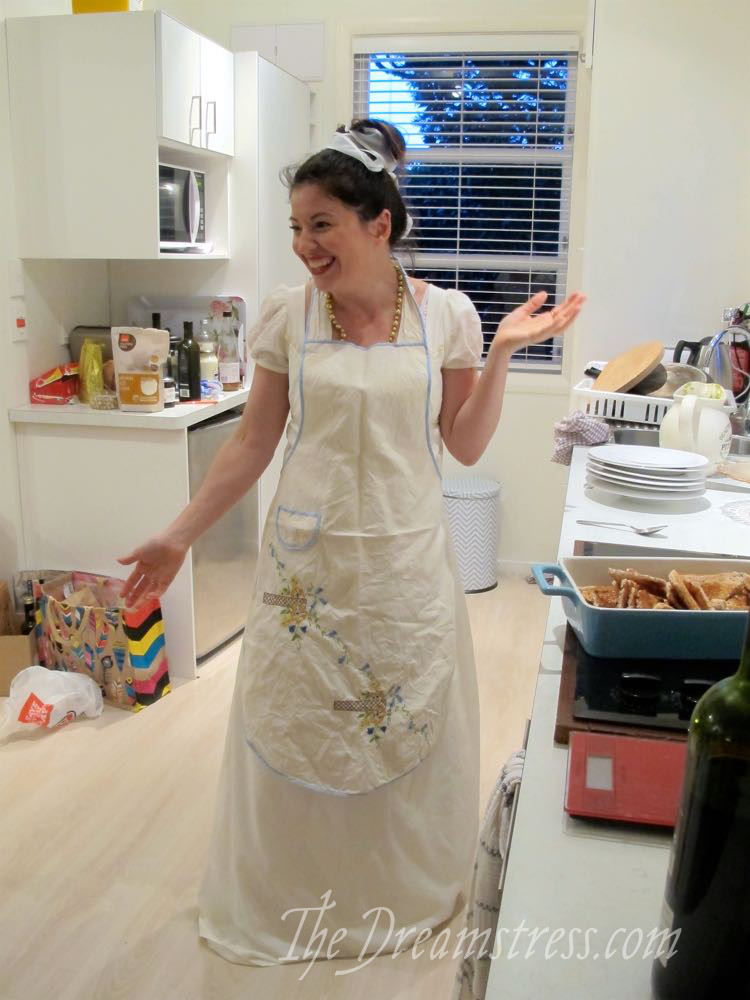
NZ Sew & Eat Historical Retreat Food thedreamstress.com

*And she did it all while on crutches!

** I will spare you images of the actual whole hare^.

^And the caption that says “things are getting hare-y”*.

* You have no idea the effort it took to resist that temptation…

*** Which I really just included as an excuse the dial the spices and spiceyness up by a factor of about 400%.  I just can’t believe that a girl who comes from a culture that eats mustard and horseradish would be so overwhelmed by anything but a seriously robust curry – and I like my curries on the robust side.

† We used to joke there should be a ‘People of Moore Wilsons’ website, a la ‘People of Walmart’.  It would feature ladies with 30 artichokes in their cart, and children wearing designer outfits that would cost more than my entire wardrobe.

†† With even more spices!  Because mmmmm….spices.

††† True story.  I couldn’t remember the name of the bread, but I can remember what it means.  So 30 seconds before writing this I was googling ‘devil fart bread’.

‡ These were both made by Nina from recipes from Mary-Anne Boermans’ Great British Bakes.  I’ve gotten their names completely wrong, but I’m definitely not mistaken in how delicious they were….

‡‡  Which is clearly a much better name.  Wouldn’t you rather eat at the Pot & Pineapple than Gunter’s?

‡‡‡ And also because frankly, that sounds a bit much…

§ When I try to eat it my mind becomes absolutely convinced that I’m eating slugs.^

^And you know how I feel about slugs.^^

^^Also, slugs in Hawai’i can carry rat lung disease, so eating one could literally kill you.

§ § Not a slug beast, for starters.
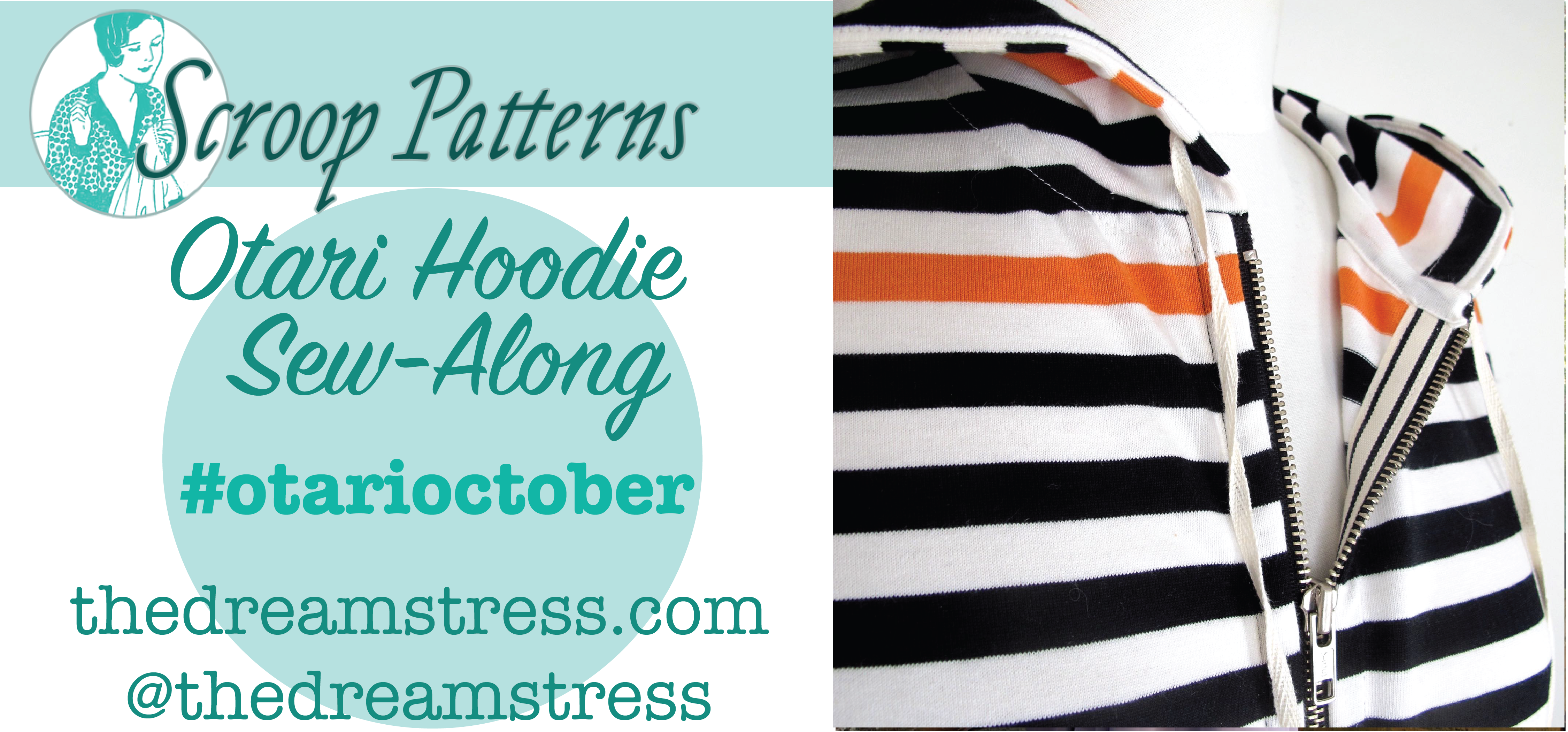
Otari Hoodie Sew Along thedreamstress.com

The Otari Hoodie Sew-Along #11: Attaching the Hood & Finishing

Hooray!  It’s the last construction post for the Otari Hoodie Sew Along!  In this post I’ll show you how to attach the hood, finish the seam, and give some tips on threading your cord.

And then your hoodie is done!

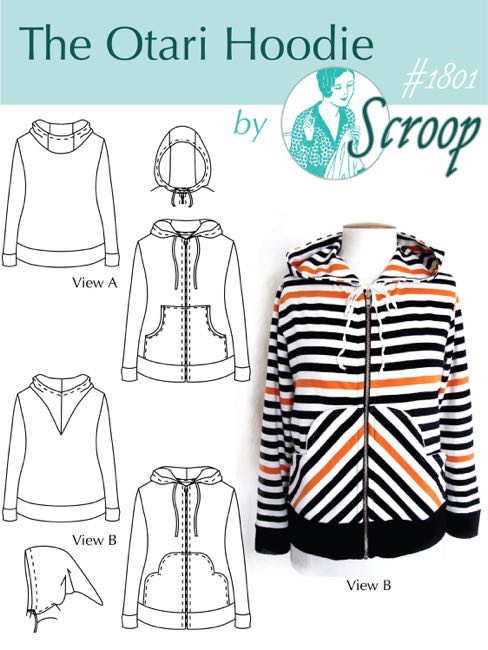
The Otari Hoodie by Scroop Patterns scrooppatterns.com

Buy the Otari Hoodie Pattern Here

In the previous Otari Hoodie Sew Along posts I covered:

So, last post!  Let’s do this thing!

The numbering of the instructions in this post corresponds to the numbering of the pattern’s  instructions.

Attaching the Hood to Body

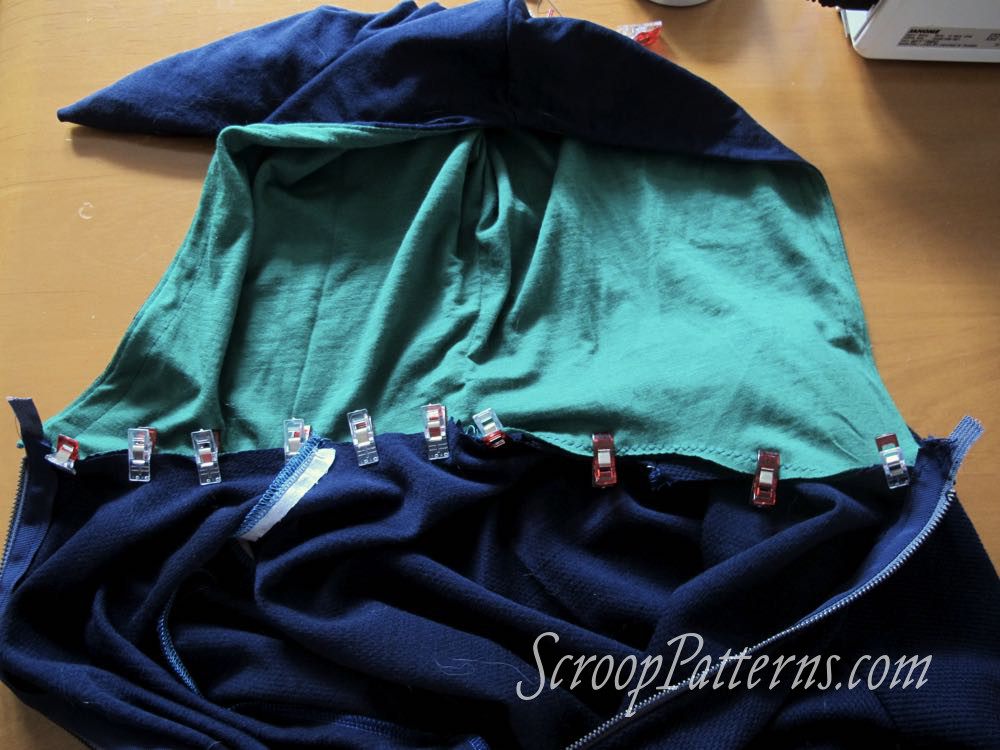
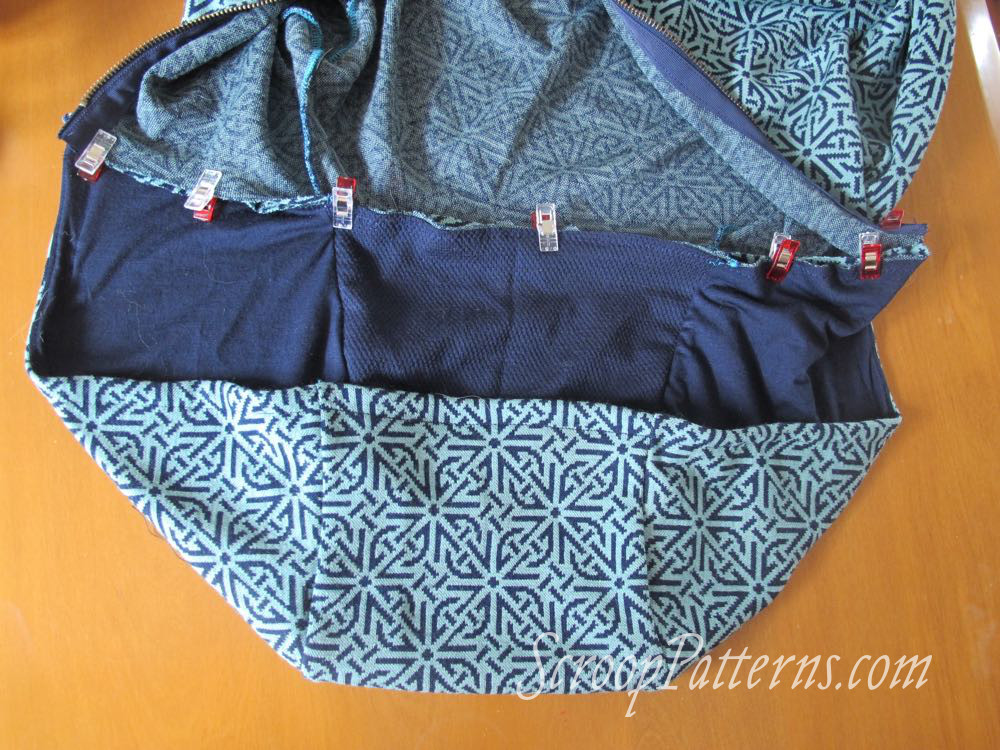
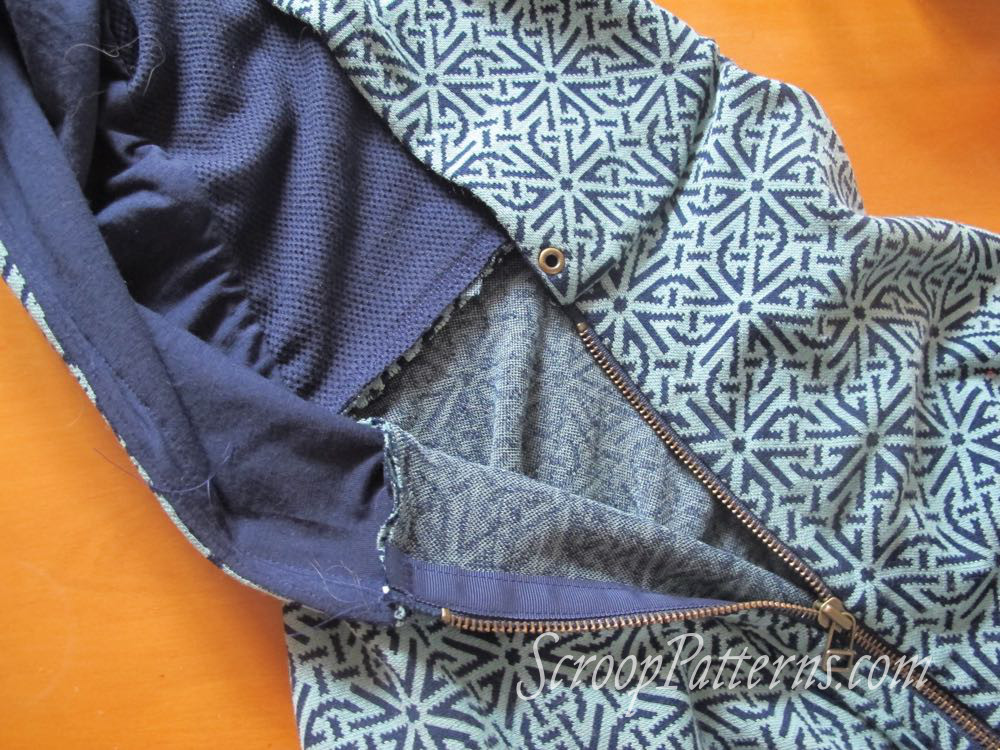
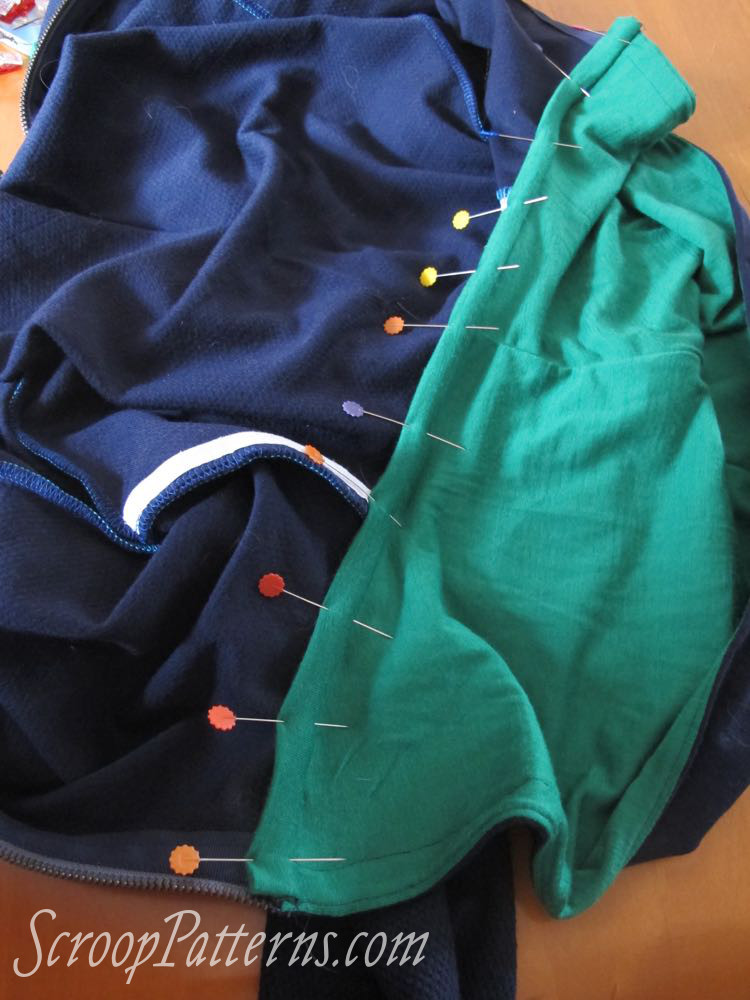
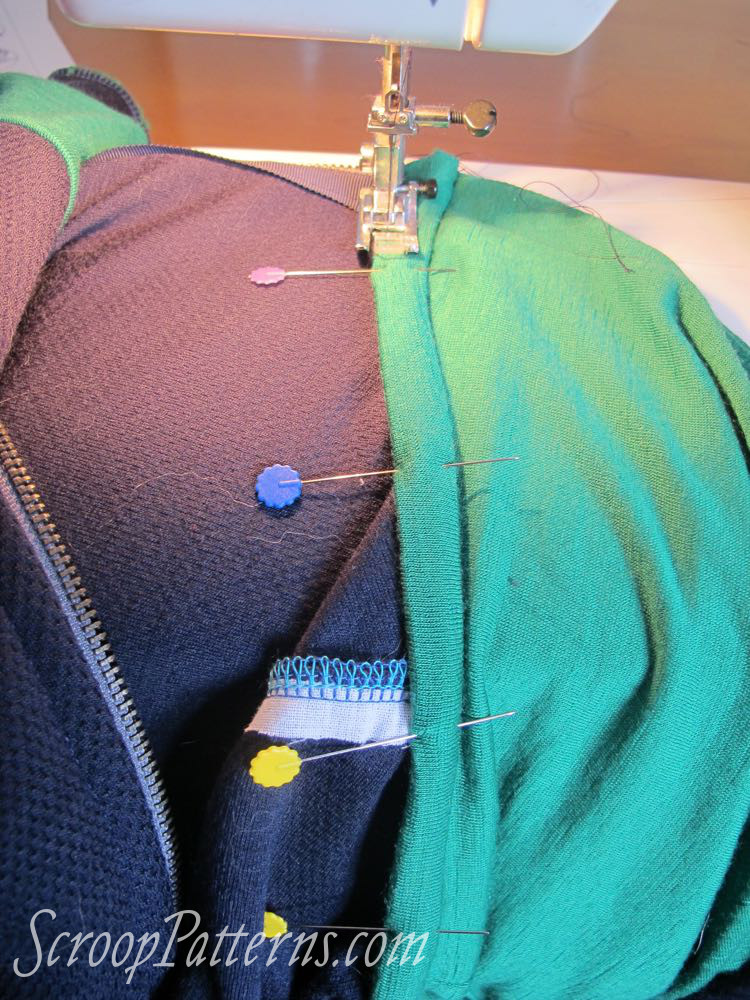
40.  Clip/pin and sew your hood to your body, matching the centre back, and the front edges of both views.

Otari Hoodie Sew Along Part 11 Finishing scrooppatterns.com

The seams of Hood A should match the shoulder seams of the hoodie:

Otari Hoodie Sew Along Part 11 Finishing scrooppatterns.com

And there’s your assembled hoodie!

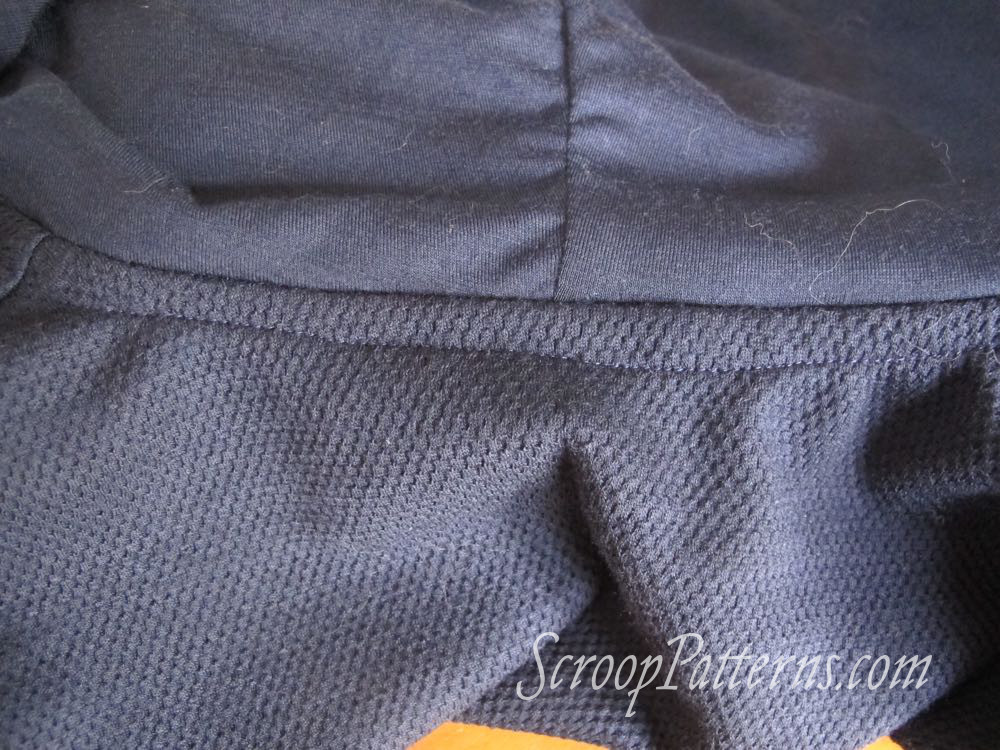
Press the seam down towards the body, and you’re ready for…

Otari Hoodie Sew Along Part 11 Finishing scrooppatterns.com

Binding the Hood Seam

Otari Hoodie Sew Along Part 11 Finishing scrooppatterns.com

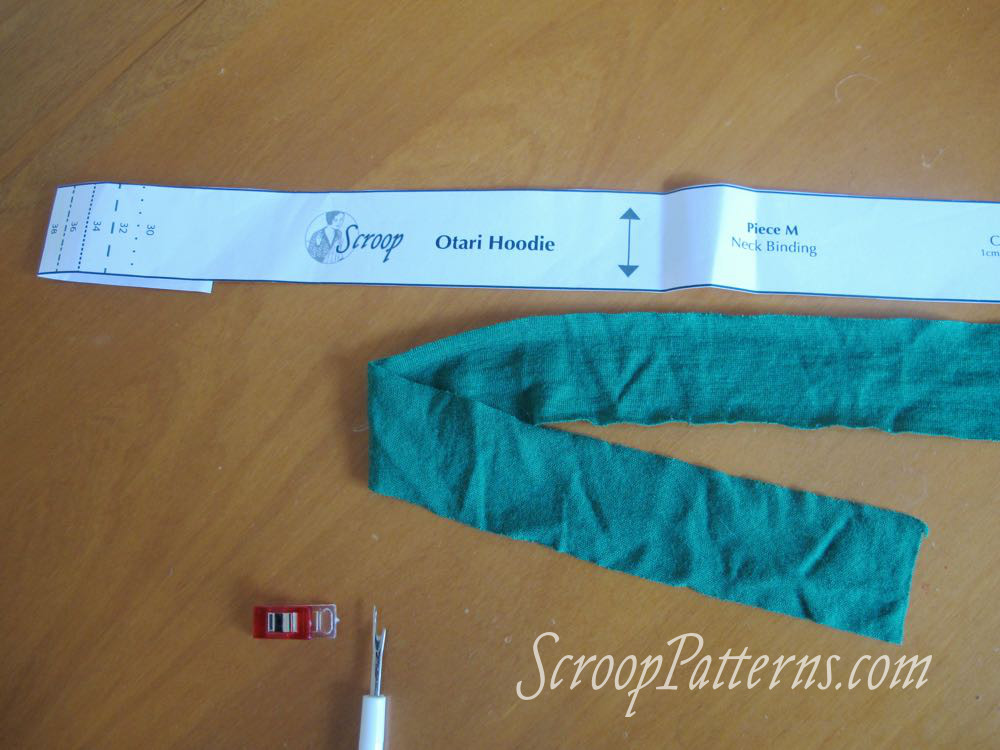
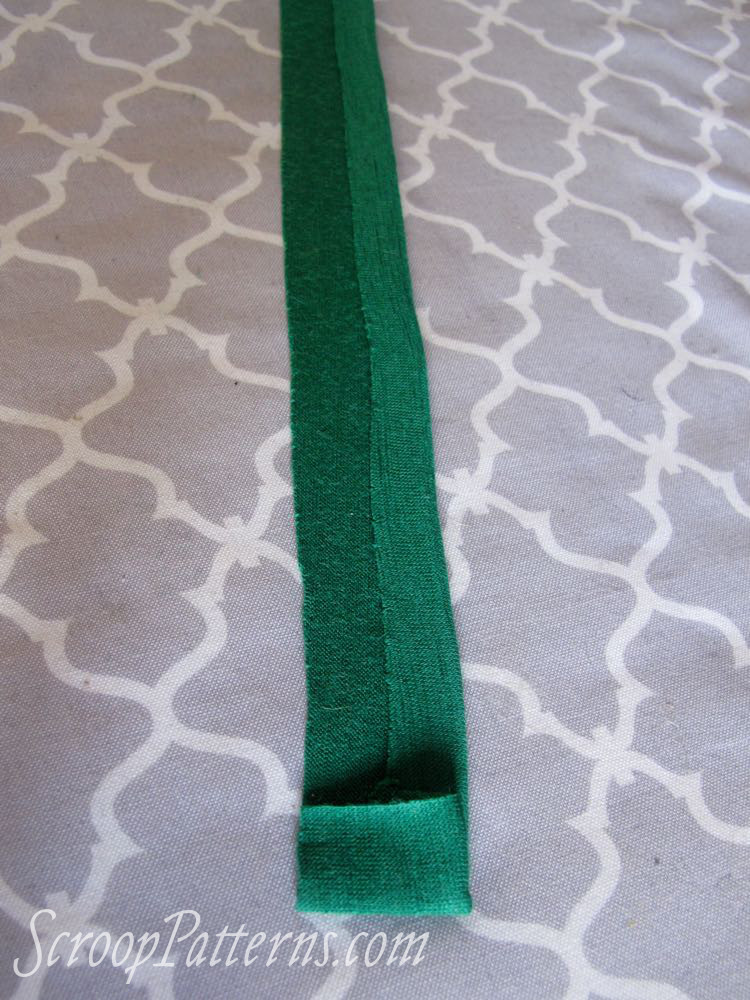
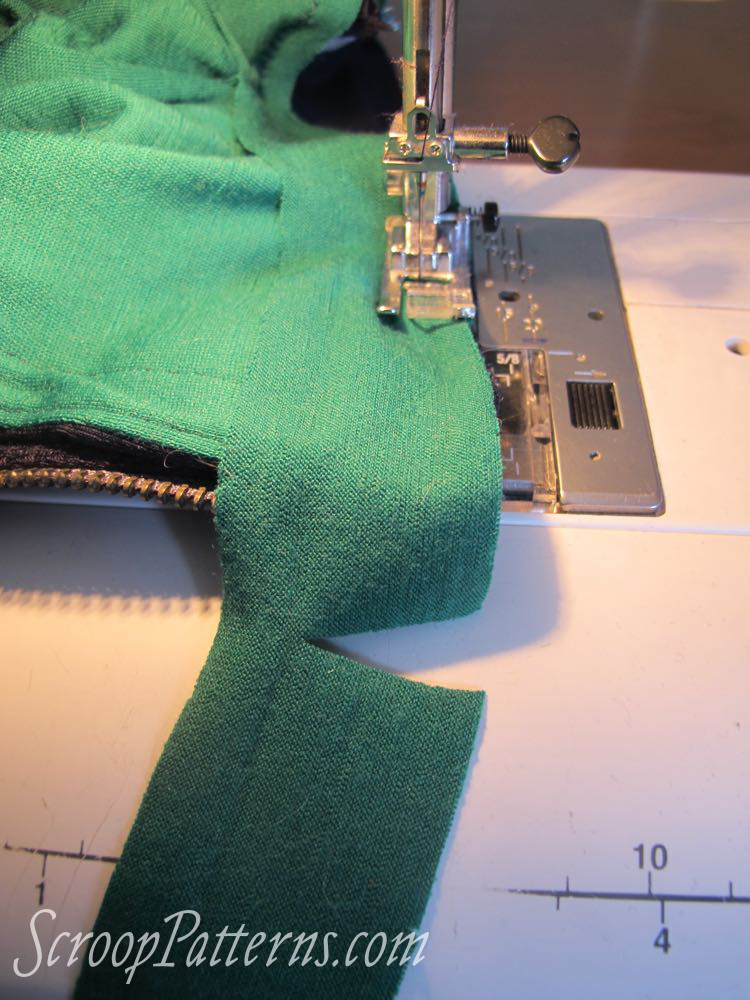
41.  Press under 1cm (wrong side to wrong side) one long edge of hood binding strip M.  Then turn under the end as shown:

Otari Hoodie Sew Along Part 11 Finishing scrooppatterns.com

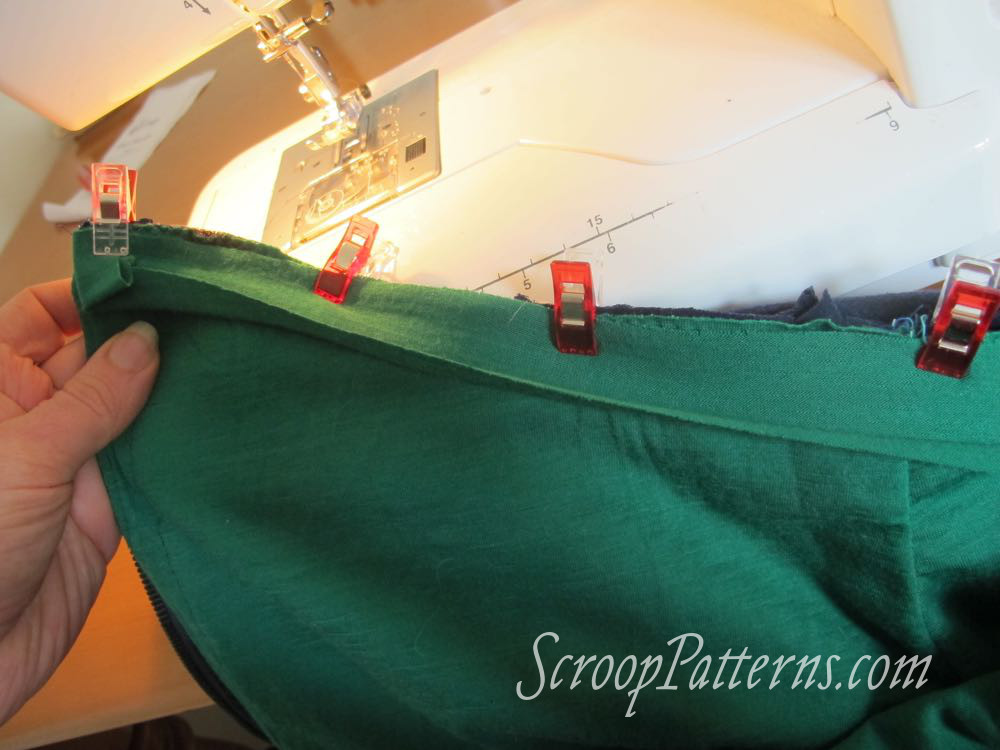
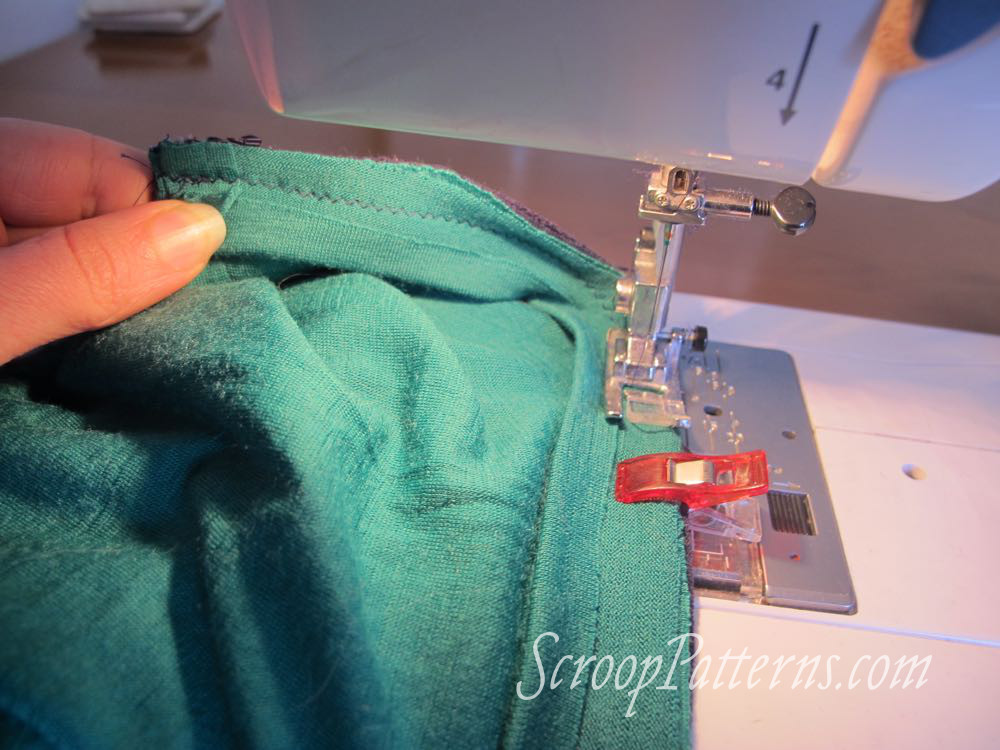
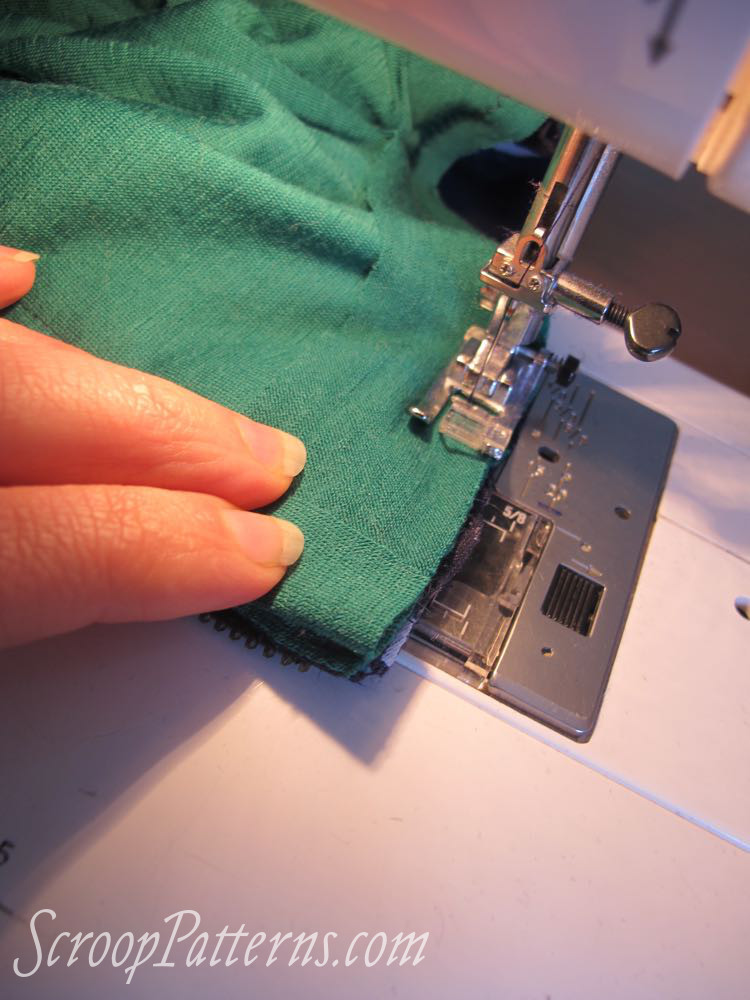
42. Starting with your turned-under end, sew the un-folded edge of binding strip M along the hood-body seam.  The right side of your strip should face the hood lining (in green on my hoodie).

Otari Hoodie Sew Along Part 11 Finishing scrooppatterns.com

Stretch the binding strip slightly as you sew

Otari Hoodie Sew Along Part 11 Finishing scrooppatterns.com

When you get close to the end of the binding strip, cut it off 3/8″/1cm beyond the edge of the hoodie, fold as you did with the other end, and sew to the end.

Otari Hoodie Sew Along Part 11 Finishing scrooppatterns.com

Otari Hoodie Sew Along Part 11 Finishing scrooppatterns.com

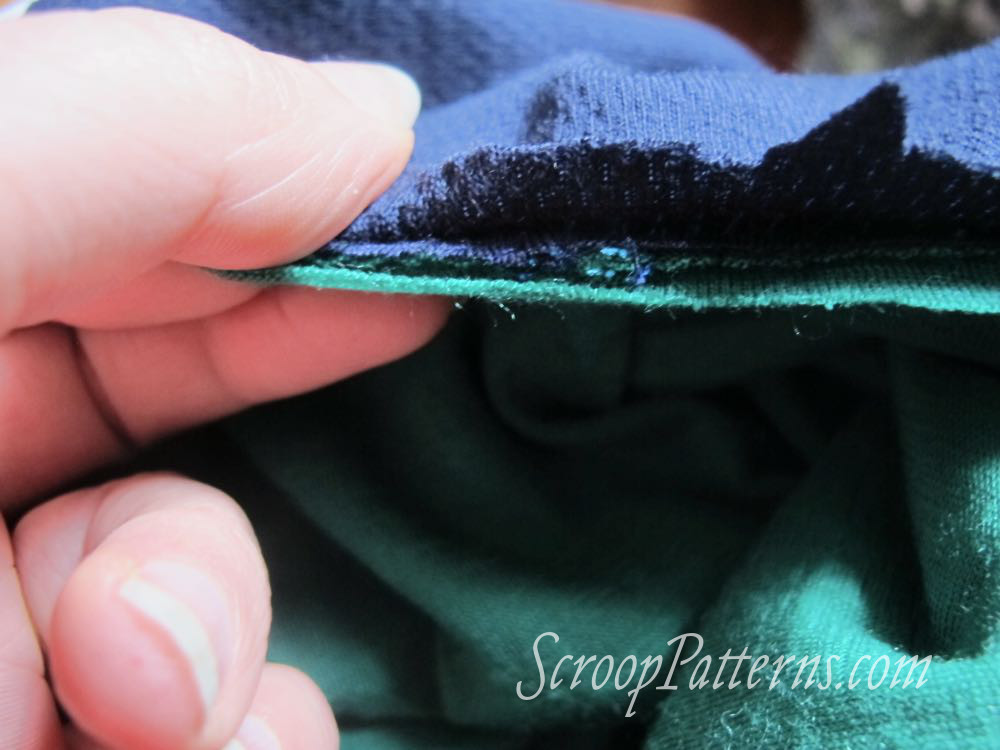
Grade the seam to reduce bulk at the neck join.  I like to cut out the middle two layers:

Otari Hoodie Sew Along Part 11 Finishing scrooppatterns.com

43.  Press down your binding strip M to cover the join of the hood & body, and all the raw seams.  Pin in place:

Otari Hoodie Sew Along Part 11 Finishing scrooppatterns.com

44. Sew along the bottom of the pinned down strip, using a straight stitch, and stretching ever so slightly as you sew.

Otari Hoodie Sew Along Part 11 Finishing scrooppatterns.com

Make sure to use a bobbin thread that matches the outside of your hoodie, because that’s where it will show:

Otari Hoodie Sew Along Part 11 Finishing scrooppatterns.com

And here is what it looks like on my double knit hoodie:

Otari Hoodie Sew Along Part 11 Finishing scrooppatterns.com

Hand sewing:

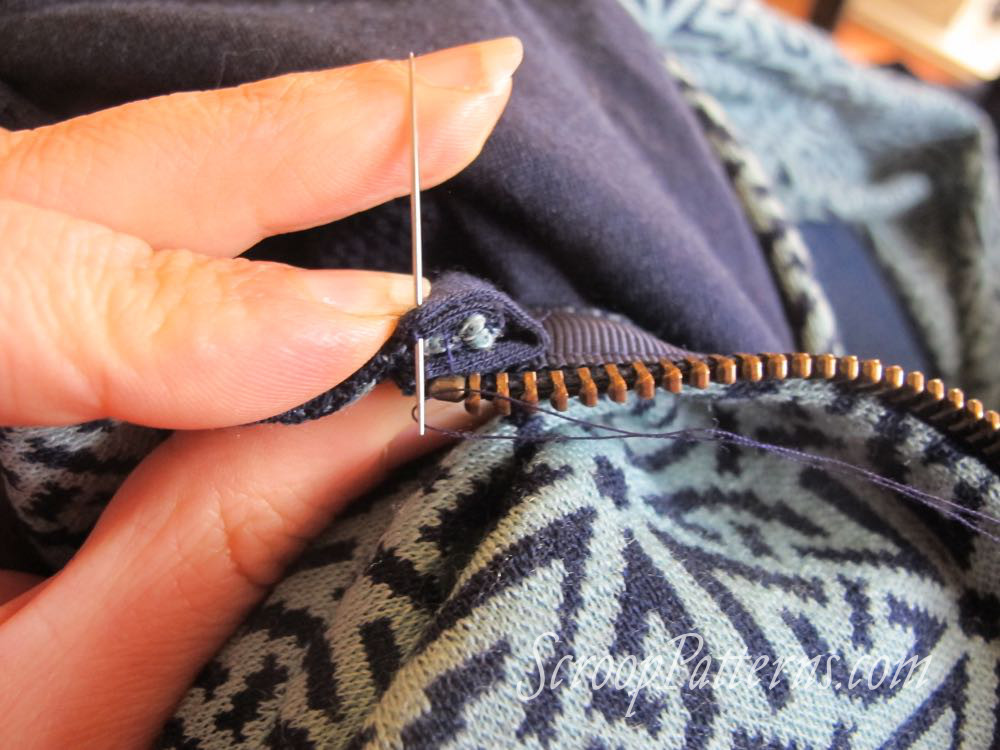
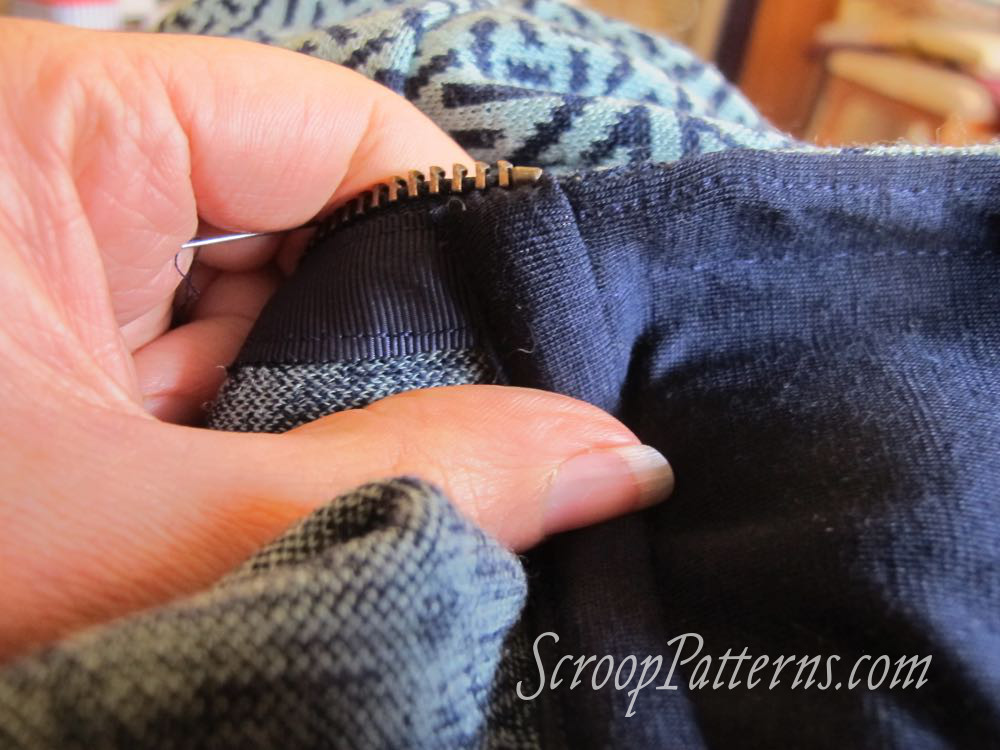
45.  Hand sew the ends of your binding strip closed:

Otari Hoodie Sew Along Part 11 Finishing scrooppatterns.com

Otari Hoodie Sew Along Part 11 Finishing scrooppatterns.com

Hood Cord:

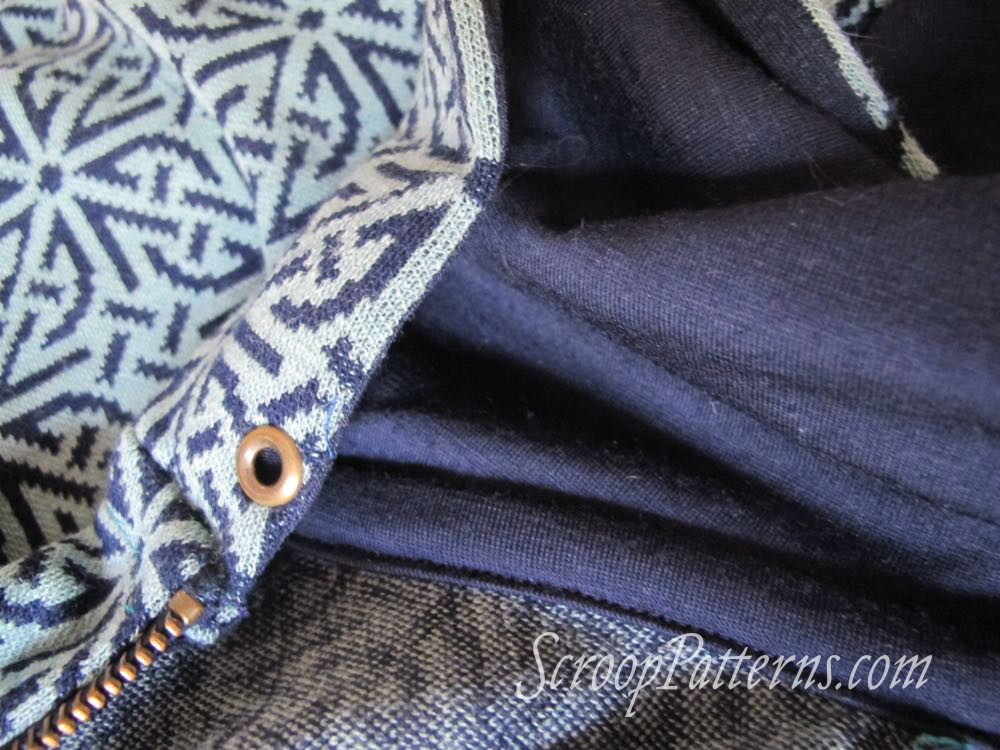
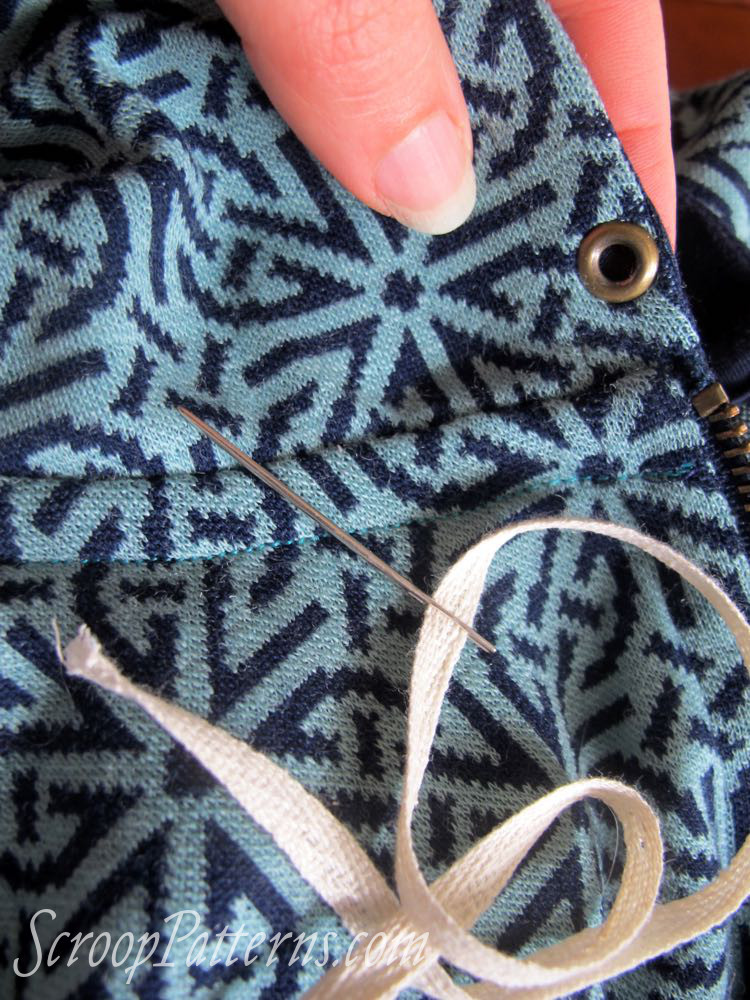
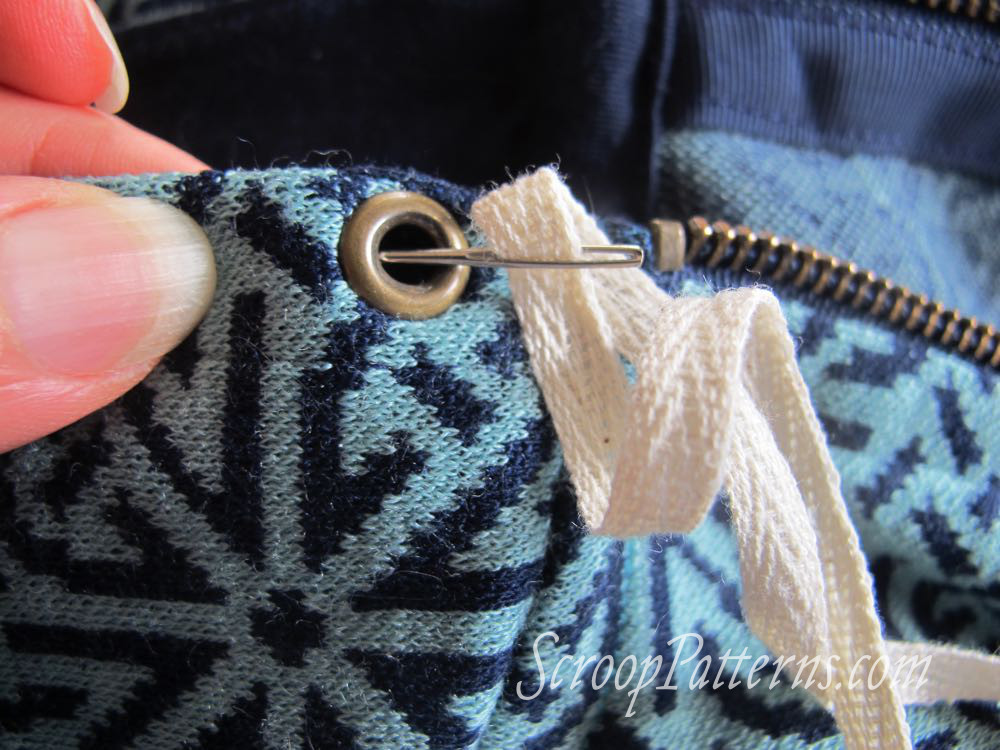
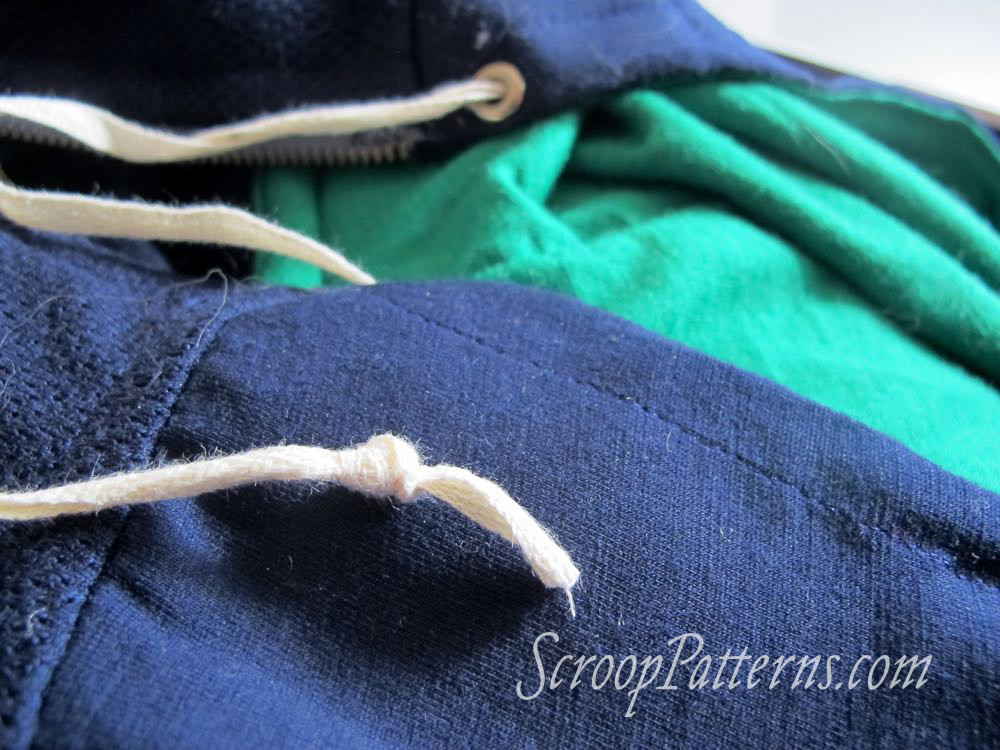
46.  Use a bodkin, blunt tapestry needle, or tape wrapped around the end of the hood cord to thread the hood cord through your channel:

Otari Hoodie Sew Along Part 11 Finishing scrooppatterns.com

Jamming the end of a large needle into a tiny bit of cork or rubbing eraser also works – anything that is small enough to go through your grommet, will blunt the tip, and won’t fall off as you thread the cord.

Otari Hoodie Sew Along Part 11 Finishing scrooppatterns.com

Once your cord is threaded through, tie off the ends.  Or get really fancy and add beads or cord endings.

Otari Hoodie Sew Along Part 11 Finishing scrooppatterns.com

And that’s your finished hoodie!

In the final Sew Along post:

My finished hoodies

Want to make your own?  Buy your Otari Hoodie Pattern Here  

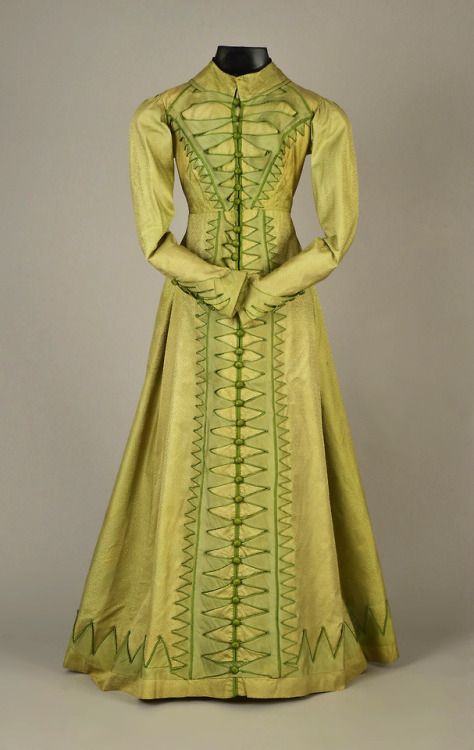
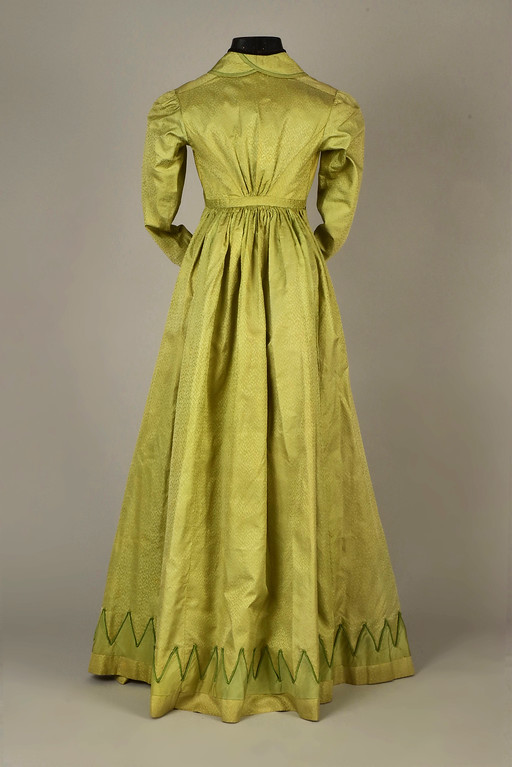
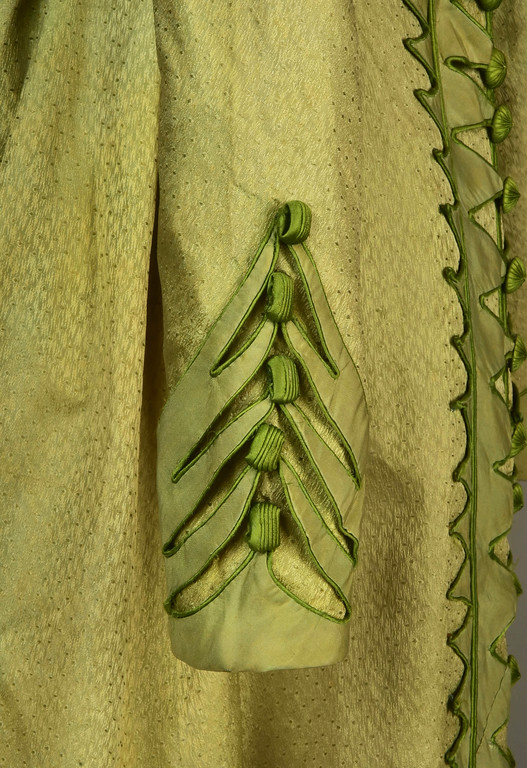
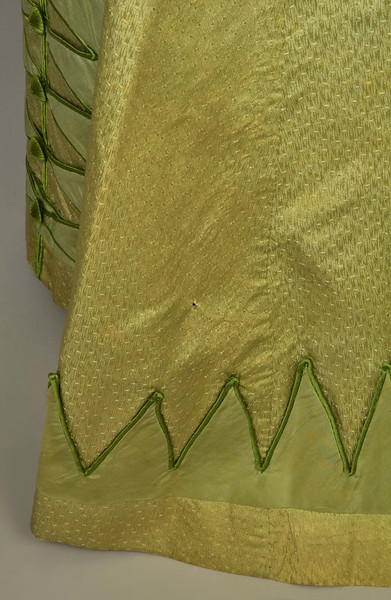
Pelisse, figured silk with velvet trim, 1815-20, Helen Larson Historic Costume Collection sold by Whitaker Auctions

Rate the Dress (well, actually it’s a pelisse)

The Rate the Dress before last was spring-heading-into-summer, last weeks was autumn-heading-into-winter, this week I’m combining both trans seasonal trends in one vivid green outer garment.

Last week:  an 1890s dress in dark green ribbed velvet and chiffon, with appliqued polka dots, puffed sleeves and more

Ratings for last week’s Hallee dress fell into two distinct camps: loves, with an average rating of 9.5, or people who thought it was too quirky, with an average rating of 7.

Which, for once, is exactly what I’d predicted the response would be.  Usually I have some theories, and then some of the responses come completely out of left field, but this time I was spot on (haha).

The Total: 8.3 out of 10

A rating that reflects almost no-ones scoring!

This week: a bright spring green pelisse  

It took me a long time to find the right garment to feature for Rate the Dress this week.  I finally decided to stick with my trans-seasonal theme, with an overgarment for keeping you cozy in cold weather, in very fresh, spring-y colours.

This late ‘teens pelisse would be worn over a dress, like a full length coat.  Although an outside garment, it was clearly worn more for fashion than practicality.  The figured sarcenet silk would spot if it got wet, and is too thin to add much warmth.

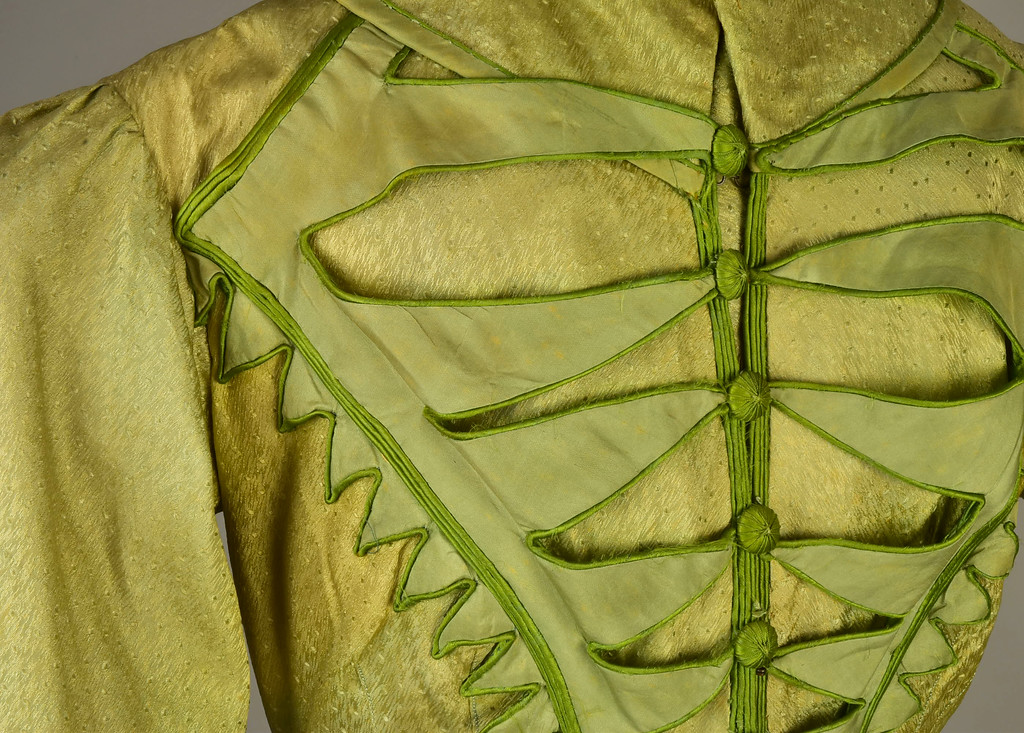
The pelisse features lavish dyked trim and non-working decorative buttons which run down the entire front of the dress-coat.

Note the piped edges of the trim, which varies between single and triple rows of piping.

It’s possible that the vivid green trim of the pelisse is Scheele’s Green, the so-called arsenic green, but it’s highly unlikely.  The use of arsenic green as a dye for fabric, particularly silk, is hugely exaggerated in pop culture fashion history.  Scheele’s Green is a pigment, rather than a dye: it was painted on to surfaces, so was used in wallpaper, leatherwork, and to colour paper leaves for fake flowers, etc.  It wasn’t particularly suitable for applying to fabric – particularly not silk.  In addition to being highly toxic, Scheele’s Green contains copper, which is very unstable when combined with sulphur, which all silk contains.  When it was applied to fabric it was usually linen and cotton.  On silk it would darken and discolour very quickly.

There are bright green mid-Victorian silk dresses which have been identified as being dyed with Scheele’s Green based on tests which determined that they contained arsenic – but I’m not entirely convinced that the tests ruled out arsenic contamination from other sources.  Arsenic was a popular pest deterrent well into the 20th century, and I’ve worked for museums that had entire historical collections that had been treated with arsenic in the 19th and early 20th century to protect them from insect and rodent damage.  Every dress in those collections would probably test positive for arsenic.

Finally, this isn’t arsenic green, because it isn’t arsenic green: the colour isn’t right for arsenic green, which is more emerald, and less yellow spring-green-y (but since every third dress of any shade of green, from any date between 1750 and 1930 that I’ve posted on IG in the last four months has gotten at least one “oooh, it’s poisonous, it’s arsenic green” comment I’m heading things off at the pass! 😉 )

So, please consider the aesthetic merits of this garment without worrying that it made its wearer very ill, as that’s most unlikely.

(climbs down from soapbox)

What do you think of it?

Rate the Dress on a Scale of 1 to 10

A reminder about rating — feel free to be critical if you don’t like a thing, but make sure that your comments aren’t actually insulting to those who do like a garment.  Our different tastes are what make Rate the Dress so interesting.  It’s no fun when a comment implies that anyone who doesn’t agree with it, or who would wear a garment, is totally lacking in taste.

(as usual, nothing more complicated than a .5.  I also hugely appreciate it if you only do one rating, and set it on a line at the very end of your comment, so I can find it!  And 0 is not on a scale of 1 to 10.  Thanks in advance!)